
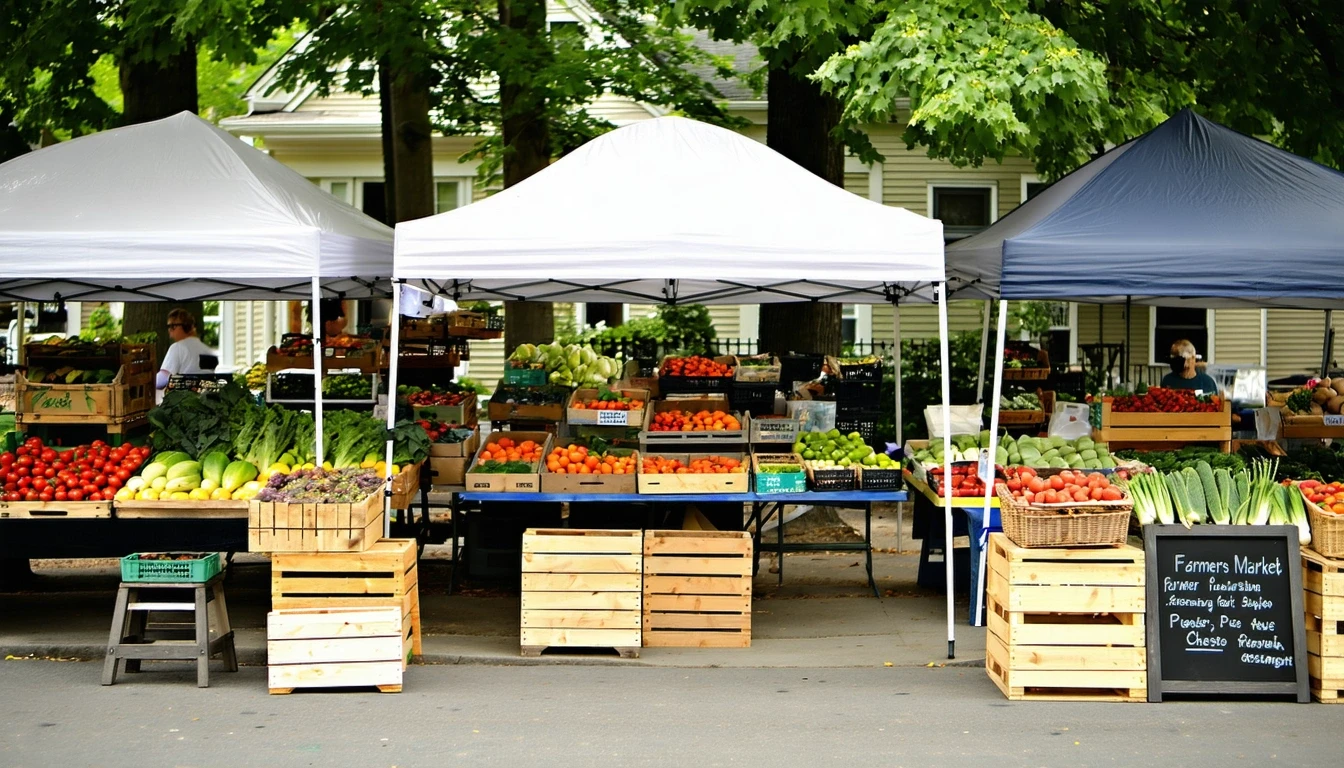
How Grocery Costs Feel in Chester
Grocery prices in Chester, PA track slightly above the national average, reflecting a regional price environment that sits about 4% higher than the U.S. baseline. For most households, that difference doesn’t announce itself on any single shopping trip—but over the course of a month, it compounds into a pressure point that families with tighter budgets feel clearly. Chester’s median household income of $39,193 per year means that grocery spending isn’t just a line item; it’s a decision that shapes weekly routines, store choices, and how often families can afford flexibility or convenience.
Singles and young couples without children may navigate grocery costs with relative ease, especially if they’re strategic about store choice and willing to plan meals around sales. But for families with kids, single parents, or seniors on fixed incomes, the same regional pricing environment creates a different reality. A household earning near the city median is dedicating a larger share of income to food than peers in cities with lower costs or higher wages. That makes grocery shopping less about preference and more about discipline—choosing between brand names and store labels, deciding whether to stock up during promotions, and thinking carefully about waste.
What amplifies this pressure is Chester’s accessibility pattern. Grocery density in the city exceeds regional thresholds, meaning there are plenty of places to shop—but they’re concentrated along specific corridors rather than evenly distributed across neighborhoods. Some residents live within walking distance of multiple options and can compare prices easily; others depend on a car or transit to reach their preferred store, adding time and friction to every trip. That unevenness doesn’t just affect convenience—it affects cost control, because households farther from discount-tier stores may default to whatever’s closest, even if it’s pricier.
Grocery Price Signals (Illustrative)
The table below shows illustrative prices for common staple items in Chester, derived from national baselines adjusted for the region’s price level. These figures are not store-specific or week-specific—they’re anchors that reflect how grocery costs tend to position locally compared to other markets. They help explain why certain items feel more or less expensive here, but they don’t represent a complete shopping list or an actual receipt.
| Item | Illustrative Price |
|---|---|
| Bread (per pound) | $1.92/lb |
| Cheese (per pound) | $5.04/lb |
| Chicken (per pound) | $2.12/lb |
| Eggs (per dozen) | $2.68/dozen |
| Ground beef (per pound) | $7.02/lb |
| Milk (per half-gallon) | $4.26/half-gallon |
| Rice (per pound) | $1.10/lb |
Derived estimate based on national baseline adjusted by regional price parity; not an observed local price.
Ground beef and cheese stand out as higher-cost items, which matters for households that rely on these staples for weeknight meals. Eggs, chicken, and rice remain relatively affordable, giving budget-conscious shoppers reliable building blocks for low-cost dinners. Bread and milk fall in the middle—not cheap enough to ignore, but not so expensive that they force substitutions. For families shopping on a fixed weekly amount, these price signals shape the cart before they even walk into the store.
What these numbers don’t capture is variability. Discount-tier stores in Chester often price staples meaningfully lower than mid-tier grocers, while premium markets charge more for organic, specialty, or prepared options. A household that shops exclusively at a discount chain may see ground beef closer to $6 per pound, while a shopper at a premium grocer may pay $8 or more. That range—sometimes 25% or wider—means store choice isn’t just about convenience or atmosphere. It’s one of the most effective levers households have to control what a budget has to handle in Chester.
Store Choice & Price Sensitivity
Grocery price pressure in Chester varies more by store tier than by any single “average” experience. Discount-tier grocers—regional chains and no-frills formats—anchor the low end of the pricing spectrum, offering straightforward staples, limited selection, and fewer prepared or specialty items. These stores serve households where every dollar counts, and they’re often located along commercial corridors that require a car or bus trip to reach. For families shopping here regularly, the savings are real and repeatable, but the tradeoff is time, limited variety, and sometimes less appealing store conditions.
Mid-tier grocers occupy the middle ground: clean stores, broader selection, recognizable national brands, and occasional promotions. These are the stores many Chester households default to because they’re familiar, accessible, and reliable. Prices here align closely with the regional baseline—not the cheapest, but not premium either. For dual-income households or families with moderate flexibility, mid-tier stores offer a balance between cost and convenience that feels sustainable week to week.
Premium grocers—whether organic-focused, specialty, or upscale chains—serve a smaller segment of Chester’s population. These stores emphasize quality, prepared foods, and curated selection, and they price accordingly. For households earning well above the city median, premium grocers offer convenience and variety without meaningful financial strain. But for families closer to the median income of $39,193, shopping at premium stores regularly isn’t realistic unless they’re selective about what goes in the cart.
Because Chester’s grocery options cluster along corridors rather than spreading evenly across neighborhoods, proximity to discount-tier stores isn’t universal. Households in areas farther from these clusters face a choice: drive or take transit to access lower prices, or shop closer to home and absorb the premium. That friction—geographic and logistical—turns store choice into a cost management strategy, not just a preference. Families who can plan around weekly trips to discount stores gain an edge; those who shop more frequently or closer to home pay more over time, even for the same items.
What Drives Grocery Pressure Here
The most significant driver of grocery pressure in Chester isn’t the price of any single item—it’s the relationship between regional pricing and household income. With a median household income of $39,193, many families are dedicating a larger share of their earnings to food than peers in cities with similar costs but higher wages, or lower costs and similar wages. That income constraint makes grocery decisions feel consequential in ways that higher-earning households don’t experience. A $20 difference in the weekly grocery bill isn’t trivial when it represents a meaningful percentage of discretionary income.
Household size amplifies this pressure. A single adult or couple can navigate Chester’s grocery costs with relative flexibility, adjusting portions, shopping sales, and absorbing occasional splurges without destabilizing their budget. But a family of four or five—especially with school-age children—faces relentless volume. Kids eat more as they grow, preferences multiply, and the margin for waste shrinks. For these households, grocery shopping becomes a weekly exercise in discipline: planning meals around what’s on sale, buying in bulk when possible, and resisting convenience items that add up quickly.
Regional distribution patterns also shape the experience. Chester sits within the Philadelphia metro area, where grocery supply chains are well-established and competitive. That keeps prices from spiking dramatically, but it also means there’s limited downward pressure—stores aren’t racing to undercut each other in ways that benefit shoppers. The result is a stable but slightly elevated pricing environment, where households can predict costs but can’t expect bargains unless they actively seek them out through store choice, timing, or format.
Seasonal variability plays a quieter role. Produce prices shift with growing seasons, and holiday periods bring temporary spikes in demand for specific items. But in Chester, these fluctuations are moderate—enough to notice if you’re tracking closely, but not enough to disrupt a well-planned budget. The bigger seasonal factor is behavior: families hosting gatherings or cooking more at home during colder months may see grocery spending rise, even if per-item prices stay flat.
Practical Ways People Manage Grocery Costs
Households in Chester who keep grocery spending under control tend to rely on a few consistent strategies, none of which require extreme couponing or deprivation. The most effective approach is planning meals around weekly sales and building a rotating menu based on what’s discounted. This doesn’t mean eating the same five dinners forever—it means recognizing that chicken, ground beef, and pork cycle through promotions predictably, and timing purchases accordingly. Families who shop this way reduce waste, avoid impulse buys, and stretch their budget without feeling restricted.
Buying in bulk works well for households with storage space and upfront cash flow, particularly for staples like rice, pasta, canned goods, and frozen vegetables. Warehouse clubs and discount grocers in the region offer meaningful per-unit savings on these items, and they don’t spoil quickly. The tradeoff is the need to plan ahead and absorb a larger one-time cost, which isn’t feasible for every household. But for families who can manage it, bulk buying reduces the frequency of shopping trips and smooths out weekly spending.
Store-brand substitutions offer another reliable lever. In Chester’s mid-tier and discount grocers, store-label products often match or closely approximate national brands in quality, but at prices that are 15% to 30% lower. Households that switch even half their cart to store brands see the difference accumulate quickly, especially on high-frequency items like bread, milk, eggs, and canned goods. The savings aren’t dramatic on any single trip, but they compound over months into hundreds of dollars of breathing room.
Reducing food waste is less about strategy and more about habit, but it’s one of the most effective ways to lower grocery costs without changing what you eat. Families who plan portions carefully, repurpose leftovers, and store perishables properly avoid throwing away food they’ve already paid for. In a household where grocery spending is tight, wasting a pound of chicken or a half-gallon of milk isn’t just inefficient—it’s a direct hit to the weekly budget. Small adjustments in how food is stored, used, and tracked can prevent that loss.
Groceries vs Eating Out (Directional)
The tradeoff between cooking at home and eating out in Chester isn’t just about price—it’s about time, energy, and how much margin a household has in their budget for convenience. Cooking at home almost always costs less per meal than restaurant dining or takeout, but the gap varies depending on what you’re comparing. A home-cooked dinner built around chicken, rice, and vegetables might cost $3 to $4 per person, while a comparable meal from a casual restaurant runs $12 to $15 or more, before tip.
For families with children, that difference scales quickly. A household of four spending $50 on a single restaurant meal could prepare three or four home-cooked dinners for the same amount. That math makes eating out feel like a luxury rather than a routine, especially for families earning near Chester’s median income. But the calculation isn’t purely financial—cooking requires time, planning, and energy, and for working parents or single-income households, those resources are often as scarce as money.
Takeout and fast food occupy a middle ground. They’re cheaper than sit-down restaurants but more expensive than cooking, and they offer speed and convenience when time is the binding constraint. Households in Chester who rely on takeout once or twice a week aren’t necessarily overspending—they’re making a tradeoff between grocery discipline and the flexibility to skip meal prep on a busy night. The key is recognizing when convenience crosses into habit, because frequent takeout can quietly erode the savings that careful grocery shopping creates.
FAQs About Grocery Costs in Chester (2026)
Is it cheaper to shop in bulk in Chester? Buying in bulk reduces per-unit costs on staples like rice, pasta, canned goods, and frozen items, especially at warehouse clubs and discount grocers in the region. The tradeoff is upfront cost and storage space, but for households that can manage both, bulk buying smooths out weekly spending and reduces shopping frequency.
Which stores in Chester are best for low prices? Discount-tier grocers and no-frills formats anchor the low end of the pricing spectrum, offering straightforward staples and fewer specialty items. Mid-tier stores balance cost and convenience, while premium grocers emphasize quality and selection at higher prices. Store choice is one of the most effective levers for controlling grocery costs in Chester.
How much more do organic items cost in Chester? Organic and specialty items typically carry a premium of 20% to 50% or more compared to conventional equivalents, depending on the product and store tier. For households prioritizing organic options, focusing on high-impact categories like dairy, eggs, and produce—and mixing in conventional items elsewhere—can help manage the cost difference.
How do grocery costs for two adults in Chester tend to compare to nearby cities? Chester’s regional price level sits about 4% above the national average, which places it in the middle range for the Philadelphia metro area. Nearby cities with higher incomes or denser grocery competition may offer slightly better pricing or more discount options, but the differences are moderate rather than dramatic.
How do households in Chester think about grocery spending when cooking at home? Families earning near the city’s median income of $39,193 treat grocery spending as a consequential decision, planning meals around sales, buying store brands, and minimizing waste. Cooking at home offers meaningful savings compared to eating out, but it requires time and discipline—resources that vary widely across households.
Does shopping at different stores during the same week save money? Shopping at multiple stores can lower costs if you’re targeting specific loss leaders or promotions at each location, but it also adds time, transportation cost, and complexity. For most households, the savings don’t justify the effort unless the stores are conveniently located along existing routes.
How does Chester’s grocery accessibility affect costs? Grocery options in Chester cluster along commercial corridors rather than spreading evenly across neighborhoods, meaning proximity to discount-tier stores varies. Households farther from these clusters face a choice: travel to access lower prices, or shop closer to home and absorb a premium. That geographic friction turns store choice into a cost management strategy.
How Groceries Fit Into the Cost of Living in Chester
Grocery costs in Chester don’t exist in isolation—they’re one piece of a broader financial picture that includes housing, utilities, transportation, and healthcare. For most households, groceries represent a smaller share of monthly spending than rent or mortgage payments, but they’re more visible and more controllable. Unlike housing, which locks in for a lease term or mortgage period, grocery spending fluctuates week to week based on choices, habits, and discipline. That makes it one of the few cost categories where households can see immediate results from behavioral changes.
For families earning near the city’s median income of $39,193, grocery pressure compounds with other fixed costs. A household dedicating 30% of income to housing and another 10% to transportation has less flexibility to absorb elevated grocery prices, even if those prices are only modestly above the national average. The cumulative effect of multiple cost categories tracking slightly high—rather than any single expense being unaffordable—creates the financial strain that many Chester households navigate daily.
Understanding how groceries interact with other expenses helps clarify where households have leverage and where they don’t. Store choice, meal planning, and waste reduction offer meaningful control over food spending, but they can’t offset housing costs that are too high or transportation expenses that are unavoidable. For a complete picture of what a budget has to handle in Chester, groceries are best understood as part of a system—not as a standalone problem to solve.
Households moving to Chester or evaluating their current spending should approach grocery costs with realistic expectations. Prices here aren’t dramatically high, but they’re not bargains either, and income levels mean that careful shopping matters more than it might in higher-wage cities. Families who plan meals, choose stores strategically, and minimize waste will find grocery spending manageable. Those who shop impulsively, default to convenience, or ignore price differences will feel the pressure more acutely. The difference between those two experiences isn’t luck—it’s discipline, and it’s one of the most reliable tools Chester households have to control day-to-day costs.
How this article was built: In addition to public economic data, this article incorporates location-based experiential signals derived from anonymized geographic patterns—such as access density, walkability, and land-use mix—to reflect how day-to-day living actually feels in Chester, PA.