
How Grocery Costs Feel in Pasadena
Grocery prices in Pasadena, TX run slightly above the national baseline, reflecting the city’s regional price parity index of 105—meaning staple items tend to cost about 5% more here than in a typical U.S. market. For households moving from lower-cost regions or managing tight budgets, that difference shows up most clearly in high-frequency purchases: eggs, milk, bread, and proteins. It’s not a dramatic premium, but it’s persistent, and it compounds over time for families buying in volume. Singles and couples may notice the gap occasionally; families with children feel it weekly.
What makes grocery costs feel tighter or looser in Pasadena isn’t just the price per pound—it’s how food and grocery options are distributed across the city. Access here is corridor-clustered, meaning stores concentrate along certain routes rather than spreading evenly through neighborhoods. That pattern doesn’t block access, but it does mean most households need to plan trips deliberately rather than stopping in spontaneously. For cost-sensitive shoppers, that structure rewards intentionality: choosing the right store tier and consolidating errands become meaningful levers for controlling spending, not just convenience preferences.
Grocery pressure in Pasadena is moderate but noticeable. Households earning near or below the city’s median income of $64,698 per year are more likely to feel the squeeze, particularly if they’re feeding multiple people or managing other fixed costs like rent and utilities. The city’s mixed mobility texture and land-use patterns mean that getting to a discount-tier store may require a slightly longer drive, but the savings from that choice can offset the inconvenience—especially for families buying staples in bulk.
Grocery Price Signals (Illustrative)
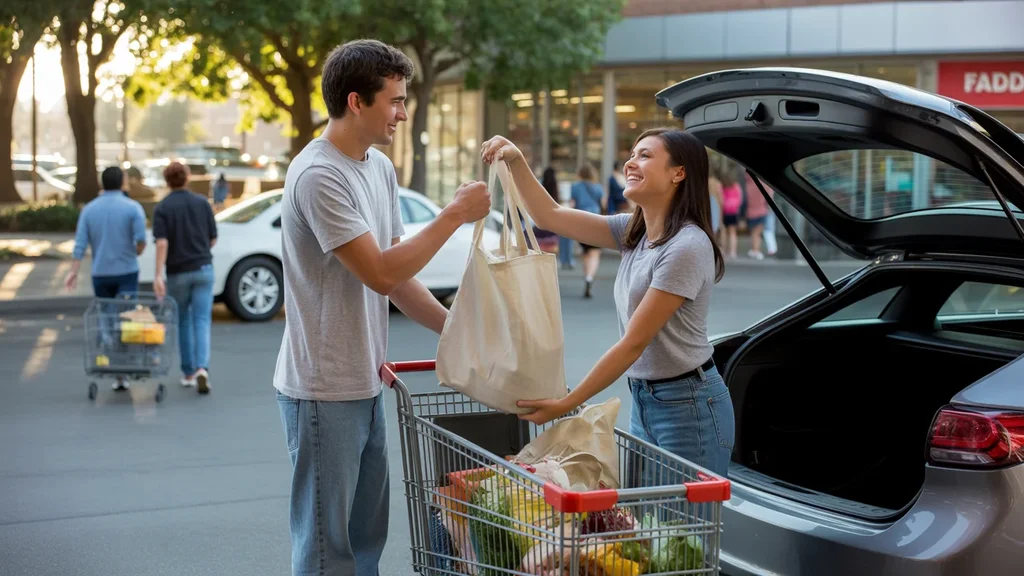
These prices illustrate how staple items tend to compare locally—not a full shopping list. They’re derived from national baselines adjusted for regional price parity, and they reflect typical pricing patterns rather than week-to-week promotions or store-specific sales. Use them as anchors for understanding relative cost positioning, not as guarantees of what you’ll pay at checkout.
| Item | Price |
|---|---|
| Bread | $1.90/lb |
| Cheese | $5.02/lb |
| Chicken | $2.13/lb |
| Eggs | $2.47/dozen |
| Ground Beef | $7.04/lb |
| Milk | $4.27/half-gallon |
| Rice | $1.11/lb |
Derived estimate based on national baseline adjusted by regional price parity; not an observed local price.
Ground beef and cheese carry the steepest per-unit costs, which matters most for households cooking protein-heavy meals multiple times per week. Rice, bread, and eggs remain relatively affordable, making them reliable budget anchors. Milk and chicken fall in the middle—not cheap, but not prohibitive. The key takeaway isn’t any single price; it’s the cumulative effect of buying these items repeatedly, and how that cumulative pressure shifts depending on where you shop and how often you go.
Store Choice & Price Sensitivity
Grocery price pressure in Pasadena varies significantly by store tier, and understanding that variation is one of the most practical tools households have for managing food costs. Discount-tier stores—no-frills formats focused on private-label staples and high-volume turnover—typically offer the lowest per-unit prices, especially on basics like rice, eggs, bread, and canned goods. These stores strip out amenities and product variety in exchange for tighter margins, and for cost-sensitive households, that tradeoff often makes sense. The savings on a week’s worth of staples can be substantial, particularly for families buying in quantity.
Mid-tier stores—regional or national chains with moderate selection and occasional promotions—occupy the middle ground. They’re more convenient for one-stop shopping, carry more branded options, and often include prepared foods, bakery sections, and specialty items. Prices here run higher than discount formats but lower than premium outlets, and many households default to this tier because it balances cost, variety, and accessibility. In Pasadena, where grocery access is corridor-clustered, mid-tier stores are often the easiest to reach, which makes them the de facto choice for households prioritizing time over maximum savings.
Premium-tier stores—organic-focused, specialty, or upscale formats—charge the highest prices, reflecting broader selection, higher-quality produce, and curated inventory. For households with dietary preferences, health priorities, or simply higher discretionary income, the premium is worth it. But for cost-conscious shoppers, these stores can feel prohibitively expensive, especially on high-frequency items like milk, eggs, and proteins. The gap between discount and premium pricing on the same staple item can easily reach 30–50%, and that gap compounds quickly across a full cart.
Because Pasadena’s grocery landscape is corridor-clustered rather than broadly accessible, store choice isn’t just about preference—it’s about logistics. Households living near a discount-tier store have a structural advantage in managing food costs. Those farther from budget options face a tradeoff: drive longer to save more, or shop closer and pay the mid-tier or premium markup. For families on tight budgets, that tradeoff is worth calculating. For higher-income households, convenience often wins.
What Drives Grocery Pressure Here
Grocery pressure in Pasadena is shaped by the interaction between regional pricing, household income, and access patterns. The city’s RPP index of 105 means prices start slightly elevated relative to the national average, and that baseline affects every household—but not equally. For families earning near or below the median income of $64,698 per year, even a 5% markup on staples adds up quickly, especially when combined with other fixed costs like housing and utilities. Higher-income households feel the same price environment, but it consumes a smaller share of their budget, leaving more room for premium-tier shopping or convenience-driven choices.
Household size amplifies grocery sensitivity more than almost any other cost category. A single person buying eggs, chicken, and rice for one week faces moderate pressure; a family of four buying the same items in quadruple volume faces compounding pressure, because the per-unit cost doesn’t drop—it just repeats. Larger households also face less flexibility in timing and substitution, because they’re restocking staples constantly rather than stretching a carton of eggs across ten days. That’s why families with children are more likely to feel grocery costs as a persistent, non-negotiable pressure point, while singles and couples experience it more episodically.
Pasadena’s corridor-clustered grocery access adds a logistical layer to cost pressure. In cities where food and grocery options are broadly accessible—spread evenly across neighborhoods—households can shop opportunistically, stopping in on the way home from work or running a quick errand between other tasks. Here, because stores concentrate along certain routes, most trips require deliberate planning. That structure doesn’t block access, but it does mean that convenience and cost are often in tension: the closest store may not be the cheapest, and the cheapest store may require a longer drive. For households with tight schedules or limited transportation flexibility, that tension can push them toward mid-tier or premium options even when discount-tier savings would help.
Seasonal variability in grocery costs tends to be less dramatic than in categories like utilities or transportation, but it still exists. Produce prices fluctuate with growing seasons and supply-chain conditions, and proteins can spike during periods of high demand or supply disruption. In Pasadena, where hot, humid summers dominate much of the year, households may also shift toward lighter, fresher meals during peak heat, which can increase spending on produce and reduce reliance on shelf-stable staples. These shifts are subtle, but they add texture to the year-round grocery experience.
Practical Ways People Manage Grocery Costs
Managing grocery costs in Pasadena comes down to behavioral levers—choices about where to shop, how often to go, and what to prioritize. The most effective strategy is store tier selection: deliberately choosing discount-tier stores for high-frequency staples and reserving mid-tier or premium stores for specialty items or convenience runs. Households that split their shopping this way—buying rice, eggs, bread, and canned goods at a no-frills format, then filling in fresh produce or prepared foods elsewhere—often see meaningful reductions in weekly spending without sacrificing variety or quality.
Trip consolidation matters more in Pasadena than in cities with broadly accessible grocery options. Because stores cluster along corridors rather than spreading evenly, each trip carries a time and fuel cost, and frequent small runs add up. Households that plan one or two larger trips per week, rather than stopping in daily, reduce both transportation costs and the temptation to make impulse purchases. This approach works best for families with storage space and the ability to buy in bulk, but even singles and couples can benefit by batching errands and avoiding redundant trips.
Private-label and store-brand products offer one of the most consistent cost advantages, particularly at discount and mid-tier stores. These items are often produced by the same manufacturers as name-brand equivalents but sold at lower prices because they carry less marketing overhead. For staples like pasta, canned tomatoes, flour, and dairy, the quality gap is usually negligible, and the savings can reach 20–30% per item. Over time, that difference compounds, especially for households buying the same staples weekly.
Seasonal and promotional shopping—buying produce when it’s in peak supply, stocking up on proteins during sales, and watching for store promotions on pantry staples—adds another layer of control. This strategy requires flexibility and storage capacity, but it allows households to smooth out price volatility and avoid paying peak prices on high-cost items. In Pasadena, where grocery access is corridor-clustered, combining promotional shopping with trip consolidation can maximize both savings and efficiency.
Cooking from scratch rather than relying on prepared foods, meal kits, or convenience items reduces per-meal costs significantly, though it requires time and skill. Households that batch-cook staples like rice, beans, and roasted vegetables can stretch ingredients further and reduce reliance on expensive pre-packaged options. This approach works best for families with predictable schedules and the ability to plan meals in advance, but even small shifts—making coffee at home instead of buying it daily, or preparing lunches instead of eating out—add up over weeks and months.
Groceries vs Eating Out (Directional)
The tradeoff between cooking at home and eating out is one of the most variable elements of food spending, and it’s shaped as much by time, energy, and convenience as by cost. In Pasadena, where grocery costs run slightly above the national baseline, cooking at home still offers a significant per-meal advantage over restaurant dining, particularly for families. A home-cooked dinner built around chicken, rice, and vegetables might cost a few dollars per serving; the same meal at a casual restaurant could easily run three to four times that amount, before tax and tip.
But the cost advantage of cooking at home depends on consistency. Households that cook most nights and rarely eat out see the full benefit; those that cook occasionally but rely on takeout or dining out multiple times per week may find that their total food spending skews higher than expected, even if their grocery bills look moderate. The gap between grocery costs and restaurant costs is wide enough that even small shifts in behavior—cooking one or two additional meals per week—can reduce overall food spending noticeably.
For singles and couples, the calculus is more nuanced. Cooking for one or two people can feel inefficient, especially if ingredients spoil before they’re used or if the time investment doesn’t feel justified. In those cases, the convenience of eating out or ordering in may feel worth the premium, particularly for households with higher incomes or demanding schedules. Families, by contrast, almost always come out ahead cooking at home, because the per-person cost drops as volume increases, and the alternative—feeding three or four people at a restaurant—becomes prohibitively expensive quickly.
FAQs About Grocery Costs in Pasadena (2026)
Is it cheaper to shop in bulk in Pasadena? Shopping in bulk can reduce per-unit costs on staples like rice, pasta, canned goods, and household supplies, particularly at discount-tier or warehouse-format stores. The savings are most meaningful for families or households with storage space and the ability to use large quantities before expiration.
Which stores in Pasadena are best for low prices? Discount-tier stores—no-frills formats focused on private-label staples and high-volume turnover—typically offer the lowest prices on basics. Mid-tier chains provide more variety and convenience but charge higher per-unit costs, while premium stores focus on specialty and organic items at the highest price points.
How much more do organic items cost in Pasadena? Organic products generally carry a premium over conventional equivalents, often ranging from 20% to 50% more depending on the item and store tier. The gap is widest on produce, dairy, and proteins, and narrowest on shelf-stable goods like grains and canned items.
How do grocery costs for two adults in Pasadena tend to compare to nearby cities? Pasadena’s regional price parity index of 105 suggests grocery costs run slightly above the national average, which places the city in the moderate range compared to other Houston-area suburbs. Costs here are likely similar to nearby communities with comparable income levels and access patterns, though specific comparisons depend on local store competition and distribution networks.
How do households in Pasadena think about grocery spending when cooking at home? Most households prioritize monthly expenses by balancing grocery costs with dining out, focusing on store tier choice and trip planning to manage weekly spending. Families tend to emphasize bulk buying and discount-tier shopping, while singles and couples may prioritize convenience and mid-tier stores even if per-unit costs run higher.
How Groceries Fit Into the Cost of Living in Pasadena
Grocery costs in Pasadena sit in the middle tier of household expenses—less dominant than housing or utilities, but more persistent and less flexible than discretionary categories like entertainment or dining out. For families, groceries can rival or exceed utility bills, particularly during months when food prices spike or household size increases. For singles and couples, groceries typically consume a smaller share of the budget, but they still represent one of the few cost categories where behavior and planning can produce immediate, measurable savings.
The city’s corridor-clustered grocery access and slightly elevated regional pricing mean that where you shop and how often you go matter more here than in cities with broader access or lower baseline costs. Households that treat grocery shopping as a strategic decision—choosing store tiers deliberately, consolidating trips, and prioritizing private-label staples—tend to experience less pressure and more control. Those who shop reactively or prioritize convenience over cost often find that grocery spending creeps higher than expected, particularly when combined with frequent dining out or reliance on premium-tier stores.
For a complete picture of how groceries interact with housing, utilities, transportation, and other fixed costs, see the full breakdown in Monthly Spending in Pasadena: The Real Pressure Points. That article explains how all the pieces fit together, where trade-offs exist, and which households feel the most pressure across categories. Groceries are one lever among many, but they’re one of the few where small, consistent changes in behavior can shift the overall cost structure in your favor.
How this article was built: In addition to public economic data, this article incorporates location-based experiential signals derived from anonymized geographic patterns—such as access density, walkability, and land-use mix—to reflect how day-to-day living actually feels in Pasadena, TX.