
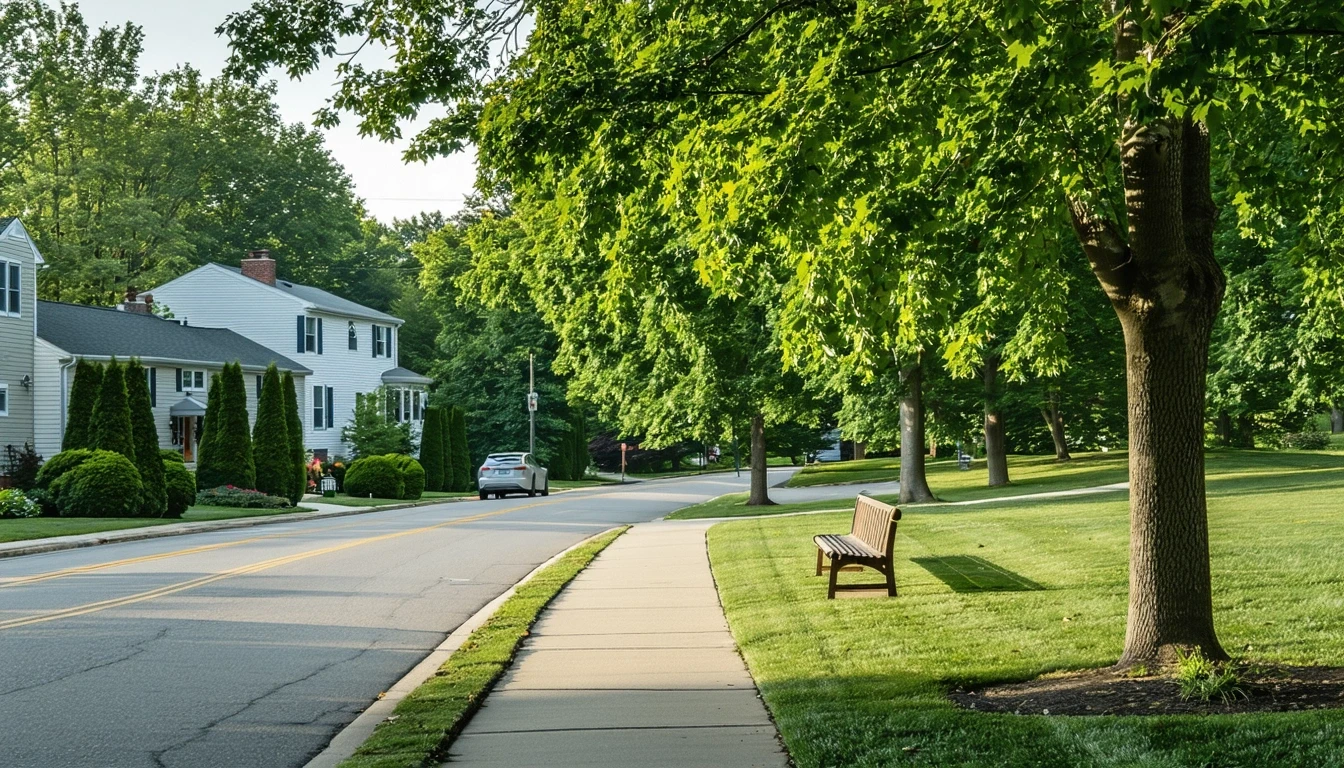
Cherry Hill and Gloucester Township sit just miles apart in Camden County, both serving as suburban anchors in the Philadelphia metro. They share school district reputations, access to the same grocery chains, and similar commute corridors into the city. Yet the cost structure in each place behaves differently—not because one is universally cheaper, but because housing entry barriers, transportation friction, and daily logistics pressure show up in distinct patterns depending on household type and income flexibility.
In 2026, the decision between these two communities isn’t about finding the lowest total cost of living. It’s about understanding where your household will feel cost pressure most acutely. Cherry Hill offers higher housing costs but more walkable pockets, rail transit access, and broadly accessible daily errands. Gloucester Township presents a lower entry point for homeownership and rent, but less documented infrastructure for reducing car dependence or shortening errand loops. For families weighing school quality against mortgage size, or singles comparing commute time against rent, the trade-offs are structural, not just financial.
This comparison explains how the same income feels different in each city, which costs dominate for different household types, and why the better choice depends on what you’re most sensitive to—not which place costs less overall.
Housing Costs
The most visible difference between Cherry Hill and Gloucester Township is housing entry cost. Cherry Hill’s median home value sits at $281,700, while Gloucester Township’s is $165,900. For renters, Cherry Hill’s median gross rent is $1,777 per month compared to Gloucester Township’s $1,400 per month. These aren’t small gaps—they represent fundamentally different access thresholds for households trying to enter the market, whether buying or renting.
But the housing story isn’t just about sticker price. Cherry Hill’s higher costs come with trade-offs that matter differently depending on household composition. The township shows strong family infrastructure signals—school density exceeds high thresholds, playground density sits in the medium band, and mixed land-use patterns mean residential neighborhoods sit closer to commercial corridors. For families prioritizing walkability to schools, parks, and errands, Cherry Hill’s housing premium buys proximity and reduces the need for constant car trips. Gloucester Township’s lower entry cost may appeal to households willing to accept more car dependence in exchange for more square footage or a smaller monthly obligation.
Renters face a similar calculus. Cherry Hill’s $1,777 median rent reflects tighter inventory and higher demand in neighborhoods with rail access and walkable pockets. Gloucester Township’s $1,400 median rent offers more breathing room for single adults or couples who don’t need transit proximity or dense errands infrastructure. But that savings comes with trade-offs: less flexibility to reduce transportation costs, fewer options for car-free or car-light living, and potentially longer errand loops that add time cost even when they don’t add direct expense.
| Housing Type | Cherry Hill | Gloucester Township |
|---|---|---|
| Median Home Value | $281,700 | $165,900 |
| Median Gross Rent | $1,777/month | $1,400/month |
| Typical Housing Form | Mixed height, walkable pockets, some townhomes and apartments near transit | Predominantly single-family, lower-density residential zones |
Housing takeaway: Cherry Hill’s higher entry costs create barriers for households with limited savings or tight budgets, but the premium buys infrastructure that reduces other costs—shorter commutes, fewer car trips, easier errands. Gloucester Township’s lower housing costs make entry easier but shift pressure onto transportation, time, and logistics. First-time buyers with modest down payments may find Gloucester Township more accessible. Families prioritizing school proximity, walkability, and transit options may find Cherry Hill’s structure worth the higher monthly obligation, especially if dual incomes can absorb the difference.
Utilities and Energy Costs
Utility costs in Cherry Hill and Gloucester Township behave similarly on paper—both cities sit in the same climate zone, face the same electricity rate of 22.73¢/kWh, and rely on natural gas for heating during cold months. Natural gas pricing differs slightly: Cherry Hill pays $17.94 per MCF, while Gloucester Township pays $17.04 per MCF. That difference is small enough that it won’t meaningfully change monthly bills for most households. What matters more is how housing stock, home age, and household size interact with seasonal energy exposure.
Cherry Hill’s mixed building height and land-use patterns mean more households live in apartments, townhomes, or newer construction with shared walls and better insulation. These housing forms reduce heating and cooling exposure compared to older, detached single-family homes. Gloucester Township’s predominantly single-family housing stock—especially older homes with less efficient envelopes—can drive higher baseline energy usage even when rates are identical. A family heating a 2,000-square-foot detached home in Gloucester Township will face more volatility during winter months than a similar household in a Cherry Hill townhome with shared walls and newer HVAC systems.
Seasonality also plays out differently depending on household routines. Cherry Hill’s walkable pockets and transit access mean some households can reduce car trips and spend less time idling in traffic or running errands, indirectly lowering fuel costs. Gloucester Township’s car-dependent structure means more households are driving for every errand, which compounds transportation costs even when utility bills themselves remain predictable. The interaction between housing form, commute patterns, and energy usage creates different exposure profiles: Cherry Hill households may see more predictable utility bills due to housing efficiency, while Gloucester Township households may face more variability tied to home age and heating needs.
Utility takeaway: Households in newer or attached housing (more common in Cherry Hill) experience lower heating and cooling volatility. Households in older, detached single-family homes (more common in Gloucester Township) face higher baseline energy exposure, especially during winter. Families with young children or elderly members who keep homes consistently heated or cooled will feel this difference more acutely. Single adults or couples with flexible schedules may find it easier to manage energy costs in either city, but Cherry Hill’s housing mix offers more options for reducing exposure through housing choice alone.
Groceries and Daily Expenses
Grocery costs in Cherry Hill and Gloucester Township are shaped less by price differences—both cities sit in the same regional price parity zone (RPP index 104)—and more by access patterns, shopping flexibility, and convenience spending creep. Cherry Hill shows high food and grocery density, meaning households can choose between discount chains, specialty stores, and neighborhood markets without long drives. Gloucester Township lacks the same documented density, which doesn’t mean groceries are unavailable, but it does mean fewer options within short distances and more reliance on car trips to reach preferred stores.
For families managing larger grocery volumes, Cherry Hill’s broadly accessible errands infrastructure reduces friction. Parents can stop at a grocery store on the way home from work, pick up missing ingredients without a dedicated trip, or compare prices across multiple stores in a single afternoon. Gloucester Township’s lower housing costs may free up budget for groceries, but the time cost of driving to fewer, more spread-out stores adds logistical pressure. That pressure doesn’t always show up as higher grocery bills—it shows up as less flexibility, more planning burden, and fewer opportunities to take advantage of sales or bulk discounts without significant detours.
Convenience spending behaves differently in each city as well. Cherry Hill’s mixed land-use patterns and walkable pockets mean coffee shops, takeout spots, and prepared food options sit closer to residential neighborhoods. That proximity makes it easier to spend on convenience when schedules get tight. Gloucester Township’s structure may naturally limit convenience spending simply because fewer options exist within short distances, which can act as a behavioral guardrail for households prone to takeout or dining out. But for households that value quick access to prepared food or coffee as a time-saving tool, Cherry Hill’s density offers more flexibility—at the cost of more temptation.
Groceries takeaway: Cherry Hill’s high grocery density reduces logistical friction for families and dual-income households juggling tight schedules, but proximity to convenience options increases the risk of spending creep. Gloucester Township’s lower density may force more intentional grocery planning, which can reduce impulse spending but adds time cost and limits flexibility. Single adults or couples with predictable routines may find Gloucester Township’s structure easier to navigate. Families managing multiple schedules, school pickups, and after-school activities will feel Cherry Hill’s errands accessibility as a meaningful cost reducer—not in grocery prices, but in time and mental load.
Taxes and Fees
Property taxes in New Jersey are among the highest in the nation, and both Cherry Hill and Gloucester Township reflect that reality. But the way property taxes interact with housing values creates different exposure profiles. Cherry Hill’s higher median home value of $281,700 means property tax bills will be higher in absolute terms, even if effective rates are similar. Gloucester Township’s lower median home value of $165,900 translates to lower annual property tax obligations, which can make a significant difference for households on fixed incomes or those stretching to afford homeownership.
For renters, property taxes are less visible but still embedded in monthly rent. Cherry Hill’s higher rents reflect not just demand but also the cost structure landlords face, including property taxes, insurance, and maintenance on higher-value properties. Gloucester Township’s lower rents suggest landlords face lower carrying costs, which can translate to more stable rent renewals and less pressure to pass through tax increases. Long-term renters in Gloucester Township may experience less volatility in annual rent adjustments compared to Cherry Hill, where tighter inventory and higher property values create more upward pressure.
Fees and recurring costs also vary by housing type. Cherry Hill’s mixed housing stock includes more townhomes and condos with HOA fees, which can bundle services like landscaping, trash, and snow removal but add predictable monthly obligations. Gloucester Township’s predominantly single-family housing stock means fewer HOA fees but more direct responsibility for maintenance, repairs, and seasonal upkeep. Homeowners who prefer bundled services and predictable monthly costs may find Cherry Hill’s HOA structure easier to manage. Homeowners who want control over maintenance timing and costs may prefer Gloucester Township’s structure, even if it requires more active management.
Taxes and fees takeaway: Cherry Hill’s higher home values drive higher property tax bills, which affect both homeowners directly and renters indirectly through higher rents. Gloucester Township’s lower home values reduce property tax exposure, making homeownership more accessible for households with limited income flexibility. HOA fees in Cherry Hill add predictability but reduce control; Gloucester Township’s single-family structure offers more control but requires more active management. Recent movers planning to stay long-term should factor in property tax trajectories, not just initial monthly costs.
Transportation & Commute Reality
Transportation costs in Cherry Hill and Gloucester Township diverge not because of gas prices—both cities pay $2.86 per gallon—but because of commute patterns, transit viability, and car dependence. Cherry Hill shows an average commute time of 25 minutes, with 36.9% of workers facing long commutes and only 6.9% working from home. But Cherry Hill also has rail transit access, walkable pockets with high pedestrian-to-road ratios, and cycling infrastructure in some areas. That combination means households have options: drive, take the train, bike for local errands, or walk to nearby destinations.
Gloucester Township lacks documented commute data, but the absence of experiential signals around transit, walkability, or cycling infrastructure suggests more uniform car dependence. Households in Gloucester Township likely drive for nearly every trip—commuting, errands, school drop-offs, and weekend activities. That doesn’t necessarily mean longer commute times, but it does mean fewer opportunities to reduce transportation costs through mode choice. A single adult in Cherry Hill might take the train to Philadelphia for work and walk to the grocery store on weekends, cutting car usage significantly. A similar household in Gloucester Township would need a car for both.
For families, the difference becomes more pronounced. Cherry Hill’s strong family infrastructure—high school density, medium playground density—means children can walk or bike to school in some neighborhoods, reducing the need for daily car trips. Gloucester Township’s structure likely requires more driving for school drop-offs, pickups, and after-school activities, which adds time cost and fuel expense even when commute distances aren’t dramatically longer. Dual-income couples in Cherry Hill can share one car more easily if one partner uses transit; Gloucester Township households will almost always need two vehicles.
Transportation takeaway: Cherry Hill’s rail access, walkable pockets, and cycling infrastructure create opportunities to reduce car dependence, especially for single adults and couples willing to adjust routines. Gloucester Township’s car-oriented structure means transportation costs are less flexible—households need reliable vehicles, face more fuel expense, and have fewer options to reduce driving. Families with multiple children and tight schedules may find Cherry Hill’s walkable school access reduces logistical pressure, while Gloucester Township’s lower housing costs may offset higher transportation needs for households already committed to two-car ownership.
Cost Structure Comparison
Housing dominates the cost experience in both cities, but the pressure shows up differently. Cherry Hill’s higher entry costs—$281,700 median home value and $1,777 median rent—create barriers for households with limited savings or tight budgets. Gloucester Township’s lower entry costs—$165,900 median home value and $1,400 median rent—make homeownership and renting more accessible upfront. But Cherry Hill’s premium buys infrastructure that reduces other costs: rail transit access, walkable errands, and family-friendly neighborhoods that cut down on car trips and logistical friction. Gloucester Township’s savings on housing shift pressure onto transportation, time, and daily logistics.
Utilities introduce similar exposure in both cities due to shared climate and electricity rates, but housing stock differences matter. Cherry Hill’s mixed building forms—apartments, townhomes, newer construction—reduce heating and cooling volatility. Gloucester Township’s predominantly single-family housing stock, especially older homes, increases baseline energy usage and seasonal variability. Families in detached homes will feel this difference more than singles or couples in smaller units.
Daily living costs—groceries, errands, convenience spending—are shaped more by access than by prices. Cherry Hill’s high food and grocery density reduces time cost and planning burden, especially for dual-income households and families managing tight schedules. Gloucester Township’s lower density doesn’t necessarily raise grocery bills, but it adds logistical friction and limits flexibility. Households prone to convenience spending may find Cherry Hill’s proximity to takeout and coffee shops increases spending creep, while Gloucester Township’s structure naturally limits those options.
Transportation patterns matter most for households trying to reduce car dependence. Cherry Hill’s rail access, walkable pockets, and cycling infrastructure create opportunities to cut transportation costs through mode choice. Gloucester Township’s car-oriented structure means nearly every trip requires a vehicle, which limits flexibility and increases baseline transportation expense. For single adults or couples, that difference can be meaningful. For families already committed to two-car ownership, it’s less decisive.
The better choice depends on which costs dominate your household. Households sensitive to housing entry barriers may prefer Gloucester Township’s lower thresholds, even if it means more driving and less walkability. Households sensitive to time cost, logistics friction, and transportation flexibility may prefer Cherry Hill’s infrastructure, even if it means higher monthly housing obligations. For families with school-age children, Cherry Hill’s strong family infrastructure and walkable school access may reduce daily stress in ways that offset higher rent or mortgage payments. For single adults or couples prioritizing housing affordability and willing to drive for most needs, Gloucester Township’s lower entry costs may feel more sustainable.
How the Same Income Feels in Cherry Hill vs Gloucester Township
Single Adult
Housing becomes the first non-negotiable cost, and Cherry Hill’s higher rent reduces flexibility for discretionary spending, savings, or debt repayment. Gloucester Township’s lower rent frees up budget but requires reliable car ownership, which shifts savings into transportation. Flexibility exists in Cherry Hill through transit access—skipping a car or reducing driving can offset higher rent. Gloucester Township offers no such trade-off; car ownership is mandatory, and commute friction is less visible but still present. Time cost matters more in Gloucester Township, where every errand requires a drive.
Dual-Income Couple
Housing pressure in Cherry Hill is front-loaded but manageable with two incomes, especially if one partner uses rail transit and reduces car dependency. Gloucester Township’s lower housing costs create more breathing room, but both partners will likely need cars, which increases baseline transportation expense. Flexibility in Cherry Hill comes from walkable errands and transit options, which reduce time spent on logistics. Gloucester Township requires more intentional planning—grocery trips, errands, and weekend activities all require driving, which compounds time cost even when fuel prices are identical. The role of commute friction becomes more visible when both partners are managing schedules.
Family with Kids
Housing and school proximity become non-negotiable first, and Cherry Hill’s strong family infrastructure—high school density, walkable neighborhoods—reduces daily logistics pressure even when housing costs are higher. Gloucester Township’s lower housing costs allow for more space, but school drop-offs, pickups, and after-school activities require constant driving, which adds time cost and mental load. Flexibility disappears in Gloucester Township when both parents work and children have overlapping schedules. Cherry Hill’s walkable school access and transit options create more opportunities to share one car or reduce driving, which matters more as children age and schedules become less predictable. The role of commute friction and car dependence intensifies with each additional child.
Decision Matrix: Which City Fits Which Household?
| Decision Factor | If You’re Sensitive to This… | Cherry Hill Tends to Fit When… | Gloucester Township Tends to Fit When… |
|---|---|---|---|
| Housing entry + space needs | Down payment size, monthly rent or mortgage obligation, upfront affordability | You value walkability, transit access, and proximity to schools enough to accept higher monthly costs | You prioritize lower entry barriers and more square footage over transit or walkability |
| Transportation dependence + commute friction | Car ownership costs, commute time, ability to reduce driving | You want rail access, walkable errands, or the option to live car-free or car-light | You’re already committed to two-car ownership and prioritize lower housing costs over transit options |
| Utility variability + home size exposure | Seasonal energy bills, heating and cooling predictability | You prefer newer or attached housing that reduces heating and cooling volatility | You’re willing to manage energy exposure in older, detached homes in exchange for lower housing costs |
| Grocery strategy + convenience spending creep | Time spent on errands, access to multiple stores, temptation to spend on takeout | You value dense grocery access and quick errands even if proximity increases convenience spending | You prefer fewer nearby options that naturally limit impulse spending and require more intentional planning |
| Fees + friction costs (HOA, services, upkeep) | Predictable monthly obligations vs control over maintenance timing and costs | You prefer bundled services through HOAs that reduce maintenance surprises | You want control over maintenance decisions and prefer to manage upkeep directly |
| Time budget (schedule flexibility, errands, logistics) | Daily logistics complexity, school proximity, ability to share one car | You have tight schedules, multiple children, or need walkable school access to reduce driving | You have flexible schedules, fewer logistical constraints, and don’t mind driving for most needs |
Lifestyle Fit
Cherry Hill and Gloucester Township offer different lifestyle textures shaped by infrastructure, density, and daily routines. Cherry Hill’s walkable pockets, rail transit access, and mixed land-use patterns create a more urban-adjacent feel, even within suburban neighborhoods. Residents can walk to coffee shops, take the train into Philadelphia for work or entertainment, and run errands without always needing a car. The township’s strong family infrastructure—high school density and medium playground density—means children can walk or bike to school in some neighborhoods, and parks with water features provide outdoor space for weekend activities. Cherry Hill’s median household income of $107,056 per year reflects a population with higher earning power, which often correlates with dual-income professional households and families prioritizing proximity to work and schools.
Gloucester Township feels more traditionally suburban, with predominantly single-family homes, lower density, and fewer walkable destinations. The lifestyle here revolves around car-based routines—driving to work, grocery stores, schools, and recreational activities. That structure appeals to households who value more space, quieter streets, and a slower pace, even if it means more time spent in the car. Gloucester Township’s median household income of $71,756 per year suggests a population with more modest earning power, which often includes families prioritizing housing affordability over transit access or walkability. The absence of documented transit or cycling infrastructure means outdoor recreation and social activities require more intentional planning and driving.
The lifestyle differences indirectly affect costs in ways that don’t always show up in monthly budgets. Cherry Hill’s walkable errands infrastructure and rail access reduce the need for a second car in some households, which lowers insurance, maintenance, and fuel costs over time. Newer housing stock in Cherry Hill—more apartments and townhomes—tends to require less maintenance and lower utility bills compared to older single-family homes. Gloucester Township’s lower housing costs free up budget for other priorities, but the car-dependent structure means transportation costs are less flexible, and older homes may require more frequent repairs and higher seasonal energy bills. For families with school-age children, Cherry Hill’s walkable school access reduces daily logistics pressure, while Gloucester Township’s structure requires more active coordination for drop-offs, pickups, and after-school activities.
Cherry Hill’s average commute time is 25 minutes, with 36.9% of workers facing long commutes. Only 6.9% of Cherry Hill workers work from home. These figures suggest a population heavily engaged in traditional commuting patterns, but rail access and walkable neighborhoods provide options for reducing car dependency. Gloucester Township lacks comparable commute data, but the absence of transit infrastructure and walkable pockets suggests most residents drive for nearly every trip, which compounds time cost even when distances aren’t dramatically longer.
Frequently Asked Questions
Is Cherry Hill or Gloucester Township cheaper for renters in 2026?
Gloucester Township shows a lower median gross rent of $1,400 per month compared to Cherry Hill’s $1,777 per month, which creates a more accessible entry point for renters with limited budgets. But Cherry Hill’s higher rent comes with trade-offs: rail transit access, walkable errands, and the option to reduce or eliminate car ownership in some neighborhoods. Renters who value transit flexibility and dense grocery access may find Cherry Hill’s structure worth the higher monthly cost, especially if they can skip a car payment. Renters prioritizing lower monthly obligations and willing to drive for most needs will find Gloucester Township’s rent more manageable, though transportation costs will be less flexible.
Which city has lower property taxes for homeowners in Cherry Hill vs Gloucester Township in 2026?
Both cities face New Jersey’s high property tax environment, but Gloucester Township’s lower median home value of $165,900 translates to lower absolute property tax bills compared to Cherry Hill’s $281,700 median home value. Homeowners in Gloucester Township will pay less in annual property taxes simply because the assessed values are lower, even if effective rates are similar. Cherry Hill’s higher property taxes reflect higher home values, which also means more equity accumulation over time. Homeowners on fixed incomes or those stretching to afford homeownership will feel Gloucester Township’s lower property tax burden as meaningful relief. Homeowners prioritizing long-term equity and walkable neighborhoods may find Cherry Hill’s higher taxes acceptable given the infrastructure and access they provide.
How do commute costs compare between Cherry Hill and Gloucester Township in 2026?
Cherry Hill offers rail transit access, walkable pockets, and cycling infrastructure, which create opportunities to reduce commute costs through mode choice. Households in Cherry Hill can take the train to Philadelphia, bike for local errands, or walk to nearby destinations, which lowers fuel expense and reduces wear on vehicles. Gloucester Township’s car-dependent structure means nearly every commute requires driving, which limits flexibility and increases baseline transportation costs. Gas prices are identical at $2.86 per gallon, but Cherry Hill households have more options to reduce driving frequency, while Gloucester Township households will almost always need reliable vehicles and face higher cumulative fuel expense. Families with two working adults will likely need two cars in Gloucester Township, while Cherry Hill households may manage with one car if transit access aligns with work locations.
Are groceries more expensive in Cherry Hill or Gloucester Township in 2026?
Both cities sit in the same regional price parity zone with an RPP index of 104, which means grocery prices are similar across stores. The difference isn’t in prices but in access and logistics. Cherry Hill shows high food and grocery density, meaning households can choose between discount chains, specialty stores, and neighborhood markets without long drives. Gloucester Township’s lower density doesn’t raise grocery prices, but it adds time cost and limits flexibility—fewer stores within short distances mean more intentional planning and longer trips. Families managing tight schedules will feel Cherry Hill’s dense grocery access as a time saver, while households with flexible routines may find Gloucester Township’s structure easier to navigate without the temptation of nearby convenience spending.
Which city is better for families with kids in Cherry Hill vs Gloucester Township in 2026?
Cherry Hill shows strong family infrastructure with high school density, medium playground density, and walkable neighborhoods that allow children to walk or bike to school in some areas. That structure reduces daily logistics pressure—fewer car trips for drop-offs, pickups, and after-school activities—which matters more as children age and schedules become less predictable. Gloucester Township’s lower housing costs allow families to afford more space, but the car-dependent structure means more driving for school, sports, and activities, which adds time cost and mental load. Families prioritizing walkable school access, parks, and reduced driving will find Cherry Hill’s infrastructure worth the higher housing costs. Families prioritizing larger homes and lower monthly obligations, and who don’t mind driving for most activities, will find Gloucester Township’s structure more manageable.
Conclusion
Cherry Hill and Gloucester Township don’t compete on total cost of living—they offer different cost structures that fit different households. Cherry Hill’s higher housing costs create barriers for households with limited savings, but the premium buys rail transit access, walkable errands, strong family infrastructure, and opportunities to reduce car dependence. Gloucester Township’s lower housing costs make entry easier, but the car-oriented structure shifts pressure onto transportation, time, and logistics. For families with school-age children, Cherry Hill’s walkable school access and dense errands infrastructure reduce daily friction in ways that offset higher rent or mortgage payments. For single adults or couples prioritizing housing affordability and willing to drive for most needs, Gloucester Township