
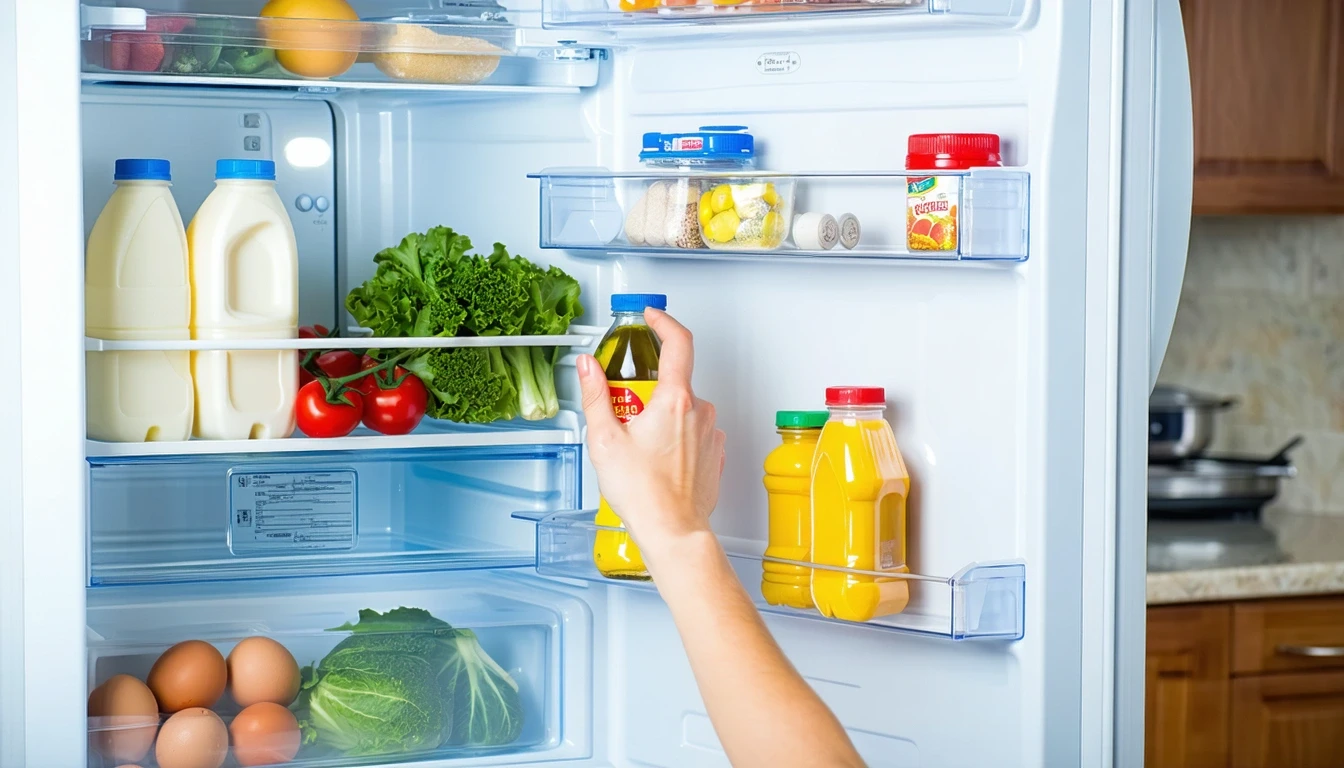
How Grocery Costs Feel in Cherry Hill
Can you stay under $100 on a typical grocery run in Cherry Hill? For a single person buying staples for the week, probably. For a family of four stocking up for the same period, it’s a stretch. That’s the reality of grocery shopping here: prices sit slightly above the national baseline, reflecting the area’s regional price parity index of 104, but the pressure you feel depends heavily on household size and which stores you choose. Cherry Hill isn’t an expensive outlier, but it’s not a bargain zone either—it’s a place where grocery costs land in the “you’ll notice it” range, especially if you’re feeding multiple people or gravitating toward convenience.
What makes grocery costs feel manageable or tight in Cherry Hill isn’t just the price tags—it’s the interaction between those prices and the median household income of $107,056 per year. For families earning at or above that level, grocery spending rarely dominates the budget. A $150 weekly grocery bill might feel routine, even unremarkable. But for households earning below the median—particularly single earners, young professionals, or families on one income—that same $150 represents a much larger share of take-home pay. The result is a bifurcated grocery experience: some households shop without much price sensitivity, while others track every dollar and plan around sales.
Household size amplifies everything. A couple buying chicken, produce, and pantry staples might spend $80–$100 without much effort. A family of four buying the same categories, but in larger quantities and with more variety, can easily double that—or more. Singles notice grocery costs in a different way: per-trip spending is lower, but per-person costs are often higher because smaller package sizes and less bulk buying power mean paying more per unit. In Cherry Hill, grocery pressure isn’t uniform—it’s a function of who you’re feeding, where you shop, and how much margin your income provides.
Grocery Price Signals (Illustrative)
These prices illustrate how staple items tend to compare locally—not a full shopping list. They’re derived from national baselines adjusted for Cherry Hill’s regional price parity and reflect typical pricing patterns, not store-specific or week-specific snapshots. Use them as anchors for understanding relative cost positioning, not as checkout-accurate figures.
| Item | Illustrative Price |
|---|---|
| Bread (per pound) | $1.91/lb |
| Cheese (per pound) | $4.92/lb |
| Chicken (per pound) | $2.10/lb |
| Eggs (per dozen) | $2.82/dozen |
| Ground beef (per pound) | $6.95/lb |
| Milk (per half-gallon) | $4.21/half-gallon |
| Rice (per pound) | $1.12/lb |
Derived estimate based on national baseline adjusted by regional price parity; not an observed local price.
Ground beef at nearly $7 per pound and cheese approaching $5 per pound represent the higher end of the staple spectrum—items where price-sensitive shoppers notice the difference between store tiers most acutely. Chicken at $2.10 per pound and rice at $1.12 per pound sit closer to national norms, offering more consistency across retailers. Eggs and milk fall somewhere in between: everyday essentials where even modest price differences add up over time, especially for families going through multiple gallons of milk or several dozen eggs each week.
These aren’t the prices you’ll see on every shelf in every store—they’re indicators of the cost environment. In practice, discount grocers undercut these figures, sometimes significantly. Premium stores exceed them, often by wide margins. Mid-tier chains cluster around these levels, with variation driven by sales, promotions, and private-label availability. The takeaway isn’t “this is what you’ll pay”—it’s “this is the baseline pressure, and your store choice determines whether you’re above it, below it, or right in the middle.”
Store Choice & Price Sensitivity
Grocery price pressure in Cherry Hill varies more by store tier than by neighborhood. The area’s high density of food and grocery establishments—well above typical thresholds—means residents have genuine choice within short distances. You’re not locked into one store because it’s the only option nearby. Instead, the decision comes down to tradeoffs: time, quality, selection, and price. Discount grocers deliver the lowest per-item costs, often 15–25% below mid-tier chains on staples like milk, eggs, bread, and canned goods. They’re where price-sensitive households do the bulk of their shopping, especially families stretching a tight budget or singles tracking every purchase.
Mid-tier chains occupy the middle ground: better selection and store experience than discount options, but without the premium pricing of upscale grocers. They’re where most Cherry Hill households land when balancing convenience, variety, and cost. Private-label products at mid-tier stores often match or beat discount pricing on quality staples, while name-brand items sit closer to the illustrative baseline. For families earning near or above the median income, mid-tier stores offer enough cost control without requiring the extra planning or limited selection that discount shopping sometimes demands.
Premium grocers cater to households prioritizing organic options, specialty items, prepared foods, and curated selection. Prices run 20–40% above mid-tier on many staples, with even wider gaps on specialty categories. For high-income families, the premium tier isn’t a budget strain—it’s a convenience and quality choice. For below-median earners, it’s largely off the table for routine shopping, reserved for occasional trips or specific items. The key insight: Cherry Hill’s store accessibility means you’re choosing your price tier based on budget and priorities, not because geography forced your hand. That’s a meaningful form of cost control, but only if you’re willing to shop accordingly.
What Drives Grocery Pressure Here
Income is the first filter. With a median household income of $107,056, many Cherry Hill families have enough margin to absorb grocery costs without severe tradeoffs. A $600–$800 monthly grocery bill for a family of four might feel noticeable, but it’s not destabilizing. For households earning $60,000 or $70,000—still solid middle-class incomes in many contexts—that same grocery spend represents a much larger share of take-home pay, forcing more intentional choices about store tier, bulk buying, and meal planning. The higher the income, the less grocery costs constrain behavior. The lower the income, the more every price difference matters.
Household size compounds everything. A single person might spend $250–$350 per month on groceries without much effort, even shopping mid-tier stores. A couple pushes that to $450–$600. A family of four easily reaches $700–$900, depending on dietary preferences, waste levels, and how much eating out offsets grocery spending. Larger families—five or six people—can approach or exceed $1,000 monthly, particularly if they’re buying fresh produce, quality proteins, and minimizing processed foods. The math isn’t linear: adding people to a household doesn’t just add cost, it amplifies sensitivity to per-unit pricing, sale timing, and store choice.
Cherry Hill’s broad accessibility to grocery stores creates a cost structure where the primary variable isn’t “can I reach a cheaper store?” but “am I willing to shop there regularly?” The walkable pockets and mixed-use areas mean many residents can reach multiple store tiers without long drives. That’s an advantage, but it requires activation: households that default to the nearest store, regardless of tier, pay more than those who route their errands around price. The infrastructure supports cost control, but it doesn’t enforce it. Seasonal variability plays a quieter role—produce costs shift with growing seasons, holiday demand spikes prices on baking staples and proteins, and winter months see less local availability—but these are secondary pressures compared to the structural factors of income, household size, and store tier selection.
Practical Ways People Manage Grocery Costs
Store rotation is the most common lever. Households split their shopping between discount grocers for pantry staples and bulk items, and mid-tier or premium stores for fresh produce, proteins, or specialty ingredients. This isn’t coupon-clipping or extreme budgeting—it’s just routing: buying rice, canned goods, frozen vegetables, and dairy at the discount tier, then filling in fresh items and preferred brands elsewhere. The time cost is real but manageable, especially given Cherry Hill’s store density. Families doing this consistently can reduce grocery spending by 10–20% compared to single-store shopping at mid-tier or premium retailers.
Bulk buying works when you have the upfront cash and storage space. Warehouse clubs offer lower per-unit costs on non-perishables, proteins, and household goods, but they require annual membership fees and the ability to buy in larger quantities. For families of four or more, the math often works: the per-pound savings on chicken, ground beef, and cheese offset the membership cost within a few months. For singles or couples, bulk buying is harder to justify—you’re either freezing portions, risking waste, or just not consuming enough volume to make the upfront investment pay off. It’s a strategy that scales with household size.
Meal planning reduces waste and impulse purchases. Households that plan weekly menus and shop from lists spend less than those who browse aisles and buy opportunistically. The savings come less from finding cheaper items and more from eliminating the $30–$50 in unplanned purchases that accumulate each trip: snacks, beverages, convenience items, and ingredients that sounded good but never get used. Planning also enables better use of sales: if chicken is discounted and you know you’ll use it in three meals that week, you buy extra. Without a plan, the sale doesn’t matter because you’re not sure what to do with it.
Private-label products deliver quality-neutral savings on many staples. Store brands for rice, pasta, canned tomatoes, frozen vegetables, dairy, and baking ingredients often match name-brand quality at 15–30% lower prices. The gap is widest at mid-tier and premium stores, where private labels are positioned as value alternatives to national brands. At discount grocers, the price difference shrinks because name brands are already cheaper. The strategy isn’t “always buy store brand”—it’s “default to store brand unless you have a specific reason not to.” Over time, that shift reduces grocery spending without requiring significant behavior change.
Groceries vs Eating Out (Directional)
The tradeoff between cooking at home and eating out isn’t just about price per meal—it’s about time, effort, and how much margin your budget provides. Cooking at home in Cherry Hill consistently costs less per person than restaurant meals, but the gap varies by household type and dining choices. A home-cooked dinner for four might run $15–$25 in ingredients; the same family eating out at a casual restaurant could spend $50–$80 before tip. For families doing this calculation multiple times per week, the savings from cooking add up quickly.
For singles and couples, the math shifts. Cooking for one or two often means smaller portions, more waste, or repetitive meals. A $12 lunch out might not feel much more expensive than buying ingredients for a homemade version, especially when you factor in time and effort. The convenience premium shrinks when household size is small. That said, frequent restaurant meals—lunch and dinner out most days—still cost significantly more than grocery-based eating, even for singles. The question becomes whether the time savings and variety are worth the price difference, and that depends heavily on income and work schedule.
Cherry Hill’s mix of dining options—from fast-casual chains to independent restaurants—means eating out can range from budget-friendly to expensive. Households that treat dining out as an occasional convenience or social activity, rather than a default, keep restaurant spending in check. Those who eat out frequently because they’re too busy or tired to cook see restaurant costs rival or exceed their grocery bills. The cost structure here doesn’t force one choice or the other—it just rewards intentionality. Cooking at home offers the lowest per-meal cost, but only if you’re actually doing it consistently and minimizing waste.
FAQs About Grocery Costs in Cherry Hill (2026)
Is it cheaper to shop in bulk in Cherry Hill? For families of four or more, bulk buying at warehouse clubs typically reduces per-unit costs on proteins, non-perishables, and household goods enough to offset the membership fee within a few months. For singles or couples, the savings are harder to capture unless you have significant freezer space and consume high volumes of shelf-stable items.
Which stores in Cherry Hill are best for low prices? Discount-tier grocers consistently deliver the lowest prices on staples like milk, eggs, bread, canned goods, and frozen vegetables—often 15–25% below mid-tier chains. Mid-tier stores offer better selection and private-label options that can match discount pricing on many items, while premium grocers cater to households prioritizing organic, specialty, or prepared foods at higher price points.
How much more do organic items cost in Cherry Hill? Organic produce, dairy, and proteins typically run 20–50% more than conventional equivalents, with the widest gaps on items like berries, leafy greens, and grass-fed beef. The premium is most noticeable at mid-tier and premium stores; discount grocers carry limited organic selection, and when they do, the price gap narrows slightly.
How do grocery costs for two adults in Cherry Hill tend to compare to nearby cities? Cherry Hill’s regional price parity of 104 places it slightly above the national baseline, similar to other Philadelphia-area suburbs. Grocery costs here generally track close to towns like Voorhees or Marlton—modest premiums over more distant or rural areas, but less pressure than closer-in urban neighborhoods where store density and real estate costs push prices higher.
How do households in Cherry Hill think about grocery spending when cooking at home? Most families treat grocery shopping as a controllable expense that responds to intentional choices about store tier, bulk buying, and meal planning. High-income households often prioritize convenience and quality over price, while below-median earners focus on discount stores, sales, and private-label products to keep costs manageable without sacrificing nutrition.
Does Cherry Hill’s store accessibility actually reduce grocery costs? Accessibility doesn’t automatically lower costs—it creates the option to lower costs by shopping across multiple store tiers. Households that actively route errands to discount grocers for staples and mid-tier stores for fresh items see meaningful savings compared to single-store shoppers. Those who default to the nearest store, regardless of tier, don’t benefit from the density.
Are there seasonal patterns in grocery costs here? Produce prices fluctuate with growing seasons, holiday demand drives up costs on baking staples and proteins, and winter months see less local availability and higher prices on fresh items. These shifts are noticeable but secondary to the larger structural factors of income, household size, and store choice that define grocery pressure year-round.
How Groceries Fit Into the Cost of Living in Cherry Hill
Grocery costs in Cherry Hill sit in the middle of the cost-of-living structure—noticeable, but rarely the primary budget pressure. Housing dominates for most families, whether through mortgage payments on a median home value of $281,700 or rent averaging $1,777 per month. Utilities add seasonal variability, particularly with electricity rates at 22.73¢/kWh driving cooling costs in summer. Transportation costs layer on top, shaped by the area’s car-oriented infrastructure and a typical commute of 25 minutes. Against that backdrop, groceries represent a controllable expense—one where intentional choices about store tier, planning, and bulk buying can reduce spending by 10–20% without extreme measures.
For households earning at or above Cherry Hill’s median income of $107,056, grocery costs rarely force tradeoffs with other budget categories. A $700–$900 monthly grocery bill for a family of four is manageable within a broader budget that accommodates housing, transportation, and discretionary spending. For below-median earners, grocery costs interact more directly with other pressures: a tight grocery budget might mean fewer restaurant meals, more careful planning around sales, or splitting shopping between discount and mid-tier stores to stretch each dollar further. The experience of grocery shopping here depends heavily on where your income falls relative to the median and how much margin you have after housing and transportation are covered.
Cherry Hill’s broad accessibility to food and grocery establishments—a function of high establishment density and walkable pockets with mixed land use—means residents can choose their grocery experience based on budget rather than proximity. That’s a structural advantage, but it requires activation: households that treat store choice as a cost lever see real savings, while those who shop by habit or convenience pay more. The infrastructure supports cost control, but it doesn’t enforce it. Understanding where groceries fit in your overall budget—and how your household size, income, and shopping habits interact with Cherry Hill’s store landscape—helps you make informed decisions about where to shop, what to prioritize, and when to adjust.
This article focuses on grocery price pressure and food costs in isolation. For a complete picture of how groceries combine with housing, utilities, transportation, and other expenses to shape your monthly budget, see A Month of Expenses in Cherry Hill: What It Feels Like. That breakdown shows how all the pieces fit together and what total cost of living feels like for different household types.
How this article was built: In addition to public economic data, this article incorporates location-based experiential signals derived from anonymized geographic patterns—such as access density, walkability, and land-use mix—to reflect how day-to-day living actually feels in Cherry Hill, NJ.