
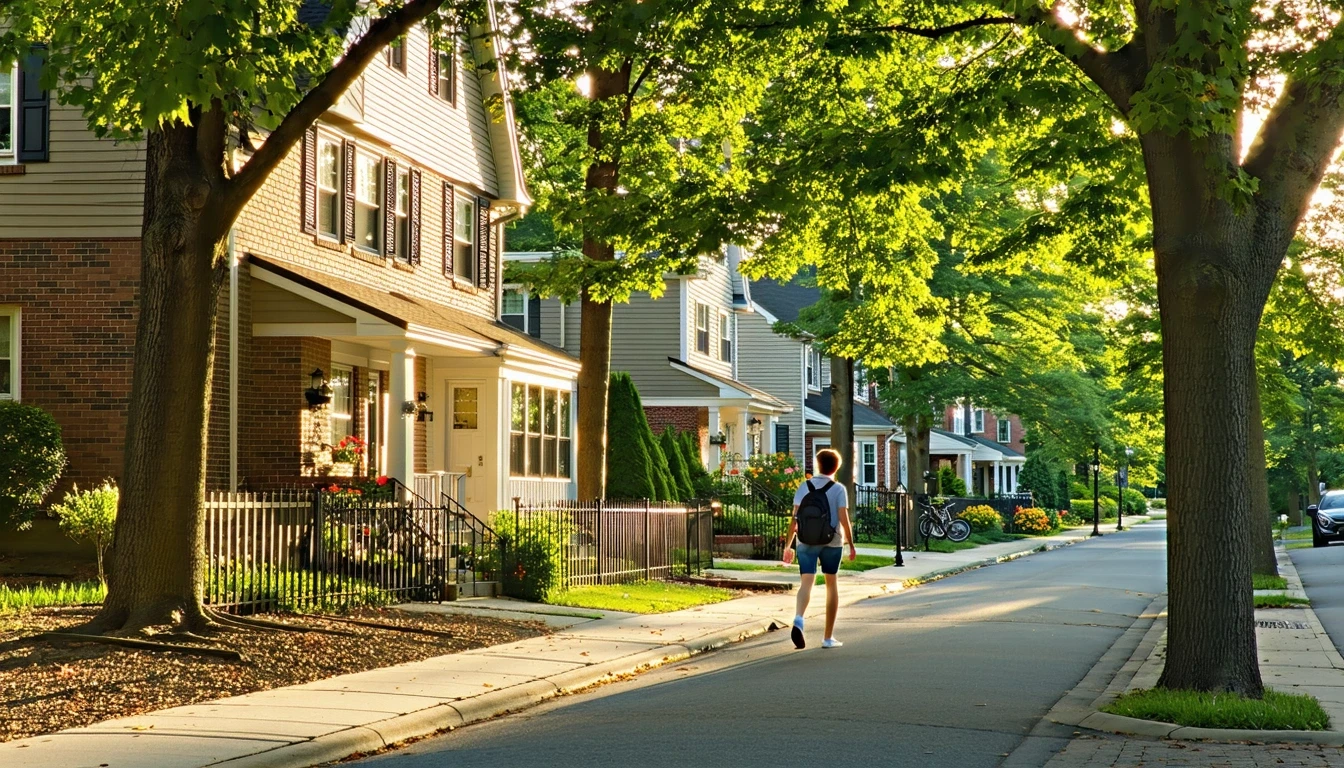
Why Students Choose College Park
What makes College Park a standout choice for college students navigating today’s housing market and campus life tradeoffs? The answer lies in a rare combination: direct rail access to Washington, DC’s job and internship market, walkable neighborhoods that don’t require a car, and a food and grocery landscape dense enough to support spontaneous errands on foot or by bike. College Park earns a student-friendliness score of 82 out of 100, driven primarily by its transit connectivity, integrated green space, and the kind of mixed-use development that puts coffee shops, study spots, and late-night food within a short walk of where students actually live.
Unlike college towns where car ownership becomes a de facto requirement, College Park’s infrastructure actively supports car-free living. The presence of rail service means students can reach DC for internships, part-time work, or weekend plans without the expense and hassle of maintaining a vehicle. Pedestrian-to-road ratios here exceed typical suburban thresholds, creating pockets where walking feels natural rather than forced. Bike infrastructure is notably present throughout parts of the city, and the density of food establishments and grocery options means daily errands don’t require advance planning or long treks. For students weighing cost, convenience, and access to opportunity, College Park delivers on all three.
The city’s building character skews more vertical than the typical college town sprawl, suggesting a supply of purpose-built student housing complexes alongside traditional apartment stock. Parks and water features are woven into the urban fabric at high density, offering study spaces, running routes, and places to decompress between classes. This isn’t a place where students feel isolated on campus or stranded in car-dependent subdivisions—it’s a place where the city itself becomes part of the college experience, accessible and navigable on student terms.
Housing Options for Students
On-campus housing at the University of Maryland provides the most seamless first-year experience, with residence halls offering meal plans, built-in social networks, and zero commute time. However, availability tightens after freshman year, and many students transition to off-campus rentals by sophomore year. The off-campus market in College Park reflects the city’s mixed-use character: you’ll find purpose-built student complexes with individual leases and amenity packages, traditional apartment buildings near campus, and older single-family homes converted into multi-bedroom rentals.
Median gross rent in College Park sits at $1,838 per month, but that figure represents whole-unit pricing. Students rarely rent alone. In a typical two-bedroom shared scenario, each roommate might pay around $920 per month; in a three-bedroom setup, that drops to roughly $613 per person. Solo living—whether in a studio or one-bedroom—generally runs between $1,400 and $1,900 per month, a premium that reflects the value of privacy and control over your living environment. Lease terms typically follow the academic calendar, with 12-month leases standard and some complexes offering 10-month options tailored to the school year.
Deposit requirements usually equal one month’s rent, and many landlords require a guarantor if the student lacks established credit or income history. Roommate-finding resources include university housing boards, Facebook groups specific to UMD off-campus housing, and platforms like Roomsurf. Proximity to campus matters: units within a 10-minute walk command a premium, but College Park’s walkable pockets and bike infrastructure mean living slightly farther out doesn’t necessarily mean car dependency. The city’s more vertical building character suggests a healthy supply of mid-rise apartments, which tend to offer better soundproofing and more consistent management than converted houses.
Getting Around: Transportation and Campus Access
College Park’s transportation landscape is defined by its rail connection to the broader Washington, DC metro system. Students can board a train and reach internships, museums, restaurants, and job interviews across the region without owning a car. This isn’t just a convenience—it’s a financial and logistical advantage that opens up opportunities unavailable in more isolated college towns. The presence of rail service also means students can maintain social and professional networks beyond campus without the recurring costs of gas, insurance, parking, and maintenance.
On a day-to-day basis, College Park’s pedestrian infrastructure supports walking as a primary mode of transportation in certain areas. The pedestrian-to-road ratio here exceeds typical suburban thresholds, meaning sidewalks, crosswalks, and pedestrian pathways are woven into the street network rather than treated as afterthoughts. Bike infrastructure is notably present, with bike-to-road ratios that make cycling a practical choice for errands, campus commutes, and recreation. Students who invest in a decent bike and a sturdy lock can navigate most of their daily routines without a car or even a bus pass.
Campus shuttle services connect residential areas to academic buildings, libraries, and athletic facilities, though schedules can be limited during evenings and weekends. Ride-sharing costs remain manageable for occasional late-night trips or grocery runs when carrying heavy bags. Parking availability near campus is constrained and often expensive, reinforcing the reality that car ownership here is optional rather than essential. For students accustomed to car-dependent suburbs, College Park offers a chance to experience urban mobility—where walking, biking, and transit become the default rather than the fallback.
Student Cost of Living
Understanding the real cost pressures in College Park requires breaking down not just rent, but the full spectrum of recurring expenses that shape a student’s financial reality. A frugal student sharing a three-bedroom apartment, cooking most meals, biking everywhere, and limiting entertainment spending might operate on a monthly budget of $900 to $1,100. A moderate lifestyle—splitting a two-bedroom, eating out occasionally, using transit and ride-shares, and maintaining a social calendar—typically runs $1,300 to $1,600 per month. A comfortable solo apartment with frequent dining out, regular entertainment, and the flexibility to say yes to spontaneous plans can push monthly costs to $2,200 or more.
Food costs vary widely based on dining habits. Students on a university meal plan pay a fixed semester rate, which simplifies budgeting but limits flexibility. Off-campus students benefit from College Park’s high density of food establishments and grocery stores, which fosters competition and variety. Cooking at home using groceries from local stores keeps food spending in the $200 to $300 per month range. Adding regular restaurant meals, coffee shop study sessions, and late-night takeout can double that figure. Many local businesses offer student discounts, particularly near campus, and knowing which spots honor your student ID can shave meaningful dollars off recurring expenses.
Textbook costs remain a wildcard, ranging from near-zero for students who rely on library reserves and digital access codes to several hundred dollars per semester for those in lab-heavy or specialized majors. Entertainment expenses depend on lifestyle: free campus events, park hangouts, and house gatherings cost nothing, while concert tickets, bar tabs, and weekend trips to DC add up quickly. Part-time job opportunities are plentiful given the 3.3% unemployment rate and proximity to DC’s job market. On-campus positions, retail shifts, food service roles, and internships provide income streams that help offset living costs, though balancing work and coursework requires discipline.
Monthly Student Budget in College Park
Here’s what a typical monthly student budget might look like in College Park:
| Expense Category | Shared Housing (3BR) | Solo Living (1BR) |
|---|---|---|
| Rent | $613 | $1,650 |
| Utilities | $50 | $100 |
| Groceries | $250 | $300 |
| Dining Out | $100 | $200 |
| Transportation | $40 | $60 |
| Textbooks/Supplies | $50 | $50 |
| Entertainment | $80 | $150 |
| Personal Care | $40 | $60 |
| Miscellaneous | $60 | $100 |
| Total | $1,283 | $2,670 |
Estimates based on average student spending patterns and local costs. Individual expenses vary based on lifestyle, major, and personal priorities.
Student-Friendly Amenities and Services
College Park’s high density of food and grocery establishments extends beyond meal options to create a landscape rich in study-friendly coffee shops, cafes with reliable Wi-Fi, and casual spots where students can camp out with laptops for hours. The city’s integrated park density means green space isn’t a luxury—it’s woven into daily life. Parks and water features provide outdoor study spots, running routes, and places to decompress between classes or after exams. These aren’t manicured showcase parks; they’re functional, accessible spaces that students actually use.
Gym facilities on campus serve most students’ fitness needs, but the city’s walkable pockets and notable bike infrastructure mean exercise can be built into daily routines rather than carved out as a separate activity. Recreational sports leagues, intramural teams, and student organizations offer structured social opportunities, while the mixed-use character of the city means informal hangouts—grabbing coffee, browsing shops, meeting friends for a meal—happen spontaneously rather than requiring advance coordination.
Healthcare access in College Park centers on clinics and pharmacies rather than a full hospital. The university’s student health center handles routine care, vaccinations, and minor illnesses, while local clinics provide additional capacity. For more serious medical needs, students typically travel to nearby facilities in the broader metro area. Mental health resources on campus include counseling services, peer support groups, and crisis hotlines, though demand often exceeds availability. Knowing where to access care—and understanding insurance coverage—becomes part of the learning curve of independent living.
Student discounts at local businesses are common, particularly near campus. Showing your student ID at restaurants, coffee shops, movie theaters, and retail stores can yield 10-15% savings. Campus job opportunities range from library desk shifts to research assistant positions to food service roles, with the added benefit of flexible scheduling that accommodates class times. The proximity to DC also opens up internship and part-time work in government, nonprofits, and private sector firms—opportunities that build resumes while offsetting living costs.
Social Scene and Nightlife
The social fabric of student living in College Park is shaped by both campus-driven events and the city’s mixed-use character. Campus social events—concerts, guest speakers, club meetings, athletic games—provide a steady stream of free or low-cost activities. Student organizations span every interest imaginable, from academic clubs to cultural groups to recreational teams. Intramural sports leagues offer competitive outlets without the time commitment of varsity athletics, and the integrated park density means pickup games, frisbee, and outdoor gatherings happen organically.
Local nightlife caters to the college demographic, with bars, music venues, and late-night eateries concentrated near campus. Age-appropriate venues serve the 21-and-over crowd, while all-ages spaces host live music, open mic nights, and themed events. The rail connection to DC expands entertainment options exponentially: students can catch concerts at major venues, explore neighborhoods like Adams Morgan or U Street, or attend cultural festivals without the logistical burden of driving and parking.
Cultural activities in College Park itself include art galleries, theater productions, and film screenings, many hosted by the university and open to the broader community. The city’s walkable pockets and mixed land use mean social life doesn’t require elaborate planning—you can walk to a friend’s apartment, grab food on the way, and stumble into an event or gathering without needing a car or a detailed itinerary. For students who thrive on spontaneity and variety, this infrastructure matters as much as any single venue or event.
The dating scene benefits from the density and diversity of a college town connected to a major metro area. Meeting people happens through classes, clubs, parties, and the informal social networks that form in shared housing, study groups, and part-time jobs. The presence of parks, cafes, and walkable streets provides low-pressure date options that don’t require significant spending. Social networking opportunities extend beyond campus through community events, volunteer work, and the professional connections that come with DC-area internships.
Safety and Practical Considerations
Campus safety measures at the University of Maryland include campus police patrols, emergency call boxes, late-night shuttle services, and a safety escort program. Local crime statistics reflect the typical challenges of a college town: property crime (bike theft, package theft, car break-ins) occurs more frequently than violent crime, and students who take basic precautions—locking doors, securing bikes with quality locks, not leaving valuables visible—significantly reduce their risk. Off-campus neighborhoods vary in safety perception, and talking to current students about which areas feel comfortable at night provides more useful guidance than crime maps alone.
Emergency services in College Park include campus police, local police, and fire/EMS, all accessible via 911. Campus security offers walking escorts after dark, and many student housing complexes provide controlled access and security cameras. Safe transportation options at night include campus shuttles, ride-sharing apps, and walking in groups. The city’s walkable pockets mean many students can avoid isolated stretches or poorly lit areas by sticking to well-traveled routes.
Academic support services on campus include tutoring centers, writing labs, math help rooms, and office hours with professors and teaching assistants. Knowing these resources exist—and actually using them before falling behind—makes the difference between struggling through a difficult course and mastering the material. Career services provide resume reviews, mock interviews, job search support, and connections to internship opportunities, particularly valuable given the proximity to DC’s robust job market.
Internship opportunities in College Park and the surrounding metro area span government agencies, nonprofits, think tanks, lobbying firms, tech companies, and media organizations. The rail connection makes commuting to these positions feasible without a car, and many internships offer academic credit or stipends. Building a professional network during college—through internships, part-time work, and informational interviews—often matters as much as coursework when it comes to post-graduation job prospects.
FAQs About Student Life in College Park
What’s the average cost of student living in College Park?
Students sharing a three-bedroom apartment typically spend $900 to $1,100 per month on a frugal budget, while a moderate lifestyle with shared housing runs $1,300 to $1,600 per month. Solo living in a one-bedroom apartment with a comfortable lifestyle can exceed $2,200 per month. These figures include rent, food, transportation, and personal expenses, but individual costs vary based on dining habits, entertainment choices, and whether you own a car.
How safe is it for students to live off-campus?
Off-campus safety in College Park depends on neighborhood choice and personal precautions. Property crime—bike theft, package theft—occurs more frequently than violent crime. Students who lock doors, secure bikes with quality locks, avoid walking alone late at night in isolated areas, and stay aware of their surroundings generally navigate off-campus living without incident. Talking to current students about which neighborhoods feel safest provides practical, ground-level insight.
Are there good part-time job opportunities?
Yes. The 3.3% unemployment rate reflects a healthy local job market, and College Park’s proximity to Washington, DC expands opportunities significantly. On-campus positions include library work, research assistant roles, and food service jobs with schedules built around class times. Off-campus options range from retail and restaurant shifts to internships in government, nonprofits, and private firms accessible via rail transit. Many students balance 10-20 hours of work per week with a full course load.
What’s the social scene like for college students?
The social scene blends campus-driven events—clubs, intramural sports, concerts, guest speakers—with the city’s mixed-use character that supports spontaneous hangouts. Local bars, music venues, and late-night eateries cater to the college demographic, while the rail connection to DC opens up concerts, cultural festivals, and neighborhood exploration. The density of parks, cafes, and walkable streets means social life doesn’t require elaborate planning or significant spending. Students who seek out opportunities—joining clubs, attending events, saying yes to invitations—build active social networks quickly.
Making the Decision: Is College Park Right for Your College Years?
College Park delivers a rare combination of transit access, walkable infrastructure, and urban amenities that support independent, car-free student living. The rail connection to Washington, DC transforms internship and job opportunities from distant possibilities into practical realities. The city’s high density of food and grocery establishments, integrated parks, and notable bike infrastructure mean daily life unfolds on foot or by bike rather than behind a windshield. For students who value mobility, convenience, and access to a major metro area, College Park earns its 82 out of 100 student-friendliness score.
The tradeoffs are real: monthly spending in College Park runs slightly above the national baseline, and solo living costs can strain student budgets. Healthcare access centers on clinics rather than a full hospital, and off-campus housing requires navigating leases, roommate dynamics, and neighborhood research. But for students willing to share housing, embrace transit and biking, and take advantage of the city’s walkable pockets, College Park offers a college experience that extends beyond campus borders into a functional, navigable urban environment.
If you’re a student or parent evaluating College Park, focus on these questions: Does the student need or want a car, or are they comfortable with transit, biking, and walking? Do they value access to DC’s job market and cultural scene? Are they prepared to share housing to keep costs manageable? Do they thrive in mixed-use, walkable environments, or do they prefer quieter, car-oriented settings? The answers to these questions matter more than generic rankings or reputation. College Park works best for students who see the city itself as part of their education—a place to learn independence, navigate urban systems, and build networks that extend beyond graduation.
How this article was built: In addition to public economic data, this article incorporates location-based experiential signals derived from anonymized geographic patterns—such as access density, walkability, and land-use mix—to reflect how day-to-day living actually feels in College Park, MD.