
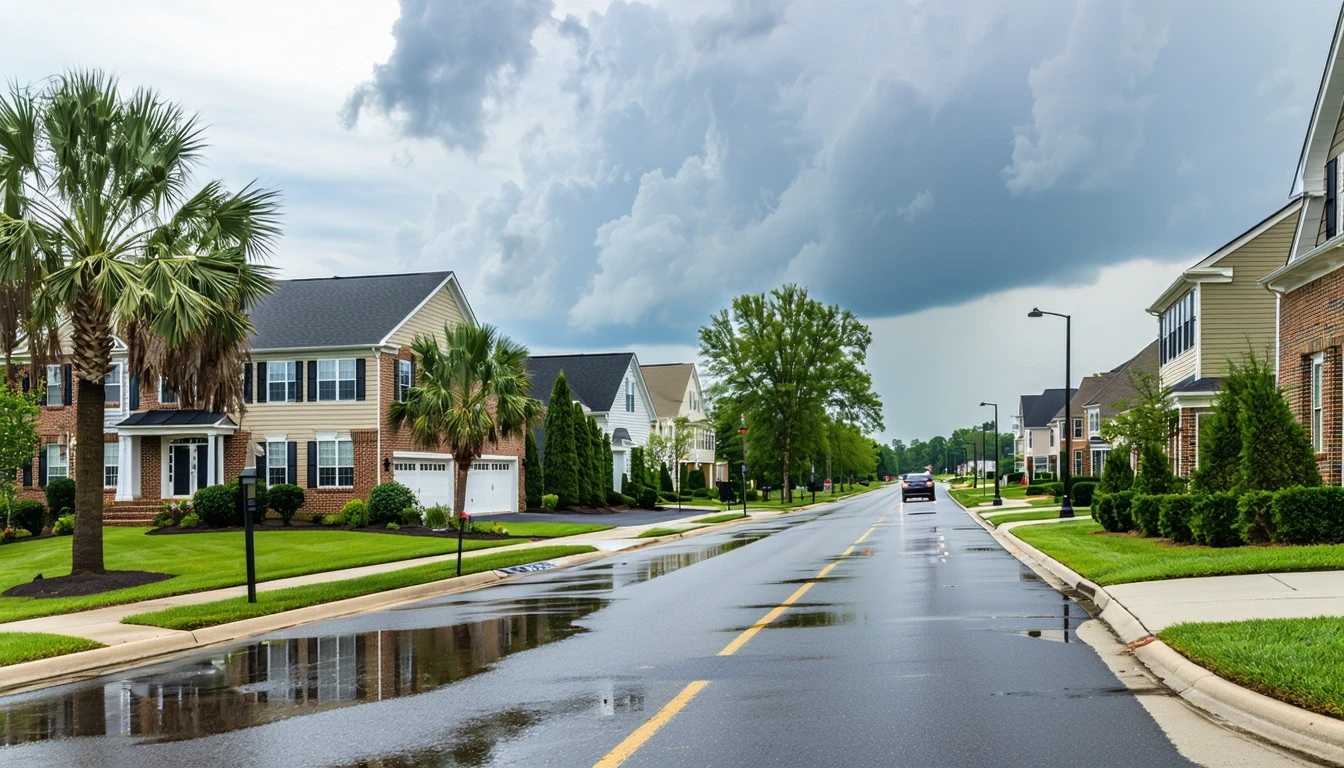
Bowie and College Park sit just miles apart in Maryland’s Washington, D.C. metro corridor, yet they offer strikingly different cost structures and daily rhythms. Bowie appeals to families and professionals seeking suburban space, single-family homes, and a quieter pace—but with longer commutes and car-dependent errands. College Park, home to the University of Maryland, delivers denser housing, walkable access to groceries and transit, and shorter average commutes—but with higher rent pressure per unit and a more urban daily texture. Both cities share the same regional price level and utility rates, so the decision hinges not on whether one is universally cheaper, but on which cost pressures align with your household’s priorities in 2026.
The Ramirez family—parents with two school-age kids—has been debating this exact choice for months. They love the idea of a yard and a single-family home in Bowie, but worry about the 36-minute average commute and the need to drive everywhere. College Park’s 24-minute commute and walkable errands appeal to them, but they’re unsure if the rental market or smaller home footprint will work for a family of four. Their debate mirrors the tradeoff thousands of households face: front-loaded housing costs and car dependency in Bowie, versus ongoing rent pressure and urban logistics in College Park.
This article breaks down where costs show up differently in each city—housing entry and ongoing obligations, transportation time and fuel exposure, grocery accessibility and convenience spending, utility volatility by housing type, and the daily friction costs that don’t appear on a lease but shape your schedule and budget. We’ll explain which households feel each city’s cost structure most acutely, and why the same income can feel stable in one place and stretched in the other—without declaring a universal winner.
Housing Costs: Entry Barriers and Ongoing Obligations
Housing costs in Bowie and College Park differ not in absolute totals, but in where the pressure concentrates and which households feel it most. Bowie’s median home value sits at $419,200, while College Park’s is $404,700—a modest difference in purchase price. But Bowie’s median gross rent is $2,167 per month, compared to College Park’s $1,838. At first glance, this seems contradictory: higher home values but lower rent in Bowie, and the reverse in College Park. The explanation lies in housing stock composition. Bowie’s market is dominated by single-family homes on larger lots, which command higher purchase prices but offer more rental supply in the form of whole-house leases that distribute cost across more bedrooms. College Park’s housing stock skews toward apartments, condos, and smaller multi-family units near the university, where per-unit rent reflects high demand from students, university staff, and young professionals competing for limited inventory.
For prospective homebuyers, Bowie’s higher median home value translates to a steeper down payment and larger mortgage obligation, but the housing form—typically three- or four-bedroom single-family homes—offers more space per dollar and long-term equity in a stable suburban market. College Park’s lower home values might seem more accessible, but the available ownership inventory tends toward condos and townhomes with HOA fees, smaller square footage, and less insulation from the rental-dominated market dynamics. First-time buyers prioritizing space and long-term predictability may find Bowie’s entry barrier worthwhile; those seeking lower purchase prices and proximity to transit may accept College Park’s trade-offs in housing form and density.
Renters face the opposite calculus. Bowie’s $2,167 median rent typically buys access to a full single-family home or a large townhouse, often with a yard, garage, and multiple bedrooms—ideal for families or households pooling income. College Park’s $1,838 median rent reflects a smaller unit: a one- or two-bedroom apartment, often without parking, in a building shared with other tenants. For a single adult or couple without children, College Park’s rent may feel more manageable and better aligned with walkable access to groceries, dining, and transit. For a family of four, Bowie’s higher rent buys the space and layout that makes daily life functional, even if it requires a car for every errand.
Housing cost pressure in Bowie concentrates at entry—higher home values and larger down payments—but offers more space, stability, and rental flexibility once you’re in. In College Park, housing pressure is ongoing and per-unit: lower purchase prices but higher rent per bedroom, with less space and more competition from the university rental market. Families prioritizing square footage and long-term predictability tend to absorb Bowie’s upfront costs; individuals and couples prioritizing walkability and shorter commutes often find College Park’s smaller, denser housing worth the per-unit rent premium.
Utilities and Energy Costs: Same Rates, Different Exposure
Bowie and College Park share identical utility rate structures: electricity costs 21.34¢ per kilowatt-hour, and natural gas runs $17.52 per thousand cubic feet (MCF). Because both cities sit in the same regional utility service area and experience the same Mid-Atlantic climate—hot, humid summers and cold winters with moderate heating demand—the cost per unit of energy is not the variable. What differs is the housing stock that consumes that energy, and how much surface area, insulation quality, and building age amplify or dampen seasonal swings.
Bowie’s housing market is anchored by single-family homes, many built in the 1980s and 1990s, with larger footprints, vaulted ceilings, and standalone structures that expose more exterior wall and roof area to the elements. These homes often include basements, attached garages, and multi-zone HVAC systems that increase baseline energy draw even when occupancy is light. During summer months, cooling a 2,000- to 2,500-square-foot single-family home in Bowie can dominate the household budget, especially if the home has older windows, minimal attic insulation, or an aging air conditioning unit. Winter heating costs are more moderate due to natural gas furnaces, but the larger interior volume still requires more energy input than a comparably sized apartment. Families in Bowie should expect utility bills to spike in July and August, with secondary peaks in January and February, and plan for variability that tracks both weather extremes and home age.
College Park’s housing stock skews toward apartments, mid-rise buildings, and attached townhomes, many of which benefit from shared walls, smaller square footage, and more recent construction standards that include better insulation and energy-efficient windows. An apartment in College Park—especially one in a building with central HVAC or shared heating infrastructure—distributes energy load across multiple units, reducing per-household exposure to peak cooling and heating costs. Renters in College Park may also avoid direct responsibility for certain utilities if landlords bundle water, trash, or gas into the lease, further smoothing monthly volatility. However, older apartments near the university with window AC units and baseboard electric heat can still experience sharp summer spikes, particularly if the building lacks modern weatherization.
Household size and housing type interact with these structural differences in predictable ways. A family of four in a Bowie single-family home will face higher absolute utility costs than a couple in a College Park apartment, but the per-person cost may feel more reasonable given the additional bedrooms, living space, and storage. A single adult in a Bowie townhouse may feel utility costs disproportionately, especially if the unit is older or poorly insulated, because the fixed costs of heating and cooling don’t scale down with occupancy. Conversely, a family in a College Park two-bedroom apartment may find utility costs manageable but feel the squeeze in other areas—like rent or parking—that Bowie households avoid.
Utility cost exposure in Bowie is driven by housing form: larger homes, more exterior surface area, and older construction amplify seasonal swings, especially in summer. In College Park, smaller units, shared walls, and denser building forms reduce per-household energy draw, but older apartments with inefficient systems can still spike in extreme weather. Households prioritizing space and long-term ownership in Bowie should budget for higher and more volatile utility bills; those in College Park’s apartment market gain predictability and lower baseline costs, but sacrifice control over building-level efficiency decisions.
Groceries and Daily Expenses: Accessibility Shapes Spending Patterns
Grocery and everyday spending pressure in Bowie and College Park is shaped less by price-per-item differences—both cities share the same regional price parity index of 104—and more by how accessibility, store density, and household logistics influence shopping frequency, convenience spending, and the friction cost of running errands. The structural difference is stark: Bowie’s food and grocery establishment density falls below low thresholds, signaling a sparse, car-dependent landscape where trips must be planned and consolidated. College Park’s food and grocery density exceeds high thresholds, creating broadly accessible options within walking or biking distance that allow for frequent, smaller trips and more flexibility in daily routines.
In Bowie, grocery shopping typically requires a car, a dedicated time block, and a route that may involve a 10- to 15-minute drive to a supermarket or big-box store. Households in Bowie tend to shop in bulk—weekly or biweekly trips to stock up on staples, household goods, and meal ingredients—because the cost of a return trip (time, gas, and schedule disruption) discourages frequent runs. This pattern favors families with storage space, meal planning discipline, and the ability to absorb upfront grocery spending in a single transaction. It also reduces impulse purchases and convenience spending, because there’s no corner store or café to pop into on the way home. However, it increases vulnerability to waste: if you overbuy perishables or misjudge the week’s needs, there’s no quick, low-friction option to grab a replacement item without another full car trip.
College Park’s grocery landscape operates on a different logic. With high food and grocery density, residents can walk or bike to a supermarket, convenience store, or specialty grocer within 10 minutes of most neighborhoods. This accessibility enables a “shop as you go” rhythm: picking up fresh produce twice a week, grabbing a missing ingredient on the way home from work, or stopping for a prepared meal when time is tight. For single adults and couples, this flexibility reduces waste, allows for spontaneous meal decisions, and eliminates the need for a large pantry or freezer. But it also introduces convenience spending creep—the $8 smoothie, the $12 lunch, the $15 takeout dinner—that accumulates when low-friction access makes small purchases feel effortless. Families in College Park may struggle with this dynamic, especially if they lack the storage or schedule predictability to consolidate trips and avoid repeat visits.
Dining out and prepared food access follow the same pattern. Bowie’s sparse food density means fewer casual dining options within walking distance, which can reduce spontaneous restaurant spending but also limit variety and convenience when cooking isn’t an option. College Park’s high food density includes a wide range of quick-service restaurants, cafés, and ethnic eateries clustered near the university and along transit corridors, making it easy to eat out frequently—but also easy to spend $50 to $75 per week on meals that could have been prepared at home. Households sensitive to convenience spending need to actively manage this exposure in College Park; in Bowie, the built environment does some of that work by making convenience less convenient.
Grocery cost pressure in Bowie is front-loaded and planning-dependent: fewer trips, larger purchases, and reliance on car access and storage space. In College Park, grocery pressure is ongoing and friction-driven: more frequent trips, smaller purchases, and higher exposure to convenience spending that compounds over time. Families with meal planning discipline and storage capacity may find Bowie’s structure advantageous; single adults and couples who value flexibility and walkable access may prefer College Park’s accessibility, provided they monitor convenience creep.
Taxes and Fees: Predictability and Structure
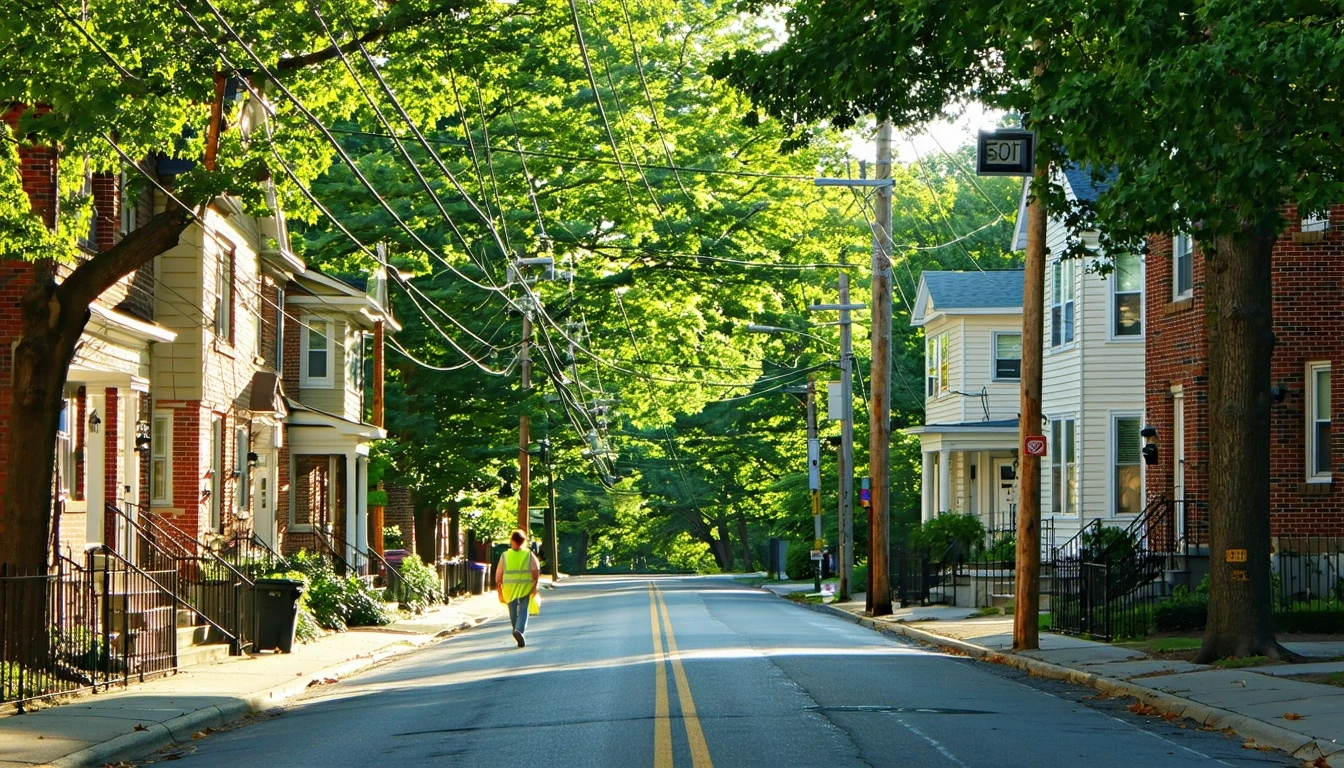
Bowie and College Park share the same state and county tax framework—Maryland income tax rates, Prince George’s County property tax rates, and identical state sales tax—so the differences in tax and fee exposure come not from rates themselves, but from how housing type, tenure, and local service structures distribute those costs across households. Property taxes in both cities are assessed on home values, meaning Bowie’s higher median home value of $419,200 translates to a higher annual property tax bill than College Park’s $404,700 median—but only for homeowners. Renters in both cities are insulated from direct property tax liability, though landlords pass those costs through in the form of rent. Because Bowie’s rental stock skews toward single-family homes with higher assessed values, and College Park’s skews toward apartments and condos with lower per-unit assessments, the indirect property tax burden embedded in rent may actually favor College Park renters despite the higher per-month rent figure.
Homeowners in Bowie face predictable, recurring property tax obligations that scale with home value and remain relatively stable year-over-year, barring reassessments or local levy changes. These taxes fund schools, public safety, and infrastructure, and they’re deductible on federal income tax returns for households that itemize—a benefit more accessible to higher-income homeowners in Bowie, where the median household income of $138,797 makes itemization more common. College Park homeowners, with a median household income of $76,973, may be less likely to itemize, reducing the effective tax benefit of homeownership and making the property tax feel more like a pure cost. However, College Park’s lower home values mean the absolute dollar amount of property tax is smaller, which can ease cash flow pressure for first-time buyers or households with tighter monthly budgets.
Local fees and service charges add another layer of differentiation. Bowie’s suburban, single-family-dominant landscape often includes homeowners association (HOA) fees for townhomes and planned communities, covering services like landscaping, snow removal, trash collection, and shared amenity maintenance. These fees range widely—from $50 to $300+ per month depending on the neighborhood—and represent a recurring, non-negotiable cost that doesn’t build equity. College Park’s denser, apartment-heavy market shifts some of these costs into the lease: landlords may bundle trash, water, and sewer into the rent, reducing the number of separate bills tenants manage but also reducing transparency into what each service actually costs. Renters in College Park gain simplicity and predictability; homeowners in Bowie gain control but must budget for HOA fees, separate utility accounts, and occasional special assessments for community repairs.
Tax and fee pressure in Bowie is higher in absolute terms for homeowners due to higher home values, but more predictable and structured through property tax and HOA systems. In College Park, lower home values reduce property tax exposure, but renters face less transparency as landlords bundle fees into rent, and condo owners may still encounter HOA obligations. Long-term homeowners planning to stay several years in Bowie benefit from stable, deductible property tax structures; renters and first-time buyers in College Park benefit from lower entry costs and simplified billing, even if the per-month rent feels higher.
Transportation and Commute Reality
Transportation costs in Bowie and College Park are shaped less by fuel prices—both cities pay $2.93 per gallon for gas—and more by how commute patterns, car dependency, and transit accessibility structure daily life. The difference in average commute time is significant: Bowie residents average 36 minutes per trip, with 61.6% experiencing long commutes, while College Park residents average 24 minutes, with only 37.0% facing long commutes. Both cities have rail transit access, but the role transit plays in reducing car dependency diverges sharply based on where jobs, errands, and daily destinations sit relative to home.
Bowie’s 36-minute average commute reflects a suburb built for car travel, where most residents drive to work, often toward Washington, D.C., Baltimore, or other regional employment centers. The 61.6% long-commute figure signals that more than half of Bowie workers spend significant time on the road each day, accumulating fuel costs, vehicle wear, and time costs that don’t show up on a monthly budget spreadsheet but shape household logistics and schedule flexibility. Even with rail access via MARC or Amtrak stations, Bowie’s sparse daily errands accessibility—flagged by low food and grocery density—means most households still need a car for shopping, school drop-offs, and weekend activities. The 18.7% work-from-home rate offers some relief, but the majority of Bowie households are car-dependent for both commuting and daily errands, making transportation a primary, ongoing cost driver.
College Park’s 24-minute average commute and 37.0% long-commute rate suggest a more compact daily radius, where jobs, campus employment, and regional transit connections reduce the need for long drives. The city’s rail presence—likely the College Park Metro station on the Green Line—provides direct access to Washington, D.C., and surrounding job centers without a car, though only 8.1% of residents work from home, indicating most still commute daily. What differentiates College Park is not the elimination of commuting, but the reduction in car dependency for non-commute trips. With broadly accessible food and grocery density, notable bike infrastructure, and walkable pockets throughout the city, College Park residents can run errands, grab meals, and manage daily tasks without driving, reducing fuel costs, parking fees, and vehicle wear even if they still drive to work.
For households sensitive to time costs, Bowie’s longer commutes translate to 12 additional minutes per trip compared to College Park—roughly 40 to 50 extra minutes per day for a round-trip commute, or four to five hours per week. Over a year, that’s 200+ hours spent in a car, which compounds stress, limits schedule flexibility, and reduces time available for childcare, errands, or personal priorities. College Park’s shorter commutes and walkable errands reduce this time tax, even if rent or parking costs feel higher on paper. For households where both adults work full-time, or where school-age children require daily pickups and drop-offs, the time cost of Bowie’s commute structure can outweigh the financial savings of lower rent or more space.
Transportation pressure in Bowie is driven by long commutes, car dependency for errands, and high exposure to fuel and vehicle costs despite rail access. In College Park, shorter commutes and walkable errands reduce car dependency for daily tasks, even if most residents still drive to work. Households prioritizing space and lower rent may accept Bowie’s transportation trade-offs; those prioritizing time, schedule flexibility, and reduced car reliance will find College Park’s structure more aligned with their needs, even at a higher per-month housing cost.
Cost Structure Comparison
Housing dominates the cost experience in both Bowie and College Park, but the pressure shows up differently depending on tenure and household composition. Bowie’s higher home values create a steeper entry barrier for buyers, but the resulting housing form—larger single-family homes with more bedrooms and yard space—distributes cost across more livable square footage and offers long-term equity stability. College Park’s lower home values ease the purchase entry point, but the rental market imposes higher per-unit costs, especially for families competing for limited two- and three-bedroom apartments near the university. Renters prioritizing space will feel College Park’s rent pressure more acutely; buyers prioritizing long-term predictability and suburban form will absorb Bowie’s upfront costs as part of a stable ownership strategy.
Utilities introduce more volatility in Bowie due to housing stock composition. Larger single-family homes with more exterior surface area and older construction amplify seasonal swings, particularly in summer when cooling costs spike. College Park’s denser, apartment-heavy stock reduces per-household energy exposure through shared walls and smaller square footage, but older buildings with inefficient systems can still experience sharp seasonal bills. Families in Bowie should budget for higher and more variable utility costs; households in College Park’s newer apartment buildings gain predictability and lower baseline energy draw, though they sacrifice control over building-level efficiency decisions.
Transportation patterns matter more in Bowie, where long commutes and car-dependent errands create ongoing fuel, maintenance, and time costs that compound over months and years. College Park’s shorter average commute and broadly accessible errands reduce car dependency for daily tasks, even if most residents still drive to work. For dual-income households or families managing school schedules, Bowie’s 36-minute average commute and 61.6% long-commute rate impose a time tax that limits flexibility and increases stress. College Park’s 24-minute average and walkable daily errands reduce this friction, even if parking or rent feels higher on paper.
Grocery and daily spending pressure in Bowie is front-loaded and planning-dependent: fewer trips, larger purchases, and reliance on car access and storage. This structure reduces convenience spending but increases vulnerability to waste and requires disciplined meal planning. College Park’s broadly accessible food and grocery density enables frequent, smaller trips and more flexibility, but also introduces convenience spending creep—the $8 coffee, the $12 lunch, the $15 takeout—that accumulates when low-friction access makes small purchases feel effortless. Families with meal planning discipline may find Bowie’s structure advantageous; single adults and couples who value walkability may prefer College Park’s accessibility, provided they monitor convenience creep.
The decision between Bowie and College Park is not about which city is cheaper overall, but about which cost pressures align with your household’s priorities, income stability, and daily logistics. Households sensitive to housing entry costs and long-term equity may prefer Bowie’s suburban form despite higher home values. Households sensitive to commute time, car dependency, and daily errands friction may prefer College Park’s walkable density despite higher rent. Families prioritizing space and storage may absorb Bowie’s utility volatility and transportation costs; single adults and couples prioritizing schedule flexibility and reduced car reliance may find College Park’s structure worth the per-unit rent premium.
How the Same Income Feels in Bowie vs College Park
Single Adult
For a single adult, housing becomes the first non-negotiable cost, and the choice between Bowie and College Park hinges on whether you prioritize space or access. In Bowie, renting a one-bedroom apartment or townhouse offers more square footage and often includes parking, but requires a car for groceries, dining, and errands, locking in ongoing fuel and maintenance costs. Flexibility shrinks because every trip must be planned, and spontaneous socializing or dining out requires a drive. In College Park, rent per unit feels higher, but walkable access to groceries, restaurants, and transit reduces car dependency, freeing up time and eliminating the friction cost of driving everywhere. The role of commute friction is decisive: if your job is near a Metro line, College Park’s 24-minute average commute and rail access make car ownership optional; if your job requires driving, Bowie’s longer commute and sparse errands access compound the time cost of car dependency.
Dual-Income Couple
For a couple, the decision shifts to how housing form and commute logistics interact with two work schedules. In Bowie, lower rent for a two-bedroom townhouse or single-family home offers more space and storage, but both partners likely need cars if they work in different locations, doubling transportation exposure and reducing schedule flexibility. Flexibility exists in housing—more room for a home office, guest space, or hobbies—but disappears in daily logistics, where every errand requires a car and long commutes eat into evening and weekend time. In College Park, higher rent buys access to walkable errands and shorter commutes, which matters more when both partners are managing full-time work and household tasks. The role of housing form becomes secondary to time cost: if one partner works from home or near a Metro line, College Park’s structure reduces the friction of coordinating two schedules; if both partners drive long distances, Bowie’s lower rent and more space may feel like a better trade-off despite the transportation burden.
Family with Kids
For families, housing space and school logistics become non-negotiable first, followed by the time cost of managing errands, childcare, and commutes. In Bowie, larger single-family homes with yards and multiple bedrooms offer the space families need, but the 36-minute average commute and car-dependent errands create a daily logistics puzzle: school drop-offs, grocery runs, and after-school activities all require driving, and long commutes reduce the time available for family dinners, homework help, or evening routines. Flexibility exists in housing form—more bedrooms, storage, and outdoor space—but disappears in schedule predictability, where every task requires a car and traffic delays compound stress. In College Park, smaller housing footprints and higher rent pressure force trade-offs in space, but shorter commutes and walkable errands reduce the daily friction of managing a family schedule. The role of commute friction and car dependence is decisive: families where both parents work full-time, or where school-age children require daily pickups, may find College Park’s 24-minute commute and accessible errands worth the sacrifice in square footage; families prioritizing space, storage, and long-term ownership may absorb Bowie’s transportation and time costs as part of a suburban lifestyle trade-off.
Decision Matrix: Which City Fits Which Household?
| Decision factor | If you’re sensitive to this… | Bowie tends to fit when… | College Park tends to fit when… |
|---|---|---|---|
| Housing entry + space needs | You need more bedrooms, storage, and yard space, or you’re building long-term equity | You can absorb higher home values and prioritize single-family ownership with suburban form | You prioritize lower purchase prices or accept higher rent for walkable access and smaller footprints |
| Transportation dependence + commute friction | You value shorter commutes, reduced car dependency, and time flexibility | You accept 36-minute commutes and car-dependent errands in exchange for more space and lower rent | You prioritize 24-minute commutes, walkable errands, and reduced time spent in a car |
| Utility variability + home size exposure | You want predictable utility bills and lower seasonal swings | You can budget for higher and more volatile utility costs driven by larger single-family homes | You prefer smaller units with shared walls and lower baseline energy draw, even with less control |
| Grocery strategy + convenience spending creep | You want to avoid convenience spending and prefer planned, bulk shopping trips | You have storage space, meal planning discipline, and accept car-dependent grocery runs | You value walkable grocery access and frequent, smaller trips, but must monitor convenience creep |
| Fees + friction costs (HOA, services, upkeep) | You want transparency and control over recurring fees and service costs | You accept HOA fees and separate utility accounts in exchange for suburban ownership and control | You prefer bundled fees in rent and simplified billing, even with less transparency |
| Time budget (schedule flexibility, errands, logistics |