
It’s Sunday evening in Bowie, and you’re mapping out the week’s meals—chicken stir-fry Monday, tacos Wednesday, maybe a pasta night Thursday. You’re not just thinking about recipes; you’re thinking about which store to hit, how far you’re willing to drive for better prices, and whether it makes sense to consolidate two weeks of staples into one trip. That’s the grocery planning rhythm here: intentional, vehicle-dependent, and shaped as much by where food retailers are as by what they charge.
Grocery costs in Bowie sit above the national baseline—the region’s price parity index of 104 means everyday staples cost roughly 4% more than the U.S. average before you even choose a store. But the bigger story isn’t the price level; it’s how sparse food retail accessibility changes the way households shop. Food establishment density falls below typical thresholds, and while grocery density registers in the medium band, that doesn’t translate to walkable convenience or competitive clusters. Most households drive to shop, plan larger trips, and make deliberate choices about which store tier—discount, mid-market, or premium—fits their budget and time constraints.
For families earning Bowie’s median household income of $138,797, grocery costs rarely create financial strain. The pressure point isn’t affordability in the strict sense—it’s the logistics of access and the time cost of price optimization. Households with tighter budgets feel that tradeoff more acutely: driving farther to reach discount-tier stores saves money but adds friction. Singles and smaller households face their own challenge—buying for one or two people in a car-dependent, plan-ahead environment makes per-person efficiency harder to achieve.
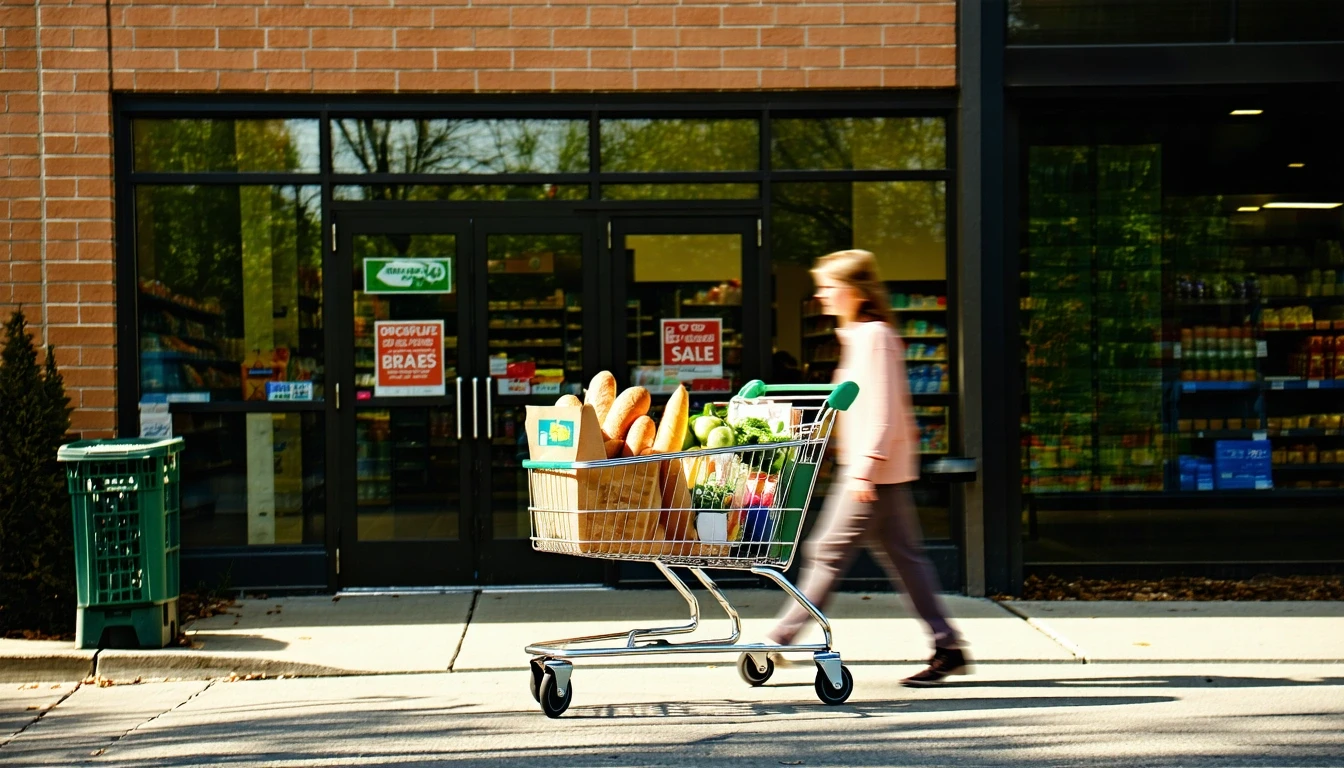
Grocery Price Signals in Bowie (Illustrative)
These prices illustrate how staple items tend to compare locally—not a complete shopping list or a snapshot of any single store’s shelf. They’re derived estimates based on the regional price environment, useful for understanding relative cost positioning but not checkout-level accuracy.
| Item | Price |
|---|---|
| Bread | $1.92/lb |
| Cheese | $5.04/lb |
| Chicken | $2.12/lb |
| Eggs | $2.68/dozen |
| Ground beef | $7.02/lb |
| Milk | $4.26/half-gallon |
| Rice | $1.10/lb |
Ground beef at $7.02/lb and cheese at $5.04/lb reflect the elevated regional baseline—not extreme, but enough that protein-heavy meal plans add up faster than they would in lower-cost metros. Eggs at $2.68/dozen and chicken at $2.12/lb remain relatively accessible, which matters for households stretching grocery dollars across the week. Rice at $1.10/lb and bread at $1.92/lb anchor budget-conscious meal planning, especially for larger families cooking in volume.
But these numbers don’t tell you what you’ll actually pay—they tell you where the baseline sits before store choice, sales cycles, and shopping behavior enter the equation. In a region where food retailers aren’t densely clustered, the store you choose and how often you’re willing to travel become as important as the price tags themselves.
Store Choice and Price Sensitivity in Bowie
Grocery price pressure in Bowie varies more by store tier than by any single “average” price level. Discount-tier stores—no-frills chains focused on private-label staples and high-turnover inventory—offer the lowest per-item costs, but they’re not always the closest option. Households willing to drive a bit farther or plan around less frequent trips can shave meaningful amounts off their weekly spending, especially on pantry staples, dairy, and frozen goods. For price-sensitive families, that tradeoff—time and fuel vs. savings—becomes a recurring decision point.
Mid-market grocery stores—the familiar regional and national chains—sit in the middle. They’re more widely distributed, easier to access, and offer a broader product mix, including name brands, prepared foods, and specialty items. Prices run higher than discount tiers but lower than premium formats, and for many Bowie households, the convenience and selection justify the modest markup. This is where most routine shopping happens: predictable, accessible, and aligned with the planning rhythm of a car-dependent suburb.
Premium grocery stores—organic-focused chains, specialty markets, and upscale formats—charge the highest prices but cater to households prioritizing quality, sourcing, or specific dietary preferences. In a high-income area like Bowie, premium stores draw steady traffic, but they’re a choice, not a necessity. For families earning well above the median, the premium is negligible. For budget-conscious households, it’s a category to avoid or visit selectively.
The sparse food retail environment amplifies the importance of these tiers. When grocery stores aren’t clustered competitively within a few blocks, households can’t easily price-shop on the fly. Instead, they pick a primary store and stick with it, occasionally making longer trips to discount or premium formats depending on what they’re buying and how much time they have. That stickiness—choosing a store and building a routine around it—means the tier you default to has a larger influence on your grocery costs than it would in a denser, more competitive retail landscape.
What Drives Grocery Pressure in Bowie
Income is the most powerful buffer. At $138,797 median household income, most Bowie families absorb grocery costs without restructuring their budgets. Premium store pricing, occasional organic purchases, and convenience-driven shopping—grabbing a rotisserie chicken on the way home, buying pre-cut vegetables—don’t create financial stress. The pressure isn’t about whether groceries are affordable; it’s about whether the time cost of optimization is worth the savings.
Household size changes the equation. A family of four buying for breakfast, packed lunches, dinners, and snacks moves through staples quickly—milk, eggs, bread, chicken, pasta, rice. Even moderate per-item markups compound across a week’s worth of meals. Larger families benefit more from discount-tier shopping and bulk buying, but that requires vehicle capacity, storage space, and the ability to plan menus around what’s on sale. Singles and couples, by contrast, face per-person inefficiency: smaller package sizes, less leverage on bulk discounts, and higher waste risk if they overbuy perishables.
Sparse accessibility creates a structural friction that affects all households but hits price-sensitive shoppers hardest. When food retailers aren’t walkable or clustered nearby, every grocery trip is a deliberate event. You can’t casually stop for a few items on the way home from work unless your commute route happens to pass a store. That makes it harder to chase sales, compare prices across stores, or split shopping between a discount chain for staples and a specialty store for fresh produce. Instead, most households pick one primary store and make less frequent, larger trips—a pattern that favors convenience and routine over price optimization.
Seasonal variability plays a quieter role. Produce prices shift with growing seasons, and holiday weeks bring temporary spikes in baking staples, proteins, and entertaining supplies. But these fluctuations are regional and national, not unique to Bowie. The local factor is how sparse retail access limits your ability to respond—if only one nearby store is convenient and their strawberries are expensive this week, you’re less likely to drive across town to compare.
Practical Ways People Manage Grocery Costs in Bowie
The most effective strategy is choosing a store tier that aligns with your budget and sticking with it for routine shopping. Households that default to discount-tier stores and plan meals around weekly sales keep costs lower without constant effort. Those who shop mid-market chains can still control spending by focusing on private-label staples, avoiding prepared foods, and buying proteins on sale to freeze. Premium store shoppers, if budget-conscious, often split their trips—staples from a mid-market chain, specialty items from the premium format only when necessary.
Meal planning reduces waste and prevents expensive last-minute purchases. In a car-dependent area where grocery trips require intentional planning, knowing what you’ll cook for the week and buying accordingly keeps you out of the cycle of over-purchasing perishables or under-buying essentials and making extra trips. Planning also lets you build meals around what’s on sale—if chicken thighs are discounted, you cook chicken; if ground beef is cheaper this week, you make tacos and pasta sauce.
Buying in bulk works well for non-perishables and freezer staples, especially for larger households. Rice, pasta, canned goods, frozen vegetables, and proteins bought in multi-pound packages lower per-unit costs and reduce shopping frequency. But bulk buying requires upfront cash, storage space, and confidence you’ll use what you buy before it degrades—advantages that favor families over singles and homeowners over renters in smaller units.
Shopping sales and using loyalty programs helps, but the return depends on how much time you’re willing to invest. Checking weekly circulars, clipping digital coupons, and timing trips around discount cycles can lower costs, but in a sparse retail environment, you’re often limited to the promotions your primary store offers. Driving to multiple stores to chase the best deal on each category rarely pays off once you factor in fuel and time.
Reducing food waste has a direct impact. Storing produce properly, using leftovers intentionally, and freezing proteins before they spoil keeps more of what you buy in meals rather than the trash. For smaller households especially, buying smaller quantities more often—even if per-unit costs are slightly higher—can be more economical than bulk purchases that go bad.
Groceries vs. Eating Out in Bowie
The tradeoff between cooking at home and eating out isn’t purely financial—it’s about time, effort, and convenience. Cooking at home almost always costs less per meal, but it requires planning, shopping, prep work, and cleanup. In a community where grocery accessibility requires intentional trips and most households rely on cars, the friction of shopping can make restaurant meals or takeout feel more appealing, especially on busy weeknights.
For high-income households, the decision often comes down to time rather than money. If both adults work full-time and commute—36 minutes average in Bowie—cooking every night may not be realistic. A mix of home-cooked dinners and occasional restaurant meals or prepared foods becomes the norm, with grocery costs forming the baseline and dining out treated as a discretionary add-on. For budget-conscious families, the calculus is stricter: eating out is reserved for special occasions, and groceries must stretch across nearly every meal.
The cost gap between cooking and dining out widens with household size. A family of four can prepare dinner at home for a fraction of what it would cost to eat at a casual restaurant, even accounting for mid-market grocery prices. Singles and couples see a smaller gap—cooking for one or two often means smaller portions, more waste risk, and less economy of scale, which narrows the savings relative to picking up a meal.
FAQs About Grocery Costs in Bowie (2026)
Is it cheaper to shop in bulk in Bowie? Bulk buying lowers per-unit costs on non-perishables and freezer staples, especially for larger households. But it requires upfront spending, storage space, and confidence you’ll use what you buy—advantages that favor families over singles and those with more room over those in smaller units.
Which stores in Bowie are best for low prices? Discount-tier chains offer the lowest prices, but they may require driving farther than mid-market stores. The best choice depends on how much time and fuel you’re willing to trade for savings, and how often you’re shopping.
How much more do organic items cost in Bowie? Organic products typically carry a noticeable premium over conventional equivalents, with the gap widest on produce, dairy, and proteins. For households prioritizing organic options, shopping at mid-market chains rather than premium formats helps control costs without sacrificing access.
How do grocery costs for two adults in Bowie tend to compare to nearby cities? Bowie’s regional price parity of 104 places it slightly above the national average, in line with the broader Washington, DC metro area. Nearby cities with similar income levels and retail access patterns tend to show comparable grocery pricing, though denser urban cores may offer more competitive store clusters.
How do households in Bowie think about grocery spending when cooking at home? Most households treat groceries as a controllable expense—store tier choice, meal planning, and waste reduction all influence how much they spend. High-income families absorb costs easily and prioritize convenience; budget-conscious households plan more deliberately and favor discount tiers when accessible.
Does sparse food retail access in Bowie make groceries more expensive? Sparse accessibility doesn’t directly raise prices, but it limits your ability to price-shop across multiple stores or chase sales. Households often pick one primary store and build routines around it, which means the tier you choose has a larger influence on your costs than it would in a denser retail environment.
How does commuting in Bowie affect grocery shopping patterns? With an average commute of 36 minutes, many households shop on weekends or plan trips around their commute route. Sparse food retail access means fewer opportunities to stop casually for a few items, so most shopping happens in larger, less frequent trips that require intentional planning.
How Groceries Fit Into the Cost of Living in Bowie
Grocery costs in Bowie are elevated but manageable, shaped more by access patterns and store tier choice than by extreme price levels. The regional baseline sits above the national average, but strong median income provides substantial cushion for most households. The real friction comes from sparse food retail accessibility—shopping requires planning, vehicle travel, and deliberate decisions about which store tier fits your budget and time constraints.
For high-income families, groceries are a minor line item, easily absorbed within monthly expenses. For moderate- and lower-income households, store choice and meal planning become critical tools for controlling costs. Singles and smaller households face per-person inefficiency, while larger families benefit from bulk buying and discount-tier shopping—if they’re willing to travel and plan around it.
Groceries don’t exist in isolation. They’re one piece of a broader cost structure that includes housing, utilities, transportation, and discretionary spending. To understand how food costs fit into your total monthly outlay—and where the real pressure points are—see the full breakdown in Monthly Spending in Bowie: The Real Pressure Points.
The key to managing grocery costs here isn’t finding a magic number or a perfect store—it’s understanding how sparse accessibility and store tier choice shape your options, and building a shopping routine that aligns with your budget, household size, and time constraints. Bowie’s grocery environment rewards planning and intentionality, and for most households, that’s enough to keep food costs predictable and under control.
How this article was built: In addition to public economic data, this article incorporates location-based experiential signals derived from anonymized geographic patterns—such as access density, walkability, and land-use mix—to reflect how day-to-day living actually feels in Bowie, MD.