
Is Bethesda the kind of place you grow roots—or just pass through? That depends less on what the city offers and more on what you need it to feel like. Bethesda sits in the affluent corridor just northwest of Washington, DC, blending suburban polish with proximity to the capital’s professional gravity. It’s a place where tree-lined streets meet upscale retail, where families settle for schools and safety, and where young professionals land—then sometimes leave—searching for something with more spontaneity. The tension here isn’t about whether Bethesda works; it’s about whether it works for you.
What tends to feel rewarding: the sense of arrival, the clean sidewalks, the reliable transit into DC, the parks that feel maintained rather than forgotten. What tends to feel limiting: the quiet that can tip into sameness, the car you still need for groceries despite walkable pockets, the nightlife that exists elsewhere. Bethesda rewards people who want a polished base near the city without living in it. It frustrates people who want texture, variety, and the ability to run errands on foot without planning.
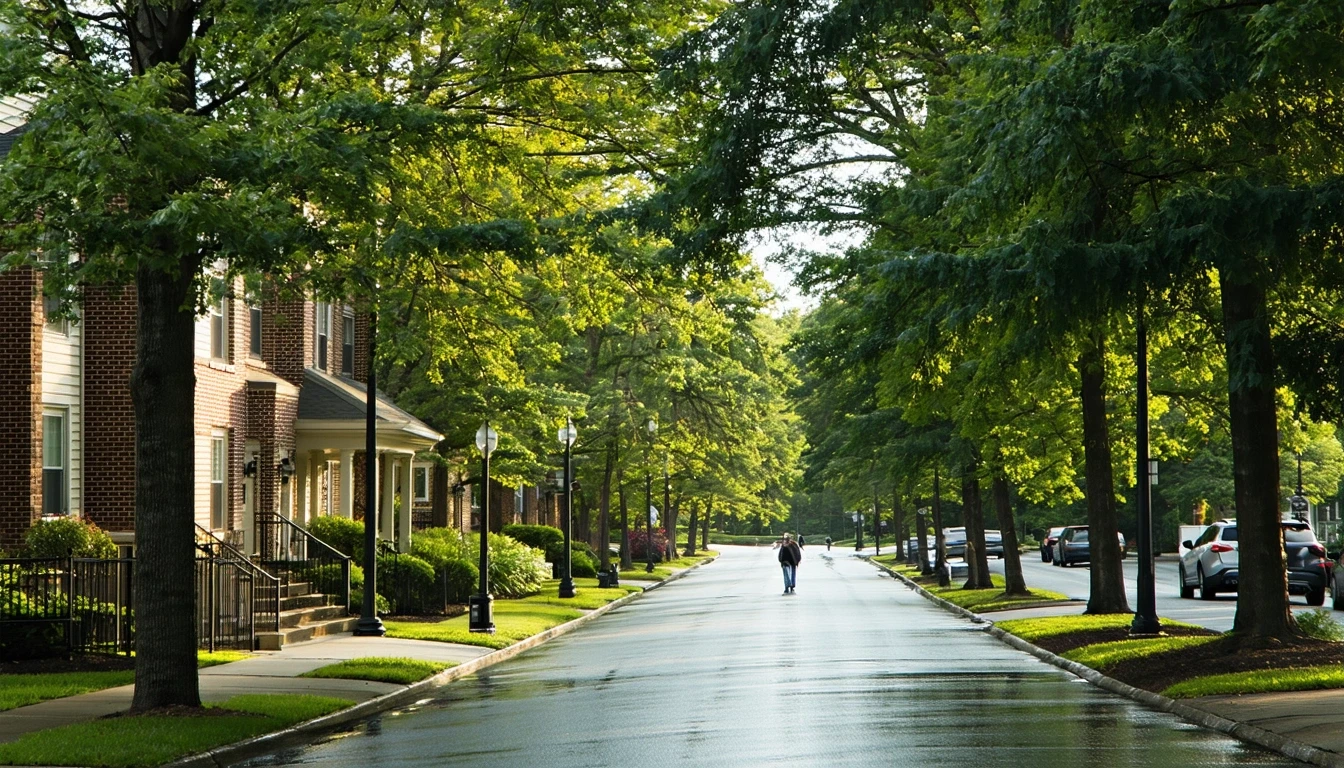
The Emotional Landscape of Bethesda
Bethesda’s vibe is shaped by a specific tradeoff: you get proximity, safety, and a well-kept environment, but you don’t get urban spontaneity or the kind of walkability that lets you forget you own a car. The pedestrian infrastructure here is substantial in certain areas—ped-to-road ratios are high enough to support real walking—but food and grocery density remain low. That means you can stroll through pleasant neighborhoods, but your daily errands still require intention, planning, or a short drive. For families and professionals who value control and predictability, that’s fine. For people who wanted a walkable urban alternative, it’s a quiet disappointment.
The building character is mixed—neither purely low-rise suburban nor vertically dense—and land use blends residential and commercial in a way that feels organized rather than organic. Bus service is present and reliable for commuting into DC, but there’s no rail, and cycling infrastructure exists only in pockets. The overall effect is a place that supports multiple modes of living without fully committing to any single one. You can walk, you can drive, you can take the bus—but none of those feel effortless in every situation.
Healthcare access is routine and local, with clinics available but no hospital within city limits. Family infrastructure is limited by density thresholds—schools and playgrounds exist, but not in the concentration that defines child-saturated suburbs. Green space is present and well-maintained, with parks that feel like intentional retreats rather than incidental leftovers. The unemployment rate sits at 2.7%, reflecting a professional, stable workforce. The weather is cold right now—23°F—but the climate here brings both heating and cooling seasons, meaning households face year-round utility exposure rather than a single dominant cost driver.
Social Media Buzz in Bethesda
Online discussion about Bethesda tends to circle around a few recurring themes: pride in the area’s reputation, frustration with the cost-to-texture ratio, protectiveness over neighborhood character, and a low hum of restlessness from younger residents. The tone is rarely angry, but it’s often evaluative—people weighing whether what they’re paying matches what they’re getting.
“It’s beautiful and safe, but I feel like I’m always driving somewhere to actually do something.”
“If you want to be near DC without the chaos, this is it. But don’t expect much happening after 9 p.m.”
“I love that I can walk my dog here and feel completely comfortable. I just wish I could walk to a decent grocery store as easily.”
The conversations aren’t about whether Bethesda is “good”—most people agree it’s well-maintained and desirable. The debate is about fit: whether the polish justifies the premium, whether the quiet feels peaceful or stifling, and whether proximity to DC culture compensates for limited local texture. Newcomers tend to express relief at the safety and order. Long-time residents express concern about rising costs and changing character. Remote workers sometimes feel isolated, missing the kind of coffeehouse or coworking culture that thrives in denser areas.
Local News Tone
Coverage of Bethesda tends to frame the city through the lens of growth, affluence, and community identity. The tone is civic-minded and measured, focusing on development debates, school quality, transportation access, and the balance between preserving neighborhood character and accommodating change. Stories rarely dwell on crisis or conflict; instead, they explore tradeoffs and transitions.
- “New Retail Arrives as Residents Debate What ‘Walkable’ Really Means”
- “Commuters Weigh Bus Access Against Car Convenience”
- “Families Drawn to Safety and Schools, But Housing Costs Climb”
- “Community Voices Reflect Pride and Pressure in Equal Measure”
- “Bethesda’s Identity: Suburban Comfort or Urban Alternative?”
The framing reflects a place where change happens incrementally and where residents feel entitled to weigh in. There’s less urgency and more deliberation. The implicit question in much of the coverage is: what should Bethesda become, and who gets to decide?
Review-Based Public Perception
Public reviews of Bethesda—whether on Google, Yelp, or neighborhood platforms—tend to praise the area’s cleanliness, safety, and access to quality services. Complaints are rarely about neglect or danger; they’re about expectation mismatches. People who wanted suburban comfort with urban perks feel let down by the car dependency and limited spontaneity. People who wanted quiet, order, and proximity to DC tend to feel satisfied.
Positive themes include well-maintained parks, reliable public services, strong schools, and a sense of security that lets families relax. Neutral or mildly critical themes include limited nightlife, sparse grocery options within walking distance, homogeneity in both demographics and dining, and a cost structure that feels steep relative to the day-to-day experience. Newer planned areas tend to feel more polished but less distinctive. Older pockets offer more character but sometimes less convenience.
The recurring sentiment is this: Bethesda delivers on what it promises—safety, proximity, polish—but it doesn’t over-deliver on texture, variety, or walkability. If you came here expecting a vibrant urban alternative, you’ll feel the gap. If you came here expecting a high-functioning suburban base near the capital, you’ll likely feel at home.
Comparison to Nearby Cities
| Dimension | Bethesda, MD | Arlington, VA | Silver Spring, MD |
|---|---|---|---|
| Overall Vibe | Polished, quiet, professional | Urban-adjacent, transit-rich, busy | Diverse, evolving, mixed-density |
| Walkability Feel | Pockets exist, errands require planning | High walkability, less car dependency | Moderate walkability, improving corridors |
| Transit Access | Bus-only, reliable for DC commute | Metro rail, frequent service | Metro rail, regional bus hub |
| Nightlife & Texture | Limited, quiets early | Active, varied, late hours | Growing, multicultural, uneven |
| Family Appeal | Strong schools, safety-focused | Family-friendly but denser, pricier | Diverse schools, more affordable |
Bethesda, Arlington, and Silver Spring all sit within the DC metro orbit, but they offer different emotional experiences. Arlington delivers more urban intensity and transit convenience, which appeals to people who want to minimize car use and maximize spontaneity. It’s busier, denser, and more expensive, but it also feels more plugged in. Silver Spring offers more demographic and cultural diversity, a growing arts scene, and slightly lower costs, but it also feels less polished and more in-transition. Bethesda splits the difference: it’s quieter and more suburban than Arlington, more affluent and controlled than Silver Spring, and it rewards people who want proximity without immersion. If you need rail transit and walkable errands, Arlington wins. If you want cultural variety and evolving energy, Silver Spring fits. If you want a polished, safe base with reliable bus access into DC and don’t mind driving for groceries, Bethesda makes sense.
What Locals Are Saying
“I moved here from the city and I don’t regret it. It’s clean, it’s safe, my kids can play outside. But I do miss being able to walk to a corner store without it being a whole thing.”
“Bethesda is perfect if you’re established and want a calm home base. If you’re young and social, you’ll probably feel like you’re missing out.”
“The commute into DC is easy, and I like coming home to quiet streets. I just wish there were more local spots to grab dinner or meet friends without driving.”
“It’s expensive, but you get what you pay for: good schools, low crime, nice parks. It’s not exciting, but it’s reliable.”
“I thought ‘walkable pockets’ meant I could ditch my car. Turns out it just means I can take a nice walk—then drive to the grocery store.”
“We’ve been here twenty years and we love it, but it’s definitely changed. More expensive, more crowded, and somehow still just as quiet at night.”
“If you work in DC and want to feel like you’ve ‘made it,’ Bethesda checks that box. Just don’t expect it to feel like a city.”
Does Bethesda Feel Like a Good Fit?
Bethesda’s emotional profile is consistent: it rewards people who value order, proximity, and a polished environment over spontaneity, density, and walkable errands. It works well for families who prioritize safety and schools, professionals who want a short commute into DC without urban intensity, and empty nesters who want comfort without compromise. It tends to frustrate younger professionals looking for nightlife and social texture, walkability advocates who expected less car dependency, and anyone who resents paying a premium for a place that feels quiet rather than vibrant.
The city doesn’t try to be everything. It’s not trying to compete with Arlington’s transit density or Silver Spring’s cultural mix. It’s offering a specific tradeoff: you get a well-maintained, safe, professionally oriented suburb with bus access to the capital and walkable pockets that make daily life pleasant—but not effortless. If that tradeoff aligns with where you are in life and what you need from a place, Bethesda will feel like home. If it doesn’t, it will feel expensive and limiting.
Understanding whether Bethesda fits means understanding what you’re willing to trade. If you want to explore how those tradeoffs play out financially, you might consider looking at a breakdown of monthly expenses, or examining what income levels support different lifestyles here. And if you’re weighing whether to rent or buy in a market like this, understanding the real tradeoffs between renting and owning can clarify what kind of commitment makes sense.
How this article was built: In addition to public economic data, this article incorporates location-based experiential signals derived from anonymized geographic patterns—such as access density, walkability, and land-use mix—to reflect how day-to-day living actually feels in Bethesda, MD.
The perspectives shown reflect commonly expressed local sentiment and recurring themes in public discussion, rather than individual accounts.