
Campbell is considered expensive in 2026, with a median home value of $1,473,700 anchoring the cost structure. The value proposition depends on housing entry cost versus transportation flexibility—walkable pockets and rail access reduce car dependence for daily errands, but ownership remains the dominant path.
Overall Cost of Living Snapshot
Is the true cost of living higher than you think? In Campbell, the answer hinges on whether you’re evaluating entry barriers or recurring expenses. The city sits at the national baseline for regional price parity (RPP index: 100), meaning the cost structure reflects national averages adjusted for local conditions—but housing distorts that picture entirely. With a median home value of $1,473,700, ownership costs dominate the financial landscape. Renters face a median gross rent of $2,619 per month, which translates to significant annual housing exposure even without ownership equity.
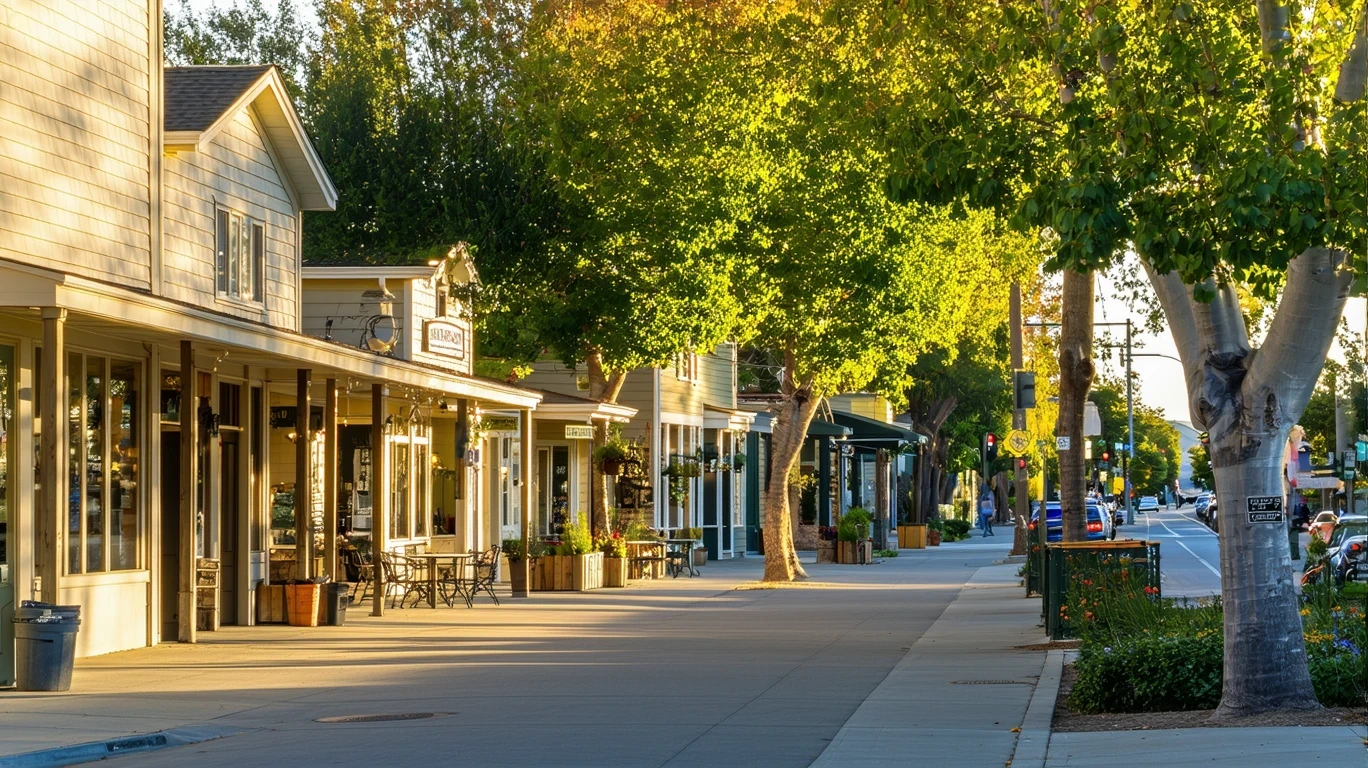
What surprises newcomers isn’t day-to-day pricing—it’s the structural weight of housing and the degree to which transportation choices either amplify or offset that pressure. Campbell’s pedestrian-to-road ratio exceeds high thresholds, and food and grocery density is broadly accessible, meaning households can reduce vehicle trips for routine errands. Rail service is present, and bike infrastructure is notable throughout parts of the city. These factors don’t eliminate car ownership, but they do create optionality that matters when calculating recurring transportation exposure.
Driver verdict: Housing entry cost is the primary pressure point. Transportation exposure is the secondary variable—households that can walk to groceries, bike to errands, or use rail for commutes experience meaningfully lower recurring costs than those dependent on long car commutes in a region where gas averages $4.22 per gallon.
Housing Costs (Primary Driver)
Campbell’s housing market is structured for ownership. The median home value of $1,473,700 reflects Silicon Valley’s broader pricing dynamics, where land scarcity, employment density, and regional demand converge. Renters pay a median of $2,619 per month, but rental inventory tends to be limited relative to ownership stock, and rent renewals in high-demand markets often face upward pressure driven by regional wage growth and constrained supply.
Ownership brings property tax exposure, insurance premiums that reflect California wildfire and seismic risk, and maintenance costs that scale with home age and size. Buyers also face the reality that down payment requirements and mortgage qualification thresholds are steep, even for households with strong income. The tradeoff: equity accumulation and long-term cost predictability versus the flexibility and lower entry cost of renting.
For households evaluating renting vs owning, the decision often comes down to time horizon and liquidity. Renters avoid property tax and maintenance volatility but remain exposed to lease renewal risk. Owners lock in principal and interest (if financing is fixed-rate) but absorb all cost variability from taxes, insurance, and repairs.
| Housing Type | Cost Anchor | What That Buys You |
|---|---|---|
| Median Home Value | $1,473,700 | Equity position, tax/insurance/maintenance exposure, long-term cost control |
| Median Gross Rent | $2,619/month | Flexibility, no maintenance risk, lease renewal exposure |
Conclusion: Campbell is a buying-dominant city. Renters exist, but the market structure and cost dynamics favor ownership for households with capital and long time horizons.
Utilities & Energy Risk
Electricity in Campbell is billed at 33.60¢ per kWh, which sits above national averages but reflects California’s energy policy, renewable mandates, and transmission costs. Natural gas is priced at $21.94 per MCF (roughly equivalent to 100 therms), which introduces moderate seasonal volatility during heating months—though Campbell’s climate limits heating demand relative to colder regions.
For illustrative context, a household using 1,000 kWh per month would face roughly $336 in electricity costs before taxes and fees. Natural gas exposure is lower in Campbell than in areas with extended heating seasons, but households with gas water heaters, dryers, or ranges still see usage spikes during cooler months.
The bigger risk isn’t baseline pricing—it’s rate structure changes and tiered usage penalties. California utilities often operate under time-of-use pricing, meaning households that shift high-draw activities (laundry, EV charging, HVAC) to off-peak hours can reduce bills meaningfully. Conversely, households with inflexible schedules or high daytime usage face steeper marginal costs.
Risk classification: moderate. Utilities aren’t the dominant cost driver, but they introduce seasonal variability and reward behavioral adaptation. Households that manage usage timing and invest in efficiency measures (insulation, LED lighting, programmable thermostats) experience lower exposure than those treating utilities as fixed overhead.
Groceries & Daily Costs
Campbell’s grocery landscape reflects California’s broader food pricing environment—produce, dairy, and protein costs align with statewide patterns shaped by agricultural proximity, labor costs, and distribution networks. The city’s food establishment density exceeds high thresholds, and grocery density is broadly accessible, meaning households have competitive options within short travel distances. This density creates pricing transparency and reduces the need for bulk-buying trips to distant warehouse clubs.
Derived estimates suggest staples like bread ($1.79/lb), eggs ($2.86/dozen), and chicken ($2.04/lb) track near national baselines, while ground beef ($6.54/lb) and cheese ($4.72/lb) reflect California’s higher labor and regulatory costs. These figures are illustrative—actual shelf prices vary by retailer, seasonality, and promotions—but the directional takeaway is that grocery pressure in Campbell is moderate, not extreme.
What matters more than per-item pricing is household shopping behavior. Families that cook at home, plan meals around seasonal availability, and avoid convenience markups (pre-cut produce, single-serve packaging) experience meaningfully lower food costs than households relying on prepared meals, delivery services, or frequent restaurant dining. Campbell’s density of food options supports both strategies, but the cost gap between them is wide.
Transportation Reality
Transportation in Campbell is a recurring exposure that varies dramatically by household structure. The average commute is 25 minutes, but 37.7% of workers face long commutes—a figure that signals significant variability in getting around the region. Only 6.4% of workers operate from home, meaning the majority of households must solve the commute problem daily.
Gas prices average $4.22 per gallon, which translates to meaningful annual costs for households driving long distances. Campbell’s pedestrian infrastructure and rail presence offer alternatives for some trips—errands, school runs, and short commutes can often be completed on foot, by bike, or via transit—but the region’s employment centers are dispersed, and many jobs require car access.
The structural question isn’t whether you need a car—it’s how many miles you’ll drive and whether your household can function with one vehicle instead of two. A household with two long commuters faces double the fuel, insurance, maintenance, and depreciation exposure of a household where one partner works locally or from home. Campbell’s walkable pockets and transit access reduce daily trip counts, but they don’t eliminate the need for regional mobility.
Transportation as exposure: Treat vehicle costs as a recurring bill, not a one-time purchase. Fuel, insurance, registration, and maintenance compound over time, and households that can reduce vehicle dependence—by living near work, using transit, or consolidating trips—experience lower total cost pressure than those treating cars as the only mobility option.
Cost Exposure Profiles
Campbell’s cost structure creates distinct exposure profiles depending on housing status, commute length, and household composition. The dominant exposures are housing entry barriers and transportation dependence—but the degree of impact varies widely.
Low-exposure situations: Owners who purchased years ago and have fixed-rate mortgages face predictable principal and interest costs, with exposure limited to property tax adjustments, insurance renewals, and maintenance events. Households with one short commute or work-from-home arrangements avoid double-vehicle costs and long-distance fuel exposure. Singles or couples without school-age children can optimize for proximity to work and errands, minimizing both housing size and transportation needs.
High-exposure situations: New buyers entering at current valuations face steep mortgage payments, property tax bills scaled to purchase price, and insurance premiums reflecting California’s risk environment. Renters in high-demand buildings face lease renewal pressure and limited control over annual cost increases. Households with two long commuters absorb fuel, insurance, and maintenance costs for multiple vehicles, compounding transportation exposure. Families with school-age children often prioritize housing size and school access over commute optimization, which can lock in higher transportation costs.
The city’s strong family infrastructure—school density exceeds high thresholds, and playground density is in the medium band—supports households with children, but those households also face larger housing needs and less flexibility to downsize or relocate for commute optimization. Conversely, the integrated park density and broadly accessible errands infrastructure reduce the need for car-dependent recreation and shopping trips, which helps offset transportation exposure for households that can take advantage of walkable access.
Structural framing: Campbell rewards households that can absorb the housing entry cost and minimize transportation dependence. The city’s infrastructure supports low-car lifestyles for daily errands, but regional employment patterns still require most households to solve the commute problem. The gap between low-exposure and high-exposure situations is wide, and it’s driven more by housing timing and commute structure than by day-to-day spending.
Frequently Asked Questions
Is Campbell more affordable than San Jose in 2026? Campbell’s housing costs tend to be comparable to or slightly lower than San Jose’s most expensive neighborhoods, but both cities reflect Silicon Valley’s broader pricing dynamics. The affordability difference is marginal, not structural.
What does a typical cost profile look like in Campbell? Housing dominates, followed by transportation exposure for households with long commutes or multiple vehicles. Utilities and groceries are moderate, not extreme, and the city’s walkable infrastructure reduces some recurring costs for households that can use it.
Do utilities cost more in Campbell than nearby areas? Electricity rates are consistent across much of Santa Clara County, so Campbell’s utility costs are similar to neighboring cities. Natural gas pricing follows regional patterns, and seasonal exposure is moderate given the local climate.
What costs tend to surprise newcomers in Campbell? Property tax bills scaled to purchase price, insurance premiums reflecting California’s risk environment, and the cumulative cost of vehicle ownership for households with long commutes. Day-to-day expenses rarely shock—housing and transportation do.
Are property taxes higher in Campbell than Sunnyvale? Property taxes in both cities are governed by California’s Proposition 13 framework, which caps assessed value increases for existing owners. Taxes reflect purchase price and local voter-approved bonds, so new buyers in either city face similar effective rates.
Can you live in Campbell without a car? Some households manage it—rail service is present, bike infrastructure is notable, and errands accessibility is broadly distributed—but most residents still own vehicles for regional commutes and trips outside the immediate area. Car-free living is possible but requires intentional housing and employment choices.
How does Campbell’s cost structure compare to the rest of Silicon Valley? Campbell sits in the middle tier of Silicon Valley pricing—less expensive than Palo Alto or Los Gatos, more expensive than parts of San Jose or Milpitas. The cost structure is similar across the region: housing dominates, transportation varies by commute, and daily expenses are moderate.
What’s the biggest financial risk of moving to Campbell? Underestimating the housing entry barrier and overcommitting to a mortgage or lease that leaves little room for transportation, maintenance, or savings. The city’s infrastructure supports efficient living, but only if housing costs don’t consume all available margin.
How this article was built: In addition to public economic data, this article incorporates location-based experiential signals derived from anonymized geographic patterns—such as access density, walkability, and land-use mix—to reflect how day-to-day living actually feels in Campbell, CA.
—