
Doral is considered expensive in 2026, with a median home value of $468,800 and median rent of $2,393 per month. The value proposition depends on housing entry cost versus the city’s walkable errands infrastructure and strong family amenities, which reduce some day-to-day logistical burdens despite higher upfront prices.
Overall Cost of Living Snapshot
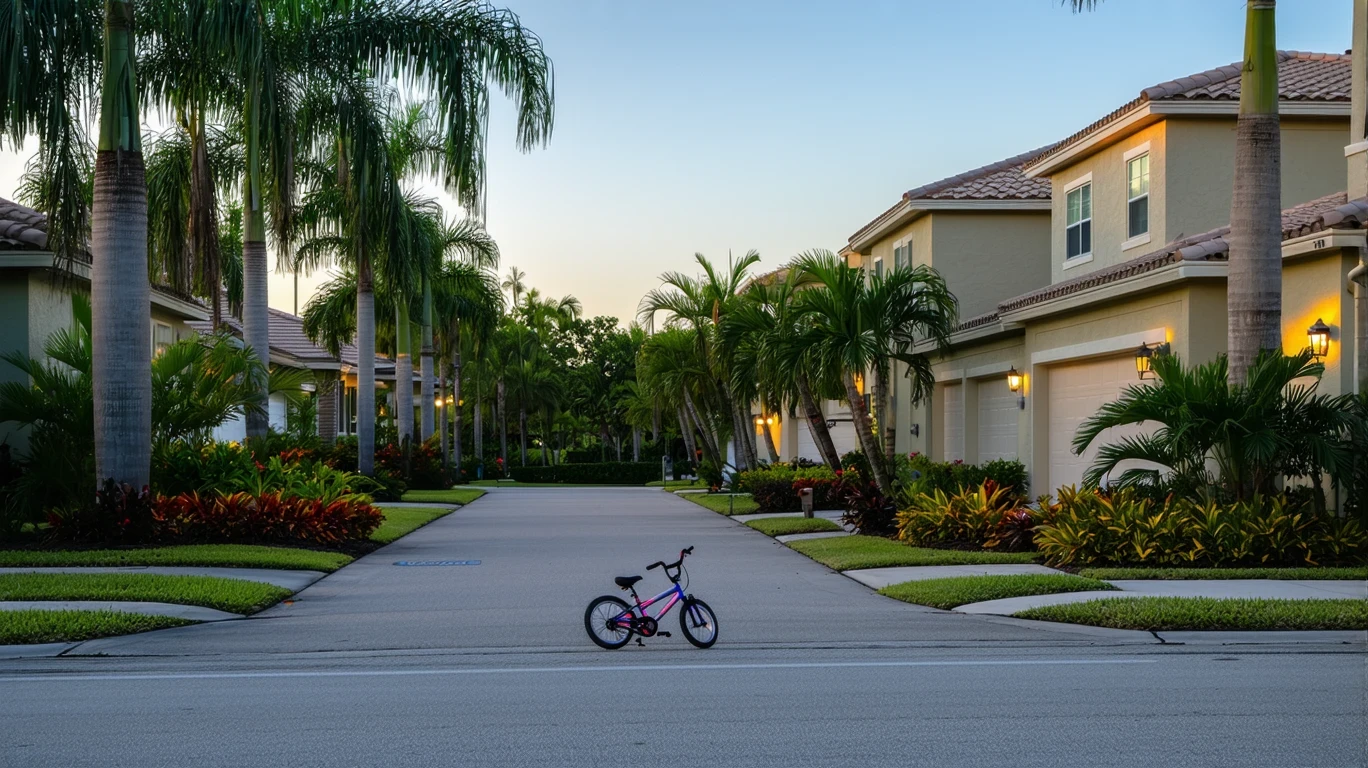
Doral’s cost structure is shaped primarily by housing, with both ownership and rental pathways demanding substantial financial commitment. The regional price parity index of 103 confirms that overall prices run above the national baseline, though the premium is moderate rather than extreme. What distinguishes Doral from other expensive suburbs is the density of accessible daily infrastructure: grocery stores, schools, playgrounds, and parks are woven throughout residential areas at levels that exceed typical suburban thresholds. This means that while housing entry costs are high, the friction and expense of running a household—getting groceries, managing school logistics, accessing green space—are lower than the suburban form might suggest.
Transportation costs split into two distinct exposures. Commuting to work remains car-dependent for most residents, with an average commute time of 25 minutes and 38.7% of workers facing long commutes. Only 5% work from home. However, day-to-day errands benefit from Doral’s walkable pockets and high food establishment density, meaning many routine tasks can be completed on foot or with minimal driving within residential neighborhoods. Utility costs are driven by Florida’s extended cooling season rather than per-kilowatt-hour rates, and natural gas plays a minor role given minimal heating demand.
Driver verdict: Housing dominates cost pressure in Doral. Surprises come from the mismatch between suburban appearance and urban-level errands accessibility, and from the seasonal intensity of cooling costs rather than baseline utility rates.
Housing Costs (Primary Driver)
Housing is the single largest cost exposure in Doral. The median home value of $468,800 requires a significant down payment, strong income qualification, and long-term financial commitment. Buyers face not only the purchase price but also property taxes, insurance (elevated in Florida due to climate risk), HOA fees in many developments, and ongoing maintenance. Ownership makes sense for households planning to stay long-term and who can absorb the upfront costs, but it locks in a large share of monthly obligations before any discretionary spending begins.
Renting at a median of $2,393 per month offers more flexibility and eliminates maintenance and insurance burdens, but it still represents a substantial recurring expense. Renters avoid the capital requirement of a down payment and can relocate more easily, but they remain exposed to lease renewals and rent adjustments over time. Neither pathway is inexpensive; the choice hinges on timeline, liquidity, and tolerance for long-term financial commitment versus year-to-year variability.
Conclusion: Doral is an ownership-oriented city for those who can afford entry, but rental costs are high enough that renting does not function as a budget alternative—it’s a flexibility trade, not a cost-saving strategy.
| Housing Type | Cost Anchor | What That Buys You |
|---|---|---|
| Ownership | $468,800 median home value | Equity accumulation, stability, but high entry cost and ongoing taxes, insurance, HOA, maintenance |
| Renting | $2,393/month median rent | Flexibility, no maintenance burden, but no equity and exposure to lease adjustments |
Utilities & Energy Risk
Electricity is the dominant utility expense in Doral, driven not by the per-unit rate but by the duration and intensity of South Florida’s cooling season. The electricity rate of 15.78¢/kWh sits near the middle of the national range, but triple-digit summer heat and high humidity mean air conditioning runs for extended periods across much of the year. Households in poorly insulated homes, older buildings, or units with west-facing exposure face higher usage and correspondingly higher bills. The risk is not the rate—it’s the volume of kilowatt-hours consumed to maintain comfort in a hot, humid climate.
Natural gas, priced at $32.82 per MCF, plays a minimal role in most Doral households. Heating demand is rare, limited to occasional cool mornings in winter. Gas may be used for cooking or water heating in some homes, but it does not represent a major or volatile cost line. The primary energy exposure is electric cooling, and that exposure is both predictable and unavoidable.
Risk classification: moderate. Utility costs are not the largest line item, but cooling season intensity creates meaningful variability and households have limited ability to reduce usage without sacrificing comfort. Efficiency improvements—better insulation, programmable thermostats, shade management—can reduce exposure, but they require upfront investment and only dampen, rather than eliminate, seasonal swings.
Groceries & Daily Costs
Grocery pricing in Doral reflects the regional price parity index of 103, meaning costs run slightly above the national baseline. Derived estimates place common items like ground beef at $6.89 per pound, eggs at $2.79 per dozen, and milk at $4.17 per half-gallon. These figures are illustrative and subject to retailer variation, but they signal that routine grocery spending will track above national averages, particularly for households buying fresh meat, dairy, and produce regularly.
What moderates the effective impact of higher list prices is Doral’s exceptionally high grocery establishment density. The city’s infrastructure includes both large-format stores and smaller markets distributed throughout residential areas, creating competitive access and reducing the need to drive long distances or rely on a single provider. For households that shop strategically—comparing prices, using sales, and taking advantage of proximity—the density of options can offset some of the baseline price premium. For households that shop less frequently or rely on convenience, the higher per-item costs will compound more quickly.
The grocery pressure in Doral is moderate: not a crisis, but not negligible. Families with children, households that cook most meals at home, and anyone managing dietary restrictions will feel the difference compared to lower-cost regions, but the city’s infrastructure provides tools to manage that pressure if used intentionally.
Transportation Reality
Transportation costs in Doral split into two distinct exposures: commuting and daily errands. Commuting remains car-dependent for the vast majority of residents. The average commute time of 25 minutes, combined with 38.7% of workers facing long commutes and only 5% working from home, indicates that most households rely on personal vehicles to reach employment. Gas prices of $2.92 per gallon are moderate, but the recurring cost of fuel, insurance, maintenance, and vehicle depreciation adds up quickly for households with long commutes or multiple drivers.
Transit options are limited to bus service, which provides some coverage but does not function as a primary commute solution for most residents. The lack of rail transit and the geographic distribution of employment in the Miami metro area mean that car ownership is effectively mandatory for work travel. Households with two working adults often need two vehicles, doubling the fixed costs of registration, insurance, and financing or depreciation.
However, getting around for daily errands tells a different story. Doral’s pedestrian infrastructure is substantial in certain areas, with a high pedestrian-to-road ratio and broadly accessible food and grocery density. Many routine tasks—picking up groceries, dropping off kids, accessing parks—can be completed on foot or with minimal driving within residential neighborhoods. This reduces the day-to-day wear on vehicles, lowers incidental fuel costs, and makes car-free or one-car living feasible for households where one or both adults work from home or have flexible schedules.
Transportation as recurring exposure: For households with long commutes and traditional work schedules, transportation is a major fixed cost. For households with shorter commutes, remote work, or the ability to walk for errands, transportation pressure is significantly lower. The difference between these two profiles can amount to thousands of dollars annually.
Cost Exposure Profiles
Cost pressure in Doral is not uniform—it depends on which exposures a household faces and how much control they have over each one. Housing entry cost is the first and largest filter: buyers need substantial savings and income to qualify for a $468,800 home, while renters need to sustain $2,393 per month in rent plus utilities and other expenses. Once housing is secured, the next layer of exposure is transportation. Households with two long commutes and two vehicles face high recurring costs for fuel, insurance, and maintenance, while households with one short commute or remote work can reduce transportation to a minor line item.
Utility exposure is driven by cooling season intensity. Households in well-insulated, shaded, or efficiently cooled homes face moderate electric bills, while those in older, poorly insulated, or sun-exposed units face sustained high usage across summer months. Grocery and daily costs are shaped by shopping habits and proximity: households that walk to nearby stores and shop strategically face lower effective costs than those who drive long distances or rely on convenience purchases.
Low-exposure situations in Doral typically involve: owned homes with manageable financing, short or remote commutes, energy-efficient housing, and walkable access to errands. High-exposure situations involve: new buyers or renters stretching to afford housing, two long commutes requiring two vehicles, older or poorly insulated housing, and reliance on driving for all errands. The gap between these two profiles is wide, and it explains why some households find Doral manageable while others feel constant financial pressure despite similar incomes.
How this article was built: In addition to public economic data, this article incorporates location-based experiential signals derived from anonymized geographic patterns—such as access density, walkability, and land-use mix—to reflect how day-to-day living actually feels in Doral, FL.
Frequently Asked Questions
Is Doral more affordable than Miami in 2026? Doral’s median home value of $468,800 and median rent of $2,393/month are both high, though they may be slightly lower than some Miami neighborhoods. The tradeoff is often space and family infrastructure versus proximity to urban employment and nightlife. Neither city is inexpensive, but Doral offers more suburban amenities and walkable errands infrastructure than its price point might suggest.
What does a typical cost profile look like in Doral? Housing dominates, followed by transportation (especially for commuters) and utilities (driven by cooling season). Grocery costs run slightly above national average, but high store density provides competitive access. The cost profile is heavily influenced by commute length, vehicle count, and housing efficiency.
Do utilities cost more in Doral than nearby areas? Electricity rates in Doral are moderate at 15.78¢/kWh, but total utility costs depend on cooling season intensity and housing efficiency. Doral’s costs are comparable to other South Florida cities; the variability comes from usage, not rates.
What costs tend to surprise newcomers in Doral? Many newcomers underestimate the cumulative impact of Florida’s extended cooling season on electric bills, the necessity of car ownership for commuting despite walkable errands infrastructure, and the recurring costs of homeowners insurance and HOA fees in many developments.
Are property taxes higher in Doral than Hialeah? Property tax rates vary by jurisdiction and are influenced by home values. Doral’s higher median home value of $468,800 generally results in higher absolute tax bills than in areas with lower home values, even if millage rates are similar. Buyers should verify current rates and exemptions with local assessors.
Can you live in Doral without a car? For commuting, most residents need a car—only 5% work from home and transit is limited to bus service. However, for daily errands, Doral’s walkable pockets and high grocery density make it possible to handle routine tasks on foot within residential areas. A car-free lifestyle is difficult but a one-car household is feasible for some.
Is Doral a good value compared to other Miami suburbs? Doral offers strong family infrastructure, integrated green space, and unusually high errands accessibility for a suburb. Whether that justifies the $468,800 median home value or $2,393/month rent depends on household priorities—families prioritizing schools, parks, and walkability may find it worthwhile, while others may prefer lower-cost alternatives with longer commutes.
How much does the cooling season add to utility bills in Doral? Total cooling costs depend on home size, insulation, thermostat settings, and occupancy patterns. The extended duration of South Florida’s hot, humid season means air conditioning runs for many months, making cooling the largest utility expense for most households. Efficiency upgrades and behavioral adjustments can reduce usage, but the seasonal exposure is unavoidable.