
Housing Costs and Ownership in Los Altos, CA (2026)
| Expense Category | Apartment | House |
|---|---|---|
| Base Housing Cost | Median rent $3,501/month | Mortgage on $2,000,001 median home (principal + interest only, before taxes/insurance) |
| Property Tax Exposure | None (embedded in rent) | Direct annual liability; subject to assessment changes and local levies |
| Maintenance & Repair | Landlord responsibility | Owner bears full cost; older housing stock common in Los Altos increases exposure |
| Utility Volatility | Lower square footage limits exposure despite high rates (31.91¢/kWh) | Larger footprint amplifies seasonal swings; Mediterranean climate moderates heating but AC usage rises in summer |
| Governance & Fees | Rare; most rentals are single-family or townhome without HOA pass-through | HOA presence varies; older neighborhoods may lack formal associations but newer developments may impose dues |
Table Methodology: This comparison isolates cost categories that behave differently in Los Altos due to housing stock age, climate, utility rate structure, and governance patterns. Categories omitted (e.g., internet, trash) do not vary meaningfully by housing type in this market. Numeric values appear only where present in authoritative data; all other distinctions are qualitative.
—
The Housing Market in Los Altos Today
Los Altos operates as a high-barrier market where what drives expenses begins with housing and radiates outward. The median home value of $2,000,001 reflects sustained demand from Silicon Valley proximity, nationally recognized school districts, and constrained supply due to low-density zoning and slow residential development. This is not a market shaped by speculative flipping or rapid construction cycles—it’s a market where established wealth concentrates and equity from other Bay Area cities migrates.
What newcomers often misunderstand is that Los Altos housing costs are structural, not cyclical. Prices don’t swing wildly with interest rate changes because the buyer pool is less rate-sensitive than in markets dominated by first-time purchasers. Demand here comes from households with significant existing equity, dual high earners in tech, or multi-generational buyers pooling resources. The result is a price floor that remains elevated even during broader market corrections.
Rental stock is limited and skewed toward single-family homes and townhomes rather than large apartment complexes. Median gross rent of $3,501 per month reflects this scarcity and the opportunity cost landlords face in a market where selling often yields substantial capital gains. Renters in Los Altos are typically in transition—between jobs, waiting for the right purchase opportunity, or prioritizing flexibility over equity accumulation.
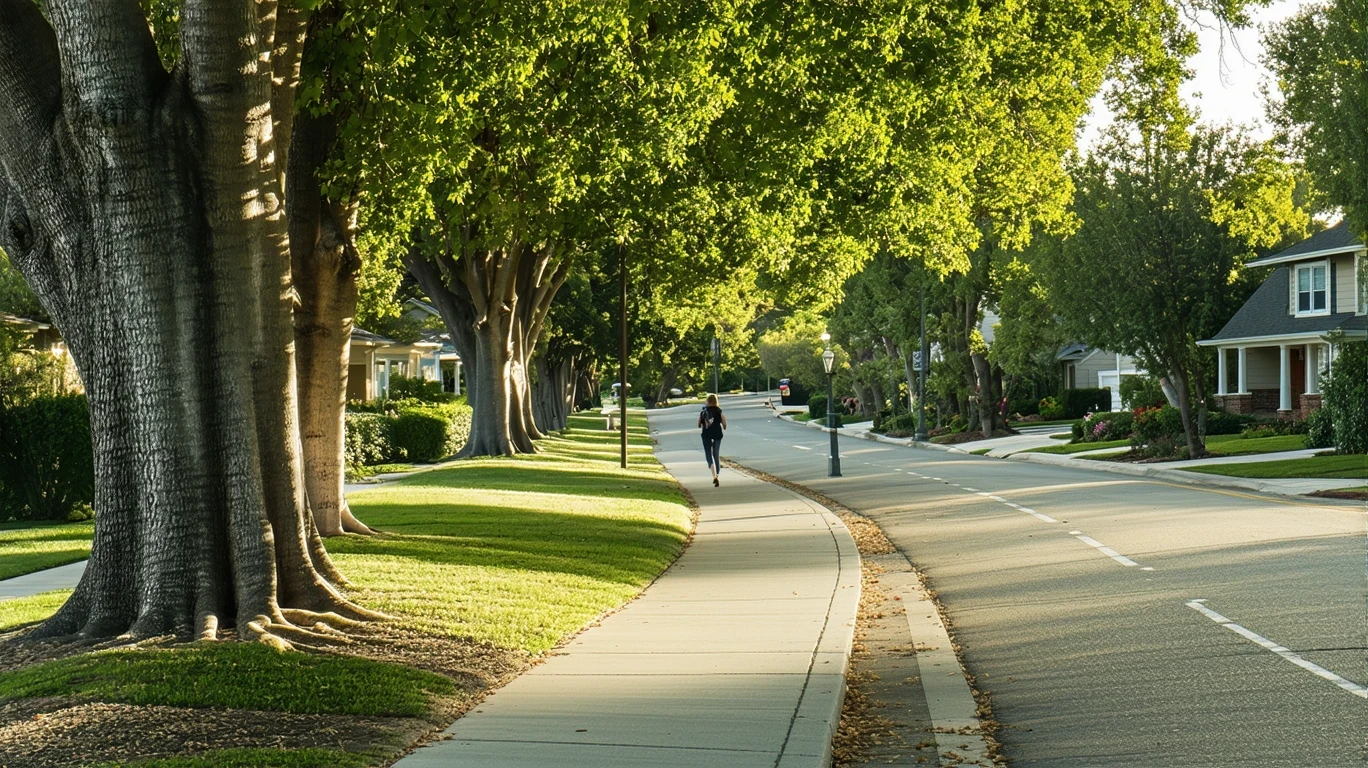
The city’s layout and infrastructure also shape housing decisions in ways that don’t appear in price data alone. Los Altos features walkable pockets with high pedestrian infrastructure density, and daily errands—groceries, pharmacies, cafes—are broadly accessible without requiring a car for every trip. This reduces the lifestyle tax that typically accompanies suburban homeownership and makes both renting and owning more practical for households that value walkability and errand convenience.
—
Renting in Los Altos
Renting in Los Altos means accepting high absolute costs in exchange for flexibility and lower commitment risk. At $3,501 per month median gross rent, renters face one of the steeper rental markets in the Bay Area, but they avoid the multi-million-dollar down payment and long-term tax and maintenance exposure that ownership entails.
Rental availability is constrained by the predominance of single-family housing stock. Unlike cities with large apartment complexes or high-rise buildings, Los Altos rental inventory consists mostly of detached homes, duplexes, and small multi-family properties. This limits options and creates competition, particularly for families seeking yard space or proximity to top-rated schools. Renters often find themselves negotiating lease terms in a landlord-favorable environment, where turnover is low and long-term tenants are preferred.
The rental experience here is also shaped by the city’s infrastructure. Because food and grocery density is high and walkable pockets are present, renters can reduce transportation costs and time spent driving for daily errands. Bus service is available, though limited to local routes without rail connections, so most renters still rely on a car for commuting to employment centers in Mountain View, Palo Alto, or Sunnyvale. The short average commute time of 22 minutes reflects proximity to major tech corridors, which is a primary reason renters tolerate high costs.
Renters also avoid direct exposure to property tax increases, insurance premium volatility, and major repair costs—expenses that homeowners in Los Altos face with little predictability. For households prioritizing liquidity, career mobility, or deferring a large financial commitment, renting remains the rational choice despite the high monthly outlay.
—
Owning a Home in Los Altos
Ownership in Los Altos is a long-term wealth position, not a monthly budget exercise. The $2,000,001 median home value requires substantial down payment capital, and the ongoing costs extend well beyond the mortgage. Property taxes, homeowner’s insurance, and maintenance collectively represent a significant and less predictable expense layer that renters never see itemized.
Property tax exposure in California is governed by Proposition 13, which caps assessed value increases at 2% annually for existing owners but resets to purchase price upon sale. This creates a bifurcated ownership class: long-term residents with artificially low tax bills and new buyers facing assessments based on current market values. For a home purchased at $2,000,001, the annual property tax burden is substantial, and it grows with local levies, school bonds, and infrastructure assessments that voters approve over time.
Maintenance costs in Los Altos are amplified by the age and character of the housing stock. Many homes were built in the mid-20th century and require ongoing investment in roofing, plumbing, electrical systems, and landscaping. The Mediterranean climate is forgiving—minimal freeze-thaw cycles, low storm damage risk—but older homes still demand attention. Deferred maintenance becomes expensive quickly, and the expectation in this market is that homes are well-kept, which sustains resale value but also imposes a continuous cost burden.
Homeowners also gain control over their living environment in ways renters cannot. They can renovate, landscape, and modify without landlord approval. They benefit from equity accumulation if property values continue to rise, and they lock in a portion of their housing cost (the mortgage principal and interest) against future inflation. But they also absorb all volatility: tax reassessments, insurance premium increases, utility rate hikes, and unexpected repairs.
For families, ownership in Los Altos offers stability in a city with strong schools, integrated parks, and present family infrastructure including playgrounds and moderate school density. The ability to stay in one home through a child’s school years without lease uncertainty is a significant non-financial benefit that many households prioritize despite the cost.
—
Utilities & Upkeep Differences
Utility and maintenance exposure in Los Altos varies more by housing size and age than by climate extremes. The region experiences warm, dry summers and mild winters, so heating demand is modest and cooling is seasonal rather than year-round. However, electricity rates are high at 31.91¢/kWh, which means that even moderate usage translates into noticeable monthly costs.
Apartment dwellers benefit from smaller square footage, which naturally limits heating and cooling load. Even without aggressive conservation, a 900-square-foot apartment will cost less to condition than a 2,500-square-foot house. Renters also avoid responsibility for water heater replacement, HVAC servicing, and appliance repairs—costs that homeowners must budget for independently.
Homeowners face larger utility bills due to greater space, and they also bear the cost of system upkeep. An aging HVAC system, inefficient windows, or poor insulation can drive costs higher, and the responsibility to upgrade or replace falls entirely on the owner. Natural gas, priced at $21.89 per thousand cubic feet, is used primarily for heating and cooking, and while winter demand is moderate, older homes with less efficient furnaces will see more variability.
Landscape irrigation is another ownership-specific cost. Many Los Altos properties feature mature trees, lawns, and gardens that require regular watering during the dry season. Water and sewer costs are not captured in the data feed, but they represent a recurring and sometimes surprising expense for new owners unfamiliar with California’s tiered water pricing structures.
Maintenance exposure is also higher for homeowners simply due to the age of the housing stock. Roofs, foundations, and exterior paint require periodic attention, and the cost of labor in Silicon Valley is elevated due to regional wage levels. Renters are insulated from all of this, though they indirectly pay for it through higher rent.
—
Rent vs Buy: Long-Term Exposure in Los Altos
The decision to rent or buy in Los Altos is less about monthly cash flow and more about risk tolerance, liquidity preference, and long-term financial strategy. Renting offers predictability within the lease term and eliminates exposure to property tax increases, maintenance surprises, and insurance volatility. Ownership offers equity accumulation and inflation protection on a portion of housing costs, but it also introduces multiple vectors of financial exposure that grow over time.
Renters face lease renewal risk. In a supply-constrained market like Los Altos, landlords have pricing power, and rent can rise substantially upon renewal. However, renters retain the ability to relocate without transaction costs, which is valuable in a region where employment and career trajectories shift frequently. For tech professionals who may move for a new role or startup opportunity, renting preserves mobility.
Owners, by contrast, lock in their mortgage payment (if fixed-rate) but face variability in property taxes, insurance, and maintenance. Property taxes can rise due to voter-approved levies and infrastructure bonds, even though Proposition 13 limits assessed value growth for existing owners. Insurance premiums can increase due to statewide wildfire risk trends, even though Los Altos itself is not in a high fire zone. Maintenance costs are episodic and unpredictable—roofs, water heaters, and HVAC systems fail on their own schedule, not the owner’s.
Over time, ownership in Los Altos has historically rewarded patience. Home values have appreciated due to sustained demand and limited supply, and owners who purchased years ago now hold significant equity. But future appreciation is not guaranteed, and the opportunity cost of capital tied up in a down payment and ongoing ownership expenses must be weighed against alternative investments.
For households planning to stay in Los Altos for a decade or more, ownership often makes sense despite the high entry cost. For those with shorter time horizons, uncertain career paths, or a preference for liquidity, renting remains the more rational choice even at $3,501 per month.
—
FAQs About Housing Costs in Los Altos
Why are home prices so high in Los Altos?
Home prices in Los Altos reflect sustained demand from Silicon Valley proximity, highly rated schools, and constrained supply due to low-density zoning and limited new construction. The buyer pool includes established wealth holders and equity migrants from other Bay Area markets, which sustains a high price floor even during broader market corrections.
Is renting in Los Altos cheaper than owning?
Renting avoids the large down payment and ongoing ownership costs like property taxes, insurance, and maintenance, but median rent of $3,501 per month is still high in absolute terms. Whether renting is “cheaper” depends on time horizon, liquidity needs, and risk tolerance. Short-term residents and those prioritizing flexibility often find renting more rational despite the monthly cost.
How does Los Altos compare to nearby cities for housing costs?
Los Altos sits at the higher end of Silicon Valley housing markets, comparable to Palo Alto and parts of Cupertino. It is more expensive than Sunnyvale or Mountain View, but the premium reflects school quality, neighborhood character, and walkable infrastructure. Buyers and renters often choose Los Altos specifically for these attributes, accepting the cost as part of the tradeoff.
What hidden costs do new homeowners in Los Altos face?
New homeowners often underestimate property tax reassessment upon purchase, ongoing maintenance for older housing stock, landscape irrigation costs during dry months, and homeowner’s insurance premiums that reflect statewide risk trends. These costs are less visible than the mortgage payment but grow over time and reduce financial flexibility.
Does Los Altos require a car, or can renters and owners rely on transit?
Most residents rely on a car for commuting, as transit is limited to bus service without rail connections. However, daily errands—groceries, pharmacies, cafes—are broadly accessible on foot or bike in many neighborhoods due to high food and grocery density and walkable pockets. This reduces the frequency of car trips for routine tasks, which lowers transportation costs and time burden for both renters and owners.
—
Making Housing Choices in Los Altos
Housing in Los Altos is expensive by any measure, but the cost structure is predictable and tied to factors that don’t change quickly: location, schools, and supply constraints. Renters pay a premium for flexibility and avoid long-term financial exposure, while owners commit substantial capital in exchange for stability, equity accumulation, and control over their living environment.
The decision hinges on time horizon and financial strategy. Households planning to stay for a decade or more, particularly families prioritizing school continuity and neighborhood stability, often find ownership worthwhile despite the high entry cost. Those with shorter timelines, uncertain career paths, or a preference for liquidity will find renting more rational, even at $3,501 per month.
What makes Los Altos distinct is not just the price level but the infrastructure and lifestyle it supports. Walkable pockets, broadly accessible errands, integrated green space, and strong family infrastructure reduce the friction and time costs that typically accompany suburban homeownership. These factors don’t lower monthly expenses directly, but they improve quality of life and reduce the need for constant driving, which matters for both renters and owners.
For a fuller picture of how housing fits into overall cost structure, see what costs people most in Los Altos. And for those planning a move, understanding logistics and cost tradeoffs is essential—pods vs trucks: which move is best for you? offers a practical breakdown of options.
How this article was built: In addition to public economic data, this article incorporates location-based experiential signals derived from anonymized geographic patterns—such as access density, walkability, and land-use mix—to reflect how day-to-day living actually feels in Los Altos, CA.