
Los Altos is considered expensive in 2026, with a median home value of $2,000,001 and median rent of $3,501 per month. The value proposition depends on housing entry cost versus car dependence, with short commutes and accessible errands softening transportation pressure.
When Maya transferred to a Bay Area office in early 2025, she knew Silicon Valley wouldn’t be cheap—but the first apartment showing in Los Altos still made her pause. The tree-lined street was beautiful, the unit spotless, and the lease number higher than her previous mortgage payment in Austin. She asked the landlord what else might surprise her. “Honestly?” he said. “Once you’re in, the rest is pretty manageable. It’s the housing that sets the bar.”
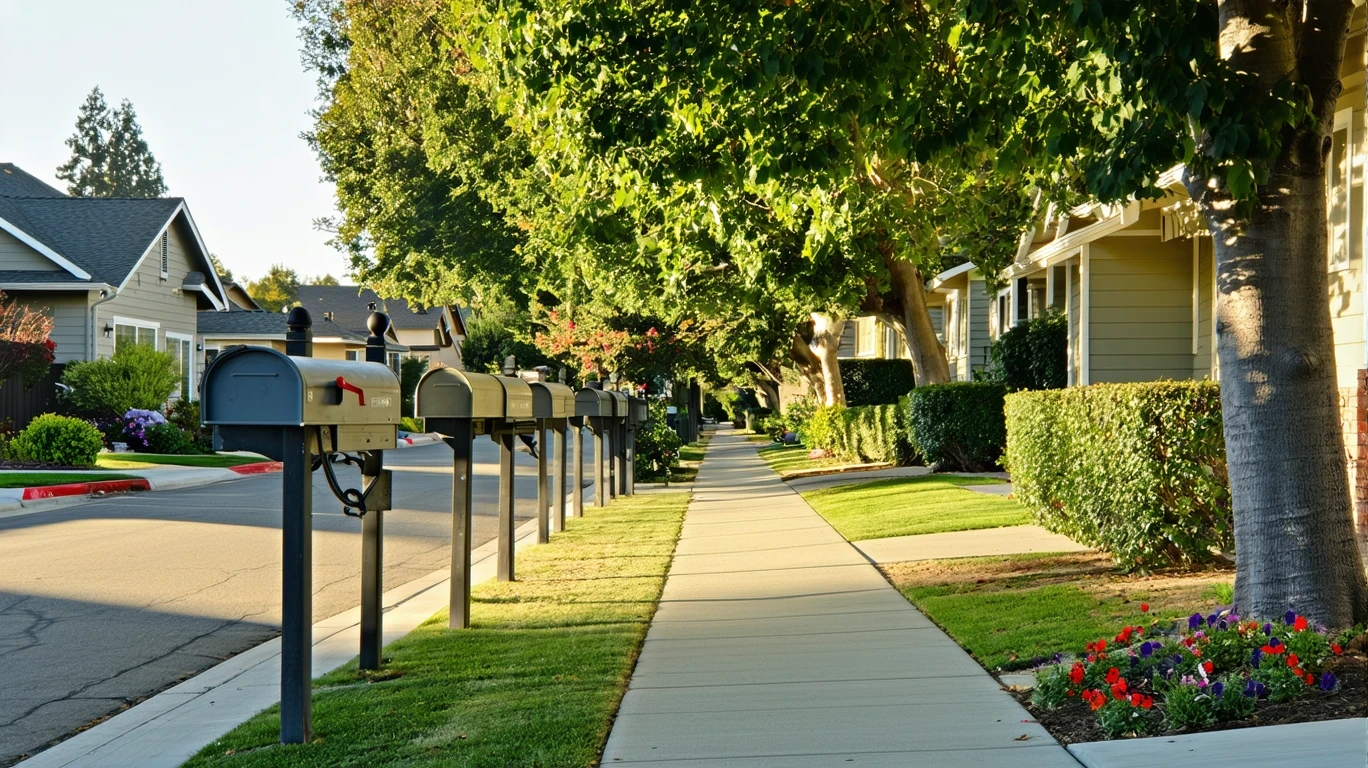
Overall Cost of Living Snapshot
Los Altos sits firmly in the expensive tier of California metros, shaped almost entirely by its housing market. With a median home value exceeding $2 million and rent topping $3,500 monthly, the cost structure here reflects both Silicon Valley proximity and the scarcity of available inventory in a low-density, established suburb.
Beyond housing, costs align roughly with state norms. Electricity runs 31.91¢ per kWh, natural gas is priced at $21.89 per MCF, and gasoline averages $4.59 per gallon—all elevated compared to national baselines but typical for Northern California. The regional price parity index of 100 suggests that non-housing goods and services track close to the broader Bay Area average, meaning groceries, dining, and personal services don’t add unexpected premiums on top of the housing burden.
What differentiates Los Altos from other high-cost Bay Area cities is the interplay between housing pressure and transportation exposure. Commutes here average just 22 minutes, and the city’s structure supports a mix of car trips and walkable errands in certain pockets. Food and grocery density exceeds high thresholds, and park access is well integrated, reducing the need for long drives to access daily needs or outdoor space. The pedestrian-to-road ratio is high in parts of the city, and both residential and commercial land use coexist, creating neighborhoods where some errands can be handled on foot or with minimal driving.
Driver verdict: Housing dominates the cost equation in Los Altos. Once that entry cost is absorbed—whether through rent or ownership—the city’s short commutes, accessible errands, and moderate utility exposure keep ongoing monthly pressure lower than the sticker price might suggest. Surprises come not from hidden fees or volatile bills, but from the sheer magnitude of the housing threshold itself.
Housing Costs (Primary Driver)
Housing is the defining cost exposure in Los Altos. The median home value of $2,000,001 reflects a market built on scarcity, school district reputation, and proximity to major Silicon Valley employers. For buyers, this means significant upfront capital requirements and ongoing property tax obligations that dwarf most other line items. Ownership here is a long-term commitment, and the cost structure rewards those who can weather the entry barrier and plan to stay.
Renters face a median gross rent of $3,501 per month, a figure that includes some utilities or services in certain buildings but often stands alone as the largest single monthly obligation. Unlike ownership, renting in Los Altos offers flexibility and eliminates maintenance unpredictability, but it also means ongoing exposure to lease renewals in a market where landlords hold pricing power.
The renting-versus-owning decision here isn’t about affordability in the traditional sense—it’s about liquidity, timeline, and risk tolerance. Renters avoid the multi-million-dollar entry cost and can relocate without transaction friction. Owners gain stability, tax advantages, and insulation from rent increases, but they absorb all property tax changes, maintenance events, and insurance adjustments. Both paths are expensive; the question is which form of expense aligns with your situation.
Conclusion: Los Altos is an ownership-dominant market where buying makes sense for those with long horizons and significant capital. Renting works for those prioritizing flexibility or unwilling to lock in at current valuations. This is not a transitional city for most—it’s a destination market where housing costs are the price of entry, not a temporary burden.
| Housing Type | Cost Anchor | What That Buys You |
|---|---|---|
| Median Home Value | $2,000,001 | Ownership stability, property tax exposure, maintenance control, long-term equity |
| Median Gross Rent | $3,501/month | Flexibility, no maintenance risk, exposure to lease renewals, no property tax |
Utilities & Energy Risk
Utility costs in Los Altos are shaped by California’s energy pricing structure and the region’s mild climate. Electricity is billed at 31.91¢ per kWh, a rate that reflects state-level renewable mandates and tiered pricing systems. For a household using around 1,000 kWh per month—a typical baseline for moderate consumption—that translates to roughly $319 in illustrative monthly electricity costs before taxes and fees. Actual bills vary with air conditioning use in summer, appliance efficiency, and whether the home has solar panels or battery storage.
Natural gas, priced at $21.89 per MCF (approximately 100 therms), is used primarily for heating and cooking. In a region where winters are cool but not severe, gas consumption tends to spike modestly in December through February. A household using around 1 MCF per month during heating season might see illustrative gas bills near $22 before fees, though usage varies widely depending on home size, insulation quality, and thermostat habits.
The risk profile here is moderate. Bills are not trivial, but they’re predictable and manageable relative to housing costs. The main volatility comes from summer cooling in poorly insulated homes or from rate changes driven by state policy shifts. Efficiency upgrades—better windows, insulation, or HVAC systems—reduce usage and help stabilize bills, though the upfront investment must be weighed against the payoff timeline.
Risk classification: Moderate. Utilities represent a recurring obligation that responds to behavior and efficiency, but they don’t introduce the same level of financial uncertainty as housing or transportation in this market.
Groceries & Daily Costs
Grocery costs in Los Altos reflect the broader Bay Area price environment, where food prices run above the national average but remain stable and predictable. Ground beef is priced at $6.75 per pound, eggs at $2.58 per dozen, and milk at $4.10 per half-gallon. These figures indicate moderate upward pressure compared to lower-cost regions, but they don’t represent the extreme premiums seen in more isolated or supply-constrained markets.
For households, this translates to steady weekly grocery bills that scale with household size and dietary preferences. A family buying fresh produce, dairy, and protein will feel the difference compared to a lower-cost state, but the impact is incremental rather than transformative. The city’s high density of food and grocery establishments—exceeding density thresholds across the area—means competitive options exist, and residents can shop around without long drives or reliance on a single provider.
Daily costs beyond groceries—coffee, takeout, personal care—follow similar patterns. Prices are elevated but not prohibitive, and the accessibility of errands within walkable pockets or short drives reduces the friction and time cost of routine purchases. The structure of the city supports efficient household logistics, which helps offset some of the price pressure by reducing fuel consumption and time spent traveling for necessities.
Transportation Reality
Transportation in Los Altos is defined by car dependency tempered by short distances. The average commute is 22 minutes, a figure that reflects both proximity to Silicon Valley job centers and the relative ease of local road networks. For a commuter driving 25 miles round trip at 25 MPG with gas priced at $4.59 per gallon, illustrative fuel costs land near $4.59 per day, or roughly $92 per month for a five-day work week, before accounting for tolls, parking, or vehicle wear.
The city’s structure supports some walkability in pockets where pedestrian infrastructure is denser, and bus service is present for those who can align routes with their schedules. However, most households rely on at least one vehicle for commuting, errands, and family logistics. The bike-to-road ratio sits in the medium band, indicating some cycling infrastructure but not enough to replace car trips for most residents.
Transportation here is a recurring exposure, not a crisis. Short commutes keep fuel and time costs manageable, and the accessibility of groceries and services reduces the need for long errand loops. The primary cost is vehicle ownership itself—insurance, registration, maintenance—which compounds for households running two cars. For those who work remotely or can walk to transit, transportation pressure drops significantly. For everyone else, it’s a steady, predictable obligation that scales with commute length and vehicle count.
Cost Exposure Profiles
Cost exposure in Los Altos varies sharply depending on housing status, commute pattern, and household structure. The city’s cost profile rewards those who have already absorbed the housing entry barrier and can take advantage of short commutes and accessible errands. It penalizes those entering the market fresh or those whose work requires long drives outside the immediate area.
Low-exposure situation: A homeowner with a paid-off mortgage or significant equity, working locally or remotely, faces minimal ongoing cost pressure. Property taxes and maintenance remain, but without rent or a commute burden, monthly obligations stay contained. Utilities are moderate, groceries are manageable, and the city’s walkable pockets and park access reduce the need for costly recreational travel.
High-exposure situation: A renter commuting to a distant job with a vehicle-dependent household faces compounding pressure. Rent exceeds $3,500 monthly, fuel and vehicle costs add up with longer trips, and the inability to build equity means every month resets the cost clock. Lease renewals introduce uncertainty, and any disruption—job loss, car trouble, medical expense—has limited cushion.
The structural difference is not about income sufficiency but about which levers a household controls. Owners lock in housing costs and gain stability. Renters retain flexibility but absorb volatility. Short commutes reduce transportation drag. Long commutes amplify it. The city’s infrastructure—dense food access, integrated parks, mixed land use—helps households reduce friction and time costs, but it cannot offset the housing threshold itself.
Frequently Asked Questions
Is Los Altos more affordable than Palo Alto or Mountain View in 2026? Los Altos sits in the same high-cost tier as Palo Alto and Mountain View, with comparable housing pressure and similar utility and transportation costs. Differences are marginal and driven more by neighborhood characteristics than city-wide pricing gaps.
What does a typical cost profile look like in Los Altos? Housing dominates, whether through rent exceeding $3,500 monthly or ownership costs tied to a $2 million-plus valuation. Utilities, groceries, and transportation add steady but secondary obligations. The profile rewards those who have absorbed the housing entry cost and can leverage short commutes and accessible errands.
Do utilities cost more in Los Altos than in nearby cities? Utility rates in Los Altos reflect regional pricing, with electricity at 31.91¢ per kWh and natural gas at $21.89 per MCF. These figures are consistent with broader Bay Area norms and don’t introduce significant premiums compared to neighboring cities.
What costs tend to surprise newcomers in Los Altos? The housing entry cost is the primary surprise, particularly for those relocating from lower-cost regions. Beyond that, the relative manageability of utilities, groceries, and short commutes often surprises newcomers expecting compounding cost pressure across all categories.
Are property taxes higher in Los Altos than in San Jose? Property taxes in Los Altos are governed by California’s Proposition 13 framework, which caps increases for existing owners. Effective rates depend on assessed value and local levies, but the structure is consistent across the region. Higher home values in Los Altos mean higher absolute tax bills, even if rates are similar.
Can someone reduce transportation costs significantly in Los Altos? Yes, particularly for those who work locally, remotely, or can walk or bike to errands in the city’s more pedestrian-friendly pockets. Bus service is present, and short commutes mean fuel costs stay contained. Households running two vehicles can often consolidate to one if work and errands align.
How does the cost structure in Los Altos compare to other Silicon Valley suburbs? Los Altos shares the high housing costs, moderate utility exposure, and car-dependent infrastructure common across Silicon Valley suburbs. What distinguishes it is the combination of short average commutes, high grocery and food density, and integrated park access, which reduce some of the logistical friction seen in more sprawling or isolated suburbs.
What drives grocery costs in Los Altos compared to the rest of California? Grocery costs in Los Altos reflect Bay Area pricing, which runs above the state average due to regional wage levels, real estate costs for retailers, and supply chain factors. The city’s dense food establishment network provides competitive options, but baseline prices remain elevated compared to Central Valley or Southern California markets.
How this article was built: In addition to public economic data, this article incorporates location-based experiential signals derived from anonymized geographic patterns—such as access density, walkability, and land-use mix—to reflect how day-to-day living actually feels in Los Altos, CA.
—