
Can you live in Cupertino without a car? For most residents, the answer is no—or at least, not comfortably. While Cupertino offers pockets of walkability, notable cycling infrastructure, and bus service, the city’s transportation reality is shaped by car dependence, long commutes, and limited transit reach. Understanding how people actually get around here—and who benefits from the infrastructure that does exist—is essential for anyone considering a move.
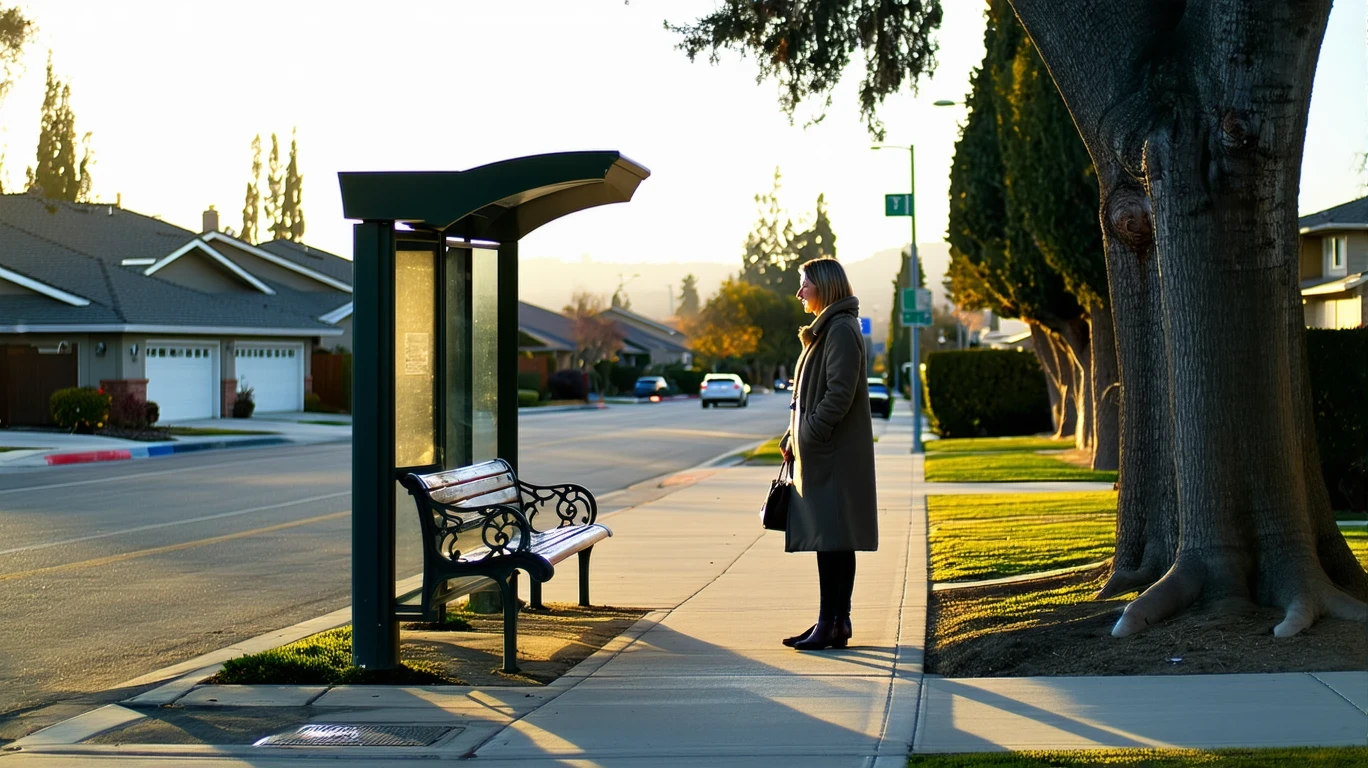
How People Get Around Cupertino
Cupertino’s dominant mobility pattern is car-first. The average commute is 25 minutes, and 43.5% of workers face long commutes, reflecting the reality that many residents travel significant distances for work. Only 3.7% work from home, meaning the vast majority leave the city daily, often heading to job centers throughout Silicon Valley and beyond.
What newcomers often misunderstand is that Cupertino’s walkable pockets and high grocery density don’t translate into transit-supported daily life. The city has substantial pedestrian infrastructure in certain areas, and the pedestrian-to-road ratio exceeds high thresholds in those zones. Food and grocery establishments are broadly accessible, with density levels that support errands on foot or bike in well-connected neighborhoods. But these strengths are localized. Outside those pockets, and especially for commuting, the car remains the primary tool.
The city’s layout reflects suburban Silicon Valley development: residential neighborhoods, commercial corridors, and office parks that are not always tightly integrated. Even in areas with good sidewalk coverage and bike lanes, the distances between home, work, and services often exceed what’s practical for daily non-car travel. Cupertino is not a place where you can assume transit will get you where you need to go, when you need to be there.
Public Transit Availability in Cupertino
Public transit in Cupertino centers around bus service. There is no rail presence in the city, which immediately limits the speed, frequency, and reach of transit options. Bus stops are present throughout the area, and public transit in Cupertino often involves systems such as VTA (Valley Transportation Authority), though coverage and routing vary by neighborhood and destination.
Transit works best for residents who live near major corridors, have flexible schedules, and travel to destinations that align with existing bus routes. For someone commuting to a nearby job center during standard hours, bus service can be a viable option—but it requires planning, patience, and acceptance of longer travel times compared to driving.
Where transit falls short is in reach and convenience. Bus service does not extend meaningfully into all residential areas, and routes are optimized for certain commute patterns, not for complex, multi-stop trips. Late-hour service is limited, and weekend coverage is less robust. For residents in less central neighborhoods, or those with reverse commutes, transit quickly becomes impractical. The absence of rail means there is no fast, high-capacity backbone to the system, and bus-only service struggles to compete with the flexibility and speed of a personal vehicle.
Driving & Car Dependence Reality
For most households in Cupertino, driving is not optional—it’s structural. The city’s geography, the distribution of jobs across Silicon Valley, and the limitations of bus-only transit mean that car ownership is the default for anyone who values control over their schedule, needs to make multiple stops, or works outside the narrow corridors served by transit.
Parking is generally available, both in residential areas and at commercial centers, which reinforces car use. Sprawl is moderate but present, and the distances between home, work, school, and errands are often too great to walk or bike comfortably, even in areas with good pedestrian infrastructure. The tradeoff is clear: driving offers speed, flexibility, and reliability, while transit offers cost savings and reduced parking hassle—but only if your life fits the routes and schedules available.
For families, car dependence is especially pronounced. School drop-offs, after-school activities, grocery runs, and weekend errands all require the ability to move quickly and carry cargo. Even in walkable pockets, the need to leave the neighborhood for work or services means a car is almost always necessary. Singles or couples without children may find it easier to rely on a combination of biking, walking, and occasional rideshare, but they are the exception, not the rule.
Commuting Patterns & Daily Mobility
Commuting in Cupertino typically involves a single-destination trip by car, often to another city in the region. The 25-minute average commute masks significant variation: some residents work nearby and face short drives, while others—43.5% of the workforce—endure long commutes that stretch well beyond half an hour. These longer commutes are not outliers; they are a defining feature of life here.
Multi-stop commutes, common among parents or workers with flexible schedules, are nearly impossible to manage without a car. Transit does not support the kind of routing flexibility required for dropping off children, stopping for errands, or adjusting plans mid-day. The low work-from-home rate (3.7%) means most residents are locked into daily travel, and the structure of that travel is shaped by the limitations of bus service and the demands of regional job distribution.
Who benefits from proximity? Residents who work in Cupertino itself, or in immediately adjacent cities, gain the most from shorter commutes and reduced exposure to traffic variability. Those who live near major employment corridors and have predictable schedules can sometimes use transit effectively. But for the majority, commuting means absorbing time, fuel costs, and the friction of regional traffic patterns.
Who Transit Works For — and Who It Doesn’t
Transit in Cupertino works for a narrow slice of residents: those who live in walkable pockets near bus routes, have flexible schedules, and travel to destinations that align with existing service. Singles or couples without complex logistics—no school runs, no multi-stop errands, no need for late-night travel—are the most likely to make transit work. Even then, it requires compromise on speed and convenience.
Transit does not work well for families. The need to coordinate multiple stops, manage time-sensitive schedules, and carry groceries or sports equipment makes bus service impractical for most household routines. It also does not work for residents in peripheral neighborhoods, where bus coverage is sparse or nonexistent. Workers with reverse commutes—traveling away from major job centers—face limited or inconvenient routing. And anyone who values predictability and control over their schedule will find transit frustrating compared to driving.
The distinction is not about preference; it’s about fit. Cupertino’s transit infrastructure serves certain patterns well and others poorly. Renters in core areas near bus lines may find it easier to go car-light, while homeowners in quieter residential zones will almost certainly need a vehicle. The city’s layout and the regional distribution of jobs make car ownership the path of least resistance for most.
Transportation Tradeoffs in Cupertino
The tradeoff between transit and driving in Cupertino is not primarily about cost—it’s about control, flexibility, and exposure to friction. Driving offers speed, reliability, and the ability to adapt plans on the fly. It allows for multi-stop trips, late-night travel, and the convenience of door-to-door service. The cost is exposure to fuel prices (currently $4.22 per gallon), parking constraints in some areas, and the time spent in traffic during peak hours.
Transit offers reduced direct costs and eliminates the need to find parking, but it comes with significant tradeoffs in time, convenience, and reach. Bus service is slower, less frequent, and less flexible than driving. It requires planning around schedules, accepting longer travel times, and limiting trips to areas served by existing routes. For households with complex logistics or time-sensitive commitments, these tradeoffs are often too steep.
The broader tradeoff is between proximity and mobility. Living in a walkable pocket near bus service reduces car dependence for errands but does not eliminate the need for a vehicle if your job, family obligations, or social life extend beyond those zones. Living farther out may offer more space or lower housing costs, but it locks you into car dependence for nearly every trip. Neither choice is wrong, but both come with structural consequences that shape what a budget has to handle in Cupertino.
FAQs About Transportation in Cupertino (2026)
Is public transit usable for daily commuting in Cupertino?
Public transit is usable for daily commuting if you live near a bus route, work along a served corridor, and have a flexible schedule. For most residents, especially those commuting to job centers outside the city or managing multi-stop routines, transit is too slow and limited to be practical. The absence of rail service means there is no fast, high-capacity option, and bus-only service does not compete well with driving for speed or convenience.
Do most people in Cupertino rely on a car?
Yes. The vast majority of Cupertino residents rely on a car for daily life. The average commute is 25 minutes, and 43.5% of workers face long commutes, most of which are made by car. Even in walkable pockets with good pedestrian infrastructure and high grocery density, the need to commute regionally and manage household logistics makes car ownership the default for most households.
Which areas of Cupertino are easiest to live in without a car?
Areas with high pedestrian infrastructure density, proximity to bus routes, and access to food and grocery establishments are the easiest to navigate without a car. These walkable pockets support errands on foot or bike and offer some transit connectivity. However, even in these areas, going entirely car-free is difficult for anyone who commutes outside the immediate neighborhood or manages complex household schedules.
How does commuting in Cupertino compare to nearby cities?
Commuting in Cupertino is shaped by the same regional dynamics that affect much of Silicon Valley: long distances between home and work, reliance on cars, and limited transit reach. The 25-minute average commute is moderate, but the high percentage of long commutes (43.5%) reflects the reality that many residents travel significant distances. Compared to cities with rail access or denser transit networks, Cupertino offers fewer non-car options for regional travel.
Can you bike for transportation in Cupertino?
Yes, biking is viable in areas with notable cycling infrastructure, where the bike-to-road ratio exceeds high thresholds. Cupertino has invested in bike lanes and paths, and certain neighborhoods support cycling for errands and short trips. However, biking for commuting depends on distance, route safety, and destination. For regional commutes or trips outside well-connected areas, biking is less practical, and most residents still rely on cars for longer or more complex travel.
How Transportation Fits Into the Cost of Living in Cupertino
Transportation in Cupertino is not just a line item—it’s a structural factor that shapes housing choice, time allocation, and daily flexibility. The decision to live near transit, in a walkable pocket, or farther out in a quieter neighborhood has direct consequences for how much you drive, how much time you spend commuting, and how much control you have over your schedule.
Car dependence is the norm here, and that dependence carries costs beyond fuel and maintenance. It affects where you can live, how you structure your day, and how much friction you absorb in managing household logistics. For families, the need for a car is nearly absolute. For singles or couples, going car-light is possible in certain areas, but it requires accepting limitations on reach, speed, and convenience.
Understanding transportation in Cupertino means recognizing that the city’s infrastructure—walkable in pockets, bus-served but not rail-connected, bike-friendly in parts—does not eliminate the need for a car for most residents. It means knowing which neighborhoods support non-car mobility for errands and which lock you into driving for everything. And it means planning for the reality that commuting here is regional, time-intensive, and car-dependent for the majority of workers.
Transportation is not separate from housing, income, or lifestyle—it’s woven into all of them. The choices you make about where to live and how to get around will define much of your experience in Cupertino, and those choices are best made with clear eyes about what the infrastructure actually supports.
How this article was built: In addition to public economic data, this article incorporates location-based experiential signals derived from anonymized geographic patterns—such as access density, walkability, and land-use mix—to reflect how day-to-day living actually feels in Cupertino, CA.
—