
74 out of 100 residents say they’re happy in Milpitas—but happiness here isn’t about charm or excitement. It’s about infrastructure that works, schools that deliver, and a location that pays off if you’re commuting into Silicon Valley. The emotional tone of Milpitas is pragmatic satisfaction: people appreciate what the city does well, but few describe it as a place they fell in love with. Instead, they talk about tradeoffs—convenience over character, function over flair, proximity over personality.
This is a city that tends to fit people who value logistics over lifestyle, and it tends to frustrate people who expected more texture, variety, or a sense of place. Understanding whether Milpitas feels like home depends less on what the city offers and more on what you’re willing to give up to get it.
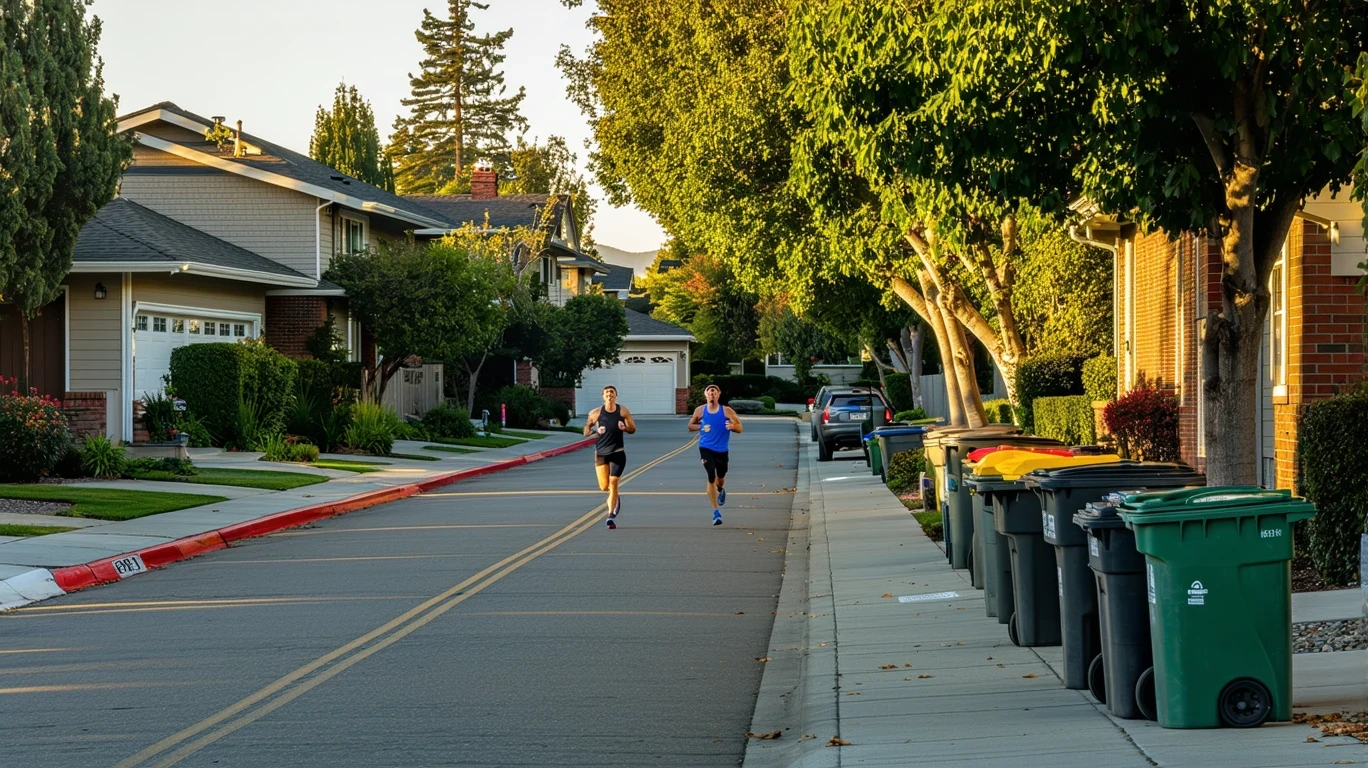
What Defines the Emotional Tone of Milpitas
Milpitas occupies an unusual emotional space: it’s neither a sleepy suburb nor a vibrant urban center, and that in-between quality shapes how people feel about living here. The city delivers strong family infrastructure, accessible errands, and integrated green space—all supported by walkable pockets, notable cycling infrastructure, and rail transit access. For households prioritizing practical daily logistics, this combination feels like a win.
But the same infrastructure that makes life manageable also contributes to a sense of emotional neutrality. People describe Milpitas as a place that works, not a place that inspires. The mixed building height and land-use patterns create functional neighborhoods without much visual distinction. The result is a city that feels competent but not memorable, efficient but not exciting.
Who tends to feel at home here? Tech workers who value a 26-minute average commute over nightlife options. Families who prioritize school density and playground access over walkable downtowns. Dual-income households comfortable with housing pressure in exchange for stability and proximity. Immigrants and multi-generational families who appreciate diverse grocery options, accessible transit, and strong community infrastructure.
Who tends to feel restless? Young professionals seeking social texture and cultural variety. Remote workers questioning whether the cost structure makes sense without commute value. Renters feeling financially stretched without the equity upside of ownership. Lifestyle-first movers expecting a distinctive sense of place or aesthetic charm.
The tension isn’t about whether Milpitas is “good” or “bad”—it’s about whether the tradeoffs align with what you need right now.
Social Media Buzz: What Locals Talk About Online
On platforms like Reddit, Facebook groups, and X (formerly Twitter), Milpitas discussions tend to cluster around a few recurring themes: commute logistics, housing affordability frustration, school quality pride, and a mild defensiveness about the city’s identity. The emotional tone is rarely celebratory, but it’s also rarely bitter—most conversations reflect a kind of resigned pragmatism.
One common sentiment: “Milpitas gets the job done. It’s not exciting, but it’s not supposed to be. If you work in the Valley and want a yard and good schools, it makes sense.” This captures the city’s core appeal—it’s a place that solves specific problems for specific people, even if it doesn’t spark joy.
Another frequent theme: “People always ask why I live here instead of San Jose or Fremont. The answer is simple: I can actually afford a house, my commute is manageable, and my kids’ schools are solid. That’s enough.” This reflects a broader pattern—Milpitas residents often frame their choice as a rational decision rather than an emotional one.
But there’s also frustration: “It feels like a place people move through, not a place people move to. There’s no downtown, no nightlife, no real identity. It’s just… functional.” This complaint comes up often among younger residents and remote workers who don’t benefit from the commute proximity that justifies the cost for others.
The overall social media vibe is protective but not passionate. People defend Milpitas when outsiders dismiss it, but they rarely evangelize about it. The city inspires loyalty rooted in practicality, not pride.
How Local Coverage Frames the City
Local news and community coverage tend to frame Milpitas through the lens of growth, change, and infrastructure—stories about what’s being built, what’s being debated, and how the city is evolving. The tone is rarely celebratory or critical; instead, it’s observational, reflecting a community still figuring out its identity.
Recurring headline-style themes include:
- Community Debates What Growth Should Look Like — discussions about new housing developments, density, and neighborhood character
- New Amenities Arrive as Town Identity Evolves — coverage of retail openings, transit improvements, and infrastructure upgrades
- Residents Weigh Convenience vs Quiet — tension between those who want more vibrancy and those who prefer suburban calm
- Schools and Safety Remain Top Priorities — ongoing focus on education quality and public safety as core community values
- Commuters Balance Proximity and Cost — stories about housing affordability and the tradeoff between location and financial pressure
The framing reflects a city in transition—no longer a quiet suburb, not yet a destination. Coverage tends to emphasize function over feeling, logistics over lifestyle. There’s little romanticization, but also little cynicism. The city is presented as a work in progress, and residents seem to accept that as the reality.
Review-Based Public Perception: What People Praise and Criticize
On platforms like Google Reviews, Yelp, and Nextdoor, Milpitas earns consistent praise for practical strengths and consistent criticism for experiential gaps. The pattern is clear: people appreciate what works (schools, parks, grocery access, commute proximity) and feel disappointed by what’s missing (nightlife, walkable downtown, cultural variety, aesthetic charm).
Positive themes tend to focus on family logistics and daily convenience. Parents highlight school quality, playground density, and park access. Commuters appreciate the rail transit connection and manageable drive times into Silicon Valley. Grocery shoppers praise the variety of Asian markets and accessible food options. The city’s infrastructure delivers on the basics, and people notice.
But the complaints are just as consistent. Younger residents and remote workers describe the city as “boring” or “soulless,” noting the lack of nightlife, entertainment options, and distinctive neighborhoods. Renters express frustration with cost pressure that feels harder to justify without the equity upside of ownership. Long-time residents sometimes lament the loss of small-town character as development accelerates.
Neighborhood variation exists but isn’t strongly defined in public perception. Newer planned areas tend to feel more polished and family-oriented, while older pockets retain a bit more texture and affordability. But most reviews treat Milpitas as a single entity rather than a collection of distinct neighborhoods—a reflection of the city’s relatively uniform functional identity.
The overall review sentiment is: “It’s fine if you know what you’re getting.” Expectations matter. People who moved here for schools, proximity, and stability tend to feel satisfied. People who moved here hoping for vibrancy, walkability, or a sense of place tend to feel let down.
How Milpitas Compares to Nearby Cities
| Dimension | Milpitas | Fremont | San Jose (East) |
|---|---|---|---|
| Overall Vibe | Pragmatic, functional, family-focused | Suburban, spacious, slightly more established | More urban texture, more variety, more expensive |
| Commute Proximity | Strong for South Bay tech hubs | Similar, slightly farther from core Valley | Closer to downtown San Jose, more transit options |
| Family Appeal | High—strong schools, parks, safety | High—similar family infrastructure | Moderate—more urban tradeoffs |
| Nightlife & Culture | Limited—quiet, suburban | Limited—similar suburban feel | Better—more restaurants, venues, variety |
| Walkability | Pockets exist, but car-dependent overall | Similar—suburban with some walkable areas | More walkable neighborhoods available |
| Cost Pressure | High, but slightly less than core San Jose | Comparable, varies by neighborhood | Higher, especially closer to downtown |
Milpitas sits in a competitive emotional space. Compared to Fremont, it feels slightly more connected to Silicon Valley’s core but offers similar suburban infrastructure and family appeal. Compared to East San Jose, Milpitas trades urban texture and variety for lower cost pressure and a quieter, more family-oriented environment.
If you prioritize commute proximity and family logistics over nightlife and walkability, Milpitas and Fremont both deliver—your choice might come down to specific neighborhood feel or school district preference. If you want more cultural variety, dining options, and urban texture, East San Jose offers that, but you’ll pay more and accept denser living conditions.
The key insight: Milpitas doesn’t try to compete on charm or excitement. It competes on function, proximity, and family infrastructure. If those are your priorities, it holds up well. If they’re not, you’ll likely feel the tradeoff more acutely than neighbors who moved here for different reasons.
What Locals Are Saying: Composite Voices from the Community
“We moved here from San Francisco when our second kid was born. The schools are great, the parks are clean, and we actually have space. Do I miss the city? Sure. But I don’t miss the stress of raising kids in a tiny apartment. This works for us right now.” — Family with young children
“I work in Sunnyvale, and my commute is under 30 minutes. That alone justifies living here. The city itself is pretty bland, but I’m not home enough to care. It’s a base, not a lifestyle.” — Tech worker, single
“Milpitas gets a bad rap, but honestly, it’s solid. The grocery options are amazing—way better than a lot of other suburbs. The schools are good. The crime is low. People expect it to be something it’s not, and then they’re disappointed. But if you know what you’re getting, it’s fine.” — Long-time resident, homeowner
“I’m remote now, and I keep asking myself why I’m still paying this much to live here. The commute value is gone, and there’s not much else keeping me. I could live somewhere cheaper and more interesting. I’m probably moving next year.” — Remote worker, renter
“It’s a good place to raise a family if you can afford it. But ‘afford it’ is doing a lot of work in that sentence. We’re stretched thin, and we’re not even living extravagantly. The cost structure here is brutal if you’re not in tech.” — Dual-income family, one non-tech job
“I like that it’s quiet and safe, but I also feel like nothing ever happens here. There’s no downtown to walk around, no local coffee shop culture, no real community gathering spots. It’s just houses and strip malls. I’m grateful for what we have, but I wouldn’t say I love it.” — Young professional, renter
“We moved here from another country, and Milpitas has been welcoming. The diversity is real, the schools are strong, and we feel like we can build a stable life here. It’s not flashy, but it’s dependable, and that matters more to us than excitement.” — Immigrant family, multi-generational household
Does Milpitas Feel Like a Good Fit for You?
Milpitas doesn’t ask you to fall in love with it. It asks you to decide whether its tradeoffs align with your current priorities. The city delivers strong family infrastructure, accessible errands, integrated parks, and rail transit access—all within a manageable commute to Silicon Valley’s core. For households who value those logistics, the city works. For households who expected more texture, variety, or a sense of place, the city feels flat.
This tends to work for: tech commuters who prioritize proximity over nightlife, families who value schools and safety over walkability, dual-income households comfortable with high costs in exchange for stability, and multi-generational families seeking practical infrastructure and diverse community resources.
This tends to frustrate: young professionals seeking social and cultural variety, remote workers questioning cost-benefit without commute value, renters feeling financially stretched without ownership equity, and lifestyle-first movers expecting charm or distinctive identity.
The city’s emotional profile is pragmatic satisfaction—people appreciate what works, even if they don’t celebrate it. If you’re looking for a place that solves specific logistical problems and you’re comfortable with a neutral emotional tone, Milpitas might fit. If you’re looking for a place that feels vibrant, distinctive, or inspiring, you’ll likely feel the absence.
To explore how these tradeoffs play out in practice, consider reading about what ‘enough’ actually means in Milpitas or how the city’s infrastructure shapes daily life. The decision isn’t about whether Milpitas is “good”—it’s about whether it’s good for you, right now.
How this article was built: In addition to public economic data, this article incorporates location-based experiential signals derived from anonymized geographic patterns—such as access density, walkability, and land-use mix—to reflect how day-to-day living actually feels in Milpitas, CA.
The perspectives shown reflect commonly expressed local sentiment and recurring themes in public discussion, rather than individual accounts.