
Mountain View is considered expensive in 2026, with median home values at $545,700 and median rent at $1,918 per month. The value proposition hinges on housing entry cost versus the ability to reduce car dependence through rail transit, walkable errands corridors, and integrated bike infrastructure.
You’re staring at a spreadsheet, trying to figure out if Mountain View makes sense financially. The rent number looks manageable compared to San Francisco—until you start adding transportation, utilities, and groceries. Then you realize the real question isn’t whether Mountain View is expensive (it is), but whether the cost structure fits how you actually live.
This guide breaks down what drives expenses in Mountain View, where the pressure points sit, and how different household setups encounter very different cost realities depending on commute patterns, housing tenure, and whether they tap into the city’s transit and walkability infrastructure.
Overall Cost of Living Snapshot
Mountain View sits at the national baseline for regional price parity (RPP index of 100), meaning its overall price level mirrors the U.S. average when adjusted for local wages and productivity. That statistical anchor, however, masks the internal cost structure: housing dominates, transportation exposure varies widely, and utilities and groceries apply moderate but consistent pressure.
The median household income is $86,136 per year (roughly $7,178 gross per month), and the unemployment rate stands at 4.1%, signaling a stable but competitive labor market. The cost shape here isn’t uniform—it’s segmented. High earners with flexible commutes and access to rail or bike infrastructure face a very different financial reality than car-dependent households driving long distances daily.
What surprises newcomers is how much transportation and housing tenure interact. Renting near a walkable corridor with rail access creates a fundamentally different cost profile than owning a single-family home in a car-dependent pocket. The primary cost driver is housing entry cost, but the swing factor—what separates low-exposure from high-exposure households—is transportation dependency and whether you organize your routines around Mountain View’s substantial pedestrian and transit infrastructure.
Housing Costs (Primary Driver)
Housing is the dominant cost pressure in Mountain View. The median home value of $545,700 reflects Silicon Valley’s broader ownership premium, while median gross rent of $1,918 per month positions renting as the more accessible entry point—but still a significant monthly obligation.
Ownership here means navigating not just the purchase price but property taxes, insurance, and maintenance on a high-value asset. Renting avoids those variables but subjects households to lease renewals in a competitive market. The calculus isn’t purely financial: ownership offers stability and insulation from rent volatility, while renting preserves flexibility and avoids the capital lock of a down payment.
Mountain View functions as both a long-term ownership market for established tech workers and a transitional rental hub for those testing the region or prioritizing mobility. The housing stock includes single-family homes, townhomes, and apartment complexes, with mixed building height character and both residential and commercial land use integrated throughout the city. This creates pockets where walkability and transit access reduce the need for a second vehicle, which in turn affects the true cost of housing when transportation is factored in.
| Housing Type | Cost Anchor | What That Buys You |
|---|---|---|
| Median Home Value | $545,700 | Ownership stability, equity building, exposure to property tax and maintenance cycles |
| Median Gross Rent | $1,918/month | Flexibility, lower upfront capital, exposure to lease renewal volatility |
The verdict: Mountain View is an ownership-dominant market with a high barrier to entry. Renting is viable for those prioritizing flexibility or building savings, but long-term residents tend to transition to ownership to lock in housing costs and benefit from equity accumulation.
Utilities & Energy Risk
Utility costs in Mountain View sit in moderate territory. Electricity runs at 34.71¢ per kWh, which is elevated compared to much of the U.S. but typical for California. Natural gas is priced at $23.78 per MCF (roughly equivalent to 100 therms), which translates to moderate heating exposure during cooler months.
Mountain View’s climate—mild year-round with warm, dry summers and cool, damp winters—means heating and cooling demands are lower than in extreme climates. There’s no extended period of triple-digit heat requiring constant air conditioning, and freezing temperatures are rare. This tempers the impact of California’s higher electricity rates. Most households see utility bills rise modestly in summer (for cooling) and winter (for heating), but the swings are smaller than in regions with more severe seasonal extremes.
The risk here is moderate. Utilities are a recurring cost that adds steady pressure but rarely creates budget shocks. Households in older buildings or those with less efficient HVAC systems will feel more exposure, while those in newer construction or who actively manage thermostat settings can keep usage—and bills—more predictable.
Risk classification: Moderate. Utility costs are present and consistent, but they don’t dominate the cost structure the way housing or transportation do.
Groceries & Daily Costs
Grocery costs in Mountain View reflect California’s broader price environment. Derived estimates based on regional price parity show staples like bread at $1.85 per pound, eggs at $2.50 per dozen, chicken at $2.05 per pound, and ground beef at $6.74 per pound. These figures suggest moderate grocery pressure—not the lowest in the country, but far from the highest.
Derived estimate based on national baseline adjusted by regional price parity; not an observed local price.
What matters more than individual item prices is how Mountain View’s food infrastructure shapes daily routines. The city shows high food establishment density and high grocery density, meaning access to supermarkets, specialty stores, and prepared food options is broadly accessible rather than concentrated in a few corridors. This reduces the friction of running errands and gives households more optionality—whether that’s shopping at a budget chain, a farmers market, or a specialty grocer.
For households cooking most meals at home, grocery costs apply steady but manageable pressure. For those relying heavily on takeout or dining out, the expense layer grows quickly, especially given the density of restaurants and cafés in walkable commercial districts.
Transportation Reality
Transportation in Mountain View is where cost exposure diverges sharply based on household behavior. Gasoline is priced at $5.79 per gallon, reflecting California’s fuel taxes and environmental regulations. For a household commuting long distances by car daily, that adds up quickly. For a household that bikes to work, takes Caltrain to San Francisco, or works remotely, transportation becomes a minor cost factor.
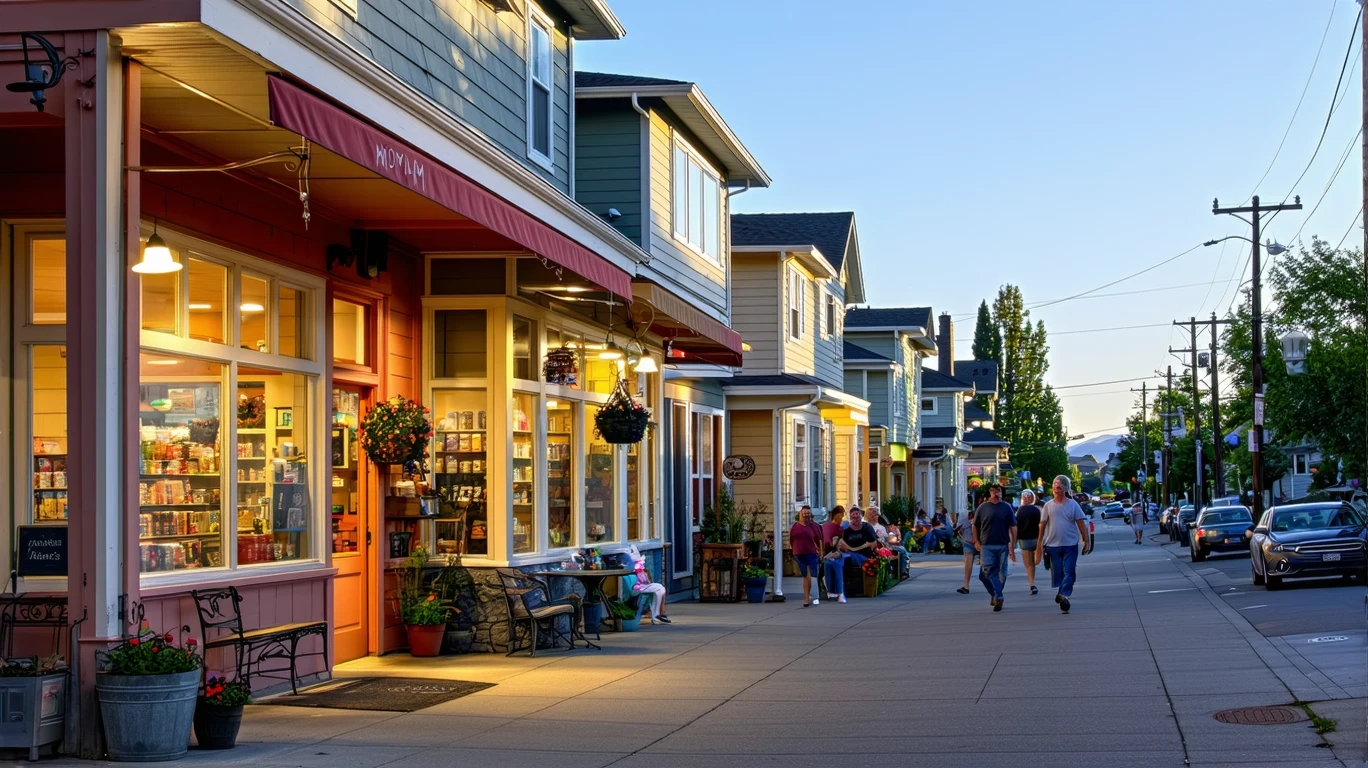
Mountain View has rail transit present (Caltrain stations provide access to the broader Peninsula and South Bay), notable bike infrastructure with a high bike-to-road ratio, and substantial pedestrian infrastructure in parts of the city. The city also shows high food and grocery density, meaning many daily errands can be completed on foot or by bike if you live near the right corridors. This infrastructure creates real optionality: households that organize their routines around transit, biking, and walkable errands can significantly reduce or eliminate the need for a second vehicle.
But that optionality isn’t universal. If your job requires driving to a suburban office park, or if your household includes multiple workers commuting in different directions, car dependency increases and so does transportation exposure. Fuel, insurance, maintenance, and parking costs stack quickly when a vehicle is in daily use.
The transportation verdict: Mountain View offers a mixed reality. Low-exposure households leverage rail, bike lanes, and walkable errands to minimize car use. High-exposure households default to driving and face recurring costs that rival or exceed rent for some budgets.
Cost Exposure Profiles
Cost exposure in Mountain View is shaped by three primary factors: housing tenure, transportation dependency, and household composition.
Low-exposure profile: A renter living near a Caltrain station or in a walkable pocket with access to grocery stores, parks, and bike lanes. This household bikes or walks for errands, takes rail for work commutes, and avoids owning a second vehicle. Monthly costs are dominated by rent ($1,918), with utilities and groceries applying moderate pressure. Transportation remains a minor line item.
High-exposure profile: A homeowner with a long car commute (or multiple commuters in the household), driving daily in a region where gas costs $5.79 per gallon. This household faces mortgage payments on a $545,700 home, property taxes, insurance, maintenance cycles, and significant transportation expenses. Utility costs are moderate but recurring. The cost structure is rigid, with limited ability to reduce major expenses without relocating or changing jobs.
The difference between these profiles isn’t income—it’s structure. A household earning $90,000 per year can thrive in Mountain View if they rent near transit and minimize car use. A household earning $120,000 can feel stretched if they own a home, commute long distances by car, and carry two vehicle payments.
Mountain View rewards households that align their living situation with the city’s infrastructure: walkable errands, rail access, bike-friendly streets, and integrated green space. Households that default to car-centric routines face a cost structure more typical of suburban sprawl, but with Silicon Valley pricing.
Frequently Asked Questions
Is Mountain View more affordable than Palo Alto or Los Altos in 2026? Mountain View tends to be less expensive than Palo Alto and Los Altos, particularly for housing, though all three cities sit in the high-cost tier of the Peninsula. The difference is often one of degree rather than kind.
What does a typical cost profile look like in Mountain View? Housing dominates, followed by transportation exposure that varies widely based on commute patterns and vehicle dependency. Utilities and groceries apply moderate, steady pressure but rarely create budget shocks.
Do utilities cost more in Mountain View than in nearby cities? Utility rates in Mountain View are typical for the Bay Area and California more broadly. Electricity is more expensive than the national average, but Mountain View’s mild climate reduces overall usage compared to regions with extreme heat or cold.
What costs tend to surprise newcomers in Mountain View? Transportation is the biggest surprise. Households accustomed to low gas prices or minimal commuting often underestimate how quickly fuel, insurance, and vehicle maintenance add up when driving is the default mode. Conversely, newcomers who assume they need a car are sometimes surprised by how much they can accomplish on foot, by bike, or via Caltrain.
Are property taxes higher in Mountain View than in San Jose? Property tax rates in California are governed by Proposition 13, so the effective rate is similar across cities. The difference comes from assessed home values—Mountain View’s higher median home value means higher absolute tax bills, even at the same rate.
Is Mountain View a good value for renters compared to ownership? Renting offers lower upfront costs and more flexibility, making it a strong option for newcomers or those prioritizing mobility. Ownership provides long-term stability and equity building but requires significant capital and exposes households to maintenance and tax cycles.
How much does commuting by car cost compared to taking Caltrain? Driving incurs fuel, insurance, maintenance, and parking costs that compound quickly at $5.79 per gallon. Caltrain fares are lower per trip, and rail commuting eliminates wear on a vehicle, though it requires living near a station and working near another transit hub.
Does Mountain View’s walkability actually reduce costs? Yes, for households that organize their routines around it. High food and grocery density, bike infrastructure, and pedestrian-friendly corridors mean many errands and short trips don’t require a car. This can eliminate the need for a second vehicle, which is a significant recurring expense.
How this article was built: In addition to public economic data, this article incorporates location-based experiential signals derived from anonymized geographic patterns—such as access density, walkability, and land-use mix—to reflect how day-to-day living actually feels in Mountain View, CA.
—