
Is Davie the perfect college town for your budget? For students at Nova Southeastern University and nearby campuses, this South Florida community offers a compelling mix: walkable neighborhoods near campus, an impressive network of parks and outdoor spaces, and a cost structure that rewards smart housing choices. With a student-friendliness score of 72 out of 100, Davie earns its reputation as a practical, livable college town—especially for students willing to share housing and take advantage of the town’s transit and bike infrastructure. The key advantages? Strong recreational amenities, bus service that connects campus to commercial corridors, and pockets of genuine walkability that let you ditch the car for daily errands. The tradeoffs? You’ll need to be strategic about where you live to maximize convenience, and weekend trips to Miami or Fort Lauderdale still require wheels or ride-sharing.
Why Students Choose Davie
Davie’s appeal starts with proximity. Nova Southeastern University anchors the local student population, and the town’s infrastructure reflects that presence. You’ll find a density of schools, recreational facilities, and community spaces that translate directly into student-friendly amenities: gyms, sports fields, study-worthy parks, and coffee shops clustered along key corridors. The town’s mixed urban form—a blend of low-rise apartments, townhomes, and single-family houses—creates housing variety that supports different budgets and living arrangements, from shared off-campus houses to purpose-built student complexes.
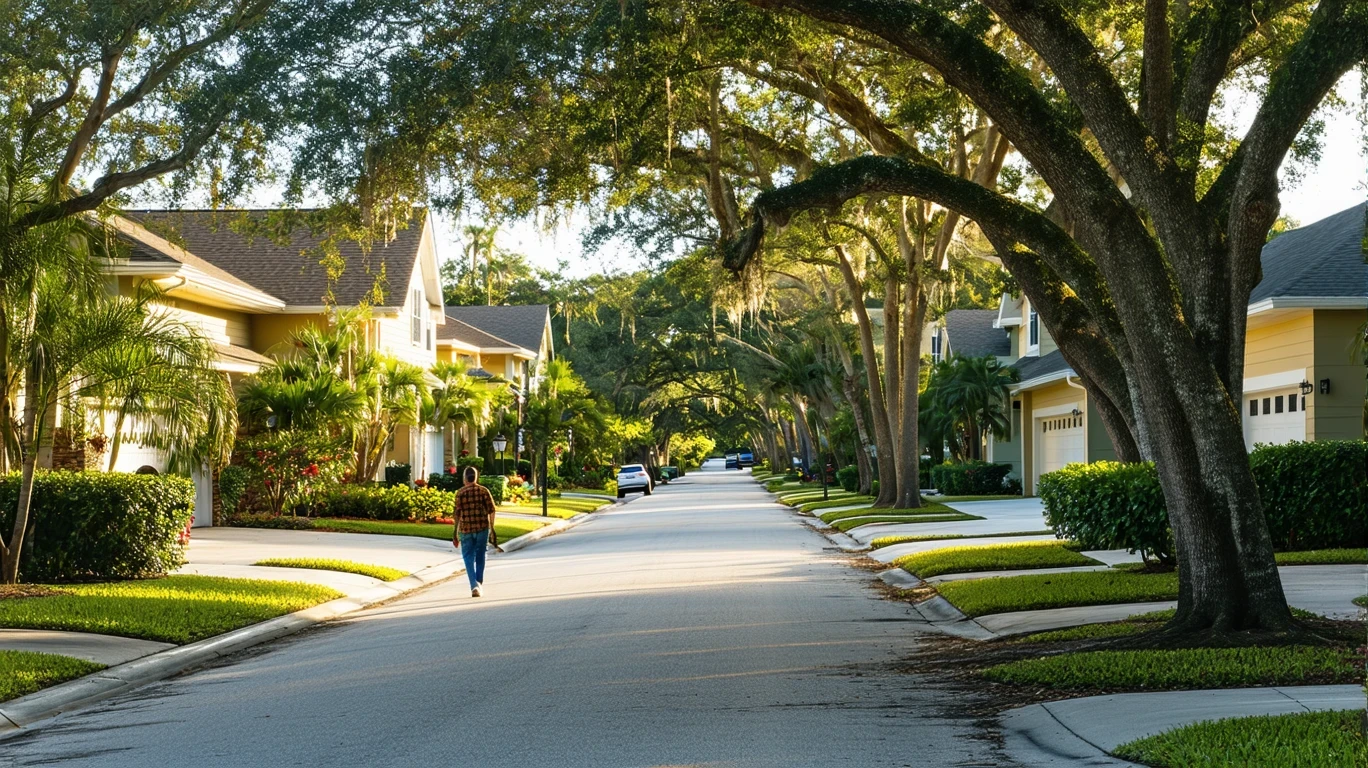
What sets Davie apart is how its physical layout shapes daily life. The town features walkable pockets where pedestrian infrastructure is strong, meaning students living near campus or along commercial corridors can handle errands, classes, and social plans on foot or by bike. Grocery stores, cafes, and essential services cluster along these corridors rather than scattering across sprawling strip malls, so a little planning goes a long way. And with park density exceeding regional benchmarks and water features woven throughout, outdoor study sessions and weekend recreation feel integrated into the rhythm of student life, not tacked on as an afterthought.
The town’s bus service provides a backbone for students without cars, connecting residential areas to campus and commercial hubs. While Davie lacks rail transit—limiting spontaneous trips to the broader metro—the bus network and bike-friendly pockets mean car ownership isn’t mandatory if you choose your housing strategically. For students balancing tuition, rent, and living expenses, that flexibility matters. The local unemployment rate of 3.2% signals a healthy job market for part-time work, and the town’s position in the Miami-Fort Lauderdale metro means internship and career opportunities are within reach, even if the commute requires some planning.
Housing Options for Students
The housing market in Davie presents a clear divide: the median gross rent of $1,805 per month reflects the broader rental market—families leasing single-family homes, professionals in newer complexes—but student housing operates in a different tier. Shared two- and three-bedroom apartments near campus typically run significantly lower per person, especially in older complexes or houses converted for student use. Purpose-built student housing near Nova Southeastern offers the convenience of furnished units, flexible lease terms, and included utilities, though you’ll pay a premium for that simplicity.
Off-campus housing strategies hinge on roommates. A three-bedroom apartment split among students can bring individual costs down to a manageable range, particularly if you’re willing to live a bit farther from campus and rely on the bus or a bike. Lease terms generally follow the academic calendar, with 12-month leases standard but some landlords offering 9- or 10-month options for students who leave for the summer. Expect to pay first and last month’s rent plus a security deposit upfront—budget for three months’ worth of housing costs before you move in. Roommate-finding resources through the university, campus housing boards, and local Facebook groups make it easier to connect with others looking to share costs.
On-campus housing at Nova Southeastern provides the most straightforward option for freshmen and students prioritizing convenience over cost. You’ll trade higher monthly expenses for proximity to classes, included utilities, and access to campus dining plans. For upperclassmen and graduate students, the off-campus market opens up more control: you choose your neighborhood, your roommates, and your tradeoffs between rent, location, and walkability. The key is understanding Davie’s corridor-clustered layout—living near a commercial corridor or within a walkable pocket means daily errands stay simple, while living between these zones often means you’ll need a car or extra time on the bus.
Getting Around: Transportation and Campus Access
Davie’s transportation landscape rewards students who plan ahead. The town’s bus service connects residential neighborhoods to campus and key commercial areas, and student discounts on transit passes make it an affordable option for those willing to build their schedule around routes and timing. For students living in the walkable pockets near campus, a bike and a bus pass can cover most needs—classes, grocery runs, coffee shop study sessions—without the expense of car ownership, insurance, and parking permits.
Biking works best in the areas where infrastructure supports it. Some pockets of Davie feature bike lanes and lower-traffic streets that make cycling practical and safe, though the network isn’t comprehensive across the entire town. If you’re considering a bike as your primary transportation, visit the neighborhood before signing a lease and test the route to campus during the time of day you’d actually be riding. Campus shuttle services, where available, add another layer of flexibility, particularly for students living in off-campus complexes with dedicated stops.
Car ownership remains common among Davie students, particularly those who work off-campus, travel home on weekends, or want the freedom to explore Miami and Fort Lauderdale without coordinating rides. Gas prices currently sit at $2.77 per gallon, and parking on or near campus typically requires a permit. The tradeoff is clear: a car expands your radius and your spontaneity, but it also adds monthly costs—insurance, gas, maintenance, parking fees—that can rival your share of rent. Ride-sharing fills the gap for occasional trips, though costs add up quickly if it becomes your primary mode for errands or social outings. The decision hinges on where you live and how you spend your time: students in walkable areas near campus can often go car-free, while those farther out or with off-campus jobs may find a car essential.
Student Cost of Living
Living costs in Davie vary widely depending on your housing situation and lifestyle choices, but the structure is consistent: housing and food dominate your budget, while transportation and discretionary spending flex based on your priorities. A frugal student sharing a three-bedroom apartment, cooking most meals, and relying on the bus can keep monthly costs significantly lower than someone living solo, eating out frequently, and maintaining a car. The regional price parity index of 103 means Davie’s overall cost level runs slightly above the national baseline, but the gap is modest—you’re not facing the extreme premiums of major coastal cities.
For students living in shared housing, illustrative monthly budgets might look like this: your share of rent could range from moderate to higher depending on proximity to campus and unit quality, with utilities (electricity at 15.70¢/kWh, water, internet) adding another layer. Florida’s climate drives cooling costs, so expect higher electric bills during the long, hot months when air conditioning runs constantly. Food costs split between groceries and occasional dining out, with access to campus meal plans offering convenience at a premium. Transportation costs depend entirely on your setup—a bus pass runs far less than car ownership, but if you’re driving, budget for gas, insurance, and parking.
Part-time work opportunities in Davie help offset expenses. The local job market, reflected in the 3.2% unemployment rate, supports student employment in retail, food service, tutoring, and campus positions. Typical student wages vary by role, but even 10-15 hours per week can cover groceries, transportation, and discretionary spending, reducing reliance on loans or family support. On-campus jobs offer the advantage of flexible scheduling around classes, while off-campus positions may pay slightly more but require commuting time. Balancing work and academics is the perpetual student calculus, but in a town with decent job availability, finding something that fits your schedule is generally achievable.
Monthly Student Budget in Davie
Here’s what a typical monthly student budget might look like in Davie, comparing shared housing and solo living scenarios. These figures are illustrative, based on average student spending patterns and local cost context, and exclude tuition and fees.
| Expense Category | Shared Housing | Solo Living |
|---|---|---|
| Rent (your share) | $600–$850 | $1,200–$1,600 |
| Utilities (electric, water, internet) | $80–$120 | $150–$200 |
| Food (groceries + occasional dining) | $250–$350 | $300–$450 |
| Transportation (bus pass or car costs) | $50–$200 | $50–$300 |
| Textbooks & supplies | $50–$100 | $50–$100 |
| Entertainment & social | $100–$200 | $100–$250 |
| Personal care & miscellaneous | $75–$125 | $100–$150 |
| Total | $1,205–$1,945 | $1,950–$3,050 |
Estimates based on average student spending patterns and local costs. Ranges reflect frugal to moderate lifestyles and do not include tuition, fees, or financial aid.
Student-Friendly Amenities and Services
Davie’s infrastructure density works in students’ favor. The town’s network of parks, recreational facilities, and community spaces—validated by high park density and strong family infrastructure signals—translates into accessible gyms, sports fields, and outdoor study spots that don’t require a membership or a long drive. Coffee shops with reliable Wi-Fi cluster along commercial corridors, creating study spaces beyond the campus library. These aren’t luxury amenities; they’re the everyday texture of a town built to support families and students alike, where public infrastructure does some of the heavy lifting that expensive private facilities handle elsewhere.
Healthcare access in Davie centers on local clinics and pharmacies rather than a major hospital, which means routine care—prescriptions, minor illnesses, preventive visits—is straightforward and nearby. For students, campus health centers typically handle the bulk of medical needs, but knowing that local clinics exist off-campus provides a backup for those living farther from campus or dealing with issues outside the health center’s scope. Mental health resources, increasingly critical for student well-being, are often available through campus counseling services, though off-campus options may require more research and potentially longer wait times.
Student discounts at local businesses aren’t universal, but they’re common enough to be worth asking about—restaurants, gyms, entertainment venues, and retail shops near campus often offer percentage-off deals or special student pricing. Campus job opportunities, from library positions to research assistantships to dining hall shifts, provide both income and résumé-building experience. The key is staying plugged into campus networks—student organizations, department bulletin boards, career services—where these opportunities get posted first. In a town where the economy is healthy and the student population is significant, finding part-time work that fits your schedule is less about scarcity and more about persistence and timing.
Social Scene and Nightlife
The social fabric of student life in Davie weaves through campus events, student organizations, and the town’s mixed-use corridors where restaurants, bars, and entertainment venues cluster. Campus social life at Nova Southeastern includes the usual mix: intramural sports, Greek life, student clubs spanning every interest from academic to recreational, and university-sponsored events that anchor the weekend calendar. For students who thrive on structured community, campus organizations provide instant social networks and leadership opportunities.
Off-campus, Davie’s nightlife skews toward the accessible rather than the extravagant. You’ll find age-appropriate venues—bars, live music spots, casual restaurants with late hours—concentrated along key corridors, though the scene isn’t as dense or varied as what you’d encounter in downtown Fort Lauderdale or Miami. The tradeoff is affordability and proximity: a night out in Davie costs less and requires less travel than a trip to the bigger metro nightlife districts. For students who want the occasional urban experience, Miami and Fort Lauderdale are close enough for weekend adventures, but Davie itself offers enough to keep social life from feeling isolated or stagnant.
Cultural activities—concerts, festivals, art events—pop up both on campus and in the broader community, particularly in the parks and outdoor spaces that define Davie’s character. The town’s integrated green space network becomes social infrastructure during weekends and evenings: pickup sports games, group study sessions, casual hangouts that don’t cost anything beyond showing up. The dating scene and broader social networking opportunities benefit from the density of young people that a major university brings, though the town’s layout means you’ll encounter the same faces in the walkable pockets and campus areas more often than in a sprawling metro. For some students, that familiarity builds community; for others, it feels limiting. Your experience depends on what you’re seeking and how much effort you put into expanding your radius.
Safety and Practical Considerations
Campus safety measures at Nova Southeastern follow standard university protocols: campus police, emergency call boxes, late-night escort services, and security in residence halls. Off-campus safety varies by neighborhood, as it does in any town, but Davie’s overall character leans suburban and family-oriented, which generally correlates with lower crime rates in residential areas. The practical advice is universal: know your neighborhood, stay aware of your surroundings, use well-lit routes at night, and trust your instincts. Students living off-campus should prioritize neighborhoods with good lighting, visible foot traffic, and proximity to bus stops or bike routes if they’re not driving.
Emergency services—police, fire, medical—are accessible throughout Davie, and the town’s clinic network handles urgent care needs when campus health services are closed. Campus security and local police maintain communication channels for students, and most universities offer safety apps that let you share your location or request assistance quickly. The key is familiarity: know where the nearest urgent care clinic is, program campus security into your phone, and understand which bus routes run late if you’re relying on transit after evening classes or social events.
Academic support services—tutoring, writing centers, study groups, office hours—are the infrastructure that keeps students on track when coursework gets overwhelming. Most universities bundle these resources into student fees, so they’re effectively prepaid; using them isn’t a sign of struggle, it’s strategic. Career services and internship placement offices become increasingly important as you move through your degree, particularly in a metro area where competition for internships and entry-level positions is real. Starting those relationships early, even as a freshman, builds networks and opportunities that pay off when you’re job-hunting senior year. In a town like Davie, where the local economy is stable and the broader metro offers diverse industries, the combination of campus career services and regional job markets creates pathways worth exploring long before graduation.
FAQs About Student Life in Davie
What’s the average cost of student living in Davie?
For students sharing housing, monthly costs typically range from $1,200 to $1,950, covering rent, utilities, food, transportation, and personal expenses, excluding tuition. Solo living pushes that range to $1,950 to $3,050 per month. The biggest variable is housing—shared apartments near campus bring costs down significantly, while solo living or premium student complexes drive them up. Transportation choices (bus pass versus car ownership) and food habits (cooking versus dining out) create the next layer of variation.
How safe is it for students to live off-campus?
Davie’s off-campus neighborhoods are generally safe, particularly in areas close to Nova Southeastern and along well-traveled corridors. Like any town, safety varies by specific location, so visiting neighborhoods at different times of day, checking lighting and foot traffic, and talking to current students about their experiences are essential steps before signing a lease. Campus security and local police maintain communication, and most students report feeling comfortable walking or biking during daylight hours in the walkable pockets near campus.
Are there good part-time job opportunities?
Yes. The local unemployment rate of 3.2% reflects a healthy job market, and students find part-time work in retail, food service, tutoring, campus positions, and internships related to their field of study. On-campus jobs offer scheduling flexibility around classes, while off-campus positions may pay slightly more but require commuting. Persistence and early applications—especially for campus jobs—improve your chances, and career services offices often maintain job boards specifically for students.
What’s the social scene like for college students?
The social scene blends campus-centered activities—student organizations, intramural sports, university events—with off-campus options along Davie’s commercial corridors, where restaurants, bars, and entertainment venues cluster. It’s not as dense or varied as downtown Fort Lauderdale or Miami, but it’s accessible, affordable, and sufficient for most students’ day-to-day social needs. For bigger nights out or cultural events, the broader metro is close enough for weekend trips. The town’s parks and outdoor spaces also serve as social infrastructure, hosting everything from pickup sports to group study sessions.
Making the Decision: Is Davie Right for Your College Years?
Davie works best for students who value practical tradeoffs over urban intensity. If you’re looking for a college town where shared housing keeps costs manageable, where bus service and walkable pockets let you live without a car, and where parks and recreational spaces are genuinely integrated into daily life, Davie delivers. The town’s infrastructure—strong family amenities that double as student resources, corridor-clustered errands that reward a little planning, and proximity to a major university—creates a livable, functional environment for students focused on academics, part-time work, and a balanced social life.
The challenges are real but navigable. You’ll need to be strategic about housing location to maximize walkability and minimize commute friction. Weekend exploration of the broader metro requires either a car, ride-sharing, or the patience to coordinate rides with friends. The nightlife and cultural scene won’t rival what you’d find in a major city, though it’s more than sufficient for most students’ needs. And while the cost structure is reasonable compared to South Florida’s pricier markets, it still requires budgeting discipline—shared housing, smart grocery shopping, and choosing between car ownership and transit-based living.
For students and parents evaluating Davie, the decision hinges on priorities. If proximity to Nova Southeastern, access to outdoor space, and a cost structure that rewards smart choices matter more than urban amenities or rail transit access, Davie earns serious consideration. Visit the neighborhoods where you’d actually live, test the bus routes you’d actually use, and talk to current students about their real experiences—not the glossy campus tour version, but the day-to-day logistics of managing expenses, getting around, and building a life during your college years. The town won’t be perfect for everyone, but for students who understand its layout and leverage its strengths, it offers a solid foundation for the academic and personal growth that defines this stage of life.
How this article was built: In addition to public economic data, this article incorporates location-based experiential signals derived from anonymized geographic patterns—such as access density, walkability, and land-use mix—to reflect how day-to-day living actually feels in Davie, FL.