
| Transit Type | Coverage Level | Typical Use Case |
|---|---|---|
| Bus Service | Corridor-focused | Single-destination commutes, flexible schedules |
| Rail Transit | Not present | N/A |
| Pedestrian Infrastructure | Concentrated in pockets | Local errands in select neighborhoods |
| Cycling Infrastructure | Limited areas | Recreational or short trips |
How People Get Around Davie
Understanding transportation options in Davie starts with recognizing that most daily life here is built around driving. The city’s layout reflects a suburban development pattern where residential areas spread across a relatively wide footprint, and commercial activity clusters along major corridors rather than distributing evenly throughout neighborhoods. This structure means that even though some areas offer sidewalks, parks, and local amenities within walking distance, the majority of households rely on a car for groceries, work commutes, and routine errands.
What newcomers often misunderstand is that Davie isn’t uniformly car-dependent. There are pockets—particularly near denser residential clusters and along bus routes—where walking, biking, or using public transit becomes more practical. But these pockets don’t connect seamlessly across the city. If you’re evaluating whether you can live here without a car, the answer depends heavily on where you live, where you work, and how much flexibility you have in structuring your day.
The city’s pedestrian infrastructure is notably stronger in certain areas, with a pedestrian-to-road ratio that exceeds typical suburban benchmarks. This doesn’t mean Davie feels like a walkable downtown, but it does mean that in the right neighborhood, you can walk to a park, a school, or a nearby plaza without feeling like you’re navigating a highway. Outside those zones, however, the infrastructure thins out quickly, and driving becomes the default.
Public Transit Availability in Davie
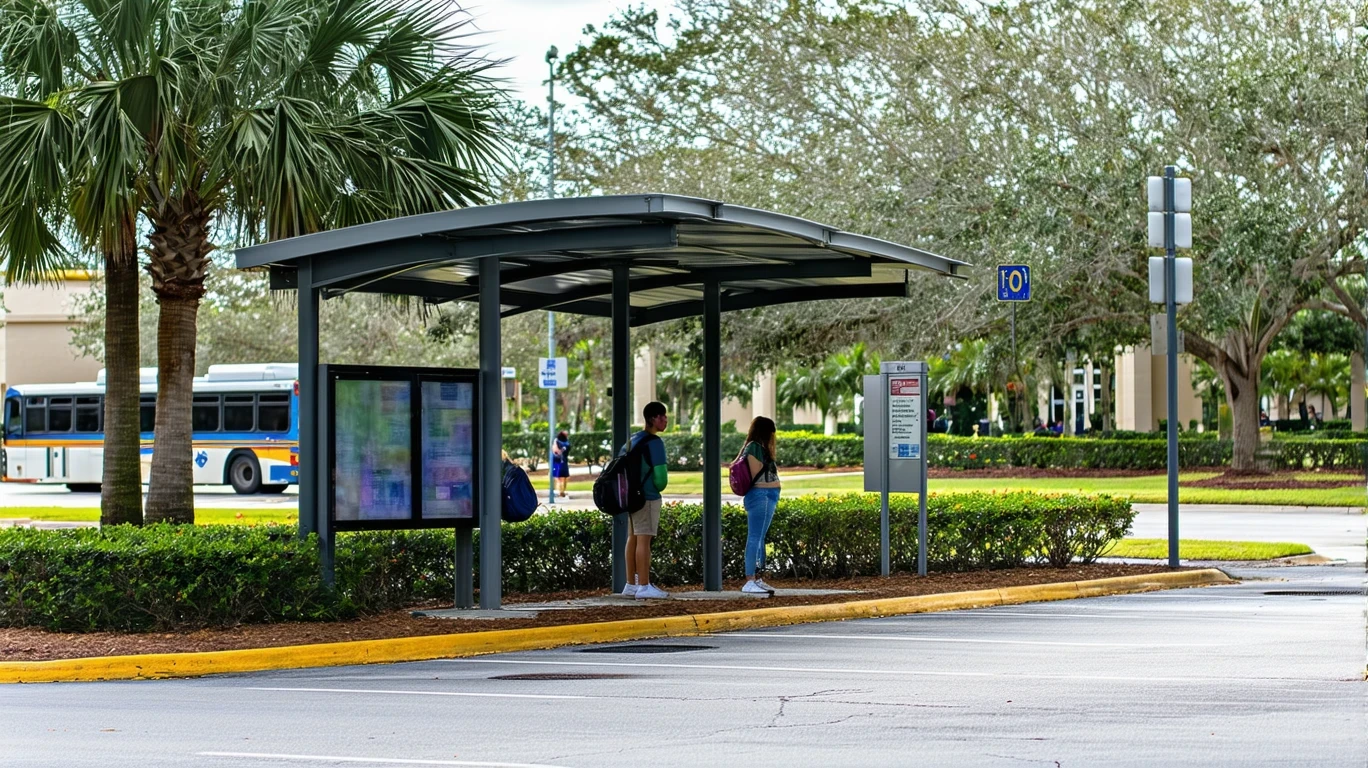
Public transit in Davie centers around bus service. There is no rail transit, so anyone relying on public transportation will be working within the constraints of a bus-only system. Bus routes tend to follow the city’s main corridors, connecting residential areas to commercial hubs, schools, and transfer points that link to broader regional networks. For someone commuting to a single destination along a major route, this can work. For someone making multiple stops, running errands across different parts of town, or working irregular hours, the limitations become more apparent.
Transit works best in Davie when your routine aligns with the available routes and when you have the time flexibility to accommodate schedules that may not run as frequently as urban rail systems. Students, single commuters, and renters living near bus stops in walkable pockets are the most likely to benefit. Families managing school pickups, grocery runs, and weekend activities typically find that transit doesn’t cover enough of their needs to replace car ownership.
Coverage is not citywide in the way that would allow someone to rely on transit from any starting point. If you’re living on the periphery or in a neighborhood set back from main roads, you’ll likely need a car to reach the nearest bus stop, which defeats much of the purpose. The system is corridor-focused, not grid-based, so gaps in service are common.
Driving & Car Dependence Reality
Driving is the primary mode of transportation for most people in Davie, and the city’s infrastructure reflects that reality. Parking is generally available and not a major source of friction. Roads are designed to move traffic efficiently between residential zones and commercial corridors, and most households own at least one vehicle. For families, two cars is typical.
Car dependence here isn’t just about preference—it’s structural. Errands are clustered along corridors rather than distributed throughout neighborhoods, which means that even a short grocery trip often requires driving. The mixed building heights and presence of both residential and commercial land use suggest some density, but not the kind of compact, mixed-use development that would allow most people to walk to daily necessities.
For those who work outside Davie or who have jobs that require travel throughout the day, driving offers the flexibility and control that transit simply can’t match. The tradeoff is exposure to fuel costs, vehicle maintenance, insurance, and the time spent in traffic. But for most households, that tradeoff is unavoidable given the city’s layout.
Commuting Patterns & Daily Mobility
Commuting in Davie varies widely depending on where you work and how your day is structured. For someone with a single-destination commute to a nearby office or campus, the pattern is straightforward: drive to work, drive home. For someone managing multiple stops—dropping kids at school, running errands, picking up supplies—the day becomes a series of car trips that would be difficult to replicate using transit.
The city’s position within the broader Miami-Fort Lauderdale metro area means that many residents commute outward to jobs in neighboring cities. For these households, proximity to major roads and highways becomes a key factor in housing choice. Living closer to a main corridor can shave time off the daily commute, while living deeper in a residential zone may offer more space and quiet but adds time and distance to the drive.
People who work from home or who have flexible schedules face fewer transportation constraints. For them, Davie’s layout offers a balance: enough infrastructure to support local errands on foot or by bike in certain areas, but with the option to drive when needed. For those with fixed schedules and long commutes, the city’s car-first design is both a convenience and a necessity.
Who Transit Works For — and Who It Doesn’t
Public transit in Davie is most practical for renters living near bus corridors, students attending local schools or colleges, and individuals with single-destination commutes that align with available routes. These households can reduce or eliminate car ownership if they’re willing to plan around transit schedules and accept the limitations of a bus-only system.
Transit becomes far less viable for families managing multiple daily obligations, for anyone working outside the city, and for residents living in peripheral neighborhoods where bus service is sparse or nonexistent. The corridor-clustered nature of errands accessibility means that even if you can take the bus to work, you may still need a car to buy groceries, pick up prescriptions, or attend appointments.
Homeowners, particularly those with children, tend to default to car ownership regardless of transit availability. The flexibility and time savings outweigh the cost of maintaining a vehicle, especially when household logistics involve coordinating multiple schedules and locations.
Transportation Tradeoffs in Davie
Choosing between transit and driving in Davie is less about cost and more about control, predictability, and time. Driving offers flexibility: you leave when you want, stop where you need to, and adjust your route in real time. Transit requires planning, patience, and a willingness to work within fixed schedules and limited coverage.
For someone with a predictable routine and a commute that fits the available bus routes, transit can reduce the burden of car ownership. For someone managing a complex schedule or living outside the core service areas, driving is the only practical option. The tradeoff isn’t just financial—it’s about how much friction you’re willing to absorb in exchange for lower transportation costs.
Davie’s walkable pockets and cycling infrastructure add another layer. In the right neighborhood, you can handle some errands on foot or by bike, reducing the number of car trips without eliminating the need for a vehicle entirely. But these pockets are isolated, not connected, so they function more as local conveniences than as a citywide alternative to driving.
FAQs About Transportation in Davie (2026)
Is public transit usable for daily commuting in Davie?
Public transit can work for daily commuting in Davie if your commute aligns with available bus routes and you have schedule flexibility. The system is bus-only and corridor-focused, so coverage is not uniform across the city. Single-destination commutes are more feasible than multi-stop routines.
Do most people in Davie rely on a car?
Yes. The majority of households in Davie rely on a car for daily transportation. The city’s layout, with errands clustered along corridors and residential areas spread across a wide footprint, makes driving the most practical option for most people.
Which areas of Davie are easiest to live in without a car?
Areas with higher pedestrian infrastructure density and proximity to bus routes offer the best chance of reducing car dependence. These tend to be neighborhoods near commercial corridors where walking to errands and accessing transit is more practical. Peripheral areas require a car.
How does commuting in Davie compare to nearby cities?
Davie’s commuting experience is shaped by its suburban layout and reliance on bus transit rather than rail. Compared to cities with more extensive transit networks, Davie requires more planning and flexibility to use public transportation effectively. Driving remains the dominant mode for most residents.
Can you bike for transportation in Davie?
Cycling infrastructure exists in some areas of Davie, but it’s limited and not evenly distributed. Biking can work for short trips or recreational use in neighborhoods with dedicated paths, but it’s not a reliable citywide alternative to driving for most errands or commutes.
How Transportation Fits Into the Cost of Living in Davie
Transportation in Davie functions as a structural factor that shapes where people live, how they spend their time, and what kind of flexibility they have in daily life. The city’s car-first design means that most households will own at least one vehicle, and many will own two. That ownership brings recurring costs—fuel, insurance, maintenance—but it also brings control and predictability that transit can’t fully replace given the current infrastructure.
For households evaluating a month of expenses in Davie, transportation is less about choosing the cheapest option and more about understanding which mode aligns with your routine, your location, and your tolerance for planning friction. If you’re living near a bus corridor and commuting to a single destination, transit can reduce costs. If you’re managing a family, working outside the city, or living on the periphery, driving is the practical default.
The presence of walkable pockets and some cycling infrastructure means that in the right neighborhood, you can reduce the number of car trips without eliminating the need for a vehicle. But these are local conveniences, not citywide alternatives. Understanding where those pockets are—and whether they align with your housing options—is key to making an informed decision about transportation in Davie.
How this article was built: In addition to public economic data, this article incorporates location-based experiential signals derived from anonymized geographic patterns—such as access density, walkability, and land-use mix—to reflect how day-to-day living actually feels in Davie, FL.