
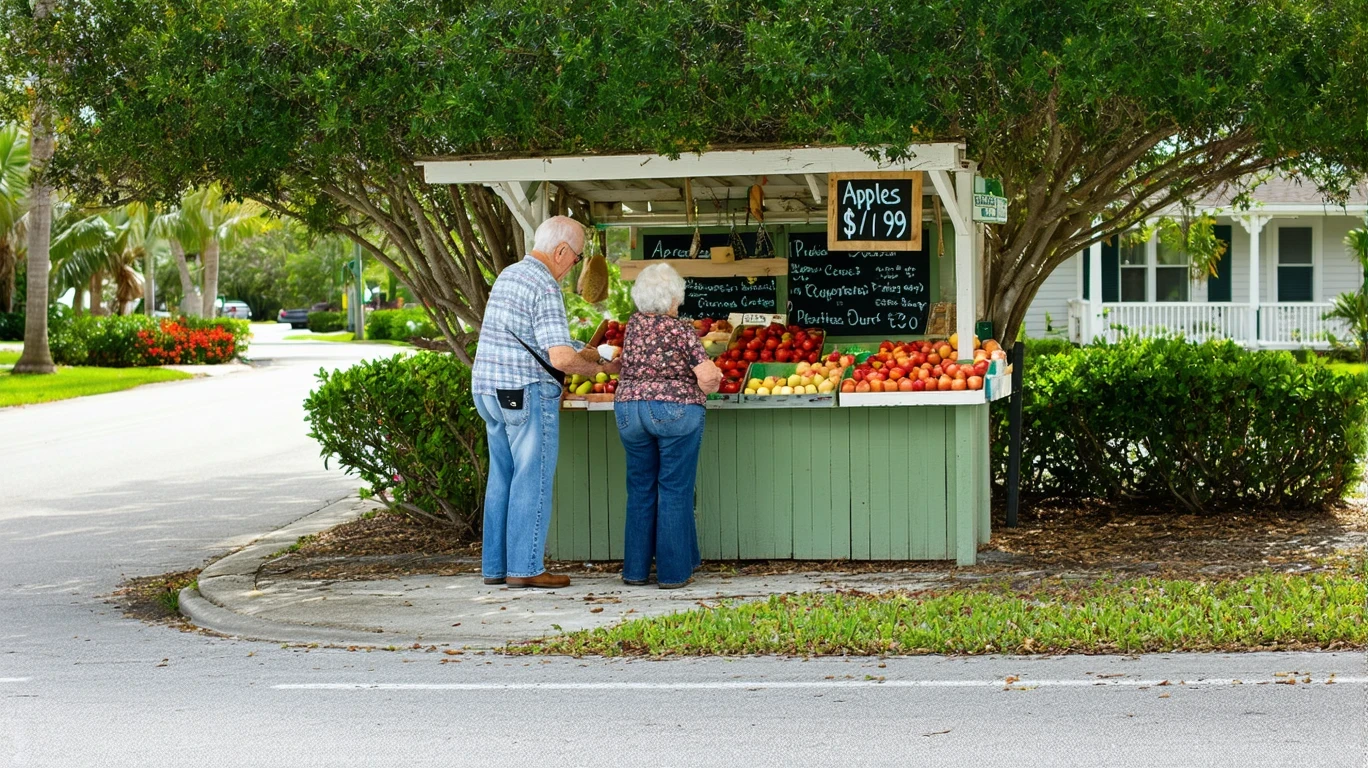
How Grocery Costs Feel in Davie
Grocery prices in Davie track slightly above the national baseline, with the region’s overall cost structure running about 3% higher than the U.S. average. That modest premium shows up most clearly in staples—bread, dairy, proteins—where even small per-unit differences compound quickly for households buying in volume. For singles and couples, the pressure is noticeable but manageable; for families with children, especially those stretching a fixed income across multiple mouths, every dollar per pound starts to matter. The difference between a tight week and a comfortable one often comes down to which store you choose and how intentionally you plan around sales and bulk opportunities.
What makes Davie distinct isn’t just the price level—it’s the corridor-clustered layout of grocery options. Food and grocery establishments concentrate along specific routes rather than spreading evenly across neighborhoods, which means access depends heavily on where you live and how far you’re willing to travel. Families near those corridors benefit from density and competition; those farther out face longer drives or fewer tier choices. That geography creates meaningful differences in how grocery costs feel day to day, even for households with similar incomes.
Median household income in Davie sits at $84,346 per year, which provides meaningful cushion for many families but doesn’t eliminate sensitivity to food price swings. Groceries remain one of the few major expense categories where households retain direct control—store choice, buying habits, and meal planning all influence the final number more than rent or insurance ever will. Understanding how prices compare locally, and how store tiers shape the experience, helps residents make decisions that fit their budget without sacrificing quality or convenience.
Grocery Price Signals (Illustrative)
The item prices below illustrate how staple goods tend to compare locally—not a full shopping list, and not a guarantee of what you’ll pay at checkout. These are derived estimates based on national baseline data adjusted for regional price parity, not observed shelf prices from a specific Davie store. They’re useful as relative anchors to understand how Davie’s grocery costs position against other markets, but they don’t reflect weekly promotions, store-specific pricing, or brand variation.
| Item | Price (Illustrative) |
|---|---|
| Bread | $1.89/lb |
| Cheese | $4.88/lb |
| Chicken | $2.08/lb |
| Eggs | $2.79/dozen |
| Ground Beef | $6.89/lb |
| Milk | $4.17/half-gallon |
| Rice | $1.11/lb |
Proteins—chicken and ground beef—carry the widest price spread depending on store tier and cut quality. A family buying several pounds of chicken per week will notice the difference between discount and premium retailers far more than a single person picking up a pack for meal prep. Dairy and eggs sit in the middle: everyday essentials where even modest per-unit premiums add up over a month. Rice and bread anchor the low end, offering stable, affordable bases for budget-conscious meal planning.
These prices don’t account for organic, specialty, or prepared options, which typically run higher across all tiers. Households prioritizing organic dairy or grass-fed beef should expect premiums well beyond these baseline figures, especially at mid-tier and premium grocers. The key takeaway isn’t the exact number—it’s the relative positioning and the recognition that store choice drives as much variation as the item itself.
Store Choice & Price Sensitivity
Grocery price pressure in Davie varies more by store tier than by any single “average” experience. Discount grocers—no-frills chains focused on private-label goods and high-volume turnover—offer the tightest pricing on staples, often running 15–25% below mid-tier competitors on comparable items. These stores sacrifice selection breadth and prepared foods for lower per-unit costs, which works well for households willing to plan meals around what’s available rather than what’s preferred. Families stretching income across multiple dependents often find discount tiers essential, especially when buying proteins, dairy, and pantry staples in volume.
Mid-tier grocers—regional and national chains offering broader selection, name brands, and more service—sit in the middle. Prices run moderately higher than discount options but remain accessible for most households earning near or above Davie’s median income. These stores balance convenience, variety, and cost, making them the default choice for many residents who value one-stop shopping and don’t want to chase sales across multiple locations. The tradeoff is straightforward: you pay for convenience and selection, but you’re not locked into premium pricing on everyday goods.
Premium grocers—specialty markets, organic-focused chains, and upscale retailers—cater to households prioritizing quality, sourcing, and prepared options over cost minimization. Prices on staples can run 30–50% above discount tiers, with even wider gaps on organic, specialty, and ready-to-eat items. For high-income households or those with specific dietary needs, the premium feels justified; for budget-conscious families, these stores work best for occasional trips rather than weekly staples. The corridor-clustered layout in Davie means access to premium options depends heavily on proximity—not every neighborhood sits near a high-end grocer, and the drive time can tip the decision back toward mid-tier convenience.
Store tier choice isn’t just about price—it’s about how much friction you’re willing to accept to control costs. Discount grocers require more planning and flexibility; premium grocers offer ease and quality at a steep markup. Most Davie households land somewhere in the middle, splitting trips between tiers depending on what they’re buying and how much time they have. The key is recognizing that grocery costs aren’t fixed—they’re a direct function of where you shop and how intentionally you approach the weekly routine.
What Drives Grocery Pressure Here
Income plays a defining role in how grocery costs feel. At $84,346 per year, Davie’s median household income provides meaningful breathing room for food spending, but that figure masks wide variation. Households earning well above the median—especially dual-income couples without children—experience grocery costs as a minor, flexible line item. Families earning at or below the median, particularly those with multiple dependents, feel the pressure more acutely. A $50 weekly swing between store tiers or buying habits can mean the difference between ending the month comfortably or scrambling to cover gaps.
Household size amplifies sensitivity. A single person buying for one can absorb price variation without major lifestyle impact; a family of four or five buying the same staples in multiples faces compounding pressure on every item. Proteins, dairy, and fresh produce—categories where per-unit costs vary widely by tier and quality—become the primary drivers of monthly grocery totals for larger households. Store choice and bulk buying strategies matter far more for families than for individuals, and the corridor-clustered grocery layout in Davie means access to discount tiers isn’t evenly distributed across neighborhoods.
Tropical climate introduces subtle but persistent cost texture. High heat and humidity year-round increase spoilage risk for fresh produce and dairy, which can push households toward more frequent, smaller shopping trips or higher reliance on frozen and shelf-stable alternatives. Air conditioning costs also interact indirectly with grocery decisions—keeping a well-stocked pantry and freezer requires consistent cooling, and power outages (more common in Florida’s storm season) can wipe out perishable inventory in hours. These aren’t dramatic cost drivers, but they shape how residents think about buying in bulk versus buying fresh, and they add friction that colder or drier climates don’t face.
Practical Ways People Manage Grocery Costs
Store rotation—splitting trips between discount grocers for staples and mid-tier chains for variety or convenience—gives households control over costs without locking them into a single tier. Buying proteins, dairy, and pantry basics at discount stores, then filling gaps with fresh produce or specialty items at mid-tier grocers, reduces total spending while preserving flexibility. The strategy requires more planning and an extra stop, but for families sensitive to price variation, the tradeoff often makes sense.
Meal planning around sales and seasonal availability reduces waste and smooths out price volatility. Proteins and produce swing in price week to week; households that plan meals based on what’s discounted rather than what’s preferred can lower costs meaningfully without sacrificing nutrition. Buying in bulk when staples hit sale prices—rice, pasta, canned goods—builds a buffer that reduces exposure to future price spikes. The key is storage: bulk buying works best for households with pantry space and consistent cooling, both of which matter more in Davie’s heat and humidity.
Private-label and store-brand goods offer comparable quality to name brands at lower per-unit costs, especially for staples like bread, dairy, canned vegetables, and grains. Discount and mid-tier grocers alike stock house brands that undercut national labels by 10–30%, and the quality gap has narrowed significantly over the past decade. Households willing to experiment with store brands on non-perishables can lower grocery totals without noticeable lifestyle impact. The savings compound fastest on high-volume items—milk, eggs, bread—where even small per-unit differences add up over a month.
Limiting prepared and convenience foods—pre-cut vegetables, ready-to-eat meals, grab-and-go snacks—cuts costs sharply but requires more time and effort in meal prep. Convenience items carry steep markups, often double or triple the cost of raw ingredients for the same nutritional output. For time-constrained households, especially dual-income couples or single parents, the premium may feel justified; for budget-focused families with more flexibility, cooking from scratch offers one of the highest-return levers for controlling grocery spending.
Groceries vs Eating Out (Directional)
The tradeoff between cooking at home and eating out hinges on time, convenience, and how much control you want over costs. Groceries offer the lowest per-meal cost when you’re willing to plan, shop, and cook; restaurants and takeout deliver speed and ease at a steep markup. For households managing tight budgets, day-to-day costs tilt heavily toward home cooking—even modest restaurant frequency can double or triple weekly food spending compared to grocery-based meal prep.
Families with children feel this tradeoff most acutely. A single restaurant meal for four can easily exceed a week’s worth of grocery staples, and the frequency compounds quickly. Households earning near or below Davie’s median income typically reserve dining out for occasional treats rather than routine convenience, using groceries as the primary food source to keep monthly totals manageable. Higher-income households face less pressure and can afford regular restaurant visits without destabilizing other budget categories, but even then, frequent takeout adds up faster than most people expect.
The corridor-clustered layout of grocery options in Davie also shapes this decision. Residents near dense grocery corridors can shop quickly and efficiently, reducing the time cost of cooking at home; those farther from major routes may find the drive time and planning friction tips the balance slightly toward takeout on busy nights. The decision isn’t purely financial—it’s about how much time and energy you have left after work, commuting, and other obligations, and whether the convenience premium feels worth it in that moment.
FAQs About Grocery Costs in Davie (2026)
Is it cheaper to shop in bulk in Davie? Bulk buying lowers per-unit costs on staples like rice, pasta, canned goods, and proteins when purchased on sale, but it requires adequate pantry and freezer space plus consistent cooling to prevent spoilage in Davie’s heat and humidity. The savings are real, but the strategy works best for households with storage capacity and the discipline to plan meals around what’s stocked.
Which stores in Davie are best for low prices? Discount-tier grocers focused on private-label goods and high-volume turnover offer the tightest pricing on staples, often running meaningfully below mid-tier and premium competitors. Store choice drives as much price variation as the items themselves, and the corridor-clustered layout means access to discount options depends heavily on where you live and how far you’re willing to drive.
How much more do organic items cost in Davie? Organic dairy, produce, and proteins typically carry premiums well above conventional equivalents, with the gap widening further at premium-tier grocers. Households prioritizing organic sourcing should expect to pay more across all categories, and the cost difference compounds quickly for families buying in volume.
How do grocery costs for two adults in Davie tend to compare to nearby cities? Davie’s regional price parity runs about 3% above the national baseline, which positions it moderately higher than some inland Florida markets but still below coastal metros with tighter housing and higher overall cost structures. The difference shows up most clearly in staples—proteins, dairy, bread—where even small per-unit premiums add up over a month for households buying regularly.
How do households in Davie think about grocery spending when cooking at home? Most residents treat groceries as one of the few major expense categories where they retain direct control, using store choice, meal planning, and bulk buying to manage costs without sacrificing quality. Families with children and those earning near the median income tend to prioritize discount and mid-tier grocers for staples, reserving premium stores for occasional specialty purchases rather than weekly routines.
Does Davie’s tropical climate affect grocery costs? High heat and humidity year-round increase spoilage risk for fresh produce and dairy, which can push households toward more frequent shopping trips or greater reliance on frozen and shelf-stable alternatives. Storm season also introduces power outage risk that can wipe out perishable inventory, adding friction to bulk buying strategies that work more smoothly in cooler or drier climates.
Are private-label brands in Davie comparable to name brands? Store-brand and private-label goods at discount and mid-tier grocers offer comparable quality to national labels on most staples—bread, dairy, canned vegetables, grains—at per-unit costs running 10–30% lower. The quality gap has narrowed significantly, and households willing to experiment with house brands on non-perishables can lower grocery totals without noticeable lifestyle impact.
How Groceries Fit Into the Cost of Living in Davie
Groceries sit below housing and utilities in total budget weight, but they carry more day-to-day friction because you make purchasing decisions multiple times per week. Unlike rent or insurance—fixed costs you pay once and move on—grocery spending requires ongoing attention, planning, and tradeoff evaluation. That makes it one of the most visible cost categories for households managing tight margins, even when the absolute dollar amount remains smaller than other major expenses.
For a complete picture of how food costs interact with housing, transportation, and utilities, the monthly budget breakdown offers the clearest view of where money goes and which categories drive the most pressure. Groceries are part of that structure, but they don’t exist in isolation—understanding how they fit alongside fixed costs and discretionary spending helps residents make decisions that balance control, convenience, and financial stability.
The corridor-clustered grocery layout in Davie creates meaningful access variation depending on where you live, which store tiers sit nearby, and how much time you’re willing to spend chasing lower prices. Residents near dense grocery corridors benefit from competition and tier choice; those farther out face longer drives or fewer options, which can tip decisions toward convenience over cost. Recognizing that geography shapes grocery pressure as much as income or household size helps clarify why some families feel the squeeze more than others, even when their earnings look similar on paper.
Ultimately, grocery costs in Davie reflect a combination of regional pricing, store tier choice, household size, and how intentionally you approach the weekly routine. The modest premium over national averages is real but manageable for most households earning near or above the median income. For families stretching fixed budgets across multiple dependents, store selection and meal planning become essential tools for keeping food spending under control without sacrificing nutrition or quality. The flexibility is there—it just requires more planning and discipline than higher-cost, lower-friction alternatives.
How this article was built: In addition to public economic data, this article incorporates location-based experiential signals derived from anonymized geographic patterns—such as access density, walkability, and land-use mix—to reflect how day-to-day living actually feels in Davie, FL.