
“I take the train when I can, but honestly, most of my week still happens in the car,” says a longtime Hialeah resident who works in downtown Miami. “The rail gets me close, but the last mile? That’s all driving.”
That tension—between rail access and car dependence—defines how people actually get around Hialeah in 2026. This city sits in the heart of Miami-Dade County, close enough to major employment centers that commuting is a daily reality for thousands of households, yet structured in a way that makes driving the default for most trips. Understanding transportation options in Hialeah means recognizing both what’s available and where the gaps force households to adapt.
This article explains how mobility works in Hialeah: what transit exists, where it reaches, who benefits from it, and how car dependence shapes daily life and long-term decisions. It does not calculate commute costs or recommend specific routes—it clarifies the structure, so you can assess fit before you move.
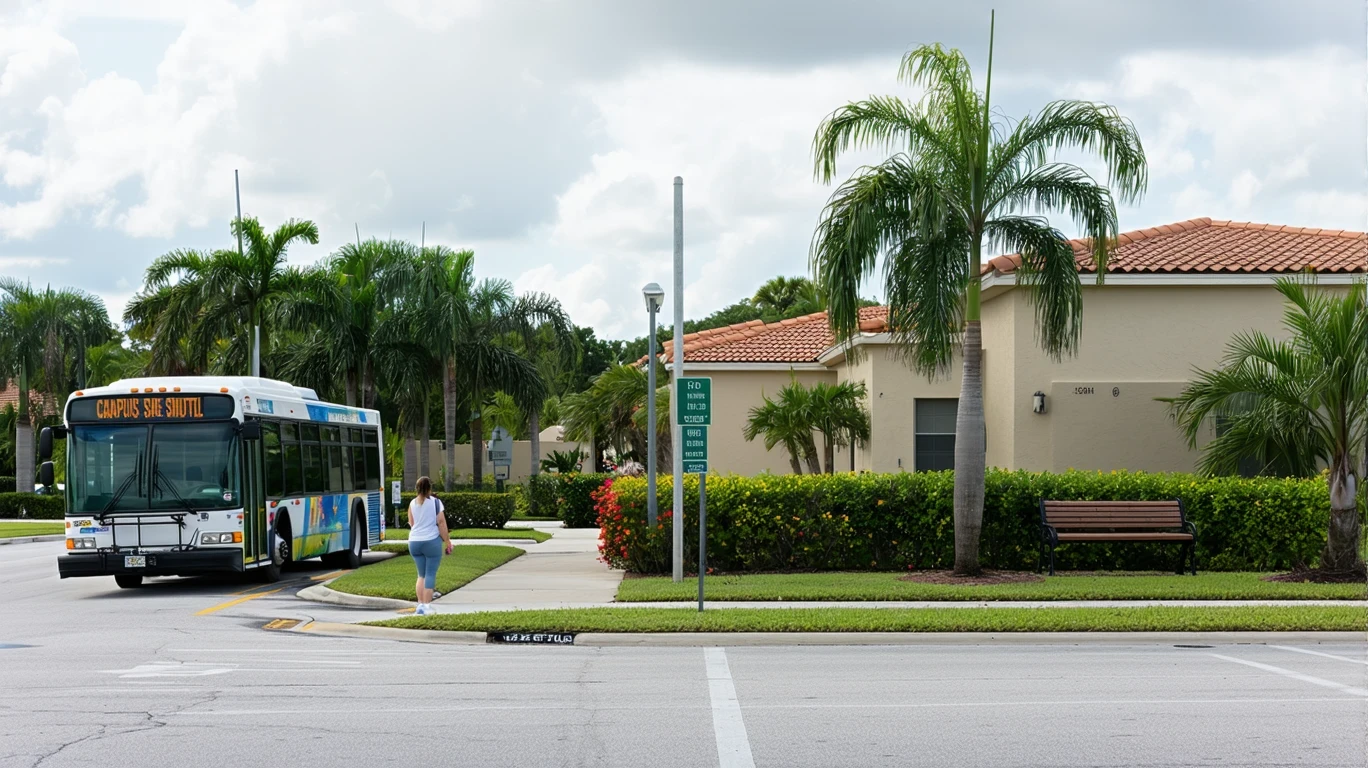
How People Get Around Hialeah
Hialeah is a car-first city with pockets of walkability and rail access that matter for specific households in specific locations. The dominant pattern is driving: most errands, most commutes, and most daily logistics require a vehicle. But that’s not the whole story.
Rail transit is present and plays a real role for residents near certain corridors, particularly those commuting to Miami’s urban core or connecting to broader regional transit networks. Pedestrian infrastructure exists at higher-than-expected density in some areas, creating neighborhoods where walking to nearby shops or services is feasible—though not universal. Food and grocery options cluster along corridors rather than spreading evenly, meaning access depends heavily on where in Hialeah you live.
Newcomers often misunderstand Hialeah’s mobility landscape in two ways. First, they assume rail access means freedom from driving—it doesn’t. Rail serves specific routes and destinations well, but it doesn’t eliminate the need for a car for most households. Second, they underestimate how much daily life revolves around proximity to commercial corridors. If you’re not near one, even short errands require intentional travel.
The city’s layout reflects its history as a mid-20th-century suburb that densified over time. Buildings tend to rise higher than in many comparable suburbs, and residential and commercial land uses mix more than the car-oriented street grid might suggest. That creates a texture where some blocks feel urban and walkable, while others remain entirely car-dependent—even within the same neighborhood.
Public Transit Availability in Hialeah
Public transit in Hialeah often centers around systems such as Metrorail, which provides rail service connecting the city to downtown Miami, Miami International Airport, and other regional destinations. Rail transit is present and accessible to households living near stations or along feeder routes, and it functions as a viable commuting tool for residents working in Miami’s central business district or other rail-served employment hubs.
But rail access is not evenly distributed. Coverage works best along specific corridors and near station areas, where the infrastructure supports both transit use and pedestrian access. Outside those zones, transit becomes less practical. Bus service exists, but it operates in an environment designed primarily for cars, meaning frequency, directness, and coverage vary significantly depending on route and time of day.
Transit tends to fall short in three scenarios: late-night or early-morning travel, trips that require multiple transfers, and errands that don’t align with major corridors. Households relying on transit for non-commute trips—grocery runs, medical appointments, school pickups—often find themselves supplementing with rideshare, carpool arrangements, or simply owning a car for those gaps.
The result is a system that works well for a narrow set of use cases—primarily peak-hour commuting along established rail lines—but doesn’t replace car ownership for most households. That’s not a failure of transit; it’s a reflection of Hialeah’s structure and the regional geography it sits within.
Driving & Car Dependence Reality
Driving is not optional for most Hialeah households. Even residents who use transit for commuting typically own a car for everything else: weekend errands, family logistics, late-night shifts, trips to areas not served by rail or bus.
The city’s street grid prioritizes vehicle movement, and parking is generally available and expected. That makes driving convenient in terms of access and flexibility, but it also means households absorb the full cost structure of car ownership—insurance, maintenance, registration, and fuel—regardless of how much they drive. Gas prices in the area were recently reported at $2.87 per gallon, a data point that matters more for budgeting than for deciding whether to own a car. The question in Hialeah isn’t whether you’ll drive; it’s how much.
Sprawl plays a role here, but not in the way people assume. Hialeah itself is relatively compact and dense compared to outer suburbs, but it functions as part of a larger metro area where jobs, services, and social networks spread across multiple municipalities. That means even short commutes can involve highway access, and even nearby errands can require crossing commercial corridors designed for high-speed traffic rather than walkability.
Car dependence also shapes housing decisions. Households prioritize parking availability, proximity to major roads, and commute-route access when choosing where to live. Renters and owners alike weigh whether a location saves time on the daily commute or adds friction that compounds over months and years.
Commuting Patterns & Daily Mobility
Commuting in Hialeah reflects its role as a residential city within a larger employment region. Many residents work outside city limits, commuting to Miami, Miami Beach, Fort Lauderdale, or other parts of Miami-Dade and Broward counties. The average commute runs 29 minutes, and just over half of workers—50.2%—experience what’s classified as a long commute, a threshold that signals meaningful time and friction in daily routines.
Only 10.2% of workers in Hialeah work from home, meaning the vast majority of households structure their lives around the need to travel for work. That travel is rarely a simple point-to-point trip. Parents drop kids at school before heading to work. Shift workers commute during off-peak hours when transit runs less frequently. Households with multiple earners coordinate vehicle access or manage overlapping schedules.
Proximity matters enormously. Residents living near rail stations and working in downtown Miami or along the Metrorail line benefit from predictable, car-free commutes. Residents working in suburban office parks, industrial zones, or retail centers outside transit corridors face a different reality: driving is the only practical option, and commute time becomes a function of traffic, route, and departure timing.
The commute isn’t just about time—it’s about predictability and control. Rail commuters trade flexibility for consistency. Drivers trade predictability for route choice and schedule control. Both groups face tradeoffs, and both tradeoffs shape what a budget has to handle in terms of time, cost, and daily stress.
Who Transit Works For — and Who It Doesn’t
Transit works best for a specific subset of Hialeah households: those living near rail stations, working in transit-accessible employment centers, and maintaining schedules that align with peak service hours. For these residents—often renters in denser, older neighborhoods close to commercial corridors—rail access reduces car dependence and opens up housing options that would otherwise require vehicle ownership.
Transit works less well for households in peripheral areas, where station access requires a car or a long bus connection. It also struggles to serve families with complex logistics: multiple jobs, school schedules, childcare pickups, or errands that don’t align with linear transit routes. For these households, transit might handle one trip type—say, the primary earner’s commute—but it doesn’t eliminate the need for a car.
Renters near core corridors benefit most from transit. They can choose housing based on proximity to rail, and they avoid the full cost burden of car ownership if their daily routines fit within transit’s reach. Owners, particularly those in single-family neighborhoods farther from stations, tend to assume car ownership and optimize for driving convenience instead.
The difference isn’t about preference—it’s about structure. Hialeah’s layout creates zones where transit is practical and zones where it isn’t. Households that align with the former gain real flexibility. Households that don’t face friction that compounds daily.
Transportation Tradeoffs in Hialeah
Choosing between transit and driving in Hialeah isn’t a binary decision—it’s a set of tradeoffs that vary by household, location, and routine.
Transit offers predictability and eliminates parking hassles, but it limits flexibility and requires proximity to stations or reliable bus routes. Driving offers control, schedule freedom, and access to the entire metro area, but it locks households into the cost structure of ownership and exposes them to traffic variability and parking constraints in denser areas.
For commuters working in downtown Miami or along the Metrorail corridor, transit can replace driving for the primary trip, reducing wear on a vehicle and avoiding downtown parking costs. For everyone else—especially those working in suburban job centers or managing multi-stop routines—driving remains the practical default.
The tradeoff also plays out in housing choice. Living near a rail station often means higher rent or home prices, denser surroundings, and less parking availability. Living farther out means lower housing costs but higher transportation friction and near-certain car dependence. Neither option is universally better; the right choice depends on what a household prioritizes and what they’re willing to absorb.
Transportation in Hialeah isn’t about finding the cheapest option—it’s about understanding which tradeoffs fit your routine and which create daily friction you’ll feel for years.
FAQs About Transportation in Hialeah (2026)
Is public transit usable for daily commuting in Hialeah?
Yes, for households near rail stations and working in transit-accessible areas like downtown Miami. Rail service is present and functions well for peak-hour commuting along established corridors. Outside those zones, transit becomes less practical, and most households rely on cars for daily commuting and errands.
Do most people in Hialeah rely on a car?
Yes. Driving is the dominant mode of transportation in Hialeah, even for residents who use transit occasionally. The city’s layout, regional job distribution, and limited transit coverage outside core corridors make car ownership the default for most households.
Which areas of Hialeah are easiest to live in without a car?
Neighborhoods near Metrorail stations and along commercial corridors with higher pedestrian infrastructure density offer the most car-free or car-light viability. These areas tend to have better access to groceries, services, and transit connections. Peripheral neighborhoods and areas farther from rail require a car for nearly all trips.
How does commuting in Hialeah compare to nearby cities?
Hialeah’s average commute of 29 minutes reflects its position within the broader Miami metro area, where many residents commute across municipal boundaries for work. The high share of long commutes—over 50%—signals that proximity to employment centers varies widely, and many households absorb significant daily travel time regardless of mode.
Can you get by with just transit and rideshare in Hialeah?
It’s possible for a narrow set of households—those living near rail, working along transit lines, and maintaining simple daily routines. For most households, especially those with children, irregular schedules, or jobs outside transit corridors, the combination of transit and rideshare becomes costly and logistically complex compared to owning a car.
How Transportation Fits Into the Cost of Living in Hialeah
Transportation in Hialeah isn’t just a line item—it’s a structural factor that shapes where people live, how they spend their time, and what financial pressures they face daily. Households near rail stations gain flexibility and can sometimes reduce or eliminate car ownership, lowering insurance, maintenance, and fuel costs. Households farther out absorb the full cost of driving, plus the time cost of longer or less predictable commutes.
The decision isn’t whether to spend money on transportation—it’s whether that spending buys control, predictability, or proximity. A household paying more for rent near a Metrorail station might spend less on transportation overall and gain back hours each week. A household paying less for housing farther out might spend more on driving and lose time to traffic and distance.
Transportation also interacts with housing choice in ways that aren’t immediately obvious. Living near transit often means accepting denser surroundings, less parking, and higher per-square-foot costs. Living in car-dependent areas often means larger homes, more parking, and lower rent—but higher transportation friction and cost.
Understanding how getting around fits into the broader cost structure helps households make decisions that align with their priorities rather than defaulting to what seems cheapest on paper. The right transportation setup in Hialeah is the one that reduces daily friction, aligns with your work and family routines, and fits within the broader tradeoffs you’re willing to make.
How this article was built: In addition to public economic data, this article incorporates location-based experiential signals derived from anonymized geographic patterns—such as access density, walkability, and land-use mix—to reflect how day-to-day living actually feels in Hialeah, FL.
—