
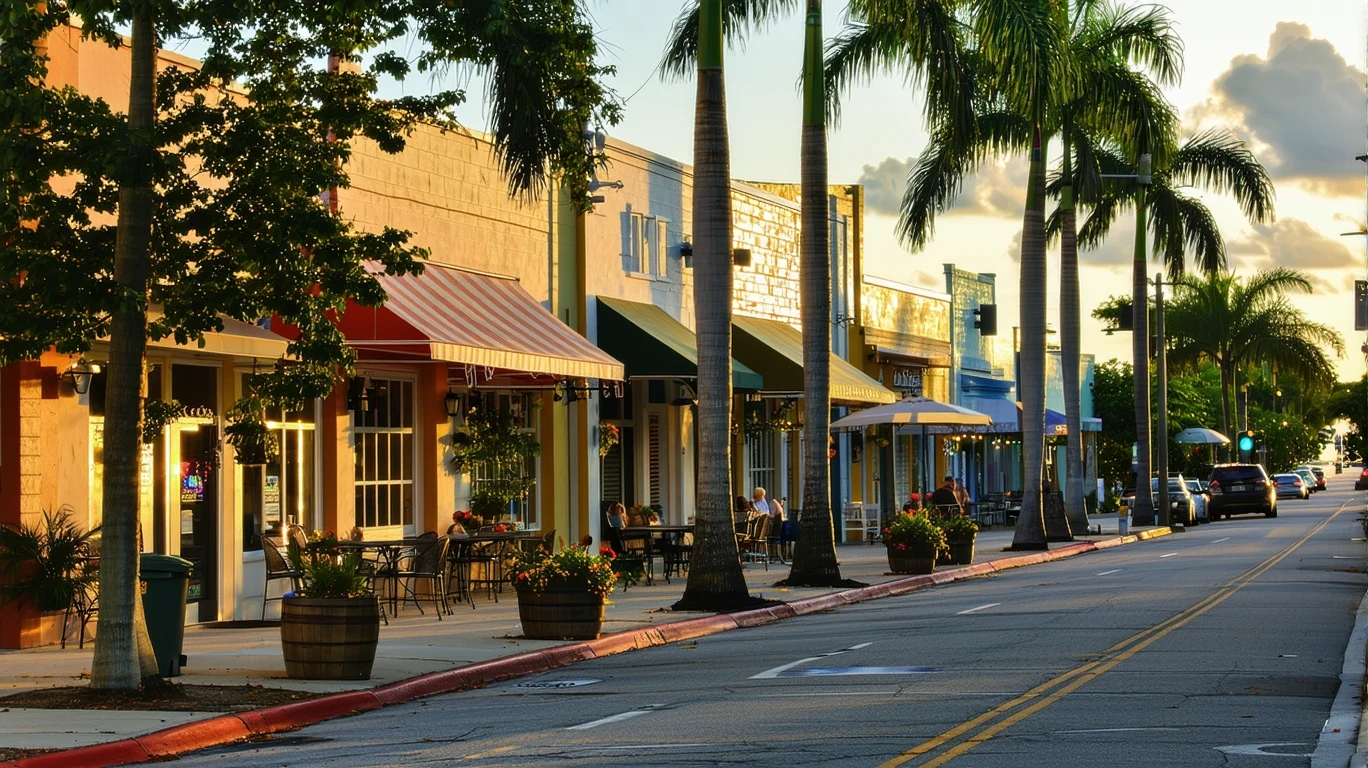
The common assumption is that Pembroke Pines—a quieter, family-oriented suburb—must be cheaper than Fort Lauderdale, with its urban energy and coastal proximity. But the reality in 2026 is more layered. While Pembroke Pines offers lower home values, its rent structure runs higher, and its car-dependent layout shifts costs from housing entry to transportation and time. Fort Lauderdale, meanwhile, concentrates expense in ownership barriers but offers rail transit, denser errands access, and walkable pockets that reduce ongoing friction for households without cars. The better choice isn’t about which city costs less overall—it’s about which cost structure aligns with how your household actually functions.
Both cities sit within the Miami-Fort Lauderdale metro and share the same regional price environment, but their internal layouts create fundamentally different daily experiences. Fort Lauderdale’s more vertical building character and mixed-use corridors support transit-oriented living, while Pembroke Pines spreads out with strong family infrastructure and parks but requires more intentional driving for groceries, services, and commutes. For renters, single adults, or dual-income couples managing overlapping schedules, Fort Lauderdale’s structure often reduces logistical load. For families prioritizing school access, playground density, and predictable residential streets, Pembroke Pines delivers that clarity—but at the cost of needing a car for nearly everything.
This comparison focuses on where cost pressure shows up in 2026, not how much it adds up to. We’ll examine housing entry versus ongoing obligations, how transit and errands accessibility shape transportation dependence, and which households feel the structural differences most acutely. The goal is to clarify trade-offs, not declare a winner.
Housing Costs
Fort Lauderdale’s median home value sits at $417,600, while Pembroke Pines comes in at $379,900—a meaningful difference in entry barrier for buyers. That gap reflects Fort Lauderdale’s denser, more vertical housing stock and proximity to urban amenities, rail transit, and mixed-use corridors. Buyers in Fort Lauderdale face higher upfront costs, but they’re purchasing access to a layout that reduces car dependency and concentrates daily errands within shorter distances. Pembroke Pines offers a lower entry point, appealing to families seeking single-family homes with yards, but the trade-off is a car-dependent structure where driving becomes non-negotiable for school drop-offs, groceries, and most services.
The rent picture inverts that logic. Fort Lauderdale’s median gross rent is $1,627 per month, while Pembroke Pines runs $1,787 per month—$160 higher. This reflects Pembroke Pines’ heavier tilt toward single-family rentals and newer suburban housing stock, where landlords price in yard maintenance, HOA fees, and the expectation of car ownership. Fort Lauderdale’s rental market includes more apartments and mid-rise buildings, where density keeps per-unit costs lower and proximity to transit reduces the need for parking premiums. For renters, Fort Lauderdale offers both lower monthly obligations and better access to walkable errands and rail service, making it structurally more efficient for households without cars or those managing tight schedules.
Ownership costs extend beyond the mortgage. Fort Lauderdale’s higher home values translate to higher property tax exposure, insurance premiums in a coastal market, and maintenance on older, denser housing stock. Pembroke Pines spreads costs differently: lower property taxes on a smaller home value, but higher likelihood of HOA fees, lawn care, and the ongoing expense of maintaining a car-dependent lifestyle. Families buying in Pembroke Pines should budget for two vehicles, regular gas fill-ups, and the time cost of driving everywhere. First-time buyers in Fort Lauderdale face a steeper entry barrier but gain flexibility in transportation choices and access to rail transit that can offset car ownership entirely for some households.
Housing takeaway: Fort Lauderdale front-loads cost in home values but reduces ongoing transportation dependence. Pembroke Pines lowers the entry barrier but locks households into car ownership and higher rent if leasing. Renters prioritizing transit access and walkability face lower monthly obligations in Fort Lauderdale. Families seeking single-family homes with strong school and playground density may prefer Pembroke Pines’ lower purchase price, but must account for the structural requirement of owning and maintaining at least one vehicle—and likely two.
Utilities and Energy Costs
Electricity rates in both cities run nearly identical—15.78¢/kWh in Fort Lauderdale and 15.70¢/kWh in Pembroke Pines—but how those rates translate into monthly exposure depends on housing type, building age, and household size. Fort Lauderdale’s more vertical, mixed-use buildings often mean smaller square footage per unit, shared walls that reduce cooling load, and newer construction with better insulation in mid-rise developments. Pembroke Pines tilts toward single-family homes with larger floor plans, standalone structures that absorb more heat, and older housing stock in some neighborhoods where HVAC systems work harder during South Florida’s extended cooling season. A family in a 2,000-square-foot Pembroke Pines home will run higher cooling bills than a couple in a 1,200-square-foot Fort Lauderdale apartment, even at the same rate.
Natural gas pricing shows a wider gap—$25.39/MCF in Fort Lauderdale versus $32.82/MCF in Pembroke Pines—but natural gas plays a limited role in South Florida’s energy profile. Most homes rely on electric heating (rarely needed) and electric water heaters, so this difference affects only households with gas stoves, dryers, or pool heaters. The bigger driver of utility volatility is air conditioning, which dominates summer bills and scales with home size, insulation quality, and thermostat discipline. Pembroke Pines’ suburban layout and larger homes create more exposure to cooling costs, while Fort Lauderdale’s denser housing stock and smaller units keep baseline usage lower.
Household size amplifies these differences. A single adult in a Fort Lauderdale studio or one-bedroom apartment might see predictable, manageable electric bills year-round. A family of four in a Pembroke Pines single-family home faces higher baseline usage from multiple bedrooms, larger common areas, and the expectation of keeping the whole house cool during peak summer months. Older homes in either city—especially those built before modern efficiency standards—will show higher volatility, but Pembroke Pines’ housing stock skews toward larger, standalone structures where that volatility hits harder. Fort Lauderdale’s mix of newer mid-rise buildings and older low-rise apartments creates more variability within the city, but the denser layout generally keeps per-household exposure lower.
Utility takeaway: Fort Lauderdale’s denser, more vertical housing stock reduces cooling exposure for most renters and small households. Pembroke Pines’ single-family layout increases baseline usage and volatility, especially for families in larger homes. Households sensitive to utility predictability benefit from Fort Lauderdale’s smaller units and shared-wall construction. Families prioritizing space in Pembroke Pines should budget for higher cooling costs and consider home age and insulation quality when evaluating properties.
Groceries and Daily Expenses
Both Fort Lauderdale and Pembroke Pines sit within the same regional price environment, with a regional price parity index of 103, meaning grocery staples and everyday goods run about 3% above the national baseline. But how those prices feel in practice depends on access, convenience, and how much driving is required to reach affordable options. Fort Lauderdale’s broadly accessible food and grocery density—with both food establishments and grocery stores exceeding high thresholds—means households can walk, bike, or take short drives to multiple options, creating competition and flexibility. Pembroke Pines shows corridor-clustered errands accessibility, with grocery density high but food establishments concentrated along major roads rather than distributed throughout neighborhoods. That structure works fine for planned weekly shopping trips but adds friction for quick top-ups, forgotten items, or last-minute meals.
The difference shows up most clearly in convenience spending. Fort Lauderdale’s walkable pockets and mixed-use corridors make it easy to grab coffee, pick up a prepared meal, or stop at a corner store without getting in the car. That convenience can increase spending for households prone to impulse purchases or frequent dining out, but it also reduces the time cost of errands and eliminates the need to batch every purchase into a single trip. Pembroke Pines’ layout requires more intentional planning: driving to a grocery store, stopping at a pharmacy, and hitting a big-box retailer often means stringing together multiple stops along the same corridor. Families with structured routines and the ability to buy in bulk benefit from that setup, but single adults or dual-income couples managing unpredictable schedules may find the driving requirement exhausting.
Price sensitivity matters differently depending on household size and shopping habits. Single adults and couples in Fort Lauderdale can lean on smaller, more frequent purchases at neighborhood stores, farmers markets, or discount chains clustered near transit. Families in Pembroke Pines benefit from access to big-box stores and wholesale clubs, where buying in volume lowers per-unit costs but requires car space and upfront cash. Dining out frequency also shifts: Fort Lauderdale’s density and walkability make restaurants and takeout more tempting, while Pembroke Pines’ suburban layout encourages home cooking simply because getting to a restaurant requires deliberate effort. Neither structure is inherently cheaper—it’s about which pattern aligns with your household’s rhythm and whether you’re more sensitive to time cost or cash cost.
Groceries takeaway: Fort Lauderdale’s broadly accessible errands reduce driving friction and support flexible, smaller shopping trips, but convenience can increase spending for households prone to impulse purchases. Pembroke Pines’ corridor-clustered layout works well for families who plan ahead and buy in bulk, but adds time cost and requires a car for nearly every errand. Single adults and couples managing unpredictable schedules feel the access difference more acutely. Families with structured routines and the ability to batch errands may prefer Pembroke Pines’ big-box access, but must account for the driving requirement.
Taxes and Fees

Property taxes in both cities are driven by Broward County’s millage rates and Florida’s homestead exemption structure, but the difference in median home values creates divergent exposure. Fort Lauderdale’s $417,600 median home value generates higher annual property tax bills than Pembroke Pines’ $379,900 median, even at the same rate. For homeowners, that gap compounds over time, especially for those who stay long enough to see assessed values rise. Pembroke Pines buyers face lower baseline property tax exposure, which can free up cash flow for other expenses—or simply reduce the total carrying cost of ownership. Fort Lauderdale buyers pay more in taxes but gain access to denser infrastructure, rail transit, and urban services that reduce the need for private spending on transportation.
HOA fees and special assessments vary widely by neighborhood and housing type in both cities, but Pembroke Pines’ suburban layout and prevalence of planned communities make HOA fees more common. Many single-family developments include mandatory fees covering landscaping, street maintenance, and shared amenities like pools or clubhouses. Those fees can range from modest monthly charges to several hundred dollars, depending on the community. Fort Lauderdale’s housing stock includes more condos and mid-rise buildings, where HOA or condo fees are standard but often bundle utilities, water, trash, and building maintenance—making them easier to predict and compare. Renters in either city typically don’t pay HOA fees directly, but landlords factor them into rent, so the cost is embedded rather than eliminated.
Sales taxes, local fees, and service charges apply equally across both cities, but how they accumulate depends on consumption patterns. Households that dine out frequently, rely on delivery services, or pay for parking in Fort Lauderdale’s denser areas will see those fees add up. Pembroke Pines’ suburban layout reduces parking costs and delivery fees but increases gas spending and vehicle maintenance, which carry their own tax and fee burden. The structural difference is predictability: property taxes and HOA fees are fixed and knowable, while consumption-based fees fluctuate with behavior. Homeowners planning to stay several years benefit from understanding the full tax and fee structure upfront, while renters should focus on whether utilities, trash, and water are included in rent or billed separately.
Taxes and fees takeaway: Fort Lauderdale’s higher home values generate higher property tax exposure for owners, but renters avoid that burden entirely. Pembroke Pines lowers baseline property taxes but increases the likelihood of HOA fees in planned communities. Homeowners in either city should budget for the full carrying cost, including taxes, insurance, and fees, rather than focusing solely on mortgage payments. Renters benefit from understanding what’s included in rent versus billed separately, as utility and service fees can shift the effective monthly cost significantly.
Transportation and Commute Reality
Fort Lauderdale’s rail transit presence fundamentally changes the transportation equation. With rail service available and a pedestrian-to-road ratio that exceeds high thresholds, households can structure their lives around transit, walking, and occasional rideshares rather than defaulting to car ownership. The median commute time is 26 minutes, and 7.6% of workers operate from home, but the real advantage is flexibility: a single adult or dual-income couple can rely on rail for work commutes, walk to errands, and avoid the fixed costs of car ownership entirely. That setup doesn’t work for everyone—families with kids, households with irregular schedules, or anyone commuting outside the rail corridor still need a car—but for those who can make it work, the savings in insurance, maintenance, parking, and gas are substantial.
Pembroke Pines operates on a bus-only transit system, which limits frequency, coverage, and practical viability for most households. The pedestrian-to-road ratio exceeds high thresholds in some areas, suggesting walkable pockets exist, but the corridor-clustered errands layout means most daily needs require driving. Without rail access and with longer distances between home, work, and services, car ownership becomes non-negotiable. Gas prices in Pembroke Pines run $2.77/gal compared to $2.94/gal in Fort Lauderdale—a modest difference that matters more when you’re filling up twice a week. The real cost isn’t just fuel; it’s the time spent driving, the need for reliable vehicles, and the logistical complexity of coordinating schedules when every trip requires a car.
Commute friction differs by household type. Single adults in Fort Lauderdale can optimize around rail and walkability, reducing transportation to a minor line item. Dual-income couples in Pembroke Pines often need two cars to manage overlapping work schedules, doubling the fixed costs of insurance, registration, and maintenance. Families in either city face the same school-run logistics, but Pembroke Pines’ strong family infrastructure (schools and playgrounds both meeting density thresholds) means shorter drives within the suburb, while Fort Lauderdale families may need to navigate denser traffic or rely on school bus service. The trade-off is time versus money: Fort Lauderdale offers lower transportation costs for those who can avoid car ownership, while Pembroke Pines requires higher transportation spending but often delivers shorter, more predictable drives within the suburb itself.
Cost Structure Comparison
Housing dominates the cost experience in both cities, but the pressure shows up differently. Fort Lauderdale front-loads expense in home values and property taxes, creating a higher barrier to ownership but offering lower rent and reduced transportation dependence for those who don’t buy. Pembroke Pines lowers the entry barrier for buyers but runs higher rent and locks households into car ownership, shifting cost from housing entry to ongoing transportation and time. For renters, Fort Lauderdale’s structure is more efficient: lower monthly obligations, rail transit access, and walkable errands reduce the need for a car. For buyers prioritizing single-family homes and family infrastructure, Pembroke Pines offers a lower purchase price but requires budgeting for vehicles, gas, and the time cost of driving everywhere.
Utilities introduce more volatility in Pembroke Pines due to its suburban layout and larger housing stock. Single-family homes with standalone structures and bigger floor plans absorb more cooling load during South Florida’s extended summer, while Fort Lauderdale’s denser, more vertical buildings keep baseline usage lower through shared walls and smaller square footage. Families in Pembroke Pines should expect higher electric bills, especially in older homes, while single adults and couples in Fort Lauderdale benefit from predictable, manageable utility costs year-round. The difference isn’t dramatic, but it compounds over time and matters more for households on tight budgets.
Daily living and groceries follow the same structural pattern. Fort Lauderdale’s broadly accessible food and grocery density reduces driving friction and supports flexible, smaller shopping trips, but convenience can increase spending for households prone to impulse purchases or frequent dining out. Pembroke Pines’ corridor-clustered layout works well for families who plan ahead and buy in bulk, but adds time cost and requires a car for nearly every errand. Single adults and couples managing unpredictable schedules feel the access difference more acutely, while families with structured routines may prefer Pembroke Pines’ big-box access and lower temptation to spend on convenience.
Transportation patterns matter more in Pembroke Pines, where car ownership is non-negotiable and driving becomes the default for every trip. Fort Lauderdale’s rail transit and walkable pockets allow some households to eliminate car ownership entirely, reducing fixed costs and freeing up cash flow for other priorities. Dual-income couples in Pembroke Pines often need two cars to manage overlapping schedules, doubling insurance, maintenance, and gas spending. Families in either city face similar school-run logistics, but Pembroke Pines’ strong family infrastructure means shorter drives within the suburb, while Fort Lauderdale families may navigate denser traffic or rely on school bus service.
The decision isn’t about which city costs less—it’s about which cost structure aligns with your household’s priorities. Households sensitive to housing entry barriers and transportation flexibility may prefer Fort Lauderdale’s lower rent and rail access. Families prioritizing single-family homes, strong school density, and predictable residential streets may prefer Pembroke Pines’ lower purchase price and family infrastructure, accepting the trade-off of higher rent and car dependence. For single adults and dual-income couples managing tight schedules, the difference is less about price and more about predictability: Fort Lauderdale reduces logistical friction, while Pembroke Pines requires more intentional planning and driving coordination.
How the Same Income Feels in Fort Lauderdale vs Pembroke Pines
Single Adult
In Fort Lauderdale, rent becomes the primary non-negotiable cost, but rail transit and walkable errands reduce transportation to a minor line item. Flexibility exists in dining out, convenience spending, and entertainment, but the denser layout makes it easy to overspend on takeout and coffee. In Pembroke Pines, rent runs higher and car ownership becomes mandatory, locking in fixed costs for insurance, gas, and maintenance. Flexibility shrinks because driving is required for every errand, and the time cost of coordinating trips adds friction to daily routines. The same income feels more predictable in Fort Lauderdale for those who can avoid car ownership, but more stretched in Pembroke Pines where transportation becomes a second rent payment.
Dual-Income Couple
In Fort Lauderdale, housing and utilities become the primary fixed costs, but rail transit allows one or both partners to commute without a car, reducing the need for two vehicles. Flexibility exists in how the household allocates time versus money—walking to errands saves gas but takes longer, while driving or ridesharing adds convenience at a cost. In Pembroke Pines, the household likely needs two cars to manage overlapping work schedules, doubling transportation exposure and reducing cash flow for discretionary spending. Flexibility disappears in logistics: every trip requires planning, and the corridor-clustered layout means batching errands or accepting multiple drives. The same income feels more flexible in Fort Lauderdale for couples who can coordinate around transit, but more rigid in Pembroke Pines where car dependence dominates the budget.
Family with Kids
In Fort Lauderdale, housing entry becomes the first non-negotiable barrier, with higher home values and property taxes creating steep upfront costs. Flexibility exists in transportation—some families can rely on school buses and rail for adult commutes—but the denser layout increases temptation to spend on dining out and convenience. In Pembroke Pines, lower home values ease the entry barrier, but rent runs higher for those leasing, and the household needs at least one reliable vehicle for school drop-offs, groceries, and activities. Flexibility exists in grocery spending through big-box access and bulk buying, but the time cost of driving everywhere reduces schedule flexibility. The same income feels more front-loaded in Fort Lauderdale, where ownership costs dominate, but more spread out in Pembroke Pines, where ongoing transportation and logistics create steady, predictable obligations.
Decision Matrix: Which City Fits Which Household?
| Decision factor | If you’re sensitive to this… | Fort Lauderdale tends to fit when… | Pembroke Pines tends to fit when… |
|---|---|---|---|
| Housing entry + space needs | You’re weighing upfront cost versus ongoing flexibility | You’re renting or prioritizing transit access over ownership | You’re buying and prioritize lower home values and family space |
| Transportation dependence + commute friction | You’re managing overlapping schedules or avoiding car ownership | You can structure life around rail transit and walkable errands | You need a car anyway and prefer shorter drives within the suburb |
| Utility variability + home size exposure | You’re managing tight budgets or prefer predictable bills | You’re in a smaller unit with shared walls and lower cooling load | You’re in a single-family home and accept higher baseline usage |
| Grocery strategy + convenience spending creep | You’re balancing time cost versus impulse purchases | You value walkable access and flexible, smaller shopping trips | You plan ahead, buy in bulk, and prefer big-box access |
| Fees + friction costs (HOA, services, upkeep) | You’re weighing predictable fees versus hidden ongoing costs | You’re renting or in a condo where fees bundle utilities and maintenance | You’re buying in a planned community and accept HOA fees for amenities |
| Time budget (schedule flexibility, errands, logistics) | You’re managing unpredictable schedules or minimizing driving | You prioritize reducing logistical friction and car dependence | You have structured routines and can batch errands efficiently |
Lifestyle Fit
Fort Lauderdale’s urban energy and coastal proximity create a lifestyle built around density, walkability, and access. Rail transit connects neighborhoods to employment hubs, entertainment districts, and the beach, reducing the need for a car and making spontaneous plans easier. The city’s more vertical building character and mixed-use corridors mean restaurants, coffee shops, and grocery stores sit within walking distance for many residents, supporting a rhythm where errands blend into daily routines rather than requiring dedicated trips. Parks and water features are integrated throughout the city, offering green space without needing to drive to access it. For single adults, young professionals, and dual-income couples who value convenience and flexibility, Fort Lauderdale’s layout reduces logistical friction and opens up time for recreation, socializing, and exploration.
Pembroke Pines delivers a quieter, more residential feel with strong family infrastructure and predictable suburban streets. Schools and playgrounds meet density thresholds, making it easier for families to find quality education and safe outdoor spaces within short drives. The corridor-clustered errands layout means most shopping, dining, and services concentrate along major roads, requiring a car but offering ample parking and less traffic congestion than Fort Lauderdale’s denser areas. Parks and water features are present, and the suburban layout provides more space for yards, driveways, and single-family living. For families with kids, retirees, or households prioritizing space and structure over spontaneity, Pembroke Pines offers a calmer environment where routines are easier to maintain and the pace of life feels less hurried.
The lifestyle difference shows up in how households spend their time. Fort Lauderdale’s walkable pockets and rail transit reduce the time cost of getting around, but the denser layout increases exposure to dining out, entertainment spending, and the temptation to fill free time with activities that cost money. Pembroke Pines requires more driving, but the suburban layout encourages home-centered routines—cooking at home, using the yard, and spending weekends at neighborhood parks rather than urban attractions. Neither lifestyle is inherently cheaper; it’s about whether you’re more sensitive to time cost or cash cost, and whether you value convenience and spontaneity or structure and predictability. Fort Lauderdale’s median commute time is 26 minutes, with 7.6% of workers operating from home. Both cities enjoy warm, tropical weather year-round, with current temperatures in the low 70s and extended cooling seasons that shape utility exposure.
Frequently Asked Questions
Is Fort Lauderdale or Pembroke Pines cheaper for renters in 2026?
Fort Lauderdale runs lower rent at $1,627 per month compared to Pembroke Pines’ $1,787 per month, and its rail transit and walkable errands reduce the need for car ownership, lowering transportation costs. Pembroke Pines requires a car for nearly every errand, adding insurance, gas, and maintenance to the monthly budget. For renters who can structure life around transit, Fort Lauderdale offers both lower rent and lower transportation exposure.
Which city is better for families with kids comparing Fort Lauderdale and Pembroke Pines?
Pembroke Pines shows strong family infrastructure, with both schools and playgrounds meeting density thresholds, and its suburban layout offers more single-family homes with yards. Fort Lauderdale provides rail transit and walkable errands, but its denser, more vertical housing stock means less space per unit. Families prioritizing school access and residential predictability may prefer Pembroke Pines, while those valuing transit flexibility and urban amenities may find Fort Lauderdale’s structure more efficient.
How do transportation costs differ between Fort Lauderdale and Pembroke Pines in 2026?
Fort Lauderdale’s rail transit and walkable pockets allow some households to eliminate