
Fort Lauderdale’s housing market reflects its role as a coastal metro with vertical density, mixed-use neighborhoods, and year-round climate exposure. The median home value sits at $417,600, while median gross rent runs $1,627 per month. These figures anchor a cost structure shaped by tropical weather, proximity to water, and infrastructure that supports both car-dependent and transit-accessible lifestyles depending on where you live.
Choosing between renting and owning here isn’t just about monthly payments—it’s about locking in predictability versus preserving flexibility, and about whether you’re prepared to absorb the long-term exposures that come with coastal homeownership in a place where storms, humidity, and insurance volatility are part of the ownership experience.
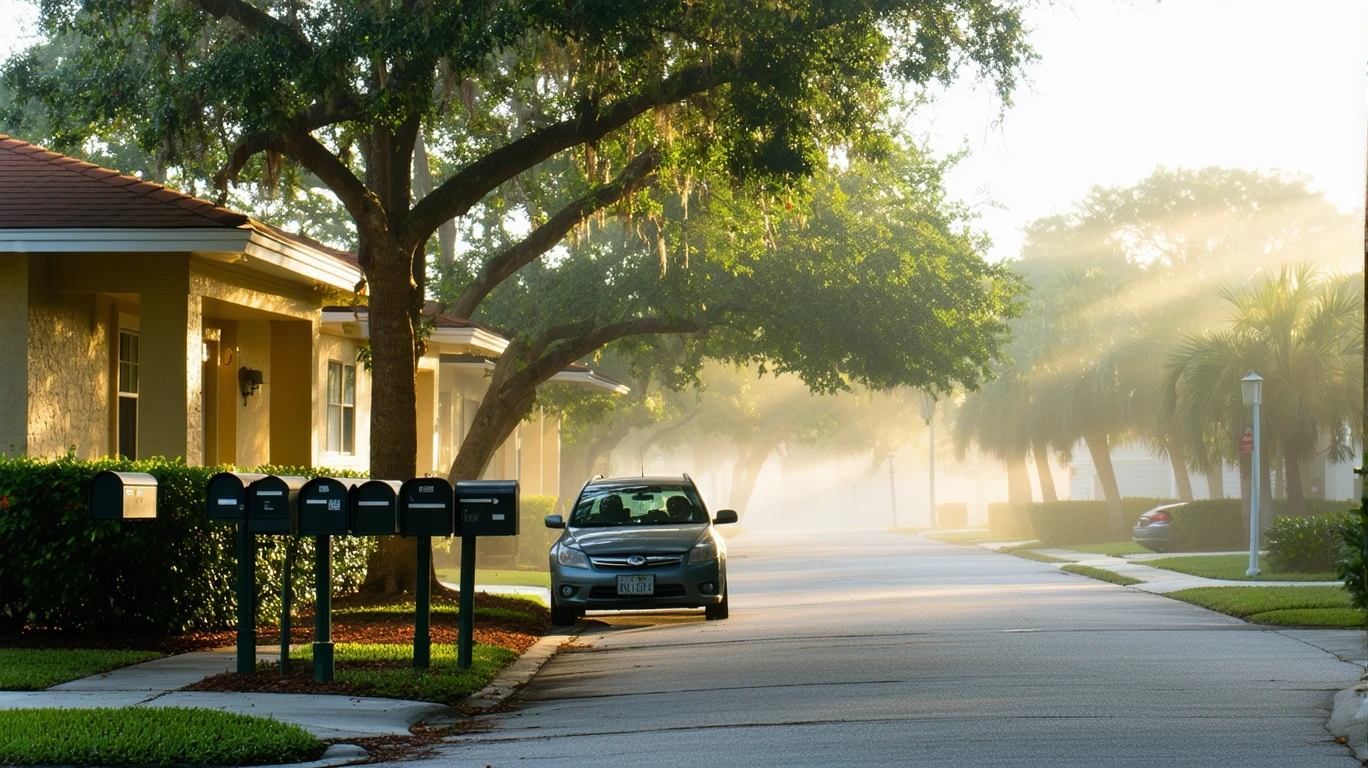
The Housing Market in Fort Lauderdale Today
Fort Lauderdale’s housing market is defined by its coastal geography and vertical urban form. The city’s building stock skews toward mid-rise and high-rise structures, with mixed residential and commercial land use woven throughout many neighborhoods. This creates pockets of walkability and transit access—rail service is present, and errands are broadly accessible across the city—but it also means that housing types vary sharply by location.
Home values here sit 3% above the national baseline when adjusted for regional price parity, but the absolute dollar figure reflects a market where entry costs are steep. Buyers face not only the purchase price but also the embedded cost of climate risk: flood zones, windstorm exposure, and the ongoing expense of maintaining structures in a humid, salt-air environment.
What newcomers often misunderstand is that Fort Lauderdale’s housing pressure isn’t uniform. The city’s infrastructure supports dense, transit-friendly living in some areas and car-oriented suburban patterns in others. Where you live determines not just housing costs but also transportation tradeoffs, daily errands friction, and long-term maintenance exposure.
Renting in Fort Lauderdale
At $1,627 per month, median gross rent in Fort Lauderdale reflects a market where rental supply includes everything from high-rise apartments near transit corridors to single-family homes in quieter, car-dependent neighborhoods. Rental costs here are moderate relative to the city’s home values, which makes renting a viable long-term strategy for households that prioritize flexibility or want to avoid the capital and maintenance burdens of ownership.
Renters benefit from the city’s broadly accessible errands infrastructure—grocery and food establishments are densely distributed, reducing the need for long drives or complex logistics. In neighborhoods with strong pedestrian-to-road ratios and rail access, renters can reduce car dependency and the transportation costs that come with it.
Rental pressure in Fort Lauderdale is shaped by the same climate factors that affect owners: landlords pass through insurance increases, and properties in flood-prone areas may see higher turnover or steeper rent adjustments. Renters don’t control these exposures, but they also don’t absorb the direct cost of storm damage, roof replacement, or HVAC failure in a climate where cooling systems run year-round.
Owning a Home in Fort Lauderdale
At $417,600, the median home value in Fort Lauderdale represents a substantial upfront commitment. Ownership here means locking in housing cost predictability—your principal and interest payment won’t change if you have a fixed-rate mortgage—but it also means accepting exposure to costs that renters avoid entirely.
Property taxes, homeowners insurance, and flood insurance (where required) are recurring expenses that can shift year to year. In a coastal metro with hurricane exposure, insurance markets are volatile, and coverage costs can rise sharply after storm seasons or when carriers exit the state market.
Maintenance in Fort Lauderdale is shaped by heat, humidity, and salt air. Exterior paint, roofing materials, and HVAC systems degrade faster than they would in drier or cooler climates. Cooling systems run nearly year-round, and when they fail, replacement is urgent—not optional. Owners also navigate HOA governance in many condo and planned communities, where monthly fees cover shared infrastructure but add a fixed cost layer that renters don’t see.
Ownership provides stability and control, but it requires capital reserves and a tolerance for cost volatility that increases the longer you stay.
Apartment vs House in Fort Lauderdale — Cost Behavior Comparison
| Expense Category | Apartment | House |
|---|---|---|
| Cooling Exposure | Shared walls reduce heat gain; lower square footage limits runtime | Full envelope exposure; larger space and often single-story layout increases cooling load year-round |
| Storm/Flood Risk | Elevated units reduce flood exposure; building-level wind mitigation often in place | Ground-level flood risk higher in many areas; individual windstorm retrofits vary; full exterior maintenance responsibility |
| Exterior Maintenance | Managed by HOA or landlord; cost embedded in rent or fee | Owner handles roof, siding, paint, landscaping—all subject to accelerated degradation in humid, salt-air climate |
| HOA/Condo Fees | Common in mid-rise and high-rise buildings; covers shared amenities, insurance, reserves | Present in planned communities; typically lower than condo fees but still a fixed monthly cost |
| Parking & Transportation | Often included or structured; proximity to rail and walkable errands reduces car dependency in select buildings | Private driveway/garage standard; car dependency higher in suburban areas without transit access |
Methodology note: This table includes only categories where cost behavior differs meaningfully in Fort Lauderdale due to climate (year-round cooling, storm exposure), urban form (vertical density, mixed-use presence), and infrastructure (rail transit, walkable pockets). Generic differences that apply uniformly across markets were excluded.
Utilities & Upkeep Differences
Utility and maintenance exposure in Fort Lauderdale is driven by climate intensity, not just housing type. Electricity rates run 15.78¢/kWh, and cooling dominates household energy use from late spring through early fall—and often beyond. In a typical house, air conditioning runs nearly year-round, and the larger the conditioned space, the higher the baseline load.
Apartments, especially those in mid-rise or high-rise buildings, benefit from shared walls and smaller square footage, which reduces heat gain and limits cooling runtime. Houses, particularly single-story layouts with full sun exposure, face higher cooling costs and more frequent HVAC strain.
Maintenance exposure is similarly climate-driven. Humidity accelerates mold growth, degrades caulking and weatherstripping, and shortens the lifespan of exterior finishes. Salt air corrodes metal fixtures, outdoor lighting, and pool equipment where present. Roof replacement cycles are shorter than in drier climates, and landscaping requires either irrigation or drought-tolerant native plantings to avoid die-off during dry periods.
Renters are insulated from most of this; owners absorb it in full. The difference isn’t just dollar amounts—it’s the unpredictability of when systems fail and how much discretion you have in timing repairs.
How this article was built: In addition to public economic data, this article incorporates location-based experiential signals derived from anonymized geographic patterns—such as access density, walkability, and land-use mix—to reflect how day-to-day living actually feels in Fort Lauderdale, FL.
Rent vs Buy: Long-Term Exposure in Fort Lauderdale
Renting and owning in Fort Lauderdale represent fundamentally different risk profiles over time. Renters face annual lease renewals and the possibility of rent increases, but they avoid property tax shifts, insurance volatility, and the capital cost of replacing major systems. Owners lock in their principal and interest payment, but they accept exposure to costs that can rise unpredictably: insurance premiums after storm seasons, special assessments in HOA communities, and maintenance expenses that increase as buildings age in a corrosive climate.
Renters maintain flexibility—they can relocate when lease terms end, adjust housing size as household needs change, and avoid the transaction costs of selling. Owners gain stability and the ability to modify their property, but they also take on the risk that their home’s value may not keep pace with the costs of maintaining it, especially in flood-prone or storm-exposed areas where insurance and mitigation requirements can escalate.
The decision isn’t about which option costs less in total—it’s about which set of tradeoffs fits your household’s tolerance for volatility, need for control, and ability to absorb large, irregular expenses without disrupting other financial goals.
FAQs About Housing Costs in Fort Lauderdale
Is renting or buying cheaper in Fort Lauderdale?
Renting avoids upfront capital costs and insulates you from property tax, insurance, and maintenance volatility. Buying locks in your principal and interest payment but exposes you to costs that can rise over time, especially in a coastal climate with storm and flood risk. The answer depends on how long you plan to stay and whether you’re prepared to absorb ownership’s irregular expenses.
How does Fort Lauderdale’s climate affect housing costs?
Year-round heat drives cooling costs higher and shortens the lifespan of HVAC systems, roofing, and exterior finishes. Humidity accelerates mold and material degradation. Coastal exposure increases windstorm and flood insurance requirements. These factors affect both renters (indirectly, through rent) and owners (directly, through maintenance and insurance).
What makes Fort Lauderdale’s housing market different from other Florida cities?
Fort Lauderdale’s vertical urban form, mixed-use neighborhoods, and rail transit presence create pockets of walkability and reduced car dependency that aren’t common in more suburban Florida metros. This affects where you can live without a car and how much you’ll spend on transportation relative to housing.
Do I need a car if I rent in Fort Lauderdale?
It depends on where you rent. Neighborhoods with rail access and high pedestrian-to-road ratios support car-free or car-light living, especially given the city’s broadly accessible grocery and food infrastructure. In more suburban areas, a car is functionally required for commuting and errands.
How do HOA fees affect ownership costs in Fort Lauderdale?
HOA and condo fees are common in Fort Lauderdale’s vertical and planned communities. They cover shared insurance, exterior maintenance, amenities, and reserve funds for major repairs. These fees are a fixed monthly cost that doesn’t go away when you pay off your mortgage, and they can increase as buildings age or after storm damage.
Making Housing Choices in Fort Lauderdale
Housing costs in Fort Lauderdale are shaped by coastal geography, vertical density, and a climate that imposes year-round cooling loads and accelerates maintenance cycles. At $417,600, the median home value reflects a market where ownership requires substantial capital and a tolerance for cost volatility tied to insurance, storms, and material degradation. At $1,627 per month, median rent offers a more predictable cost structure and flexibility, though renters give up control and the ability to lock in long-term housing stability.
The city’s infrastructure—walkable pockets, rail transit, and broadly accessible errands—means that housing location affects not just cost but also transportation dependency and daily logistics. Families benefit from high school density and integrated green space, but they also navigate the same climate exposures that affect all homeowners here.
Choosing between renting and owning in Fort Lauderdale isn’t about finding the cheaper option—it’s about deciding which risks you’re willing to manage and which tradeoffs align with how you plan to live. If you’re planning a move to Fort Lauderdale, understanding these cost behaviors before you commit to a lease or a purchase will help you avoid surprises and make a choice that fits both your budget and your household’s long-term needs.