
Sunday afternoon in Burnsville: you sit down with a handwritten list, a mental tally of what’s already in the pantry, and a rough sense of what the week ahead demands. Breakfast staples, a few proteins, vegetables that won’t wilt by Thursday, something quick for the nights when no one has time to cook. The list isn’t extravagant—it’s practical, built around meals you’ve made a dozen times. But even a routine week of groceries carries weight, and the checkout total has a way of landing harder or softer depending on where you shop, what you prioritize, and how tightly you’re managing the rest of the month’s expenses. In Burnsville, grocery costs sit slightly below the national baseline, but that modest relief doesn’t mean food spending disappears as a pressure point. For families stretching a single income, for couples managing two careers and a mortgage, and for singles watching discretionary dollars shrink, the experience of grocery shopping is shaped less by any single price and more by the cumulative effect of dozens of small choices—store tier, brand loyalty, trip frequency, waste tolerance—that either absorb or amplify cost pressure week after week.
Burnsville’s regional price parity index of 98 suggests that, on average, goods and services here cost slightly less than the national benchmark. That positioning shows up in grocery prices, too, though the effect is incremental rather than transformative. A household buying the same staples here as in a higher-cost metro will notice some relief, but the difference rarely changes the fundamental question: how much room does the grocery budget have, and where does it give first when other expenses tighten? For a two-adult household, monthly grocery spending in Burnsville tends to land around $600 to $700, though that figure shifts with dietary preferences, waste habits, and reliance on convenience items. Singles face a different arithmetic—less absolute spending, but higher per-person costs due to package sizes, spoilage risk, and the inefficiency of cooking for one. Families with children, meanwhile, see grocery costs scale quickly, as growing appetites, school lunches, and snack demands layer onto the base shopping list. The pressure isn’t uniform: it’s felt most acutely by households where food spending competes directly with housing, childcare, or transportation costs that don’t bend.
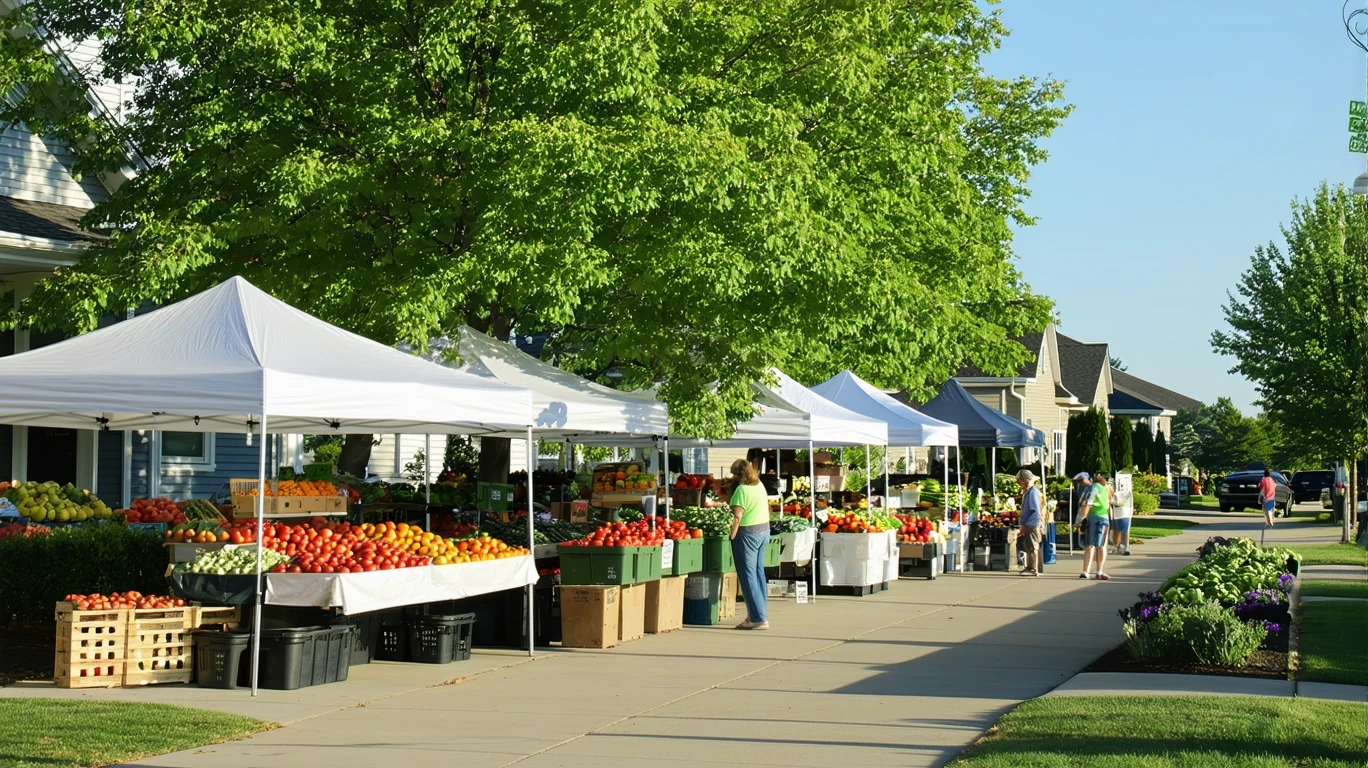
Grocery Price Signals in Burnsville
Item-level prices offer a way to understand how Burnsville’s grocery costs compare, not as a complete shopping list but as illustrative anchors that reflect relative positioning. These prices are derived estimates, adjusted for regional cost patterns, and they help explain why certain categories feel more or less expensive locally. They don’t represent a specific store or a specific week—they’re reference points, not receipts.
| Item | Price |
|---|---|
| Bread | $1.80/lb |
| Cheese | $4.64/lb |
| Chicken | $1.98/lb |
| Eggs | $2.66/dozen |
| Ground Beef | $6.55/lb |
| Milk | $3.97/half-gallon |
| Rice | $1.05/lb |
Note: Derived estimate based on national baseline adjusted by regional price parity; not an observed local price.
Staples like rice, bread, and chicken sit at price points that support routine meal planning without forcing substitutions. Ground beef and cheese, by contrast, represent categories where small per-unit differences compound quickly for households buying in volume. Eggs and milk—items purchased weekly by most households—occupy a middle zone: not trivial, but not prohibitive. The prices above don’t tell you what you’ll pay at checkout, but they do clarify where Burnsville sits relative to higher-cost metros and lower-cost rural areas. The relief is real, but it’s marginal. A family saving a few dollars per trip still faces the same weekly discipline, the same tradeoffs between quality and cost, the same pressure when unexpected expenses arrive mid-month.
Store Choice and Price Sensitivity
In Burnsville, grocery cost pressure varies more by store tier than by any single “average” price level. Discount-tier stores anchor the low end, offering house brands, bulk staples, and no-frills environments that prioritize price over convenience. Mid-tier chains occupy the middle ground, balancing selection, cleanliness, and competitive pricing with occasional promotions that reward loyalty or volume. Premium-tier stores—whether organic-focused, specialty-oriented, or service-heavy—command higher prices in exchange for product quality, prepared options, and a shopping experience that feels less transactional. The difference between tiers isn’t subtle: a household committed to discount shopping can reduce grocery spending by 20 to 30 percent compared to one that defaults to premium stores, even when buying similar items.
Burnsville’s grocery landscape reflects a corridor-clustered access pattern, meaning food and grocery options concentrate along commercial corridors rather than distributing evenly across neighborhoods. For households with flexible schedules and reliable transportation, this clustering creates opportunity: you can choose your store tier deliberately, plan trips to minimize frequency, and take advantage of bulk pricing or weekly promotions. For households with tighter schedules, limited mobility, or less tolerance for trip planning, the same structure increases friction. Convenience becomes a cost, and the closest store—regardless of tier—becomes the default. Store choice, in this context, isn’t just about preference; it’s a lever that either absorbs or amplifies grocery cost pressure depending on how much control a household has over where and when they shop.
Price sensitivity also depends on household composition. Singles and couples without children often prioritize convenience and quality over absolute cost, because grocery spending represents a smaller share of total expenses and waste risk is lower. Families, especially those with multiple children, experience grocery costs as a high-frequency, high-volume pressure point where small per-item differences accumulate rapidly. A household buying a dozen eggs, two gallons of milk, and three pounds of chicken every week will feel the difference between discount and premium pricing in ways that a single-person household buying half those quantities will not. Store tier choice, for families, becomes a structural decision with meaningful monthly consequences.
What Drives Grocery Pressure in Burnsville
Grocery cost pressure in Burnsville is shaped by the interaction between income, household size, and the structure of local food access. The city’s median household income of $85,801 per year positions most households comfortably above poverty thresholds, but that figure masks variation. Single-income families, households with high housing costs, and workers in lower-wage sectors feel grocery spending as a binding constraint, especially when food costs compete with rent, utilities, or transportation. Higher-income households, by contrast, experience grocery shopping as a discretionary decision: they can absorb premium pricing, prioritize organic or specialty items, and treat convenience as a feature worth paying for.
Household size amplifies sensitivity. A single adult spending $250 per month on groceries faces a manageable line item; a family of four spending $900 per month faces a pressure point that demands active management. The difference isn’t just volume—it’s the frequency of decision-making, the complexity of meal planning, and the reduced margin for error. Families can’t easily absorb spoilage, can’t skip trips, and can’t substitute convenience for cost without consequences. Grocery spending, for larger households, becomes a weekly negotiation between what’s needed, what’s affordable, and what’s realistic given time and energy constraints.
Seasonal variability also plays a role, though it’s less about price swings and more about demand shifts. Winter months in Burnsville bring heating costs that compress discretionary spending, making grocery budgets feel tighter even when prices hold steady. Summer months ease utility pressure but introduce different spending patterns—grilling, fresh produce, social gatherings—that can push grocery totals higher without feeling like inflation. The rhythm of the year doesn’t change grocery prices dramatically, but it does change how much room a household has to absorb them.
Practical Ways People Manage Grocery Costs
Managing grocery costs in Burnsville isn’t about finding a single optimization—it’s about layering small disciplines that reduce waste, increase control, and align spending with actual consumption. Meal planning is the most effective lever: households that plan a week’s meals before shopping avoid impulse purchases, reduce spoilage, and buy only what they’ll use. The discipline isn’t glamorous, but it works. A household that shops with a list and a plan spends less than one that shops reactively, even when buying the same items at the same store.
Store tier choice matters, but so does timing. Many mid-tier chains run weekly promotions on proteins, dairy, and produce, and households that align their shopping trips with those cycles can capture meaningful savings without sacrificing quality. Discount-tier stores offer consistent low prices but require tolerance for limited selection and less predictable stock. Premium-tier stores rarely discount aggressively, so households shopping there pay for convenience and quality every trip. The choice isn’t binary—many households split their shopping, buying staples at discount stores and specialty items elsewhere—but it does require intentionality.
Bulk buying reduces per-unit costs but only for households with storage space, upfront cash, and confidence they’ll use what they buy before it spoils. Freezing proteins, portioning produce, and rotating pantry staples extend the value of bulk purchases, but the strategy fails if food goes to waste. Cooking from scratch reduces costs compared to prepared or convenience items, but it demands time, skill, and energy that not every household has in equal measure. The most effective cost management strategies aren’t universal—they’re tailored to a household’s specific constraints, rhythms, and tolerance for planning.
Groceries vs. Eating Out
The tradeoff between cooking at home and eating out shapes grocery spending in ways that aren’t always visible. Households that cook most meals treat groceries as a fixed cost, absorbing the time and effort required to plan, shop, and prepare food in exchange for lower per-meal costs. Households that rely more heavily on takeout, delivery, or restaurant meals experience groceries as a smaller line item but face higher total food spending. The tradeoff isn’t purely financial—it’s also about time, convenience, and the mental load of meal planning. A household that eats out twice a week isn’t necessarily overspending; it may be making a deliberate choice to trade money for time or to reduce decision fatigue.
In Burnsville, where grocery prices sit slightly below the national baseline, the relative advantage of cooking at home is modest but real. A household that prepares most meals can keep monthly food costs within a manageable range, even when buying quality ingredients. A household that defaults to eating out will see food spending rise quickly, especially if restaurant meals become routine rather than occasional. The decision isn’t binary, and most households occupy a middle ground—cooking during the week, eating out on weekends, relying on convenience items when time is short. The key is recognizing that grocery costs and dining costs aren’t separate budgets; they’re two parts of the same question: how much does it cost to feed this household, and where does the money go?
FAQs About Grocery Costs in Burnsville (2026)
Is it cheaper to shop in bulk in Burnsville? Bulk buying reduces per-unit costs, but only if you have storage space and confidence you’ll use what you buy before it spoils. Discount-tier stores and warehouse clubs offer the best bulk pricing, though the upfront cost can strain tighter budgets.
Which stores in Burnsville are best for low prices? Discount-tier stores consistently offer the lowest prices, while mid-tier chains balance cost and convenience. Premium-tier stores charge more but provide specialty items and prepared options that some households prioritize.
How much more do organic items cost in Burnsville? Organic products typically cost more than conventional equivalents, though the premium varies by category. Households prioritizing organic spending should expect higher grocery totals, especially for produce, dairy, and proteins.
How do grocery costs for two adults in Burnsville tend to compare to nearby cities? Burnsville’s regional price parity sits slightly below the national baseline, meaning grocery costs here are modestly lower than in higher-cost metros but not dramatically different from similar suburban areas in the Twin Cities region.
How do households in Burnsville think about grocery spending when cooking at home? Most households treat groceries as a manageable but non-trivial line item, balancing cost, quality, and convenience. Store choice, meal planning, and waste reduction are the primary levers for controlling spending without sacrificing dietary preferences.
How Groceries Fit Into the Cost of Living in Burnsville
Grocery costs in Burnsville occupy a middle tier in the hierarchy of household expenses—less dominant than housing, less volatile than utilities, but more frequent and more visible than many other line items. For most households, groceries represent a pressure point that demands weekly attention but doesn’t define affordability on its own. The real question isn’t whether groceries are cheap or expensive in absolute terms; it’s whether a household has enough room in its budget to absorb food costs without forcing tradeoffs elsewhere. That room depends on income, housing costs, transportation expenses, and the dozens of other fixed and variable costs that shape monthly spending in Burnsville.
Understanding grocery costs in isolation is useful, but it’s incomplete. Food spending interacts with every other part of a household budget: higher rent leaves less room for premium groceries, longer commutes reduce time for meal planning, utility volatility compresses discretionary spending. The households that manage grocery costs most effectively aren’t necessarily the ones spending the least—they’re the ones who’ve aligned their food spending with their income, their schedule, and their priorities, and who’ve built enough margin to absorb the inevitable weeks when the list runs longer than expected. For a full picture of how groceries fit into the broader cost structure—and where the real pressure points land—readers should consult the complete monthly budget breakdown, which positions food spending alongside housing, transportation, and utilities in a way that reflects the actual tradeoffs households face.
How this article was built: In addition to public economic data, this article incorporates location-based experiential signals derived from anonymized geographic patterns—such as access density, walkability, and land-use mix—to reflect how day-to-day living actually feels in Burnsville, MN.