

Eden Prairie and Saint Paul sit just miles apart in the Twin Cities metro, but the way households experience cost pressure in each city reflects fundamentally different structures. Eden Prairie offers newer suburban infrastructure, extensive park systems, and rail transit access within a low-rise, mixed-use environment. Saint Paul brings the density, walkability, and urban amenities of Minnesota’s capital city. For households deciding between the two in 2026, the question isn’t which city costs less overall—it’s where cost pressure concentrates, how predictable expenses feel month to month, and which tradeoffs align with daily life.
The Johnsons, a family of four weighing their options, found themselves debating exactly this. Eden Prairie promised space, greenery, and a suburban rhythm. Saint Paul offered transit depth, walkable errands, and the energy of an established urban core. Both cities share the same regional price environment, the same brutal winters, and access to the same metro job market. But the mechanics of how money moves—and where friction shows up—differ in ways that matter for renters, first-time buyers, and families managing logistics across work, school, and daily errands.
This comparison explains how housing entry costs, transit dependence, utility exposure, and day-to-day errands behave differently in Eden Prairie and Saint Paul, and which households feel those differences most acutely.
Housing Costs
Eden Prairie’s housing market reflects its role as a mature, family-oriented suburb with a mix of single-family homes, townhomes, and apartment complexes. The median home value sits at $442,200, positioning it as a market where entry requires substantial capital but delivers space, newer construction, and access to highly rated school districts. For renters, the median gross rent is $1,731 per month, a figure that typically reflects larger units, modern amenities, and inclusion in managed communities with bundled services like landscaping or snow removal.
Saint Paul’s housing data isn’t available in the current feed, but as Minnesota’s capital and a mature urban center, the city’s housing stock skews older, denser, and more varied. Renters in Saint Paul often find smaller units in converted multi-family buildings, walk-up apartments, and older housing stock that trades space for location and transit access. Homebuyers encounter a mix of historic single-family homes, duplexes, and rowhouses, with entry costs and ongoing maintenance shaped by the age and condition of the building rather than the newness of the development.
The difference in housing pressure isn’t just about price—it’s about what you’re buying into. In Eden Prairie, housing costs are front-loaded: higher entry barriers, but newer systems, lower immediate maintenance risk, and predictable HOA or community fee structures. In Saint Paul, housing costs are more distributed: lower entry points in some neighborhoods, but higher exposure to repair volatility, older heating systems, and the need to budget for deferred maintenance. Families prioritizing space, school access, and low ongoing friction may find Eden Prairie’s structure more predictable. Singles or couples valuing walkability, transit access, and lower entry costs may find Saint Paul’s older housing stock a better fit, provided they can absorb maintenance uncertainty.
| Housing Type | Eden Prairie | Saint Paul |
|---|---|---|
| Median home value | $442,200 | Data not available; typically lower entry, older stock |
| Median gross rent | $1,731/month | Data not available; typically lower for smaller units |
| Typical housing form | Single-family, townhomes, managed apartments | Duplexes, walk-ups, historic single-family |
| Primary cost driver | Entry barrier, space premium | Maintenance volatility, age of systems |
Housing takeaway: Eden Prairie imposes higher upfront costs but offers predictability and newer infrastructure. Saint Paul provides more entry flexibility but requires households to manage maintenance exposure and the tradeoffs of older housing stock. Renters sensitive to space and amenities may prefer Eden Prairie; renters prioritizing location and transit access may find Saint Paul’s density advantageous. First-time buyers face a steeper climb in Eden Prairie but gain stability; buyers in Saint Paul trade lower entry for higher ongoing uncertainty.
Utilities and Energy Costs
Utility costs in both cities are shaped by Minnesota’s long, cold winters and the energy demands of heating season. Eden Prairie’s electricity rate is 14.96¢/kWh, while Saint Paul’s rate runs slightly higher at 16.37¢/kWh. Natural gas, the primary heating fuel across the metro, costs $9.43/MCF in Eden Prairie and $9.99/MCF in Saint Paul. These differences are modest in isolation, but they compound over months of heavy heating usage, particularly in older or larger homes.
The bigger driver of utility exposure isn’t the rate—it’s the housing stock. Eden Prairie’s newer construction typically includes better insulation, modern HVAC systems, and energy-efficient windows, reducing baseline heating demand even in single-family homes. Apartments and townhomes in managed communities often benefit from shared walls, reducing heat loss and lowering per-unit consumption. In Saint Paul, older housing stock—especially pre-1980s single-family homes and walk-up apartments—tends to leak heat, driving higher gas usage during the coldest months. Renters in older buildings may face unpredictable spikes, particularly if heating systems are outdated or poorly maintained.
Household size and home type interact with these structural differences. A family in a 2,000-square-foot single-family home in Eden Prairie will use substantial energy for heating, but the efficiency of newer systems keeps costs more predictable. A similar-sized older home in Saint Paul may see higher volatility, with cold snaps triggering sharp increases in gas bills. For renters in smaller apartments, the difference narrows: a 900-square-foot unit in Eden Prairie and a similar unit in Saint Paul may experience comparable heating costs, though the Saint Paul unit’s older radiators or baseboard heaters may cycle less efficiently.
Utility takeaway: Eden Prairie’s newer housing stock reduces heating volatility, making utility costs more predictable for families and homeowners. Saint Paul’s older infrastructure increases exposure to seasonal spikes, particularly in single-family homes and larger apartments. Households in smaller units or those prioritizing lower baseline usage may find the difference negligible. Families managing larger homes should expect more stable costs in Eden Prairie and more seasonal variability in Saint Paul.
Groceries and Daily Expenses
Grocery costs across the Twin Cities metro reflect the same regional price environment, with both Eden Prairie and Saint Paul showing an RPP index of 98—slightly below the national baseline. Derived estimates for staples like bread ($1.81/lb in Eden Prairie, $1.80/lb in Saint Paul), ground beef ($6.60/lb vs $6.55/lb), and eggs ($2.45/dozen vs $2.66/dozen) show minimal variation. The real difference isn’t price—it’s access structure and how that shapes shopping behavior.
Eden Prairie’s grocery landscape is corridor-clustered, with medium-density food and grocery establishments concentrated along major commercial strips. Households typically drive to big-box stores, regional chains, or warehouse clubs, optimizing for volume purchases and lower per-unit costs. This structure rewards planning and car access but penalizes spontaneity: forgetting an item or needing a quick restock means another drive. For families managing weekly meal prep and bulk buying, this friction is minimal. For singles or couples with less predictable schedules, it adds time cost.
Saint Paul’s denser, more walkable core offers more distributed grocery access, with neighborhood markets, co-ops, and smaller-format stores interspersed with residential blocks. This reduces the need for dedicated grocery trips but often comes with higher per-unit prices at convenience-oriented stores. Households that shop frequently in small batches may find this structure more flexible. Households optimizing for cost per pound may still drive to larger stores on the periphery, negating the walkability advantage.
Dining out and convenience spending follow similar patterns. Eden Prairie’s commercial corridors offer chain restaurants, fast-casual options, and coffee shops clustered near retail centers. Saint Paul’s walkable neighborhoods support more frequent, lower-cost takeout or coffee runs, which can add up for households prone to convenience creep. A single adult in Saint Paul may spend less per grocery trip but more on incremental takeout. A family in Eden Prairie may spend more per grocery haul but less on spontaneous dining.
Grocery takeaway: Eden Prairie rewards planning, car access, and bulk purchasing, making it more efficient for families managing predictable meal routines. Saint Paul’s distributed access reduces trip friction for singles and couples but increases exposure to convenience spending. Households sensitive to per-unit grocery costs may prefer Eden Prairie’s big-box access. Households valuing flexibility and walkable errands may find Saint Paul’s structure less car-dependent, though not necessarily cheaper.
How this article was built: In addition to public economic data, this article incorporates location-based experiential signals derived from anonymized geographic patterns—such as access density, walkability, and land-use mix—to reflect how day-to-day living actually feels in Eden Prairie, MN.
Taxes and Fees
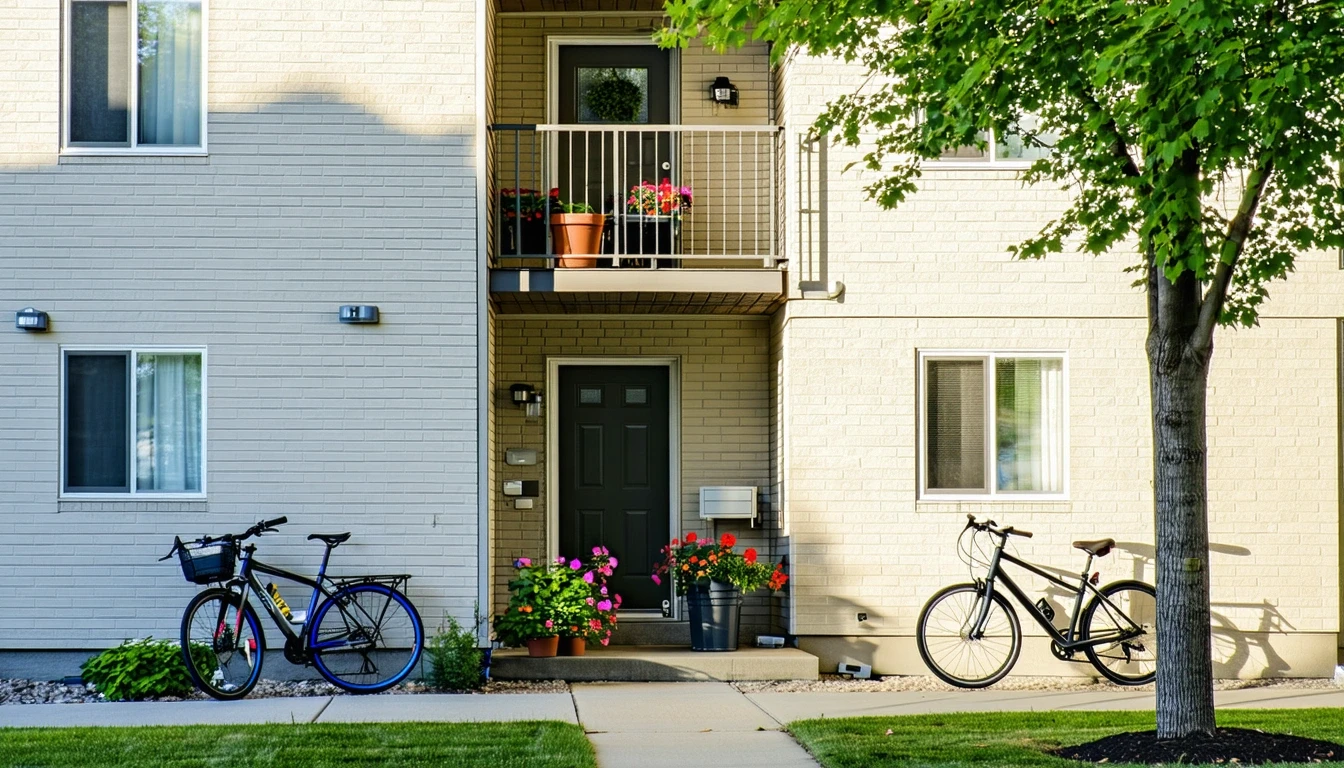
Property taxes in both cities are set at the county and municipal level, with Hennepin County (Eden Prairie) and Ramsey County (Saint Paul) applying different mill rates and assessment practices. While specific rates aren’t provided in the current feed, the structural difference lies in what homeowners are buying into. Eden Prairie’s newer developments often bundle services—landscaping, snow removal, community amenities—into HOA fees, which can range from modest to substantial depending on the neighborhood. These fees add predictability but reduce flexibility: you’re paying whether you use the services or not.
Saint Paul’s older housing stock typically avoids HOA structures outside of condo buildings, giving homeowners more control over maintenance spending but also more exposure to one-time costs like roof replacement, furnace upgrades, or exterior repairs. Renters in both cities are insulated from property taxes directly, but landlords pass through these costs in rent, along with any special assessments or fee increases.
Sales tax across Minnesota is consistent, so the difference in consumption taxes is negligible. However, city-specific fees—trash collection, water, sewer, parking permits—can vary. Eden Prairie’s managed communities often include trash and water in HOA fees, simplifying billing. Saint Paul’s older infrastructure may require separate billing for utilities, adding administrative friction but also transparency into actual usage.
Taxes and fees takeaway: Eden Prairie’s HOA-heavy structure increases predictability but reduces control, making it better for households that value bundled services and low friction. Saint Paul’s unbundled approach gives homeowners more flexibility but exposes them to lumpier, less predictable costs. Renters in Eden Prairie may see higher base rent reflecting bundled services; renters in Saint Paul may see lower base rent but more variable utility bills.
Transportation and Commute Reality
Eden Prairie benefits from rail transit access, a rare feature for a Twin Cities suburb. The presence of light rail stations means households can reach downtown Minneapolis or Saint Paul without driving, reducing commute costs for workers in the urban core. However, the city’s low-rise, mixed-use form and corridor-clustered errands still favor car ownership for daily logistics. Families managing school drop-offs, grocery runs, and weekend activities will find a car essential, even with transit available for work commutes.
Saint Paul, as the state capital and a mature urban center, offers deeper transit coverage, more frequent bus service, and denser walkable infrastructure. Households living near transit corridors can feasibly operate with one car or no car, particularly if work, errands, and social life align with transit routes. However, commutes to suburban job centers—common in the Twin Cities—may still require driving, and winter weather reduces the appeal of walking or waiting for buses during the coldest months.
Gas prices reflect this difference in car dependence. Eden Prairie’s gas price of $3.44/gal is notably higher than Saint Paul’s $2.63/gal, a gap that compounds for households driving daily. A household commuting 25 miles round trip in a 25-MPG vehicle would burn one gallon per day, translating to roughly $81 more per month in Eden Prairie compared to Saint Paul over 30 days of commuting. For dual-car households, that gap widens further.
The tradeoff isn’t just cost—it’s time and flexibility. Eden Prairie’s rail access offers predictable commute times for downtown workers, but errands and non-work trips still require a car. Saint Paul’s denser transit network supports more car-free living, but only for households whose daily patterns align with transit coverage. Families with kids, multiple job locations, or weekend travel needs will likely default to car ownership in both cities, making the gas price difference a meaningful ongoing cost.
Cost Structure Comparison
Housing dominates the cost experience in Eden Prairie, with higher entry barriers and rent levels reflecting newer construction, larger units, and bundled community services. Families and homeowners gain predictability and lower maintenance risk, but renters and first-time buyers face steeper upfront costs. Saint Paul’s housing pressure is more distributed: lower entry points in some neighborhoods, but higher exposure to maintenance volatility and the age of existing systems. Households comfortable managing repair uncertainty can access the market more easily; those prioritizing stability may find the tradeoff less appealing.
Utilities introduce more volatility in Saint Paul, where older housing stock and less efficient heating systems amplify seasonal exposure. Eden Prairie’s newer construction reduces heating demand and smooths monthly bills, particularly for families in single-family homes. The difference matters most for households in larger spaces or those sensitive to budget predictability during winter months.
Transportation patterns matter more in Eden Prairie, where car dependence remains high despite rail access, and gas prices run significantly higher. Saint Paul’s denser transit network and walkable core reduce car reliance for some households, but only if daily routines align with transit coverage. Dual-car households in Eden Prairie face compounding fuel costs; single adults or couples in Saint Paul may feasibly operate with one car or none, depending on job location and lifestyle.
Grocery and errands accessibility reflects the clearest structural difference. Eden Prairie’s corridor-clustered food access rewards planning and bulk shopping but penalizes spontaneity. Saint Paul’s distributed, walkable errands reduce trip friction but increase exposure to convenience spending and higher per-unit prices at smaller stores. Families managing predictable routines may find Eden Prairie more efficient; singles or couples with variable schedules may find Saint Paul’s flexibility worth the tradeoff.
The better choice depends on which costs dominate the household. For families sensitive to housing entry costs, maintenance risk, and heating volatility, Eden Prairie offers more predictability. For households sensitive to car dependence, fuel costs, and errands friction, Saint Paul’s transit depth and walkable core may reduce both time and money pressure. Neither city is universally cheaper—each concentrates cost pressure differently, and the right fit depends on which levers matter most.
How the Same Income Feels in Eden Prairie vs Saint Paul
Single Adult
In Eden Prairie, housing and transportation become non-negotiable first: rent for a one-bedroom apartment and a reliable car to manage errands and commuting. Flexibility exists in grocery spending and dining out, but the corridor-clustered structure limits walkable spontaneity. In Saint Paul, housing entry costs may be lower, and transit access reduces car dependence, freeing up budget for other priorities. However, older housing stock increases exposure to utility volatility, and walkable convenience can quietly inflate spending on takeout and coffee. The difference is less about total cost and more about whether predictability or flexibility feels more stable.
Dual-Income Couple
In Eden Prairie, dual-car ownership becomes the default unless both partners work downtown and can rely on rail transit. Housing costs are front-loaded, but newer construction reduces maintenance surprises and utility spikes. Flexibility exists in discretionary spending, but errands require planning and driving. In Saint Paul, one-car or no-car living becomes feasible if both jobs align with transit routes, reducing fuel and insurance costs. Housing entry is easier, but older systems increase exposure to repair costs and seasonal utility swings. The tradeoff is between upfront housing costs and ongoing transportation exposure.
Family with Kids
In Eden Prairie, housing space and school access become non-negotiable, pushing families toward higher rent or mortgage payments. Two cars are essential for managing school drop-offs, activities, and errands, and fuel costs compound quickly. Flexibility exists in grocery strategy, but the corridor-clustered structure rewards bulk shopping and planning. In Saint Paul, housing entry may be easier, but older homes increase exposure to maintenance costs and heating volatility. Transit access helps for adult commutes, but families still need at least one car for logistics. The difference is whether front-loaded housing costs or ongoing maintenance and utility volatility feels more manageable.
Decision Matrix: Which City Fits Which Household?
| Decision factor | If you’re sensitive to this… | Eden Prairie tends to fit when… | Saint Paul tends to fit when… |
|---|---|---|---|
| Housing entry + space needs | Upfront capital, predictability, maintenance risk | You prioritize newer construction, lower ongoing friction, and can absorb higher entry costs | You need lower entry barriers and can manage maintenance volatility in older housing stock |
| Transportation dependence + commute friction | Fuel costs, car necessity, commute predictability | You work downtown and can use rail transit but still need a car for errands and family logistics | Your daily routine aligns with transit coverage and you can feasibly operate with one car or none |
| Utility variability + home size exposure | Seasonal spikes, heating efficiency, budget predictability | You value newer systems, better insulation, and lower exposure to winter heating volatility | You can absorb seasonal utility swings and prioritize lower housing entry over heating predictability |
| Grocery strategy + convenience spending creep | Per-unit costs, trip frequency, planning burden | You manage predictable meal routines, buy in bulk, and optimize for cost per pound | You value walkable errands, flexible shopping, and can resist convenience spending temptation |
| Fees + friction costs (HOA, services, upkeep) | Bundled vs unbundled costs, control vs predictability | You prefer bundled services, low administrative friction, and predictable monthly obligations | You want control over maintenance spending and can manage lumpier, less predictable costs |
| Time budget (schedule flexibility, errands, logistics) | Trip planning, car dependence, spontaneity | You can plan errands in advance and don’t mind driving to centralized commercial corridors | You value walkable spontaneity, shorter errand trips, and less time spent in the car |
Lifestyle Fit
Eden Prairie’s experiential structure reflects its role as a mature, family-oriented suburb with surprising depth. The city’s walkable pockets—areas where pedestrian infrastructure exceeds typical suburban ratios—mean that some neighborhoods support casual walking for recreation or short errands, even if most daily logistics still require a car. Rail transit access is a genuine differentiator, offering predictable commutes to downtown Minneapolis or Saint Paul without the variability of highway traffic. For families, the city’s integrated park access—with park density exceeding high thresholds and water features woven into the landscape—provides abundant outdoor space for weekend activities, youth sports, and casual recreation. However, school density falls below low thresholds, meaning families may face longer drives to schools or rely on busing, adding logistical friction during the school year.
Saint Paul offers the density, walkability, and cultural amenities of Minnesota’s capital city. Neighborhoods near the urban core support car-free or one-car living, with transit coverage, walkable errands, and proximity to restaurants, theaters, and civic institutions. Families gain access to established school districts, historic parks, and a more urban rhythm. However, older housing stock, maintenance exposure, and seasonal utility volatility require households to budget for unpredictability. The tradeoff is between Eden Prairie’s newer infrastructure and suburban predictability versus Saint Paul’s urban convenience and lower entry barriers.
Recreation and outdoor access differ structurally. Eden Prairie’s park system is deeply integrated, with trails, lakes, and green space accessible from most neighborhoods. Saint Paul’s parks are well-established but may require more intentional travel depending on neighborhood. Both cities experience the same brutal Minnesota winters, with heating season dominating utility costs from November through March. Neither city offers a climate advantage—the difference is how housing stock and infrastructure handle the cold.
Quick fact: Eden Prairie’s rail transit access is rare for a Twin Cities suburb, offering downtown commuters a car-free option.
Quick fact: Saint Paul’s denser urban core supports walkable errands and transit-dependent living for households whose routines align with coverage.
Frequently Asked Questions
Is Eden Prairie or Saint Paul cheaper for renters in 2026?
Eden Prairie’s median gross rent of $1,731/month reflects larger units, newer construction, and bundled amenities, making it more expensive upfront but more predictable. Saint Paul’s rental market typically offers lower entry costs for smaller units in older buildings, but renters face higher exposure to utility volatility and maintenance issues. The better choice depends on whether you prioritize space and predictability or lower entry costs and walkable access.
Which city has lower transportation costs, Eden Prairie or Saint Paul?
Saint Paul’s gas price of $2.63/gal is significantly lower than Eden Prairie’s $3.44/gal, reducing fuel costs for car-dependent households. However, Eden Prairie offers rail transit access, allowing downtown commuters to avoid driving entirely. Saint Paul’s denser transit network supports more car-free living, but only if daily routines align with coverage. Dual-car households in Eden Prairie face compounding fuel costs; single adults or couples in Saint Paul may feasibly operate with one car or none.
How do utility costs compare between Eden Prairie and Saint Paul in 2026?
Eden Prairie’s electricity rate (14.96¢/kWh) and natural gas price ($9.43/MCF) are slightly lower than Saint Paul’s (16.37¢/kWh and $9.99/MCF), but the bigger driver is housing stock. Eden Prairie’s newer construction reduces heating demand and smooths seasonal bills. Saint Paul’s older buildings increase exposure to winter heating spikes. Families in larger homes will feel the difference more acutely; renters in smaller apartments may see minimal variation.
Which city is better for families with kids, Eden Prairie or Saint Paul?
Eden Prairie offers integrated park access, newer housing stock, and rail transit for adult commutes, but school density is low, requiring longer drives or busing. Saint Paul provides established school districts, walkable neighborhoods, and urban amenities, but older housing stock increases maintenance exposure. Families prioritizing outdoor space and predictability may prefer Eden Prairie; families valuing walkable errands and urban access may find Saint Paul’s structure more flexible.
Do grocery costs differ between Eden Prairie and Saint Paul in 2026?
Grocery prices are nearly identical across the Twin Cities metro, with both cities showing an RPP index of 98. The difference is access structure: Eden Prairie’s corridor-clustered grocery stores reward bulk shopping and planning but require driving. Saint Paul’s distributed, walkable markets reduce trip friction but may carry higher per-unit prices. Families managing predictable routines may find Eden Prairie more efficient; singles or couples with variable schedules may prefer Saint Paul’s flexibility.
Conclusion
Eden Prairie and Saint Paul offer fundamentally different cost structures, each concentrating pressure in ways that favor different households. Eden Prairie imposes higher housing entry costs, higher fuel prices, and more car dependence, but delivers predictability through newer construction, integrated parks, and rail transit access. Saint Paul provides lower housing entry barriers, cheaper gas, and deeper transit coverage, but exposes households to maintenance volatility, older heating systems, and the friction of managing older infrastructure. Neither city is universally cheaper—the right fit depends on which costs dominate your household and which tradeoffs align with your daily life.
For families prioritizing space, outdoor access, and predictable monthly costs, Eden Prairie’s suburban structure and newer housing stock reduce friction and volatility. For singles or couples valuing walkable errands, transit access, and lower entry barriers, Saint Paul’s urban density and flexible infrastructure may reduce both time and money pressure. The Johnsons ultimately chose Eden Prairie, prioritizing park access and school logistics over walkable spontaneity. Your household’s answer depends on whether you’re optimizing for predictability or flexibility, and whether upfront costs or ongoing volatility feels more manageable in 2026.