
“It’s the kind of place where you get space, good schools, and trails everywhere—but you’re definitely driving to most things.” That’s how one longtime resident sums up Eden Prairie, and it captures the central tradeoff that defines life here: this is a suburb that delivers on comfort, safety, and outdoor access, but asks you to accept car dependency and a quieter social pace in return.
What Living in Eden Prairie Actually Feels Like
Eden Prairie sits in the southwest Twin Cities metro with a median household income of $129,345 per year—well above regional and national benchmarks. That income level shapes expectations: people moving here often want more than generic suburbia. They’re looking for trails, good parks, reliable services, and easy access to Minneapolis without urban intensity. For many households, Eden Prairie delivers exactly that.
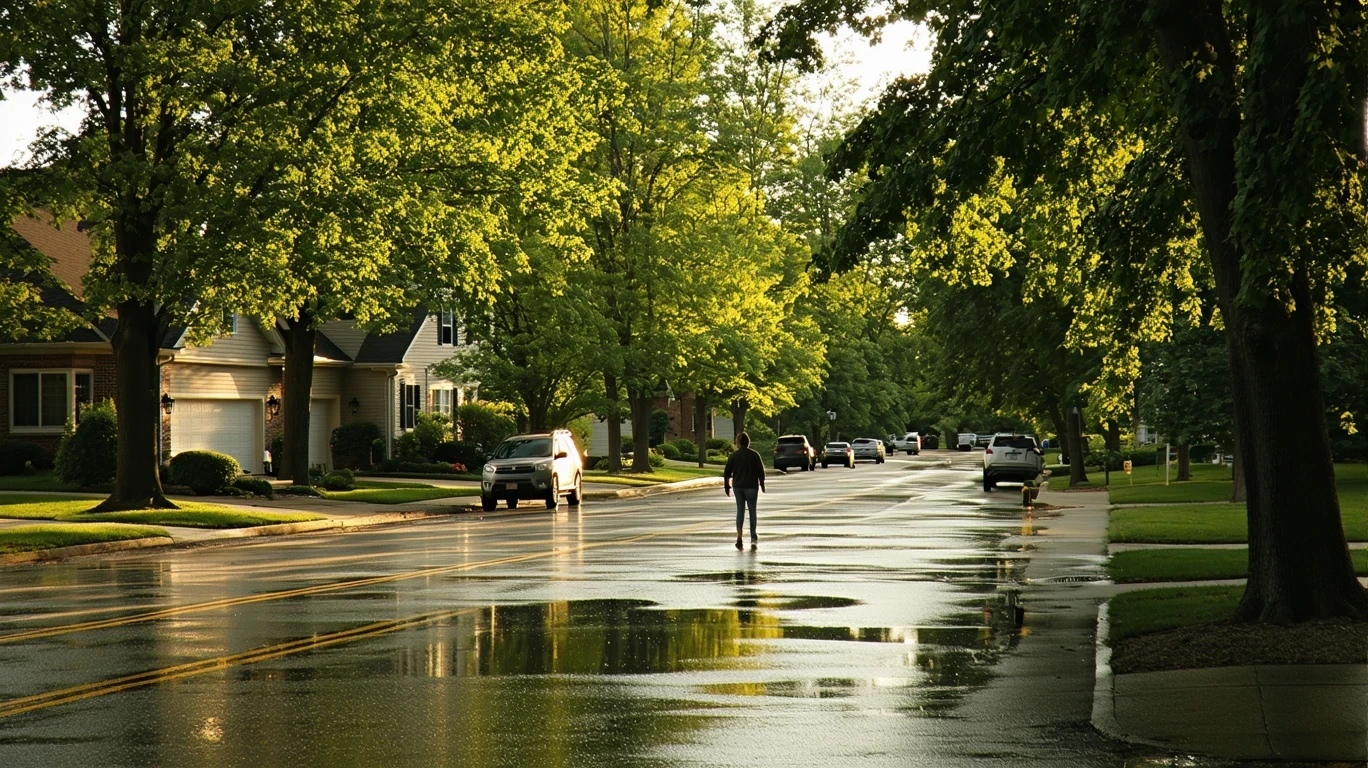
The city’s built environment reflects its suburban identity. Buildings remain low-rise, and both residential and commercial land use are present, creating pockets of mixed activity rather than strict separation. Pedestrian infrastructure is notably strong in certain areas—the pedestrian-to-road ratio exceeds high thresholds—but this doesn’t translate to walkable errands across the board. Grocery and food options cluster along corridors rather than distributing evenly, meaning most households still rely on cars for daily logistics. What sets Eden Prairie apart from many suburbs is the presence of rail transit, which opens commuting options that car-dependent peers lack, and the integration of parks and green space throughout the city, with park density exceeding high thresholds and water features woven into the landscape.
For families drawn to outdoor life and neighborhood safety, this setup works beautifully. For households expecting urban texture, walkable errands, or vibrant street life, it feels limiting. The tension isn’t about whether Eden Prairie is “good”—it’s about whether its specific tradeoffs match what you actually need day-to-day.
Social Media Buzz in Eden Prairie
Online discussion about Eden Prairie tends to center on three recurring themes: pride in outdoor amenities, frustration with traffic and driving distances, and debate over whether the city feels too quiet or appropriately peaceful.
“We moved here for the trails and we use them constantly—it’s honestly the best part of living here.”
“Everything requires a drive. Even ‘close’ errands take 10 minutes in the car. If you’re used to walking to a coffee shop, this will feel isolating.”
“It’s safe, clean, and boring. That’s the deal. If you’re okay with boring, it’s great.”
The emotional range is wide but consistent: people who wanted suburban refuge feel validated, while those who expected more spontaneity or convenience feel restless. There’s also recurring conversation about the cost-to-walkability ratio—renters paying $1,731 per month in median gross rent sometimes express frustration that the rent level doesn’t come with urban-style errands accessibility. Homeowners, meanwhile, tend to frame the $442,200 median home value as reasonable given the school quality, park access, and commute options.
Local News Tone
Coverage of Eden Prairie tends to frame the city through the lens of managed growth and quality-of-life preservation. Headlines reflect ongoing negotiation between development, infrastructure, and community identity:
- “New Development Brings Amenities, Raises Density Questions”
- “Residents Weigh Convenience Against Neighborhood Character”
- “Transit Access Expands as Suburb Redefines Commuter Options”
- “Parks and Trails Remain Central to City Identity”
- “Housing Costs Rise as Demand for Space Continues”
The tone is rarely alarmist, but it’s not celebratory either. Local coverage tends to treat Eden Prairie as a city in transition—no longer a quiet bedroom community, not yet an urban node—and the friction that creates becomes a recurring story angle. There’s pride in what works (outdoor infrastructure, safety, schools) and defensiveness about what doesn’t (traffic, perceived sameness, cost pressure for renters).
Review-Based Public Perception
Public reviews of Eden Prairie—whether on Google, Yelp, or neighborhood platforms—reveal a city that meets or exceeds expectations for people who wanted suburban comfort, and disappoints those who wanted texture or walkability.
Praise tends to focus on:
- Park quality and trail connectivity
- Perceived safety and school reputation
- Access to both Minneapolis and the airport via rail and highway
- Clean, well-maintained public spaces
Complaints tend to focus on:
- Car dependency for nearly all errands
- Limited nightlife, dining variety, and spontaneous social options
- Traffic congestion during peak hours despite suburban setting
- Cost of housing relative to walkability and urban amenities
Neighborhood variation exists but isn’t sharply defined in public discussion. Newer planned areas tend to feel more insulated and amenity-rich, while older pockets offer larger lots and more established trees. Neither is described as significantly more walkable or urban in character—the differences are aesthetic and spatial rather than functional.
One recurring theme: people who moved from denser cities often feel the adjustment more acutely. “It’s fine if you grew up in suburbs, but if you’re used to walking to dinner or grabbing groceries on foot, this will feel like a step backward,” one review notes. Conversely, families leaving urban cores tend to describe Eden Prairie as exactly what they were looking for: “We wanted our kids to ride bikes safely and play outside without constant supervision. This delivers that.”
Comparison to Nearby Cities
| Aspect | Eden Prairie | Bloomington | Minnetonka |
|---|---|---|---|
| Overall Vibe | Outdoor-focused, quiet, rail-accessible suburb | Busier, more commercial, airport-adjacent energy | Affluent, residential, lake-oriented calm |
| Walkability | Pockets of strong pedestrian infrastructure, car-dependent overall | More walkable near Mall of America and transit hubs | Minimal walkability, heavily car-oriented |
| Social Life | Family-oriented, limited nightlife | More dining and entertainment options | Very quiet, private, low social density |
| Commute Options | Rail transit present, strong highway access | Excellent transit and highway access | Highway-dependent, limited transit |
Eden Prairie sits between Bloomington’s busier, more commercial energy and Minnetonka’s quieter, lake-focused affluence. If you want suburban space but value transit access and don’t want to feel completely car-locked, Eden Prairie offers a middle path. If you want more walkable errands and dining variety, Bloomington’s density near transit hubs might feel more convenient. If you prioritize privacy, larger lots, and lake access over any urban amenities, Minnetonka leans further into residential seclusion.
None of these cities will satisfy someone seeking urban texture, but they represent different flavors of suburban comfort. Eden Prairie’s distinguishing feature is the combination of rail access, integrated parks, and strong cycling infrastructure—rare for a car-oriented suburb.
What Locals Are Saying
“We have two kids and we’re outside every day. The parks are incredible, the trails connect everywhere, and we feel safe letting them ride bikes in the neighborhood. That’s worth the tradeoff of driving to Target.”
“I work in Minneapolis and take the train. That’s the only reason this works for me. If I had to drive every day, I’d probably move closer in. But the train makes it manageable, and I get way more space for the money.”
“It’s too quiet for me. I’m used to walking to coffee shops and restaurants, and here everything requires planning and driving. It’s clean and safe, but it feels isolating.”
“We moved from a dense neighborhood in St. Paul and we don’t miss it. We wanted a yard, good schools, and less noise. Eden Prairie delivers all of that. The lack of nightlife doesn’t bother us at all.”
“The rent here is high for what you get in terms of walkability. I’m paying over $1,700 for a two-bedroom, and I still have to drive everywhere. I expected more convenience at this price point.”
“I’ve been here 20 years and it’s changed a lot—more traffic, more development—but it’s still one of the best places to raise a family in the metro. The schools are strong, the parks are maintained, and people care about the community.”
“If you’re retired and you like being active outdoors, this is a great spot. Trails, lakes, low crime, good healthcare access. It’s not exciting, but it’s comfortable and well-run.”
Does Eden Prairie Feel Like a Good Fit?
Eden Prairie works best for households that value outdoor access, safety, and space over walkability and urban texture. It’s a suburb that offers more infrastructure than most—rail transit, strong cycling paths, integrated parks—but it still requires a car for most errands and lacks the spontaneous social life of denser areas.
This tends to work for:
- Families prioritizing outdoor life, school quality, and neighborhood safety
- Professionals with flexible commutes who value rail access to Minneapolis
- Households with high income seeking suburban space without feeling completely car-locked
- People who want green space woven into daily life, not just as a weekend destination
This tends to frustrate:
- Households expecting walkable errands or dense retail options
- People seeking vibrant street life, nightlife, or dining variety
- Renters sensitive to cost-to-convenience ratios
- Anyone who finds car dependency isolating or exhausting
The city’s emotional profile isn’t about happiness or unhappiness—it’s about alignment. If you know you want suburban refuge and you’re willing to drive for convenience, Eden Prairie delivers that with more park access and transit options than most peers. If you’re hoping for a walkable, textured daily experience, the infrastructure won’t support it, no matter how much you appreciate the trails.
For a clearer sense of how costs break down month-to-month, explore A Month of Expenses in Eden Prairie: What It Feels Like. To understand what shapes housing pressure and availability here, see What Drives Housing Costs in Eden Prairie. And if you’re weighing whether the amenities and infrastructure match your daily needs, What Makes Life Feel Tight in Eden Prairie walks through the tradeoffs in detail.
How this article was built: In addition to public economic data, this article incorporates location-based experiential signals derived from anonymized geographic patterns—such as access density, walkability, and land-use mix—to reflect how day-to-day living actually feels in Eden Prairie, MN.
The perspectives shown reflect commonly expressed local sentiment and recurring themes in public discussion, rather than individual accounts.