
A first-time renter in Brooklyn Park looking at a one-bedroom apartment near the commercial corridors will likely face rent around $1,244 per month, the city’s median. For a household earning Brooklyn Park’s median income of $82,271 per year, that represents roughly 18% of gross income—comfortably within traditional affordability guidelines. But the rental experience here isn’t uniform: proximity to bus routes, grocery clusters, and the city’s walkable pockets determines whether a renter can reduce car dependency or must budget for vehicle ownership alongside rent.
A first-time buyer considering a median-priced home at $289,400 will find the purchase price accessible under standard lending ratios, but ownership in Brooklyn Park carries exposure that renters avoid: property taxes that adjust with assessed value, heating bills that stretch across Minnesota’s long winter, and maintenance reserves for snow removal, roof integrity, and exterior upkeep. The decision between renting and buying here isn’t just about monthly payment—it’s about which costs you control, which you inherit, and how Brooklyn Park’s suburban structure shapes your day-to-day logistics.
The Housing Market in Brooklyn Park Today
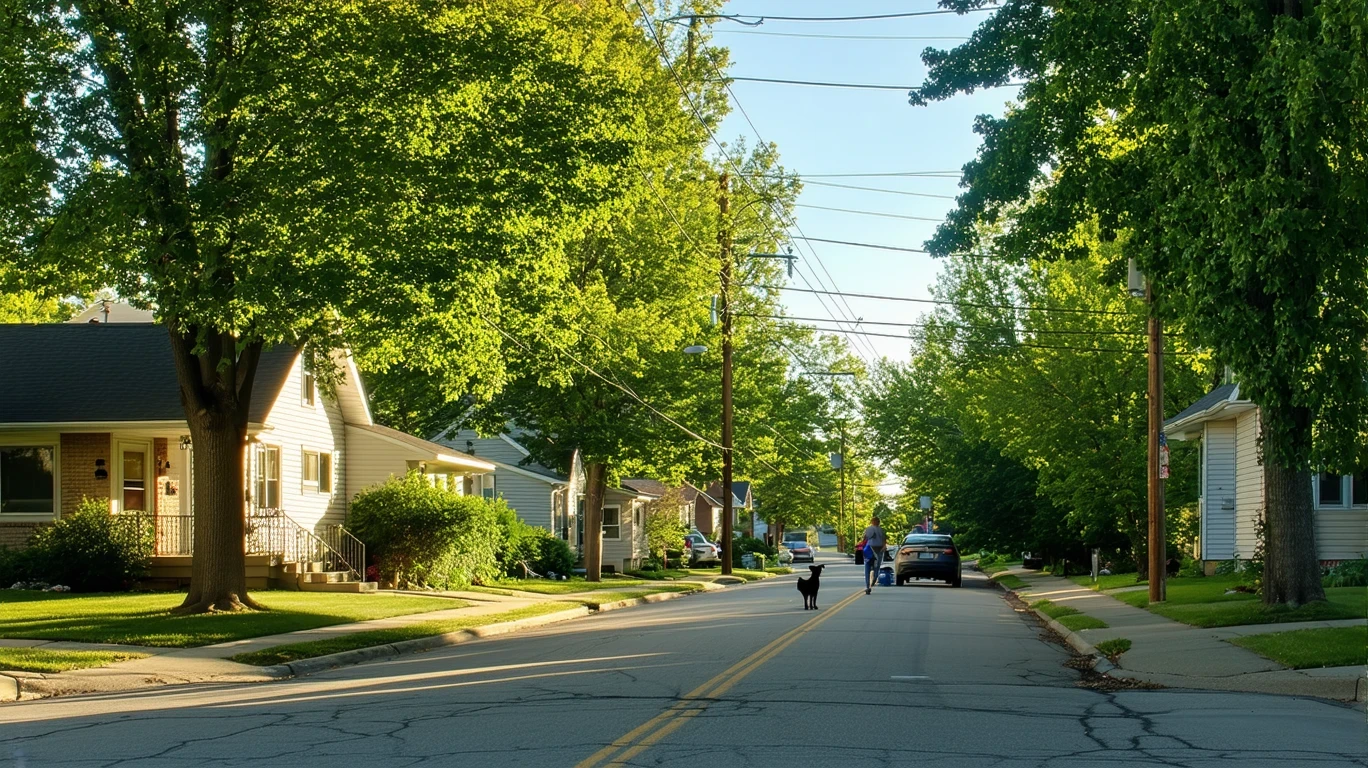
Brooklyn Park’s housing market reflects its role as a northwest Twin Cities suburb: a mix of single-family homes, townhomes, and apartment complexes that developed in waves from the 1970s onward. The median home value of $289,400 sits below the metro average, making the city a comparatively accessible entry point for buyers priced out of Minneapolis or inner-ring suburbs. But that accessibility comes with tradeoffs: the city’s infrastructure is car-oriented outside its denser corridors, and its family amenities—schools and playgrounds—are distributed unevenly, requiring intentional neighborhood selection.
Newcomers often misunderstand Brooklyn Park’s density. The city has walkable pockets where pedestrian infrastructure is strong, and its park network is extensive, with water features woven throughout. But between those nodes, the street grid favors driving. Grocery stores and restaurants cluster along commercial corridors rather than spreading evenly, so where you live determines whether errands are a quick walk or a planned trip. For renters and buyers alike, the real cost pressures in Brooklyn Park emerge not from sticker prices but from the friction of getting around and the seasonal intensity of heating and cooling.
The city’s low unemployment rate of 2.8% signals a stable job market, but many residents commute to Minneapolis, St. Paul, or other metro employment centers. That commute pattern shapes housing demand: proximity to bus routes and major roads commands a premium, while homes farther from transit corridors trade convenience for space and lower prices. For buyers, this creates a choice between accessibility and yard size; for renters, it determines whether a car is optional or essential.
Renting in Brooklyn Park
At $1,244 per month, Brooklyn Park’s median rent reflects moderate pressure—not the affordability of outer exurbs, but not the squeeze of downtown Minneapolis either. Rental availability concentrates in apartment complexes near commercial corridors and along bus routes, where access to groceries and transit reduces the need for a second car. But outside those corridors, rental options thin, and the housing stock shifts toward single-family homes that landlords rent at higher rates to cover property taxes and maintenance.
Renters in Brooklyn Park face a practical question: do you pay for proximity to errands and transit, or do you accept a longer commute and car dependency in exchange for more space? The city’s bus network provides coverage, but without rail service, transit-dependent renters must align their housing search with routes that connect to their workplace. For households that can’t or don’t want to own a car, that constraint narrows the viable rental pool significantly.
Rental volatility here follows metro trends rather than local idiosyncrasies. Lease renewals typically bring increases, but the magnitude depends on metro-wide demand and landlord turnover rather than Brooklyn Park-specific factors. Renters should expect that proximity to parks, bus stops, and grocery clusters will command higher rents, and that those premiums persist even when the broader market softens.
Owning a Home in Brooklyn Park
Buying a home in Brooklyn Park at the median price of $289,400 puts ownership within reach for households earning the city’s median income, but the cost structure shifts dramatically from renting. Property taxes, which vary by assessed value and local levy rates, represent a recurring obligation that rises over time as home values adjust. Heating costs dominate winter utility bills, driven by Minnesota’s extended cold season, and maintenance reserves must account for snow removal, ice dam prevention, and the wear that freeze-thaw cycles impose on roofs, siding, and foundations.
Ownership here also means navigating Brooklyn Park’s suburban governance. Some neighborhoods operate under homeowners associations that bundle services like lawn care or snow removal but add monthly fees; others leave all maintenance to the homeowner. The city’s housing stock includes both newer developments with modern insulation and older homes where heating efficiency varies widely. Buyers must assess not just purchase price but the age and condition of mechanicals—furnaces, water heaters, windows—that determine ongoing expense.
The ownership experience in Brooklyn Park diverges from renting in one critical way: control over cost exposure. Renters face lease renewal uncertainty but avoid property tax adjustments and major repair bills. Owners lock in their purchase price but inherit every cost that the property generates—taxes, insurance, utilities, and the episodic expenses of roof replacement, furnace failure, or driveway resurfacing. For households that value stability and can maintain reserves, ownership provides predictability. For those with tight cash flow or uncertain tenure, renting avoids the risk of a $10,000 furnace replacement in February.
Apartment vs House in Brooklyn Park — Cost Behavior Comparison
| Expense Category | Apartment | House |
|---|---|---|
| Heating (Winter) | Shared walls reduce heat loss; landlord or tenant pays depending on lease structure; exposure moderate | Full perimeter exposure to Minnesota cold; owner responsible for furnace efficiency and insulation; heating costs dominate winter bills |
| Cooling (Summer) | Shared walls buffer heat; smaller square footage limits AC load; exposure low to moderate | Larger square footage and full sun exposure increase cooling demand; owner controls efficiency upgrades |
| Snow Removal | Typically included in rent or managed by landlord; tenant avoids labor and equipment costs | Owner responsible for driveway, walkways, and sometimes sidewalks; requires equipment or contractor expense |
| Property Taxes | Not directly paid by tenant; embedded in rent but landlord absorbs assessment changes during lease term | Owner pays directly; adjusts with assessed value and levy changes; long-term exposure increases with appreciation |
| Maintenance (Episodic) | Landlord responsible for appliances, HVAC, plumbing, and structural repairs; tenant avoids reserve planning | Owner responsible for all systems; must maintain reserves for furnace, roof, water heater, and foundation issues common in freeze-thaw climates |
| Outdoor Space | Limited or shared; no lawn care or landscaping costs | Yard maintenance required; includes mowing, irrigation, and seasonal cleanup; adds labor or contractor expense |
Why these categories differ in Brooklyn Park: The comparison above isolates costs that behave differently due to Brooklyn Park’s northern climate, suburban housing stock, and ownership structure. Heating dominates because Minnesota winters are long and cold, and houses lose heat faster than apartments. Snow removal matters because the city requires property owners to clear walkways, and driveways are standard. Property taxes and episodic maintenance appear because ownership here means absorbing costs that renters never see itemized. Categories like internet, trash, or insurance were omitted because they don’t vary meaningfully between apartments and houses in this market—they’re either bundled similarly or priced identically regardless of housing type.
Utilities & Upkeep Differences
Utility exposure in Brooklyn Park splits sharply between apartments and houses, driven by Minnesota’s climate and the city’s housing age. Apartments benefit from shared walls that buffer heat loss in winter and reduce cooling load in summer. Houses, by contrast, expose their full perimeter to the elements: heating a 1,500-square-foot single-family home through a Minnesota winter generates bills that dwarf apartment costs, especially in older homes where insulation and furnace efficiency lag modern standards.
Electricity rates in Brooklyn Park sit at 15.67¢ per kWh, and natural gas costs $9.99 per thousand cubic feet. For apartment renters, those rates translate to moderate bills year-round, with heating often covered by the landlord or split across units. For homeowners, natural gas becomes the dominant winter expense, and electricity spikes in summer when central air conditioning runs continuously during heat waves. The intensity of both seasons—extended cold and occasional triple-digit summer heat—means that houses face noticeable utility volatility, while apartments experience steadier, lower bills.
Maintenance exposure follows a similar pattern. Apartment tenants avoid the cost and labor of snow removal, gutter cleaning, and exterior repairs. Homeowners in Brooklyn Park must budget for snow blowers or plow services, roof inspections after ice dams, and the periodic replacement of mechanicals that fail more frequently in climates with extreme temperature swings. The city’s integrated park network and water features add quality of life, but they don’t reduce the upkeep burden that comes with owning a detached home in a freeze-thaw zone.
Rent vs Buy: Long-Term Exposure in Brooklyn Park
The long-term cost difference between renting and buying in Brooklyn Park isn’t about which option costs less—it’s about which risks you’re willing to carry. Renters face lease renewal increases that track metro demand, but they avoid property tax adjustments, major repair bills, and the episodic costs of roof replacement or furnace failure. Owners lock in their purchase price and gain equity, but they inherit every cost the property generates: taxes that rise with assessed value, insurance premiums that adjust with claims history, and maintenance expenses that compound as the home ages.
In Brooklyn Park specifically, ownership exposes households to Minnesota’s winter maintenance intensity. Ice dams, frozen pipes, and snow removal aren’t occasional inconveniences—they’re seasonal certainties that require either labor or contractor expense. Renters outsource that burden to landlords; owners absorb it directly. For households with stable income and the ability to maintain reserves, ownership provides control and predictability. For those with variable income or limited savings, renting avoids the risk of a $15,000 roof replacement or a $8,000 furnace swap during a cold snap.
The city’s suburban structure also shapes long-term housing decisions. Families who prioritize access to schools and playgrounds must choose neighborhoods carefully, as Brooklyn Park’s family infrastructure is unevenly distributed. Renters can relocate when household needs change; owners face transaction costs and market timing risk. For households planning to stay in Brooklyn Park long-term and willing to manage seasonal upkeep, ownership builds equity and stabilizes housing costs. For those uncertain about tenure or unwilling to handle winter maintenance, renting preserves flexibility and caps exposure.
How Brooklyn Park’s Layout Shapes Daily Housing Costs
Brooklyn Park’s street grid and land use create cost friction that doesn’t show up in rent or mortgage payments but shapes how much households spend on transportation and time. The city’s errands infrastructure clusters along commercial corridors rather than spreading evenly, so residents outside those corridors must drive to grocery stores, pharmacies, and restaurants. That pattern increases car dependency for most households, adding fuel, insurance, and maintenance costs that renters and owners alike must budget for.
The city’s walkable pockets—areas where pedestrian infrastructure is strong—reduce that burden for households who live within them, but coverage is uneven. A renter in an apartment near a bus route and grocery cluster can minimize car use and lower transportation costs; a renter or owner in a single-family neighborhood farther from those corridors will likely need a vehicle for every errand. Brooklyn Park’s notable cycling infrastructure provides an alternative for some trips, but Minnesota winters limit bike commuting to warmer months, leaving cars as the default year-round.
For families, the city’s limited school and playground density adds another layer of logistics. Despite Brooklyn Park’s integrated park network—one of its strongest amenities—the scarcity of playgrounds and schools near many residential areas means parents must drive children to activities rather than walking. That travel burden doesn’t appear in what a budget has to handle in Brooklyn Park, but it increases both time costs and vehicle expenses, especially for households with multiple children or tight schedules.
How this article was built: In addition to public economic data, this article incorporates location-based experiential signals derived from anonymized geographic patterns—such as access density, walkability, and land-use mix—to reflect how day-to-day living actually feels in Brooklyn Park, MN.
FAQs About Housing Costs in Brooklyn Park
Is Brooklyn Park affordable for first-time buyers?
Brooklyn Park’s median home value of $289,400 is accessible to households earning the city’s median income under standard affordability guidelines, but buyers must budget for property taxes, winter maintenance, and heating costs that extend beyond the mortgage payment. Affordability depends on whether a household can maintain reserves for episodic repairs and seasonal upkeep, not just whether they qualify for the loan.
How does renting in Brooklyn Park compare to nearby suburbs?
Brooklyn Park’s median rent of $1,244 per month reflects moderate pressure relative to the Twin Cities metro. It’s higher than outer-ring suburbs but lower than inner-ring communities closer to Minneapolis. The rental experience varies significantly by location within Brooklyn Park: apartments near bus routes and commercial corridors offer better access to errands and transit, while rentals in car-dependent neighborhoods require vehicle ownership.
What drives utility costs in Brooklyn Park homes?
Heating dominates winter utility bills due to Minnesota’s extended cold season, especially in older single-family homes where insulation and furnace efficiency vary. Natural gas costs $9.99 per thousand cubic feet, and electricity runs 15.67¢ per kWh. Apartments experience lower utility costs due to shared walls; houses face full perimeter exposure and higher seasonal volatility.
Do Brooklyn Park homeowners face HOA fees?
Some Brooklyn Park neighborhoods operate under homeowners associations that charge monthly fees in exchange for services like lawn care, snow removal, or shared amenities. Other neighborhoods leave all maintenance to individual owners. Buyers should verify HOA status and fee structure before purchase, as those costs add to the monthly ownership burden and can increase over time.
How does Brooklyn Park’s layout affect housing decisions?
Brooklyn Park’s errands infrastructure clusters along commercial corridors, so housing location determines whether residents can walk to groceries or must drive. The city has walkable pockets and notable cycling infrastructure, but coverage is uneven, and bus service (without rail) limits transit viability for car-free households. Families face additional logistics due to limited school and playground density, requiring intentional neighborhood selection to minimize travel burden.
Making Housing Choices in Brooklyn Park
Housing costs in Brooklyn Park behave predictably in some ways and unpredictably in others. Rent and home values sit at moderate levels relative to the Twin Cities metro, but the cost experience depends heavily on where you live within the city and whether you own a car. Renters near bus routes and commercial corridors can reduce transportation costs and access errands without driving; renters and owners in car-dependent neighborhoods must budget for vehicle ownership alongside housing payments.
Ownership in Brooklyn Park offers stability and equity but requires reserves for property taxes, winter maintenance, and the episodic costs of furnace replacement, roof repair, and snow removal. Renting avoids those risks but exposes households to lease renewal increases and limits control over housing quality. For households planning long-term tenure and willing to manage seasonal upkeep, ownership builds wealth and locks in predictability. For those uncertain about staying or unable to handle maintenance volatility, renting preserves flexibility and caps exposure.
The city’s integrated parks, moderate cost structure, and proximity to Twin Cities employment make it a viable option for families, first-time buyers, and renters seeking suburban access without downtown prices. But Brooklyn Park’s uneven walkability, limited family infrastructure, and car-oriented layout mean that housing decisions here must account for transportation costs, time burden, and neighborhood-level variation. The right choice depends not just on rent or mortgage affordability, but on whether the city’s structure fits how you move, work, and manage daily logistics.