
Can you live in Hamilton without a car? For some residents—especially those near the rail corridor or in walkable pockets downtown—the answer is a qualified yes. For most households, though, daily life still revolves around driving. Hamilton sits in a middle zone: it’s not a car-only suburb, but it’s not a transit city either. Understanding how people actually get around here means looking past assumptions and focusing on where infrastructure creates real options—and where it doesn’t.
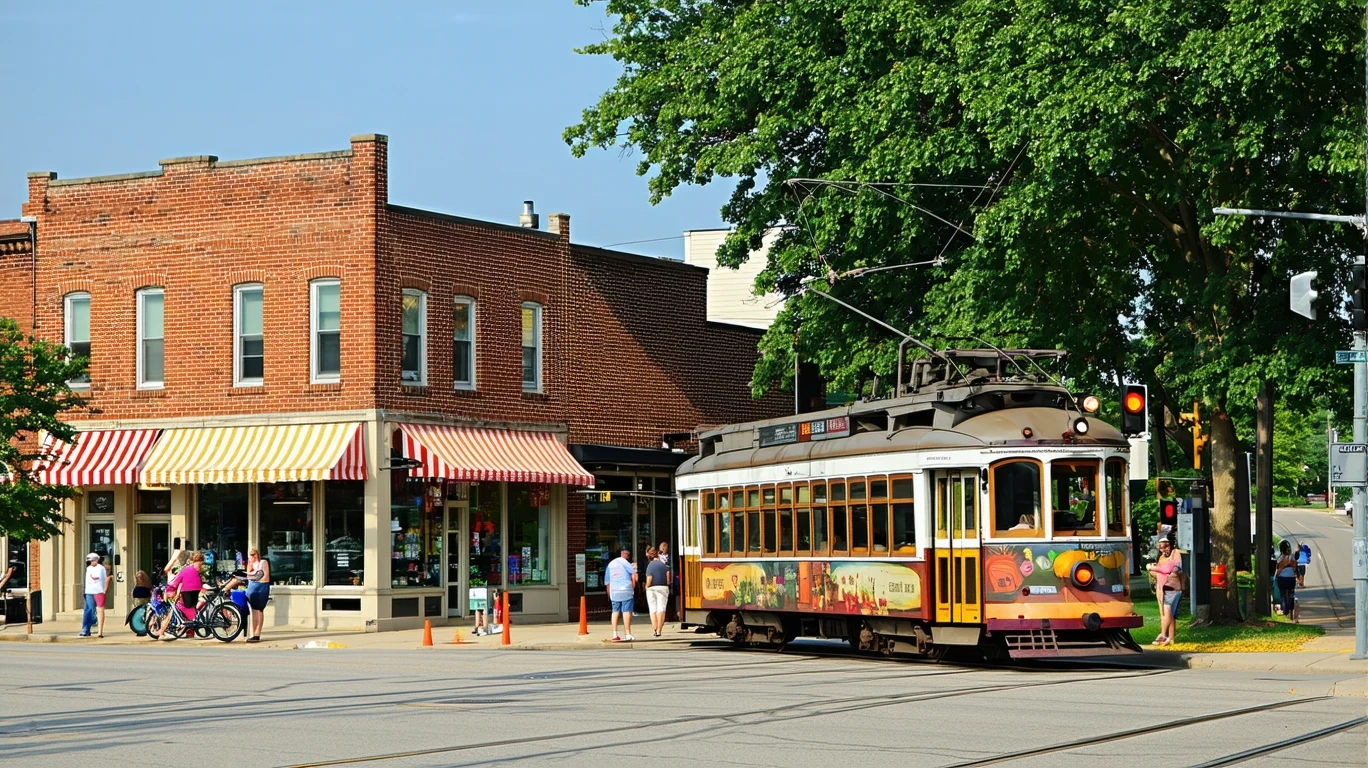
How People Get Around Hamilton
Hamilton’s transportation landscape reflects its role as a regional hub with mixed urban form. The city has rail service, bus stops, and higher pedestrian-to-road ratios in certain areas, but it’s still shaped by a street network built for cars. Most residents drive for most trips. That’s not a failure of planning—it’s a reflection of how the city is laid out, where jobs are located, and how errands are distributed.
What newcomers often misunderstand is that Hamilton isn’t uniformly car-dependent. There are neighborhoods where walking to a grocery store, catching a bus, or biking to work is genuinely practical. But those areas are pockets, not the norm. If you’re comparing Hamilton to a dense urban core, you’ll be disappointed. If you’re comparing it to a sprawling exurban subdivision, you’ll find more flexibility than expected.
The key is matching your household’s daily patterns to the infrastructure that exists in your specific neighborhood. Proximity to rail, density of food and grocery options, and pedestrian infrastructure vary significantly across Hamilton. Where you live determines how you move.
Public Transit Availability in Hamilton
Hamilton has rail service, which sets it apart from many similar-sized Ohio cities. Rail creates a real commuting option for residents who live near stations and work along the line. It’s not a system that blankets the city, but for single-destination commuters—especially those heading to regional employment centers—it can replace daily driving.
Bus service exists, but coverage is corridor-focused. Transit works best along main routes where density supports frequent stops. In residential areas farther from these corridors, service thins out. Late-night and weekend options are more limited, which affects shift workers and households that rely on transit for non-commute trips.
Public transit in Hamilton often centers around systems such as Butler County Regional Transit Authority, though coverage and route structure vary by area. The presence of rail is the most significant factor: it provides a backbone that bus-only systems lack. But rail doesn’t solve last-mile problems. If your home or workplace isn’t within walking distance of a station, you’re back to driving or coordinating rides.
Transit works when your routine aligns with the network. It falls short when you need flexibility, multiple stops, or service outside peak hours. That’s not unique to Hamilton—it’s the reality of mid-sized transit systems everywhere.
Driving & Car Dependence Reality
Most Hamilton households own at least one car, and many own two. Driving isn’t just convenient—it’s often necessary. Grocery stores, schools, medical appointments, and recreational activities are spread across a geography that doesn’t support transit-only living for most families.
Parking is generally accessible and inexpensive compared to larger metro areas. That reduces one of the friction points that makes car ownership burdensome in dense cities. But car dependence still creates exposure: fuel costs, maintenance, insurance, and the time spent behind the wheel all add up. The average commute in Hamilton is 25 minutes, and 35.6% of workers face longer commutes. Those numbers reflect a region where jobs and housing aren’t always co-located.
Sprawl plays a role. Hamilton has walkable blocks downtown and near certain commercial corridors, but much of the residential fabric is lower-density, with longer distances between destinations. That layout favors driving. It’s not impossible to reduce car dependence, but it requires deliberate housing choices and a willingness to accept tradeoffs in convenience.
Commuting Patterns & Daily Mobility
Commuting in Hamilton varies widely depending on where you live and where you work. Workers with jobs in downtown Hamilton or along the rail line have the most flexibility. Those commuting to suburban office parks, industrial zones, or neighboring cities usually drive.
Single-job households with predictable schedules benefit most from transit. Multi-stop routines—dropping kids at school, running errands, covering multiple work sites—almost always require a car. Only 6.5% of Hamilton workers work from home, which means the vast majority are making daily trips, and most of those trips happen by car.
The structure of daily mobility in Hamilton reflects corridor-clustered errands and walkable pockets rather than universal pedestrian access. You can walk to a coffee shop or corner store in some neighborhoods, but a weekly grocery run, a doctor’s appointment across town, or a child’s soccer practice will likely require driving. The city’s infrastructure supports selective car-free trips, not car-free living.
How this article was built: In addition to public economic data, this article incorporates location-based experiential signals derived from anonymized geographic patterns—such as access density, walkability, and land-use mix—to reflect how day-to-day living actually feels in Hamilton, OH.
Who Transit Works For — and Who It Doesn’t
Transit is most viable for renters in core neighborhoods with rail access, single adults or couples without school-age children, and workers whose jobs align with transit routes. These households can structure routines around fixed schedules and limited coverage. They trade flexibility for lower transportation costs and reduced driving time.
Transit works less well for families managing school drop-offs, activity schedules, and multi-stop errands. It’s also a poor fit for residents in peripheral neighborhoods where bus service is sparse and rail stations are miles away. Homeowners in these areas typically own two cars and plan their housing choices around driving.
The difference isn’t about preference—it’s about infrastructure. Your monthly budget in Hamilton will look different depending on whether your neighborhood supports transit use or requires full car dependence. Proximity to rail and walkable errands isn’t just a lifestyle factor; it’s a financial one.
Transportation Tradeoffs in Hamilton
Choosing between transit and driving in Hamilton isn’t about picking the “better” option—it’s about understanding what each mode gives you and what it costs in time, control, and predictability.
Transit offers lower direct costs and eliminates parking hassles, but it requires schedule adherence and limits spontaneity. Driving provides flexibility and speed but exposes you to fuel price swings, maintenance cycles, and the ongoing expense of vehicle ownership.
For households near rail with straightforward commutes, transit can replace a second car. For households in less-connected areas or with complex logistics, driving isn’t optional. The tradeoff isn’t transit versus driving across the board—it’s knowing which trips each mode handles well and planning accordingly.
FAQs About Transportation in Hamilton (2026)
Is public transit usable for daily commuting in Hamilton?
Yes, if you live near a rail station and work along the line. Rail service provides a real alternative to driving for single-destination commuters. Bus service works for some routes but has more limited coverage and frequency. Transit viability depends heavily on where you live and where you work.
Do most people in Hamilton rely on a car?
Yes. The majority of Hamilton households own at least one car, and many own two. While transit exists and some neighborhoods support walking or biking, the city’s layout and job distribution make driving the dominant mode of transportation.
Which areas of Hamilton are easiest to live in without a car?
Neighborhoods near rail stations and within walkable pockets downtown offer the most car-free or car-light potential. These areas have higher pedestrian infrastructure density and better access to corridor-clustered errands. Peripheral neighborhoods generally require a car for daily life.
How does commuting in Hamilton compare to nearby cities?
Hamilton’s rail presence gives it an edge over purely car-dependent suburbs, but it doesn’t match the transit coverage of larger metro cores. Commute times and car dependence fall somewhere in the middle—better than exurban sprawl, less flexible than dense urban centers.
Can you bike regularly in Hamilton?
Biking infrastructure exists in pockets, with moderate bike-to-road ratios in some areas. Cycling is practical for certain trips and certain neighborhoods, but it’s not a citywide solution. Weather, distance, and road design all affect whether biking works for your routine.
How Transportation Fits Into the Cost of Living in Hamilton
Transportation isn’t just a line item—it’s a structural factor that shapes where you can live, how much time you spend in transit, and how much control you have over daily logistics. In Hamilton, getting around costs less than in major metros, but it still requires planning.
Households that can use rail or live in walkable areas reduce their exposure to fuel price swings and vehicle depreciation. Those in car-dependent neighborhoods absorb those costs in exchange for housing affordability or space. Neither choice is wrong, but each has financial and lifestyle consequences.
If you’re evaluating whether Hamilton fits your household, start by mapping your daily destinations against the city’s transit and pedestrian infrastructure. The right neighborhood can make transportation feel easy. The wrong one can turn every errand into a logistical puzzle. Hamilton offers both kinds of places—your job is to figure out which one matches your routine.
—