
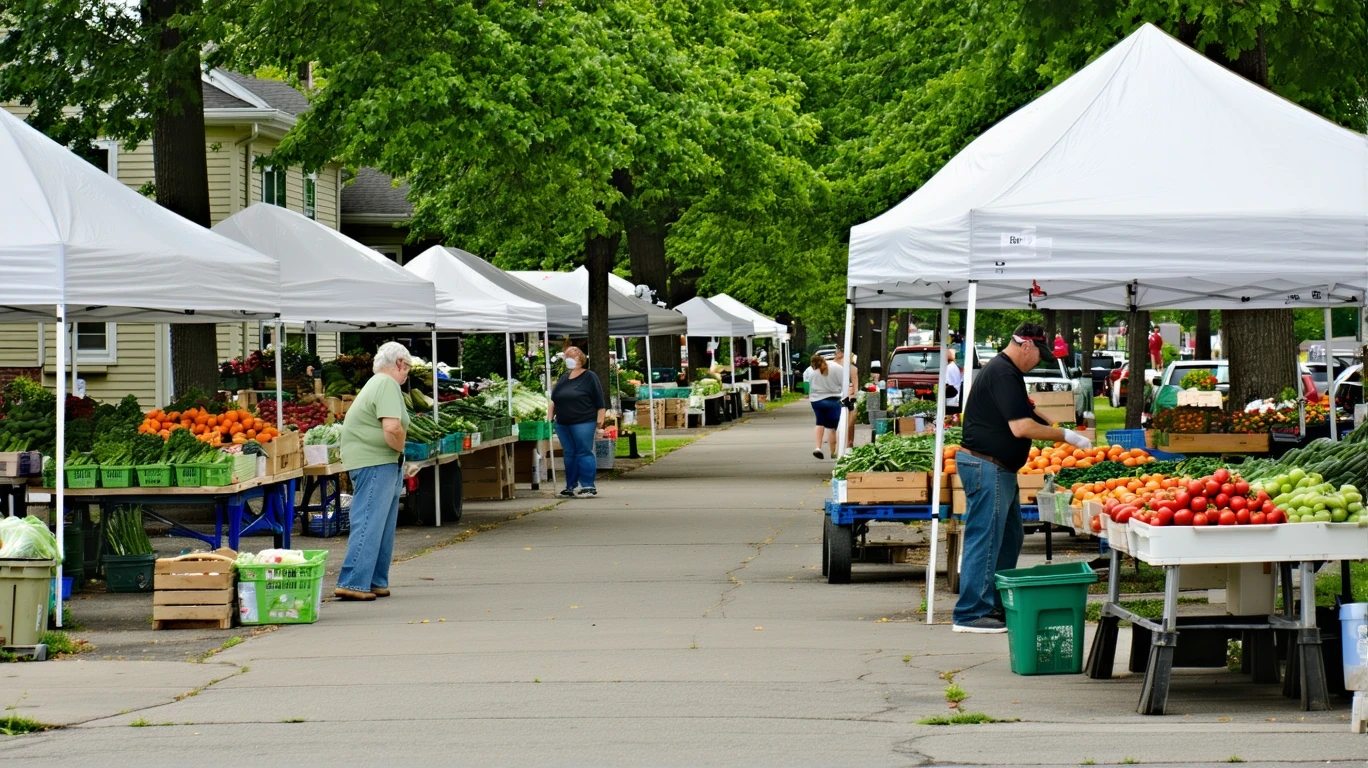
How Grocery Costs Feel in Hamilton
Can you stay under $100 at the grocery store? In Hamilton, that challenge feels different than it does in pricier metros—not because the checkout total disappears, but because the baseline cost structure gives households a bit more room to maneuver. Hamilton’s regional price level runs about 6% below the national average, and that shows up in the grocery aisle. Staple items—bread, eggs, chicken, milk—tend to price lower here than in higher-cost cities, which means a cart that might hit $120 in Columbus or Cincinnati can often land closer to $100 in Hamilton. But “lower than elsewhere” doesn’t mean “low.” For a household earning the city’s median income of $52,995 per year, grocery costs still represent a meaningful weekly decision, especially when feeding multiple people or managing a tight budget.
Who notices grocery costs most? Singles and young professionals benefit the most from Hamilton’s modest pricing—buying for one person means the per-item savings add up without the volume multiplier that families face. A household buying seven gallons of milk a month feels price differences more acutely than someone buying two. Families with children, especially those with school-age kids or teenagers, encounter grocery pressure not because Hamilton is expensive, but because volume needs amplify even small per-item costs. A family of four spending $150–$175 per week isn’t overpaying by national standards, but it’s still a significant line item when measured against local income levels. Fixed-income seniors and retirees feel grocery costs differently again: every percentage point matters when Social Security or pension income is fixed, and the ability to shop strategically—choosing discount stores, avoiding waste, timing sales—becomes a practical necessity rather than a lifestyle preference.
The experience of grocery shopping in Hamilton is also shaped by where food retail is concentrated. Grocery options tend to cluster along commercial corridors rather than being evenly distributed across neighborhoods, which means most households plan intentional trips rather than making quick stops on foot. This influences how people shop: fewer small trips, more consolidated weekly runs, and a stronger emphasis on store choice. The question isn’t just “what do groceries cost?”—it’s “where are you shopping, and how often are you willing to drive to get there?”
Grocery Price Signals (Illustrative)
These prices illustrate how staple items tend to compare locally—not a full shopping list, and not a guarantee of what any single store charges on any given week. They’re drawn from regional price data adjusted for Hamilton’s cost level, and they serve as anchors for understanding relative affordability rather than checkout-accurate pricing. If you’re moving to Hamilton or comparing it to another city, these numbers help explain why grocery costs feel lighter here than in higher-cost metros, even if they don’t feel “cheap” in absolute terms.
| Item | Typical Price |
|---|---|
| Bread (per pound) | $1.73 |
| Cheese (per pound) | $4.55 |
| Chicken (per pound) | $1.92 |
| Eggs (per dozen) | $2.42 |
| Ground beef (per pound) | $6.35 |
| Milk (per half-gallon) | $3.85 |
| Rice (per pound) | $1.00 |
Derived estimate based on national baseline adjusted by regional price parity; not an observed local price.
What stands out? Proteins—chicken and ground beef—represent the biggest per-item expense, which is why families often feel grocery pressure most sharply when planning dinners. Eggs and rice remain budget anchors, and milk pricing sits in a middle zone where brand and store tier make a noticeable difference. Cheese, at $4.55 per pound, is neither a luxury nor a throwaway cost; it’s the kind of item where buying a two-pound block at a discount store instead of an eight-ounce package at a convenience-oriented grocer can shift weekly spending by $5 to $10 without changing what you eat.
Store Choice & Price Sensitivity
Grocery costs in Hamilton vary more by store tier than by neighborhood. The city’s retail landscape includes discount grocers, mid-tier chains, and premium or specialty markets, and the difference between shopping at the low end versus the high end can easily represent a 20–25% swing in weekly spending—even when buying the same items. Discount stores—think no-frills layouts, house brands, and limited prepared food sections—offer the lowest baseline prices and appeal to cost-conscious households willing to trade convenience for savings. Mid-tier chains occupy the middle ground: recognizable brands, broader selection, occasional sales, and a shopping experience that feels familiar without commanding a premium. Premium grocers—whether organic-focused, specialty, or convenience-oriented—charge more for ambiance, prepared foods, and niche product lines, and they’re best suited to households where grocery budget flexibility exists or where specific dietary needs justify the cost.
Because grocery options in Hamilton are concentrated along commercial corridors rather than distributed evenly across residential areas, store choice often involves a tradeoff between proximity and price. A household living near a mid-tier chain might drive an extra ten minutes to reach a discount grocer, especially if they’re shopping for a family or managing a tight budget. Conversely, a single professional or couple might prioritize convenience and shop closer to home, accepting a modest price premium in exchange for saving time and reducing trip frequency. The structure of the city—where errands require intentional travel rather than spontaneous stops—reinforces the importance of planning: fewer trips, larger carts, and a stronger emphasis on per-item cost awareness.
Store tier also interacts with household size in predictable ways. Singles and couples can absorb the premium-store cost difference more easily because volume is low; spending an extra $10 per week at a nicer store might feel worth it for better produce or a faster checkout. Families with children, on the other hand, feel the tier difference multiply across every category—dairy, snacks, proteins, pantry staples—and the cumulative effect makes discount shopping a practical necessity rather than a preference. Fixed-income households, regardless of size, benefit most from discount store pricing, where every percentage point saved translates directly into budget breathing room.
What Drives Grocery Pressure Here
Grocery pressure in Hamilton isn’t driven by high prices—it’s driven by the interaction between modest prices and constrained income. The city’s median household income of $52,995 means that even with below-average grocery costs, food spending still represents a meaningful share of take-home pay. A household following the standard 30% housing affordability guideline has roughly $3,700 per month (gross) to cover utilities, transportation, groceries, insurance, and everything else. Within that envelope, groceries compete with other non-negotiable costs, and the result is that price sensitivity remains high even when absolute prices are low.
Household size is the primary multiplier. A single person spending $50–$60 per week on groceries is managing a controllable expense; a family of four spending $150–$175 per week is managing a significant budget line that leaves less room for error. The difference isn’t waste or inefficiency—it’s volume. Kids eat more as they grow, teenagers consume astonishing quantities of milk and snacks, and families cooking at home every night go through proteins, produce, and pantry staples faster than smaller households. The per-item savings Hamilton offers help, but they don’t eliminate the pressure that comes from feeding multiple people on a median income.
Regional distribution patterns also matter. Because grocery retail in Hamilton clusters along corridors rather than being walkable from most neighborhoods, households without reliable transportation face higher effective costs—not in price per item, but in time, trip complexity, and reduced access to discount stores. A household that can drive to three different stores and compare prices has more control over grocery spending than a household limited to whatever is closest or reachable by transit. This access gap doesn’t show up in price data, but it shapes the lived experience of grocery affordability in ways that matter for families, seniors, and anyone managing transportation constraints alongside budget constraints.
Practical Ways People Manage Grocery Costs
Managing grocery costs in Hamilton starts with store choice, but it doesn’t end there. Households that keep grocery spending under control tend to combine strategic shopping with behavioral discipline, and the most effective strategies don’t require coupons or apps—they require planning and consistency. Shopping at discount stores is the single highest-impact lever: switching from a mid-tier chain to a no-frills grocer can reduce weekly spending without changing what you eat, simply by eliminating brand premiums and convenience markups. For families, this difference compounds quickly; for singles, it’s less dramatic but still meaningful.
Buying in bulk works when you have the storage space and the upfront cash to make it happen. Staples like rice, pasta, canned goods, and frozen proteins cost less per unit when purchased in larger quantities, and households that can dedicate freezer space to bulk chicken or ground beef reduce per-meal costs without sacrificing quality. The tradeoff is immediacy: bulk buying requires planning, and it ties up cash that might otherwise be available for other expenses. It’s a strategy that works best for families and couples with predictable consumption patterns, and less well for singles or households with limited storage.
Meal planning reduces waste, and waste is where grocery budgets quietly bleed. A household that plans dinners for the week, writes a list, and sticks to it spends less than a household that shops reactively and ends up throwing away produce or leftovers. This isn’t about perfection—it’s about reducing the frequency of “I don’t know what to make, so I’ll buy extra and figure it out later” trips, which tend to result in impulse purchases and unused ingredients. Cooking at home consistently, rather than oscillating between cooking and convenience, also stabilizes grocery spending by reducing the temptation to fill gaps with takeout or prepared foods.
Seasonal awareness helps at the margins. Produce costs fluctuate throughout the year, and buying what’s in season—or at least avoiding what’s out of season—keeps costs lower without requiring a spreadsheet. Berries in winter cost more than berries in summer; root vegetables in fall cost less than root vegetables in spring. Households that adjust their shopping to match seasonal availability don’t necessarily save dramatically, but they avoid paying premiums for items that are expensive simply because they’re out of cycle.
Groceries vs Eating Out (Directional)
The tradeoff between cooking at home and eating out isn’t just about cost—it’s about time, energy, and convenience. Cooking at home in Hamilton is almost always cheaper on a per-meal basis, but “cheaper” doesn’t account for the labor of planning, shopping, cooking, and cleaning. A household that cooks every night might spend $150–$175 per week on groceries and produce 20+ meals; a household that eats out three or four times per week might spend $200+ on groceries and dining combined, but they’re also buying back time and reducing decision fatigue.
For families, cooking at home is usually the only practical option—feeding four people at a restaurant adds up fast, and doing it multiple times per week becomes unsustainable on a median income. For singles and couples, the calculus is different: eating out occasionally doesn’t blow up the budget, and the convenience can feel worth the premium, especially after a long day or when grocery shopping hasn’t happened yet. The key is consistency. Households that cook most of the time and eat out occasionally maintain control over food spending; households that oscillate unpredictably between cooking and dining out tend to overspend in both categories, because they’re buying groceries they don’t use and paying restaurant prices more often than they planned.
The structure of Hamilton—where errands require intentional trips and grocery stores cluster along corridors—also influences this tradeoff. A household that’s already out running errands might stop for fast food or takeout rather than making a separate grocery trip, especially if they’re tired or pressed for time. This isn’t irrational; it’s a response to the friction of access. Reducing that friction—by planning grocery trips in advance and keeping a stocked pantry—makes cooking at home the path of least resistance, which is where sustainable cost control actually happens.
FAQs About Grocery Costs in Hamilton (2026)
Is it cheaper to shop in bulk in Hamilton? Bulk buying reduces per-unit costs for staples like rice, pasta, canned goods, and frozen proteins, but it requires upfront cash and storage space. Families with predictable consumption patterns benefit most; singles may find bulk buying ties up money without delivering proportional savings.
Which stores in Hamilton are best for low prices? Discount grocers—those with no-frills layouts, house brands, and limited prepared food sections—offer the lowest baseline prices and work well for cost-conscious households. Mid-tier chains balance price and convenience, while premium or specialty stores charge more for ambiance, organic options, and prepared foods.
How much more do organic items cost in Hamilton? Organic products typically carry a premium of 20–40% over conventional equivalents, depending on category. Households prioritizing organic foods should expect higher grocery spending overall, though shopping at discount stores that carry organic house brands can narrow the gap.
How do grocery costs for two adults in Hamilton tend to compare to nearby cities? Hamilton’s regional price level runs about 6% below the national average, which translates to modest savings compared to higher-cost metros like Columbus or Cincinnati. A household spending $120 per week in Hamilton might spend $130–$140 for the same items in a pricier city, though store choice and shopping habits matter more than location alone.
How do households in Hamilton think about grocery spending when cooking at home? Most households treat groceries as a controllable expense that responds to planning and store choice. Families emphasize volume and per-item cost; singles and couples prioritize convenience and quality. Cooking at home consistently keeps costs lower than oscillating between cooking and dining out, because it reduces waste and avoids paying restaurant premiums.
Does Hamilton’s corridor-clustered grocery layout affect costs? Indirectly, yes. Because grocery stores concentrate along commercial corridors rather than being walkable from most neighborhoods, households plan fewer, larger trips and place more emphasis on store choice. This structure rewards intentional shopping and penalizes reactive, convenience-driven trips, which tend to cost more per item.
Are grocery costs in Hamilton rising faster than income? Grocery prices fluctuate with national supply chains, seasonal cycles, and commodity costs, and they don’t always move in sync with local wage growth. Households on fixed incomes or tight budgets feel price increases more acutely, even when absolute costs remain below national averages. Long-term grocery affordability depends on income growth keeping pace with food price trends, which varies by household and employment sector.
How Groceries Fit Into the Cost of Living in Hamilton
Groceries represent a significant but controllable share of household spending in Hamilton, and they interact with housing and transportation costs in ways that shape overall affordability. A household paying below-market rent or owning a home with a manageable mortgage has more flexibility to absorb grocery costs, shop at mid-tier or premium stores, and eat out occasionally. A household stretched thin by housing costs feels grocery pressure more intensely, because every dollar spent on food is a dollar that isn’t available for rent, utilities, or transportation. The city’s below-average price level helps, but it doesn’t eliminate the tradeoffs that come with managing your monthly budget in Hamilton on a median income.
Transportation costs also influence grocery affordability, though not in obvious ways. Households with reliable vehicles can shop at discount stores farther from home, compare prices across multiple retailers, and buy in bulk when it makes sense. Households without cars—or with older, less reliable vehicles—face higher effective grocery costs because they’re limited to whatever is closest or reachable by transit, and those options aren’t always the cheapest. This access gap doesn’t show up in price data, but it matters for families, seniors, and anyone managing transportation constraints alongside budget constraints.
For a complete picture of how groceries fit into overall household spending—including housing, utilities, transportation, and discretionary costs—see the full breakdown of where your money goes each month in Hamilton. That article walks through the interactions between fixed and variable costs, explains how different household types allocate income, and provides the context needed to understand whether Hamilton’s cost structure works for your situation. Groceries are one piece of the puzzle, but they don’t exist in isolation, and understanding how they fit into the larger financial picture is what turns price awareness into confident decision-making.
How this article was built: In addition to public economic data, this article incorporates location-based experiential signals derived from anonymized geographic patterns—such as access density, walkability, and land-use mix—to reflect how day-to-day living actually feels in Hamilton, OH.
—