
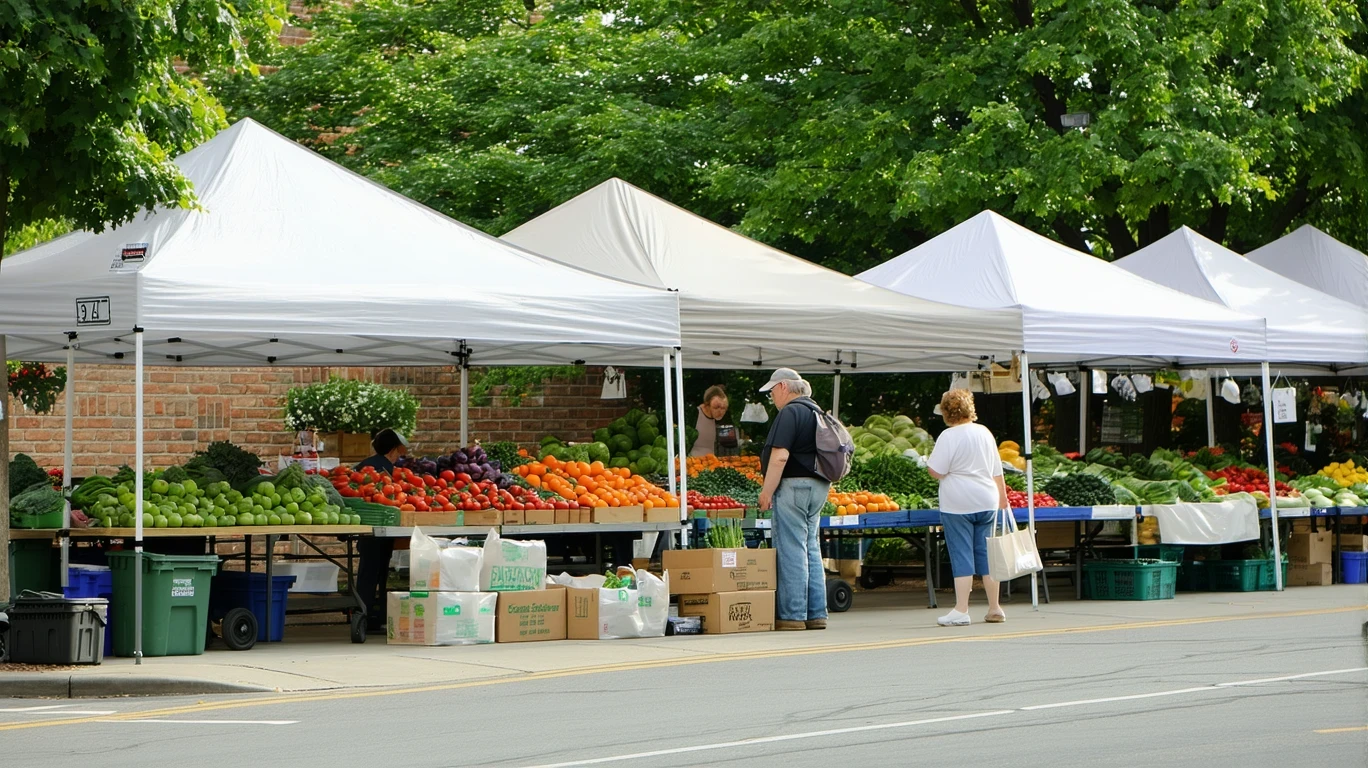
Can You Stay Under $100? The Grocery Bill Challenge in Cincinnati
Walk into any grocery store in Cincinnati with a mental budget of $100, and you’re immediately playing a high-stakes game of tradeoffs. Do you grab the name-brand cereal or the store version? Does the chicken go on sale this week, or do you pivot to ground beef? Can you stretch that cart to cover breakfasts, lunches, and dinners for the week—or do you run out of runway by Thursday? For families moving to Cincinnati or residents recalibrating their budgets in 2026, the grocery bill isn’t just a line item. It’s a weekly test of planning, discipline, and store choice. And in a city where the median household income sits at $49,191 per year, every decision at the checkout matters.
Cincinnati’s grocery landscape operates at a modest structural advantage compared to the national baseline—the regional price parity index of 94 signals that goods and services here generally cost about 6% less than the U.S. average. That advantage shows up in grocery aisles, but it doesn’t guarantee relief. Income constraints mean food spending claims a larger share of household budgets than in wealthier metros, and the difference between shopping at a discount grocer versus a premium format can easily erase that 6% head start. The real question isn’t whether groceries cost less in Cincinnati—it’s whether households make choices that let them capture that advantage.
This article explains how grocery costs actually feel in Cincinnati, which households notice price pressure most, and how store selection and shopping habits determine whether your weekly trip feels manageable or relentless. We’re not building a simulated shopping cart or pretending to know what’s in your fridge. Instead, we’re showing you the forces that shape grocery spending here, the levers you control, and the tradeoffs that define the experience. For a full picture of how groceries fit into monthly expenses, you’ll want to review the broader budget breakdown separately—but if you want to understand why your grocery bill feels the way it does, this is where we start.
How Grocery Costs Feel in Cincinnati
Grocery prices in Cincinnati sit in a sweet spot that feels neither punishing nor luxurious—they’re simply workable, provided you’re intentional. The regional price environment creates a baseline that’s friendlier than coastal metros or high-cost Midwest hubs, but it’s not a discount wonderland. Singles and young professionals working entry-level jobs notice every price swing, especially when income hasn’t caught up to rent and transportation costs. A $50 grocery run that covers five days of meals requires discipline: store brands, seasonal produce, and a willingness to skip convenience items. Families with children, by contrast, experience grocery costs as a volume game. The per-item advantage compounds across larger carts, and households that commit to discount-tier stores or bulk purchasing can stretch budgets further than the raw numbers suggest.
Seniors on fixed incomes occupy a middle ground. Modest prices help, but limited flexibility means even small price increases—eggs jumping 30 cents, milk creeping past $4—register as budget disruptions rather than minor annoyances. The structural advantage Cincinnati offers is real, but it requires activation. Households that treat grocery shopping as a passive errand, defaulting to the nearest store or grabbing whatever’s convenient, often end up paying closer to national averages. Those who plan around sales, compare store tiers, and avoid impulse purchases capture the full benefit of the city’s cost structure.
Food options in Cincinnati concentrate along commercial corridors, where restaurant density runs high but grocery density remains moderate. This creates a behavioral fork: easy access to prepared food and dining out competes with the intentional effort required to reach grocery anchor stores. Walkable pockets in some neighborhoods support errand consolidation, but most grocery runs still require planning rather than spontaneous walkability. Households that default to convenience—grabbing takeout because the grocery store isn’t on the way home—face higher food costs overall. Those who build routines around grocery value, even if it means a slightly longer trip, consistently report lower spending and greater control.
Grocery Price Signals (Illustrative)
These prices illustrate how staple items tend to compare locally—not a full shopping list or a snapshot of any single store. They’re anchors, not guarantees, and they reflect the kind of pricing households encounter when shopping mid-tier formats in Cincinnati. Derived estimate based on national baseline adjusted by regional price parity; not an observed local price.
| Item | Typical Price |
|---|---|
| Bread | $1.68/lb |
| Cheese | $4.44/lb |
| Chicken | $1.92/lb |
| Eggs | $2.69/dozen |
| Ground Beef | $6.15/lb |
| Milk | $3.76/half-gallon |
| Rice | $1.00/lb |
Chicken at $1.92 per pound and rice at $1.00 per pound anchor budget-conscious meal planning—households that build dinners around these staples consistently underspend compared to those who default to convenience proteins or prepared sides. Ground beef at $6.15 per pound sits in a higher tier, meaning families that rely on it heavily feel more pressure than those who rotate in chicken, beans, or eggs. Cheese at $4.44 per pound and milk at $3.76 per half-gallon represent everyday dairy costs that add up quickly for families with children, especially those who go through multiple gallons per week. Eggs at $2.69 per dozen remain one of the most cost-efficient protein sources, but price volatility—driven by supply disruptions or seasonal shifts—can push them higher without warning.
These numbers don’t tell you what you’ll pay at checkout, but they do reveal relative positioning. Staples like rice and chicken offer the most leverage for households trying to control costs, while proteins like ground beef and dairy products represent categories where small price differences across stores compound quickly. The takeaway isn’t to memorize prices—it’s to recognize which items drive your spending and where store choice or substitution creates the most room to maneuver.
Store Choice and Price Sensitivity
Grocery price pressure in Cincinnati varies more by store tier than by any single “average” experience. Discount grocers—no-frills formats focused on private-label goods, limited selection, and high turnover—offer the lowest per-item costs, often running 20-30% below mid-tier chains on comparable staples. These stores reward households willing to trade brand familiarity and convenience for price discipline. You won’t find extensive prepared food sections or specialty imports, but if your goal is to stretch $75 into a week’s worth of meals, discount formats deliver. Families with children and budget-conscious singles benefit most, especially when buying high-volume staples like rice, pasta, canned goods, and frozen vegetables.
Mid-tier chains occupy the middle ground, balancing price, selection, and convenience. These stores offer recognizable brands, broader produce sections, and more prepared food options, but prices run closer to regional averages. Households that value one-stop shopping—grabbing groceries, pharmacy items, and household goods in a single trip—often default to mid-tier formats, accepting modest price premiums in exchange for convenience. The tradeoff works for dual-income families with limited time, but it quietly erodes the 6% structural advantage Cincinnati offers. A cart that costs $85 at a discount grocer might run $110 at a mid-tier chain, and that $25 gap repeats weekly.
Premium grocers—specialty stores, organic-focused formats, and upscale chains—cater to households prioritizing quality, variety, and experience over price. Expect to pay 40-60% more on comparable items, with the gap widening on organic produce, artisan goods, and prepared meals. These stores serve a real need for households with dietary restrictions, culinary interests, or simply higher incomes, but they’re not where most Cincinnati families do their core shopping. The key insight: store tier choice isn’t about right or wrong—it’s about aligning your shopping habits with your budget reality. Households that drift between tiers without intention often end up paying mid-tier prices for discount-tier needs, leaving money on the table every week.
What Drives Grocery Pressure Here
Income context shapes how grocery costs feel more than the prices themselves. With a median household income of $49,191, Cincinnati households allocate a higher share of earnings to food than residents of wealthier metros, even when per-item costs run lower. A $400 monthly grocery budget represents about 10% of gross income for a median household—manageable, but tight enough that unexpected price spikes or poor store choices create real strain. Singles earning below the median feel this pressure most acutely, especially when juggling rent, transportation, and student loans. Families with children face volume pressure instead: even modest per-item costs multiply quickly when feeding three or four people, and the gap between careful shopping and convenience defaults widens.
Household size sensitivity compounds in predictable ways. A single adult buying for one can often absorb price variability by adjusting portions or substituting items week to week. A family of four loses that flexibility—meals require consistent volume, and skipping staples isn’t an option. The result: families feel grocery cost pressure more intensely and earlier than singles, even when shopping the same stores. Discount-tier formats and bulk purchasing offer the most relief, but they require upfront planning and sometimes larger per-trip spending, which creates its own cash flow challenge for households living paycheck to paycheck.
Regional distribution and access patterns introduce friction that isn’t always visible in price comparisons. Grocery density in Cincinnati clusters along commercial corridors rather than spreading evenly across neighborhoods, meaning some households face longer trips to reach discount-tier stores or bulk formats. That distance cost—time, gas, and convenience—can quietly offset savings, especially for families without reliable transportation or those working multiple jobs. Seasonal variability adds another layer: produce prices swing with growing seasons, holiday demand drives up proteins like turkey and ham, and winter heating costs sometimes force households to trim grocery budgets to cover utility bills. The interplay between income, household size, access, and seasonality means grocery pressure in Cincinnati isn’t static—it shifts based on where you live, how you shop, and what else is competing for your budget.
Practical Ways People Manage Grocery Costs
Households that consistently underspend on groceries in Cincinnati share a few behavioral patterns, none of which require extreme couponing or meal-prep marathons. The most effective strategy is simple: commit to a primary store tier and shop it consistently. Discount grocers reward loyalty and familiarity—once you learn the layout, identify reliable private-label products, and understand the sales cycle, you stop wasting time and money on trial and error. Families that split shopping between multiple stores, chasing individual deals, often spend more on gas and impulse purchases than they save on sale items.
Meal planning around staples rather than recipes reduces both cost and waste. Instead of buying ingredients for specific dishes and letting leftovers spoil, successful shoppers build flexible meal frameworks: rice, chicken, and seasonal vegetables can become stir-fry, soup, or casserole depending on what’s on hand. This approach minimizes the premium paid for specialty items and reduces the frequency of mid-week “emergency” trips, which almost always result in overspending. Buying in bulk works, but only for non-perishables and items you’ll actually use. A 10-pound bag of rice at $1.00 per pound is a smart buy; a bulk pack of fresh herbs that wilts before you use it is not.
Avoiding prepared and convenience foods represents the single biggest lever most households have. Pre-cut vegetables, rotisserie chicken, and meal kits carry significant markups—sometimes doubling the cost of raw ingredients. For time-constrained families, the tradeoff may be worth it occasionally, but defaulting to convenience items weekly erodes budgets quickly. Finally, shopping seasonally and flexibly—buying what’s abundant and cheap rather than forcing specific ingredients—keeps costs down without requiring sacrifice. Strawberries in December cost twice what they do in June; ground beef on sale beats full-price steak every time. The goal isn’t perfection—it’s building habits that align your spending with your priorities, week after week.
Groceries vs Eating Out (Directional)
The tradeoff between cooking at home and dining out shapes food spending in Cincinnati more than most households realize. Groceries represent the lower-cost option on a per-meal basis, but they require time, planning, and energy—resources that feel scarce for dual-income families, shift workers, and parents managing school schedules. Eating out offers convenience and variety, but the cost premium is steep: a meal that costs $3 to prepare at home might run $12 at a casual restaurant, and that gap widens when feeding multiple people. The real decision isn’t whether to cook or dine out—it’s how often convenience is worth the markup.
Households that dine out frequently, even at mid-tier or fast-casual spots, often spend as much on restaurants as they do on groceries, effectively doubling their food costs. For families already stretched thin, that pattern creates budget pressure that shows up elsewhere—deferred car maintenance, skipped savings contributions, or credit card balances that creep upward. Singles and young professionals face a different calculus: cooking for one often means dealing with leftovers or buying small quantities at higher per-unit costs, which narrows the savings gap. Still, even modest home cooking—preparing three or four dinners per week instead of one—creates meaningful room in a tight budget.
The corridor-clustered food access pattern in Cincinnati makes this tradeoff more tempting. When restaurants line your commute route but the grocery store requires a detour, the path of least resistance tilts toward dining out. Households that build routines around grocery shopping—treating it as a scheduled errand rather than an afterthought—report lower food spending and greater control. The goal isn’t to eliminate dining out, but to make it an intentional choice rather than a default driven by convenience and fatigue.
FAQs About Grocery Costs in Cincinnati (2026)
Is it cheaper to shop in bulk in Cincinnati? Bulk purchasing works well for non-perishable staples like rice, pasta, canned goods, and frozen items, especially at discount-tier stores or warehouse formats. The per-unit savings can be significant, but only if you have storage space and will actually use the volume before expiration.
Which stores in Cincinnati are best for low prices? Discount-tier grocers consistently offer the lowest per-item costs, often running 20-30% below mid-tier chains on comparable staples. These no-frills formats prioritize private-label goods and high turnover over selection and ambiance, but they deliver the most value for budget-conscious households.
How much more do organic items cost in Cincinnati? Organic and specialty items typically carry premiums of 30-60% over conventional equivalents, with the gap widening at premium-tier stores. Households prioritizing organic products should expect meaningfully higher grocery bills unless they focus on seasonal produce and sales.
How do grocery costs for families in Cincinnati compare to nearby cities? Cincinnati’s regional price parity of 94 suggests grocery costs run modestly below the national average, but the real comparison depends on store choice and shopping habits. Families that shop discount tiers in Cincinnati likely spend less than those shopping mid-tier formats in higher-cost metros, but the gap narrows if store selection isn’t intentional.
How do households in Cincinnati think about grocery spending when cooking at home? Most households view grocery shopping as a controllable expense—one where planning, store choice, and discipline create meaningful savings. The challenge isn’t knowing that cooking at home costs less than dining out; it’s building routines that make grocery shopping feel manageable rather than burdensome, especially when time and energy are limited.
Do grocery prices in Cincinnati fluctuate seasonally? Yes, produce prices swing with growing seasons, and holiday demand drives up proteins like turkey, ham, and baking staples. Winter months sometimes force households to trim grocery budgets to cover higher heating costs, creating indirect seasonal pressure even when prices remain stable.
Can you really stay under $100 for a week’s groceries in Cincinnati? For a single adult or couple shopping discount-tier stores, staying under $100 is achievable with planning and discipline. Families with children face steeper volume demands, and that threshold becomes harder to meet without sacrificing variety or relying heavily on low-cost staples like rice, beans, and chicken.
How Groceries Fit Into the Cost of Living in Cincinnati
Grocery costs in Cincinnati occupy a manageable middle tier within the broader cost structure—less punishing than housing or transportation, but significant enough to demand attention. For most households, groceries represent the third or fourth largest monthly expense, trailing rent or mortgage payments, utilities, and often car-related costs. The difference: groceries offer more control. You can’t negotiate your rent mid-lease or eliminate your commute, but you can choose where you shop, what you buy, and how often you cook. That flexibility makes grocery spending one of the few levers households can pull immediately when budgets tighten.
The interplay between groceries and other costs matters more than the grocery bill in isolation. A household spending $450 per month on groceries might feel comfortable if rent is $900 and transportation costs are low, but that same grocery budget feels crushing if rent is $1,400 and car payments are $350. The regional price advantage Cincinnati offers—reflected in that RPP of 94—helps across categories, but it’s not a cure-all. Households that let grocery spending drift upward by defaulting to convenience or premium stores often find themselves squeezed elsewhere, cutting into savings or deferring maintenance. Those who treat grocery shopping as a strategic expense, aligning store choice and habits with income reality, create room for other priorities.
For a complete picture of how groceries fit into your monthly budget, including housing, utilities, transportation, and discretionary spending, you’ll want to review the full cost breakdown separately. This article focused on the forces that shape grocery spending and the levers you control, but budgeting requires seeing the whole picture—how every expense interacts, where tradeoffs exist, and what your household can realistically sustain. The good news: Cincinnati’s cost structure is workable, and grocery costs here reward intentionality. The challenge is building habits that let you capture that advantage week after week, even when time is tight and convenience feels tempting. Start with store choice, commit to planning, and treat grocery shopping as a skill worth developing. The savings compound faster than you’d expect.
How this article was built: In addition to public economic data, this article incorporates location-based experiential signals derived from anonymized geographic patterns—such as access density, walkability, and land-use mix—to reflect how day-to-day living actually feels in Cincinnati, OH.