
Homeownership in Hilliard extends well beyond the mortgage payment. Property taxes shift with reassessments and levy outcomes. Maintenance demands vary with housing age and weather exposure—furnace repairs during cold snaps, AC strain through humid summers, and roof or siding work after storm seasons. Homeowners insurance premiums respond to claim patterns and replacement cost estimates. Utilities run separately, and in a four-season climate, heating and cooling loads dominate seasonal bills. For houses with yards, lawn care, snow removal, and exterior upkeep add recurring costs. If the property sits within a homeowners association, monthly or annual fees cover shared infrastructure or amenities, sometimes bundling services that would otherwise be billed separately. These costs don’t appear on the purchase contract, but they shape the ownership experience and long-term financial exposure in Hilliard more than the list price alone.
The median home value in Hilliard stands at $336,300, reflecting the city’s position as a suburban Columbus market with a strong income base—median household income reaches $116,287 per year. That income level supports ownership for many households, but the entry price remains significant. Renters face a median gross rent of $1,518 per month, a figure that includes base rent and some utilities but rarely covers all monthly housing exposure. The regional price parity index sits at 95, indicating costs slightly below the national baseline, yet the absolute dollar figures for both rent and ownership remain substantial. Unemployment holds at 4.0%, suggesting a stable labor market that underpins housing demand.
Hilliard’s housing market reflects its role as a commuter suburb with walkable pockets, notable bike infrastructure, and bus service, but limited family-oriented amenities like schools and playgrounds within easy reach. The city’s urban form mixes residential and commercial land use, and park density exceeds typical suburban thresholds, with water features integrated into the landscape. For households weighing rent against ownership, these structural characteristics shape daily logistics, transportation costs, and long-term housing fit as much as the price itself.
The Housing Market in Hilliard Today
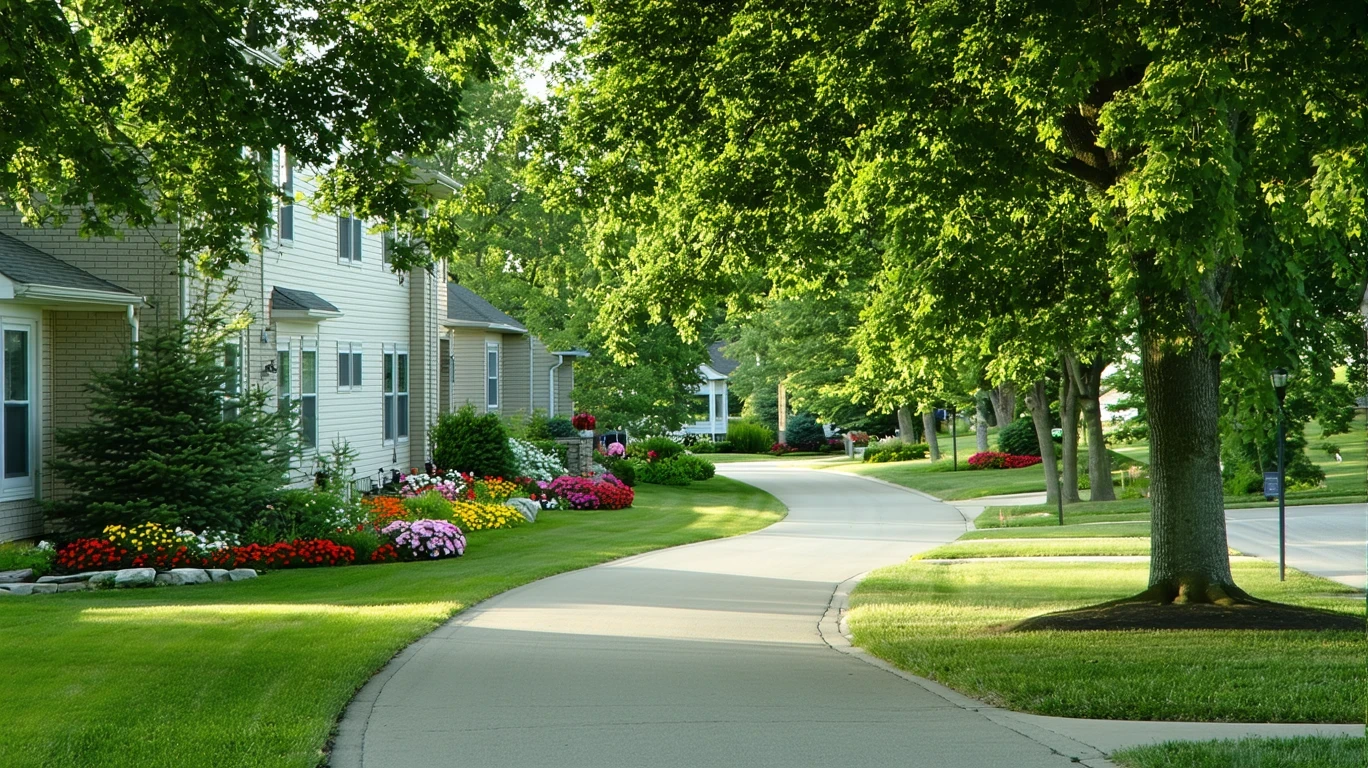
Hilliard operates within the Columbus metropolitan economy, drawing workers who value proximity to the city without living in its core. The housing stock reflects suburban development patterns—single-family homes dominate, but the presence of mixed-use corridors and higher pedestrian-to-road ratios in certain areas signals denser pockets where walkability reduces car dependency. This isn’t a uniform grid; housing character and access to errands, transit, and green space vary by neighborhood.
Newcomers often misread Hilliard as a generic suburb, expecting uniform car dependence and isolated residential tracts. In practice, the city’s notable bike infrastructure and walkable pockets allow some households to reduce transportation costs and time, particularly those living near corridor-clustered grocery and food establishments. However, families with school-age children face a different reality: school and playground density fall below thresholds that would support easy daily access, adding logistics complexity and often requiring vehicle trips even for routine errands.
The strong median income base creates upward pressure on both home values and rents. Buyers compete with households earning well above the national median, which sustains home prices even when the regional price parity suggests a modest cost advantage. Renters below the median income face tighter budgets, as monthly expenses stretch further when rent alone approaches or exceeds typical affordability heuristics.
Renting in Hilliard
At $1,518 per month, the median gross rent in Hilliard reflects both the city’s income profile and its position within the Columbus metro. Rental availability clusters along commercial corridors, where mixed land use supports apartment buildings and smaller multifamily properties. These areas benefit from proximity to food and grocery options, reducing the need for long drives to stock a pantry. However, renters in more residential pockets—where single-family homes dominate—often find fewer rental units and less walkable access to daily errands.
Rental pressure intensifies for households earning below the median. When income sits closer to regional or national averages, the $1,518 figure consumes a larger share of gross pay, leaving less room for transportation, utilities, and discretionary spending. Renters in Hilliard must also account for utilities billed separately—electricity at 17.31¢/kWh and natural gas at $11.25/MCF—which fluctuate with seasonal heating and cooling demands. Cold winters drive natural gas usage, while warm, humid summers push air conditioning loads higher.
The presence of bus service offers an alternative to car ownership for some renters, particularly those living near stops and working along transit-accessible routes. However, the lack of rail transit and the corridor-clustered nature of grocery access mean most renters still rely on a vehicle for weekly shopping and errands outside walkable pockets. This adds fuel costs—gas sits at $3.00/gal—and vehicle maintenance to the monthly budget, even for households attempting to minimize transportation expenses.
Owning a Home in Hilliard
Ownership in Hilliard begins with a $336,300 median home value, a price point that demands significant upfront capital and ongoing financial capacity. Property taxes, though not specified in available data, represent a recurring cost that rises with assessed value and local levy decisions. Homeowners face reassessment cycles that adjust taxable value based on market conditions, and levy outcomes—whether for schools, infrastructure, or services—directly affect annual tax bills. Unlike rent, property taxes don’t stabilize; they shift with policy and valuation, creating long-term exposure that renters avoid.
Maintenance costs in Hilliard respond to the four-season climate. Heating systems work hard through cold winters, and air conditioning units strain during humid summer months. Roof and siding integrity matter when storms bring wind, rain, and occasional ice. Older housing stock requires more frequent repairs, while newer builds delay but don’t eliminate these costs. Exterior upkeep—lawn care, snow removal, gutter cleaning—adds labor or service expenses that apartments typically bundle into rent or HOA fees.
Homeowners insurance premiums reflect replacement costs, claim history, and risk exposure. In a suburban market with mixed housing ages and weather variability, premiums adjust over time, and homeowners have limited control over these increases. Utility bills hit harder in owned homes, where square footage often exceeds apartment units, and occupants bear full responsibility for heating, cooling, water, and electricity. The integrated green space and water features that enhance Hilliard’s outdoor appeal don’t reduce these costs; they simply shift lifestyle value rather than financial exposure.
For families, ownership in Hilliard offers space and stability but doesn’t resolve the limited school and playground infrastructure. Parents still drive children to activities, playdates, and school events, adding transportation time and fuel costs that persist regardless of housing tenure. The walkable pockets and bike infrastructure benefit adults commuting or running errands, but they don’t substitute for the dense family amenities found in cities with higher school and playground density.
Apartment vs House in Hilliard — Cost Behavior Comparison
| Expense Category | Apartment | House |
|---|---|---|
| Heating & Cooling Exposure | Lower square footage and shared walls reduce load; landlord may cover some utilities | Higher square footage and standalone structure increase seasonal utility volatility in four-season climate |
| Maintenance Responsibility | Landlord handles HVAC, roof, exterior; tenant handles interior only | Owner handles all systems, exterior, and yard; weather-related repairs (storm damage, freeze/thaw cycles) fall entirely on owner |
| Property Tax Exposure | None; embedded in rent but not separately billed or subject to reassessment | Direct annual bill; rises with assessed value and levy outcomes; no cap or predictability |
| Transportation Integration | Corridor-clustered apartments near errands reduce vehicle dependency; walkable pockets and bus service lower costs for some renters | Houses in residential areas often require vehicle for groceries and errands; larger garages and driveways accommodate multiple cars but don’t reduce need |
| Access to Family Infrastructure | Limited school and playground density affects both; apartments don’t inherently improve access | Larger yards provide private outdoor space, but low playground and school density still requires driving children to activities |
Why these categories? Hilliard’s four-season climate drives heating and cooling costs differently depending on housing type and square footage. Maintenance responsibility shifts entirely from landlord to owner, and weather exposure—cold winters, humid summers, occasional storms—makes this distinction material. Property tax exposure separates renters from owners in terms of long-term cost predictability. Transportation costs vary based on proximity to corridor-clustered errands and walkable pockets, which favor some apartment locations. Family infrastructure limitations affect both tenure types, but houses offer private outdoor space that partially offsets the low playground density. Categories like HOA fees, insurance, and water/sewer were excluded because they vary too widely within each housing type to generalize meaningfully without specific data.
Utilities & Upkeep Differences
Utility exposure in Hilliard splits sharply between apartments and houses, driven by square footage, structure, and occupant responsibility. Apartments benefit from shared walls that reduce heating and cooling loads, and landlords sometimes cover water, sewer, or trash. Tenants typically pay electricity and may pay natural gas, but the smaller footprint and partial insulation from neighbors’ heating lower seasonal swings. Houses, by contrast, expose owners to full utility bills across larger spaces with no shared thermal mass. Cold winters push natural gas usage higher, and humid summers drive air conditioning costs up. Electricity at 17.31¢/kWh and natural gas at $11.25/MCF apply to both, but the volume consumed differs substantially.
Maintenance and upkeep diverge even more sharply. Apartment tenants call the landlord when the furnace fails or the roof leaks. Homeowners call a contractor and pay the bill. In Hilliard’s climate, HVAC systems work year-round—heating through winter, cooling through summer—and both modes wear components down. Filters, thermostats, ductwork, and major system replacements fall to the homeowner. Roof and siding integrity matter when storms bring wind and rain, and freeze-thaw cycles stress foundations, driveways, and exterior surfaces. Older homes require more frequent intervention, but even newer builds eventually face these costs.
Yard maintenance adds another layer for homeowners. Lawn care, snow removal, gutter cleaning, and seasonal landscaping don’t exist for apartment renters, but they consume time or money for house owners. Hilliard’s integrated green space and water features enhance the city’s outdoor appeal, but private yards still require upkeep regardless of nearby parks. These costs don’t appear on a mortgage statement, but they recur and compound over time, shaping the true cost of ownership beyond the purchase price.
Rent vs Buy: Long-Term Exposure in Hilliard
Renting in Hilliard offers cost predictability within the lease term but no control over renewal increases. Landlords adjust rent based on market conditions, property tax changes, and operating costs. A renter paying $1,518 today may face a different figure next year, with no mechanism to lock in long-term stability. However, renters avoid property tax reassessments, maintenance surprises, and insurance premium shifts. When the furnace fails or the roof leaks, the landlord pays. When property taxes rise, the cost embeds gradually into future rent rather than hitting as a lump-sum bill.
Ownership in Hilliard exchanges rental flexibility for long-term cost exposure. The mortgage payment may stabilize (if fixed-rate), but property taxes, insurance, maintenance, and utilities do not. Taxes rise with assessed value and voter-approved levies. Insurance premiums adjust with claim patterns and replacement cost estimates. Maintenance costs arrive unpredictably—HVAC replacement, roof repair, water heater failure—and weather exposure accelerates wear. Heating and cooling bills fluctuate with seasonal intensity, and homeowners bear the full load across larger square footage.
The $336,300 median home value in Hilliard creates a significant entry barrier, but the $116,287 median household income suggests many buyers can sustain ownership. The question isn’t whether ownership is possible, but whether the household can absorb cost volatility over time. Renters trade equity accumulation for cost containment and mobility. Owners trade flexibility for control and long-term housing security, but they accept exposure to costs that shift with policy, weather, and time. Neither path eliminates housing cost pressure; they simply distribute risk and predictability differently.
For families, ownership in Hilliard offers space and stability but doesn’t resolve the limited school and playground infrastructure. Parents still drive children to activities, and the logistics burden persists regardless of tenure. For remote workers or smaller households, the walkable pockets and bike infrastructure reduce transportation costs, making both renting and owning more viable depending on location within the city. The integrated park density and water features enhance quality of life without adding direct costs, but they don’t offset the financial exposure that comes with ownership.
FAQs About Housing Costs in Hilliard
What drives the $336,300 median home value in Hilliard, OH?
Hilliard’s home values reflect its position within the Columbus metro, strong median household income, and suburban appeal with walkable pockets and integrated green space. The regional price parity sits below the national baseline, but absolute prices remain high due to demand from households earning above-average incomes and competing for limited inventory.
Is $1,518 per month typical for rent in Hilliard, OH?
$1,518 represents the median gross rent, meaning half of renters pay more and half pay less. Rent varies by location, unit size, and proximity to corridor-clustered errands and walkable areas. Renters in more isolated residential pockets may pay less but face higher transportation costs due to limited walkability and grocery access.
How do property taxes affect homeownership costs in Hilliard, OH?
Property taxes in Hilliard rise with assessed home value and local levy outcomes. Reassessments adjust taxable value based on market conditions, and voter-approved levies for schools, infrastructure, or services increase annual bills. Unlike rent, property taxes don’t stabilize; they shift over time, creating long-term cost exposure for homeowners.
Do utilities cost more in a house than an apartment in Hilliard, OH?
Yes, typically. Houses have larger square footage, no shared walls, and full occupant responsibility for heating, cooling, water, and electricity. Hilliard’s four-season climate drives higher heating loads in winter and cooling loads in summer. Apartments benefit from smaller spaces and sometimes landlord-covered utilities, reducing seasonal cost swings.
Does Hilliard, OH support car-free living for renters or homeowners?
Partially. Walkable pockets with high pedestrian-to-road ratios and notable bike infrastructure allow some households to reduce car dependency, particularly near corridor-clustered grocery and food options. Bus service exists but no rail transit. Most households still rely on a vehicle for weekly errands, family logistics, and accessing areas outside walkable zones.
Making Housing Choices in Hilliard
Housing costs in Hilliard split between high entry prices for ownership and moderate-to-high rental pressure, both shaped by the city’s strong income base and suburban Columbus location. Renters face $1,518 median gross rent and must account for utilities, transportation, and limited walkability outside corridor-clustered areas. Owners confront a $336,300 median home value, property tax exposure, maintenance volatility, and utility bills that swing with seasonal heating and cooling demands. Neither path eliminates cost pressure; they distribute risk, predictability, and control differently.
Hilliard’s walkable pockets, notable bike infrastructure, and integrated green space reduce transportation and lifestyle costs for households positioned to take advantage of them. However, limited family infrastructure—low school and playground density—adds logistics complexity for parents, requiring vehicle trips and time even when housing itself sits in a walkable area. Remote workers and smaller households benefit most from the city’s mixed urban form and transit options, while families must weigh space and stability against the ongoing cost of managing children’s access to schools and activities.
For a broader look at what shapes the cost of living in Hilliard, including how housing fits into overall expenses, see the cost overview. Understanding how housing costs interact with transportation, utilities, and daily errands helps clarify which tenure path—and which neighborhood within Hilliard—fits a household’s financial capacity and lifestyle priorities.
How this article was built: In addition to public economic data, this article incorporates location-based experiential signals derived from anonymized geographic patterns—such as access density, walkability, and land-use mix—to reflect how day-to-day living actually feels in Hilliard, OH.