
“I check the bus schedule every morning, but I keep my car keys in my pocket just in case,” says a Grove City resident who commutes into Columbus for work. “Some days it lines up perfectly. Other days, I’m glad I have a backup plan.”
That tension—between structure and flexibility, between what’s available and what’s reliable—defines how people actually move through Grove City in 2026. This is a city where transportation options in Grove City exist, but they don’t all work the same way for everyone. Understanding how transit, driving, biking, and walking fit together here requires looking past the map and into the daily rhythms that shape commutes, errands, and household logistics.
How People Get Around Grove City
Grove City operates as a car-oriented suburb with pockets of walkability and a bus network that serves specific corridors. The city’s layout reflects decades of suburban growth radiating outward from a compact historic core, and that structure still governs how people move today. Most residents drive most of the time, but the presence of pedestrian infrastructure in certain areas and cycling routes throughout the city means that car dependence isn’t absolute—it’s situational.
What newcomers often misunderstand is that Grove City isn’t uniformly suburban. The older neighborhoods closer to the center have sidewalks, mixed-use blocks, and bus access. The newer subdivisions farther out are built around cul-de-sacs, wider roads, and garage-first home designs. That difference matters. A household living near Broadway can walk to a grocery store and catch a bus into Columbus. A household two miles south might need to drive to reach the same bus stop.
The city’s pedestrian-to-road ratio exceeds the high threshold in certain areas, meaning there’s more walkable infrastructure than you’d expect in a typical car-dependent suburb. Bike infrastructure is also notably present, with bike-to-road ratios that support cycling as a real option for some trips. But these features are unevenly distributed, and they don’t eliminate the need for a car—they reduce it in specific contexts.
Public Transit Availability in Grove City
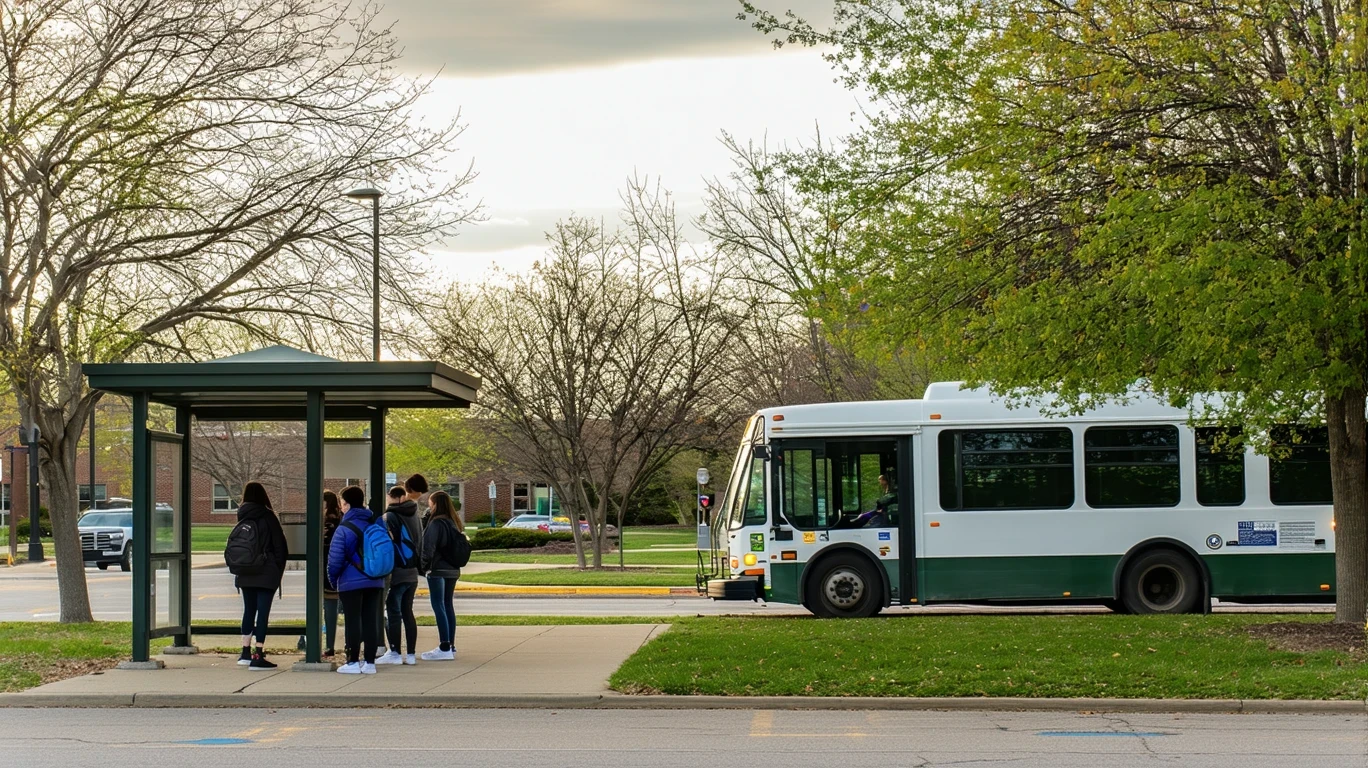
Public transit in Grove City often centers around systems such as the Central Ohio Transit Authority (COTA), which operates bus routes connecting Grove City to Columbus and surrounding areas. Bus stops are present throughout the city, but coverage is concentrated along major corridors rather than spread evenly across residential neighborhoods.
Transit works best for people whose daily destinations align with existing routes and who have schedules flexible enough to accommodate transfer times and service gaps. It works less well for households managing multi-stop errands, late-night shifts, or trips to areas outside the core network. The absence of rail transit means that all public transportation here is bus-based, and that comes with limitations in speed, frequency, and geographic reach.
For someone commuting from Grove City into downtown Columbus during peak hours, the bus can be a viable option. For someone trying to reach a job site in a suburban office park or run errands across multiple neighborhoods, the bus becomes a planning burden rather than a convenience. That’s not a failure of the system—it’s a reflection of the city’s spatial structure and the realities of bus-based coverage in a low-density environment.
Driving & Car Dependence Reality
Driving is the default mode of transportation in Grove City, and the city’s infrastructure reflects that. Roads are wide, parking is abundant, and most commercial development is designed with the assumption that customers will arrive by car. For households living in the outer neighborhoods, driving isn’t just convenient—it’s necessary. Grocery stores, schools, medical offices, and workplaces are often spread across distances that make walking or biking impractical, especially in winter or during Ohio’s humid summer months.
Car dependence here isn’t about preference—it’s about structure. The city’s land use patterns, the spacing of destinations, and the limited reach of transit all push households toward car ownership. Even in the walkable pockets near the historic core, most residents still own at least one vehicle, because the things they need to do regularly extend beyond the boundaries of what’s reachable on foot or by bus.
That said, car dependence in Grove City is less absolute than in many other Columbus suburbs. The presence of sidewalks, bike lanes, and bus service means that some trips—especially short, local errands—can be handled without driving. But those trips are the exception, not the rule, and they’re only feasible for households living in specific parts of the city.
Commuting Patterns & Daily Mobility
The average commute in Grove City is 23 minutes, which is relatively short by regional standards. But averages obscure variation. About 31.9% of workers face long commutes, meaning their trips to work take significantly longer than the median. That split reflects the city’s role as both a residential suburb and a regional employment node. Some people work locally; others commute into Columbus or beyond.
Only 2.9% of Grove City workers work from home, which is notably low compared to post-pandemic national trends. That suggests the local economy is weighted toward jobs that require physical presence—retail, healthcare, education, manufacturing—rather than remote-friendly knowledge work. For most households, the commute is a fixed daily obligation, and the choice of transportation mode is shaped by where that commute goes and when it happens.
Single-destination commutes into Columbus are the easiest to serve with transit. Multi-stop trips—dropping kids at daycare, picking up groceries, running errands on the way home—require the flexibility that only a car provides. That’s why even households with access to transit often choose to drive: the structure of their day doesn’t fit the structure of the bus network.
Who Transit Works For — and Who It Doesn’t
Transit in Grove City works best for individuals and households who live near major bus corridors, work in downtown Columbus or along other transit-served routes, and have schedules that align with peak service hours. It’s a viable option for single commuters without childcare logistics, for students, and for workers whose jobs are located in dense, transit-accessible areas.
Transit works less well for families managing school drop-offs, for shift workers with non-standard hours, for households living in the outer subdivisions, and for anyone whose daily routine involves multiple stops across disconnected parts of the metro area. The city’s food and grocery density is moderate and clustered along corridors, meaning that even running errands on foot or by bus requires planning and time.
Renters living in older apartment complexes near the city center are more likely to benefit from transit access than homeowners in newer subdivisions. But even in the walkable core, most households still own cars, because the range of destinations they need to reach regularly extends beyond what transit can serve efficiently.
Transportation Tradeoffs in Grove City
Choosing between transit and driving in Grove City isn’t about cost alone—it’s about control, predictability, and flexibility. Transit offers lower direct expenses and eliminates parking hassles, but it requires schedule adherence, limits spontaneity, and adds time to most trips. Driving offers speed, convenience, and the ability to handle complex multi-stop days, but it comes with fuel exposure, maintenance obligations, and the need for parking in denser areas.
For households trying to reduce car dependence, the tradeoff isn’t binary. Some trips—commuting into Columbus, running a single errand downtown—can be handled by bus or bike. Others—grocery shopping with kids, late-night shifts, trips to suburban job sites—require a car. The question isn’t whether to rely on transit or driving, but which trips can realistically shift modes and which can’t.
The presence of bike infrastructure and walkable pockets means that some households can reduce their car usage without eliminating it entirely. But that reduction is situational, and it depends on where you live, where you work, and how your household is structured. Grove City isn’t a place where most people can go car-free, but it’s also not a place where every trip requires driving.
FAQs About Transportation in Grove City (2026)
Is public transit usable for daily commuting in Grove City?
Yes, if your commute aligns with existing bus routes and your schedule fits service hours. Transit works best for trips into Columbus along major corridors. It’s less practical for multi-stop commutes, suburban job sites, or trips outside peak hours.
Do most people in Grove City rely on a car?
Yes. The majority of residents drive regularly, and car ownership is the norm. Even households with access to transit typically own at least one vehicle, because the city’s layout and the distribution of daily destinations make driving necessary for most trips.
Which areas of Grove City are easiest to live in without a car?
The older neighborhoods near the historic core, particularly along Broadway and other central corridors, offer the best combination of walkability, bus access, and proximity to grocery stores and services. Outer subdivisions are much harder to navigate without a car.
How does commuting in Grove City compare to nearby cities?
Grove City’s average commute time is relatively short, but the percentage of workers facing long commutes is significant. The city’s transit access is better than some outer suburbs but more limited than inner-ring neighborhoods closer to Columbus. Driving remains the dominant mode across the region.
Can you bike safely in Grove City?
Bike infrastructure is notably present, with dedicated lanes and paths in many parts of the city. Cycling is a real option for some trips, especially in the central areas. But the city’s layout and traffic patterns mean that biking isn’t practical for all destinations or all seasons.
How Transportation Fits Into the Cost of Living in Grove City
Transportation isn’t just a line item—it’s a structural factor that shapes where people live, how they spend their time, and what tradeoffs they’re willing to accept. In Grove City, the presence of bus service and walkable pockets means that some households can reduce their car dependence and lower their direct transportation costs. But for most residents, driving is unavoidable, and that means absorbing fuel, insurance, and maintenance expenses as a fixed cost of daily life.
The choice of where to live within Grove City affects transportation costs more than the choice of mode. Living near a bus line or within walking distance of grocery stores reduces the need for frequent driving, but it doesn’t eliminate it. Living in the outer subdivisions increases car dependence and adds commute time, but it may also come with lower housing costs or more space. Those tradeoffs are household-specific, and they don’t resolve neatly into a single “best” strategy.
For a fuller picture of how transportation fits into monthly expenses, budget planning, cost breakdown, the Monthly Spending article provides numeric context on how different household types allocate their budgets. Here, the focus is on understanding how mobility works in practice—what’s available, what’s realistic, and what constraints shape daily life in Grove City.
Transportation in Grove City is defined by options that exist but don’t always align, by infrastructure that supports some trips but not others, and by a suburban structure that makes driving necessary for most households while still leaving room for walking, biking, and transit in specific contexts. The city isn’t locked into a single mobility pattern, but it’s not infinitely flexible either. Understanding how people actually get around here means recognizing both the possibilities and the limits, and making decisions based on what works for your household, not what works in theory.
How this article was built: In addition to public economic data, this article incorporates location-based experiential signals derived from anonymized geographic patterns—such as access density, walkability, and land-use mix—to reflect how day-to-day living actually feels in Grove City, OH.