
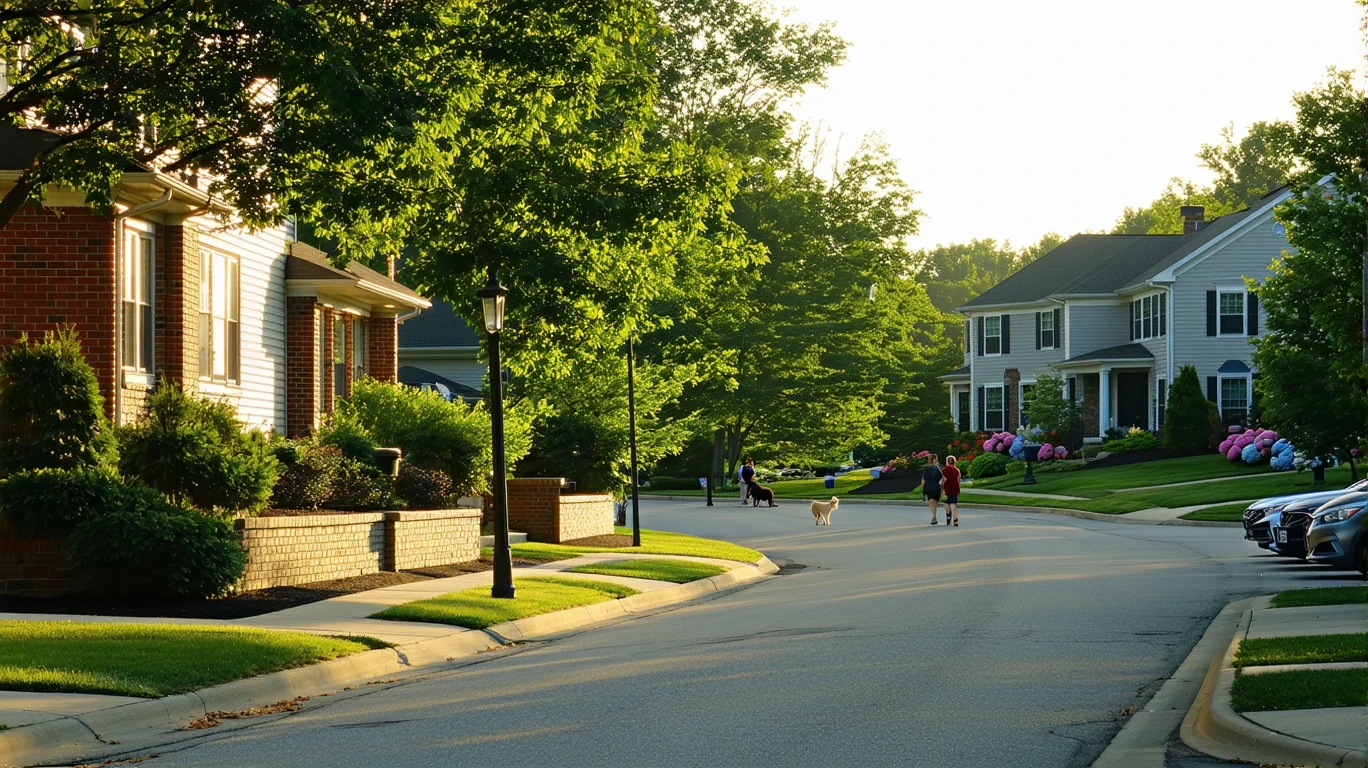
Which city gives you more for your money? For households weighing a move within the Columbus metro in 2026, Dublin and Grove City represent two distinct cost structures—not just two price points. Both cities sit in the same regional economy, share similar weather patterns, and draw from overlapping job markets, yet the way costs show up in daily life differs sharply. Dublin’s median home value of $478,400 and median rent of $1,541 per month reflect a market built around walkable neighborhoods, integrated parks, and dense grocery access. Grove City’s median home value of $262,800 and median rent of $1,205 per month signal a different trade: lower housing entry barriers in exchange for longer commutes and car-dependent errands. The decision isn’t about which city costs less overall—it’s about which cost pressures your household can absorb, and which ones create friction you can’t ignore.
This comparison focuses on how different households experience cost exposure in 2026, not on calculating total affordability. Families prioritizing space and lower monthly obligations may find Grove City’s housing market more forgiving. Singles and couples who value walkability, hospital access, and errand convenience may find Dublin’s infrastructure reduces time costs and transportation dependence, even as housing prices climb. Understanding where each city concentrates cost pressure—and where it offers flexibility—helps you match your household’s budget structure to the place that fits.
Housing Costs: Entry Barrier vs Ongoing Obligation
Housing dominates the cost comparison between Dublin and Grove City, but the difference isn’t just magnitude—it’s structure. Dublin’s median home value of $478,400 creates a steep entry barrier for buyers, requiring larger down payments, higher closing costs, and mortgage payments that anchor household budgets for decades. Grove City’s median home value of $262,800 lowers that threshold significantly, making homeownership accessible to households with smaller savings or single incomes. For renters, the gap narrows but remains meaningful: Dublin’s median gross rent of $1,541 per month versus Grove City’s $1,205 per month translates to different levels of flexibility in how much income remains after housing is paid.
The housing stock in each city reinforces these differences. Dublin’s walkable pockets and mixed-use neighborhoods support a range of housing types—townhomes, condos, and single-family homes—often with proximity to parks, groceries, and schools. That density and access come with higher per-square-foot costs, but they also reduce transportation dependence and errand friction. Grove City’s housing market skews toward single-family homes on larger lots, where space is easier to find but daily logistics require more driving. Families prioritizing yard space, room for kids, or home offices may find Grove City’s housing costs easier to manage, while households sensitive to commute time or walkability may absorb Dublin’s higher housing costs to reduce other frictions.
For first-time buyers, the difference in entry cost is stark. A household saving for a down payment in Dublin faces a longer timeline and higher income requirements to qualify for financing. Grove City’s lower home values allow buyers to enter the market sooner, though they may trade proximity to work or amenities for that accessibility. Renters in both cities face ongoing obligations that shape monthly flexibility: Dublin’s higher rents leave less room for discretionary spending, while Grove City’s lower rents free up income for transportation, childcare, or savings. The key question isn’t which city is cheaper—it’s whether your household is more constrained by upfront costs or ongoing monthly obligations.
Housing takeaway: Dublin’s housing market imposes higher entry barriers and monthly obligations, but delivers walkability, errand density, and reduced car dependence. Grove City’s lower housing costs create more flexibility for families prioritizing space and savings, but require households to absorb higher transportation exposure and time costs. First-time buyers and single-income households may find Grove City more accessible; dual-income couples and households valuing infrastructure density may find Dublin’s housing premium worth the tradeoff.
Utilities and Energy Costs: Predictability vs Exposure

Utility costs in Dublin and Grove City follow similar baseline rates—electricity runs 17.66¢/kWh in Dublin and 17.85¢/kWh in Grove City, while natural gas sits at $23.03/MCF in both cities—but how those costs behave in practice depends on housing type, home age, and household size. Both cities experience cold winters and warm summers, creating dual seasonal peaks: heating dominates bills from November through March, while air conditioning drives costs from June through August. The difference lies in how housing stock and household logistics amplify or dampen that exposure.
Dublin’s mixed-use neighborhoods and denser housing forms—townhomes, condos, and newer single-family builds—often feature shared walls, smaller square footage, and more recent construction standards. These factors reduce heating and cooling loads, making utility bills more predictable and less volatile across seasons. Grove City’s larger single-family homes on bigger lots create more exposure: older homes with less insulation, higher ceilings, and more square footage to condition mean utility bills swing more sharply between winter heating and summer cooling. Families in Grove City managing 2,000+ square-foot homes should expect higher baseline usage and more pronounced seasonal spikes than households in Dublin’s smaller, newer units.
Household size and daily routines also shape utility exposure differently in each city. In Dublin, where walkability and errand density reduce time spent at home during the day, utility usage may concentrate in mornings and evenings. In Grove City, where longer commutes and car-dependent errands mean more time spent at home outside work hours, baseline electricity and gas usage may run higher year-round. Families with young children, remote workers, or retirees—groups that spend more daytime hours at home—will feel utility volatility more acutely in Grove City’s larger, older housing stock. Singles and dual-income couples in Dublin’s newer, smaller units may find utility costs easier to predict and control.
Utility takeaway: Dublin’s denser, newer housing stock reduces utility volatility and makes costs more predictable, especially for smaller households. Grove City’s larger, older homes create more seasonal exposure and higher baseline usage, particularly for families managing bigger square footage. Households sensitive to budget predictability may prefer Dublin’s utility profile; families prioritizing space and willing to manage seasonal swings may find Grove City’s housing tradeoff worth the added energy exposure.
Groceries and Daily Expenses: Access vs Price Sensitivity
Grocery and daily spending pressure in Dublin and Grove City differs less in price levels—both cities share the same regional price parity index of 95—and more in how access, convenience, and household logistics shape where money goes. Dublin’s broadly accessible food and grocery infrastructure, with high-density options spread throughout walkable neighborhoods, means households can shop frequently, compare prices easily, and reduce reliance on bulk buying or long drives to discount stores. Grove City’s more car-dependent layout concentrates grocery options along commercial corridors, requiring households to plan trips, consolidate errands, and rely more heavily on larger shopping runs.
For staple items like bread, milk, eggs, and chicken, regional pricing holds steady across both cities. A loaf of bread runs around $1.74/lb, a dozen eggs near $2.58, and chicken approximately $1.92/lb in both markets.* The difference emerges in how often households can shop, how much they buy per trip, and how easily they can substitute or comparison-shop. In Dublin, where grocery density is high and walking or biking to a store is feasible for many residents, households can make smaller, more frequent purchases and respond quickly to sales or preferences. In Grove City, where trips require driving and stores are farther apart, households tend to buy in larger volumes, stock pantries more heavily, and face less flexibility to adjust spending week by week.
Convenience spending—coffee shops, takeout, prepared foods, and quick household goods—adds another layer. Dublin’s mixed-use neighborhoods and dense commercial corridors make it easy to grab a coffee, pick up a prepared meal, or stop for a forgotten item without planning. That convenience can drive spending creep for households that don’t actively manage it. Grove City’s layout requires more intentional trips, which can reduce impulse spending but also increases the friction cost of running out of something mid-week. Families managing larger grocery volumes may find Grove City’s big-box access and lower convenience temptation easier on the budget, while singles and couples who value flexibility and speed may prefer Dublin’s density despite the risk of higher convenience spending.
Grocery takeaway: Dublin’s high grocery density reduces planning burden and increases flexibility, but also creates more opportunities for convenience spending. Grove City’s car-dependent layout requires more intentional shopping and larger trips, which can lower impulse purchases but increases time and transportation costs. Households with tight schedules or small children may value Dublin’s errand accessibility; families managing larger volumes and prioritizing bulk savings may find Grove City’s structure more efficient.
*Derived estimate based on national baseline adjusted by regional price parity; not an observed local price.
Taxes and Fees: Predictability vs Hidden Costs
Tax and fee structures in Dublin and Grove City shape long-term cost exposure in ways that aren’t always visible at signing. Both cities rely on property taxes to fund schools, infrastructure, and services, but how those taxes interact with home values creates different obligations. Dublin’s higher median home value of $478,400 means property tax bills—even at identical millage rates—will run higher in absolute terms than Grove City’s $262,800 median. For homeowners, that difference compounds annually and affects refinancing, home equity calculations, and long-term ownership costs. Renters don’t pay property taxes directly, but landlords pass those costs through in rent, making Dublin’s higher rents partly a reflection of the city’s tax base.
Beyond property taxes, recurring fees vary by neighborhood and housing type. Dublin’s walkable neighborhoods and mixed-use developments often include homeowners association (HOA) fees that bundle services like landscaping, trash removal, snow clearing, and shared amenity maintenance. These fees add predictability—households know what they’ll pay each month—but they also add rigidity, since HOA dues rarely decrease and can rise with special assessments. Grove City’s single-family home market includes fewer HOA-governed communities, meaning homeowners manage their own landscaping, trash, and maintenance. That structure offers more control but also more variability: a harsh winter, a broken appliance, or deferred maintenance can create unexpected costs that HOA fees would have smoothed out.
Sales taxes, local income taxes, and utility fees apply similarly across both cities, since they sit in the same metro and county systems. The structural difference lies in how housing type and ownership duration affect tax exposure. Homeowners planning to stay in Dublin for a decade or more will feel property tax obligations more acutely as home values appreciate, while renters remain insulated from those increases unless landlords pass them through at lease renewal. In Grove City, lower home values mean property tax bills start lower, but homeowners still face the same appreciation pressure over time. Households planning short-term stays (2–3 years) may find Grove City’s lower entry costs and tax base easier to manage, while long-term residents in Dublin may accept higher taxes in exchange for infrastructure density and service quality.
Tax and fee takeaway: Dublin’s higher home values drive higher property tax obligations, but HOA fees in many neighborhoods add predictability to recurring costs. Grove City’s lower home values reduce baseline tax exposure, but fewer HOA-governed communities mean homeowners absorb more variability in maintenance and service costs. Renters in both cities face indirect tax exposure through rent levels, with Dublin’s higher rents partly reflecting its tax base. Long-term homeowners should weigh tax trajectory against infrastructure access; short-term residents may prioritize lower entry costs over service density.
Transportation & Commute Reality
Transportation costs and commute patterns create one of the sharpest structural differences between Dublin and Grove City. Grove City’s documented average commute of 30 minutes, with 22.8% of workers facing long commutes and only 2.9% working from home, signals a car-dependent reality where most households drive daily to work, errands, and activities. Gas prices in Grove City sit at $2.58/gal, slightly lower than Dublin’s $2.83/gal, but that per-gallon difference matters less than total miles driven. Households commuting 25+ miles round-trip five days a week will feel transportation costs as a recurring, non-negotiable line item, amplified by vehicle maintenance, insurance, and the time cost of sitting in traffic.
Dublin’s infrastructure tells a different story. Experiential signals show walkable pockets with high pedestrian-to-road ratios, notable cycling infrastructure, and broadly accessible food and grocery density. Bus service is present, though rail transit is not. For households living in Dublin’s denser neighborhoods, daily errands—groceries, pharmacies, schools—often require no car at all, or only short trips. That density reduces transportation dependence, lowers fuel and maintenance exposure, and frees up time that would otherwise go to commuting or errand logistics. Families with two working adults may find Dublin’s layout allows one household to manage errands and childcare without needing a second vehicle, a meaningful cost reduction that doesn’t show up in gas prices alone.
The commute experience also shapes household stress and schedule flexibility. Grove City’s longer average commute and high percentage of long-distance workers mean households spend more time in cars, face more exposure to traffic variability, and have less flexibility to handle mid-day errands or school pickups. Dublin’s walkable infrastructure and shorter errand distances give households more control over daily schedules, even if work commutes remain similar. For families with young children, aging parents, or irregular work hours, that flexibility can be worth more than the dollar difference in rent or home prices. Singles and couples with stable 9-to-5 schedules and tolerance for driving may find Grove City’s lower housing costs offset the transportation tradeoff.
Cost Structure Comparison
Housing pressure dominates the cost experience in both cities, but it shows up differently. Dublin’s higher home values and rents create a steep entry barrier and ongoing monthly obligation that anchors household budgets, leaving less flexibility for discretionary spending or savings. Grove City’s lower housing costs reduce that front-loaded pressure, freeing up income for transportation, utilities, and variable expenses. For households where housing affordability determines whether a move is possible at all, Grove City’s structure offers more immediate access. For households where housing is manageable but daily logistics create friction, Dublin’s density and walkability reduce the hidden costs of time and car dependence.
Utilities introduce more volatility in Grove City, where larger homes and older housing stock amplify seasonal swings in heating and cooling costs. Dublin’s denser, newer housing forms make utility bills more predictable and easier to control, especially for smaller households. That predictability matters most for families on fixed incomes or tight budgets, where a $200 winter heating spike can force tradeoffs elsewhere. Households with more income flexibility or willingness to manage seasonal variability may prioritize Grove City’s space over Dublin’s utility stability.
Transportation patterns matter more in Grove City, where car dependence is near-universal and commute times run longer. Households managing two vehicles, long commutes, and frequent errands will feel transportation costs as a persistent, unavoidable expense. Dublin’s walkable infrastructure and errand density reduce that exposure, particularly for households that can consolidate trips, bike, or walk for daily needs. The difference isn’t just fuel costs—it’s time, vehicle wear, and the mental load of coordinating logistics. For households sensitive to schedule flexibility or managing caregiving responsibilities, Dublin’s layout reduces friction in ways that don’t show up in a monthly budget line.
Groceries and daily expenses follow similar price levels across both cities, but access patterns shift how households spend. Dublin’s high grocery density and walkable errands make it easy to shop frequently and adjust spending week by week, though convenience temptation can drive spending creep. Grove City’s car-dependent layout requires more planning and larger shopping trips, which can reduce impulse purchases but increases time costs and transportation exposure. Households managing larger grocery volumes or prioritizing bulk savings may find Grove City’s structure more efficient; singles and couples valuing flexibility may prefer Dublin’s density.
The better choice depends on which costs dominate your household. For families sensitive to housing entry barriers and monthly rent or mortgage obligations, Grove City offers more breathing room. For households where transportation time, errand friction, and utility volatility create stress, Dublin’s infrastructure reduces those pressures even as housing costs climb. The decision isn’t about which city costs less—it’s about which cost structure matches where your household has flexibility and where it doesn’t.
How the Same Income Feels in Dublin vs Grove City
Single Adult
For a single adult, housing becomes the first non-negotiable cost, and Dublin’s higher rent or mortgage payment leaves less room for savings or discretionary spending. Flexibility exists in transportation—Dublin’s walkability and bus service mean a car may be optional, reducing insurance, fuel, and maintenance exposure. Grove City’s lower rent frees up income, but car ownership becomes mandatory, and longer commutes eat time that could go toward side work, errands, or rest. The tradeoff is front-loaded housing cost versus ongoing transportation dependence.
Dual-Income Couple
A dual-income couple in Dublin may absorb higher housing costs more easily, especially if both partners work nearby or one works from home. Walkable errands and dense grocery access reduce the need for a second vehicle, lowering transportation and insurance costs. In Grove City, lower housing costs create more flexibility for savings or travel, but both partners likely need cars, and longer commutes reduce time for shared meals, errands, or household projects. The difference is less about cash flow and more about time budget and logistics friction.
Family with Kids
For families, Grove City’s lower housing costs and larger homes create space for kids, home offices, and storage, but transportation and logistics become more complex. School drop-offs, extracurriculars, and grocery runs require more driving, and longer parental commutes reduce schedule flexibility for mid-day pickups or appointments. Dublin’s walkable neighborhoods and integrated parks reduce car dependence and errand friction, but higher housing costs leave less room for childcare, activities, or college savings. The decision hinges on whether the household values space and lower monthly obligations or infrastructure density and time flexibility.
Decision Matrix: Which City Fits Which Household?
| Decision factor | If you’re sensitive to this… | Dublin tends to fit when… | Grove City tends to fit when… |
|---|---|---|---|
| Housing entry + space needs | Down payment size, monthly rent or mortgage obligation, square footage per dollar | You can absorb higher housing costs in exchange for walkability and errand density | You prioritize lower entry barriers, larger homes, and more yard space |
| Transportation dependence + commute friction | Daily driving requirements, commute time, vehicle ownership costs | You value walkable errands, bike infrastructure, and reduced car dependence | You’re comfortable with longer commutes and car-dependent logistics |
| Utility variability + home size exposure | Seasonal bill swings, heating and cooling costs, budget predictability | You prefer smaller, newer housing with more predictable utility costs | You’re willing to manage larger homes and more seasonal utility volatility |
| Grocery strategy + convenience spending creep | Errand frequency, shopping flexibility, impulse purchase temptation | You value frequent, flexible shopping and don’t mind managing convenience temptation | You prefer bulk shopping, fewer trips, and lower convenience spending exposure |
| Fees + friction costs (HOA, services, upkeep) | Predictable monthly obligations vs variable maintenance costs | You prefer bundled HOA services and predictable recurring fees | You want more control over maintenance and fewer mandatory monthly fees |
| Time budget (schedule flexibility, errands, logistics) | Caregiving responsibilities, irregular work hours, mid-day flexibility | You need walkable errands and shorter logistics chains to manage household schedules | You have stable schedules and tolerance for longer commutes and car-dependent errands |
Lifestyle Fit: Infrastructure vs Space
Lifestyle differences between Dublin and Grove City extend beyond cost into how daily life feels and what infrastructure supports it. Dublin’s walkable pockets, integrated parks, and high-density grocery access create a rhythm where errands, exercise, and social activities happen within a smaller geographic radius. Families can walk to playgrounds, bike to schools, and access hospital care without long drives. The presence of both residential and commercial land use in close proximity means households can manage daily needs without constant car trips, reducing the mental load of logistics. For households with young children, aging parents, or anyone managing caregiving responsibilities, that density translates to fewer coordination headaches and more schedule flexibility.
Grove City’s layout prioritizes space and privacy, with larger lots, single-family homes, and more separation between residential and commercial areas. Families gain yards for kids, pets, and outdoor projects, along with quieter streets and more room to spread out. That space comes with a tradeoff: most activities require driving, and errands take longer to complete. The average commute of 30 minutes reflects a car-dependent reality, and nearly a quarter of workers face long commutes that cut into time for family dinners, hobbies, or rest. For households where space is the priority—home offices, workshops, gardens—Grove City delivers more square footage per dollar. For households where time and convenience matter more, Dublin’s infrastructure reduces friction even as housing costs climb.
Recreation and outdoor access also differ in texture. Dublin’s integrated park density and water features create frequent, accessible green space that households can reach on foot or by bike. Grove City offers outdoor space as well, but accessing it typically requires driving to specific parks or trails. Both cities sit in the same regional climate, with cold winters and warm summers, so outdoor activity patterns follow similar seasonal rhythms. The difference lies in how often households can step outside for a quick walk, playground visit, or green space break without planning a trip. For families with active kids or adults who prioritize daily outdoor time, Dublin’s park integration reduces the barrier to getting outside. For households who prefer larger, destination-style outdoor trips on weekends, Grove City’s layout works fine.
Dublin’s median household income sits at $158,363 per year, reflecting a population with higher earnings and professional employment. Grove City’s median household income of $84,765 per year signals a more economically diverse population, with a broader range of income levels and household types. Both cities share the same unemployment rate of 4.0%, indicating stable regional labor markets. The income difference doesn’t determine which city is “better”—it reflects who lives there now and what cost structures those households have chosen to absorb.
Frequently Asked Questions
Is Dublin or Grove City cheaper for renters in 2026?
Grove City’s median gross rent of $1,205 per month runs lower than Dublin’s $1,541 per month, creating more immediate flexibility for renters managing tight budgets. Dublin’s higher rent reflects walkable infrastructure, errand density, and hospital access that reduce transportation and time costs. Renters prioritizing lower monthly obligations may find Grove City easier to manage; renters valuing walkability and reduced car dependence may find Dublin’s rent premium worth the tradeoff.
Which city has lower transportation costs, Dublin or Grove City?
Grove City’s gas price of $2.58/gal runs slightly lower than Dublin’s $2.83/gal, but transportation costs depend more on total miles driven than per-gallon price. Grove City’s average 30-minute commute and 22.8% long-commute rate signal higher car dependence and more driving overall. Dublin’s walkable neighborhoods, notable bike infrastructure, and broadly accessible errands reduce the need for daily car trips. Households managing long commutes and frequent driving will feel transportation costs more in Grove City; households able to walk or bike for errands may spend less in Dublin despite higher gas prices.
Do utilities cost more in Dublin or Grove City in 2026?
Electricity rates run nearly identical—17.66¢/kWh in Dublin and 17.85¢/kWh in Grove City—and natural gas sits at $23.03/MCF in both cities. The difference lies in housing stock and square footage: Grove City’s larger, older single-family homes create more heating and cooling exposure, leading to higher seasonal bills. Dublin’s denser, newer housing forms reduce utility volatility and make costs more predictable. Households managing larger homes in Grove City should expect higher utility bills and more seasonal swings; smaller households in Dublin’s newer units will see more stable, lower costs.
How do housing costs in Dublin and Grove City compare for first-time buyers in 2026?
Dublin’s median home value of $478,400 creates a steep entry barrier, requiring larger down payments and higher income to qualify for financing. Grove City’s median home value of $262,800 makes homeownership more accessible for households with smaller savings or single incomes. First-time buyers prioritizing lower entry costs and faster market access may find Grove City more realistic; buyers willing to save longer or stretch budgets for walkability and infrastructure density may find Dublin worth the wait.
Which city is better for families with kids, Dublin or Grove City, in 2026?
The better city depends on what matters most to your family. Grove City’s lower housing costs and larger homes create space for kids, play areas, and storage, but require more driving for school, activities, and errands. Dublin’s walkable neighborhoods, integrated parks, and school density reduce car dependence and logistics friction, but higher housing costs leave less room for savings or extracurriculars. Families prioritizing space and lower monthly obligations may prefer Grove City; families valuing walkability, errand convenience, and time flexibility may find Dublin’s infrastructure worth the housing premium.
Conclusion
Dublin and Grove City offer two distinct cost structures within the same Columbus metro, and neither is universally cheaper or better. Dublin’s higher housing costs—$478,400 median home value and $1,541 median rent—create steeper entry barriers and ongoing obligations, but deliver walkable infrastructure, errand density, hospital access, and reduced car dependence that lower transportation and time costs. Grove City’s lower housing costs—$262,800 median home value and $1,205 median rent—make homeownership and renting more accessible, but require households to absorb longer commutes, higher transportation exposure, and more car-dependent logistics. The decision hinges on where your household has flexibility and where it doesn’t.
Households sensitive to housing entry costs, monthly rent or mortgage obligations, and upfront savings will find Grove City’s structure more forgiving. Families prioritizing space, larger homes, and lower baseline costs may accept longer commutes and car dependence as a reasonable tradeoff. Households where transportation time, errand friction, and schedule flexibility create stress—particularly those managing caregiving, irregular work hours, or multiple daily trips—may find Dublin’s infrastructure reduces hidden costs that don’t show up in rent or mortgage payments. The choice isn’t about which city costs less overall; it’s about matching your household’s cost sensitivity to the place where the structure fits. Both cities work, but they work for different reasons and different households.
How this article was built: In addition to public economic data, this article incorporates location-based experiential signals derived from anonymized geographic patterns—such as access density, walkability, and land-use mix—to reflect how day-to-day living actually feels in Dublin, OH.