
Can you live in Dublin without a car? It’s a question that shapes housing searches, job decisions, and daily routines—and the answer depends less on what’s technically available and more on how you actually need to move through your day.
Dublin sits in a development pattern common to many Ohio suburbs: pockets of walkable density surrounded by car-oriented corridors. Public transit exists, but it plays a supporting role rather than anchoring daily life. For some households—particularly young renters near bus routes or single commuters with fixed destinations—transit can work. For most, though, a car remains the primary tool for getting around, not because alternatives are absent, but because the structure of daily errands, work schedules, and household logistics makes driving the path of least friction.
Understanding transportation options in Dublin means recognizing that mobility here is less about choosing one mode and more about managing tradeoffs between convenience, control, and flexibility. This article explains what transit actually covers, where driving becomes necessary, and which household types can realistically build a life around something other than a car.
How People Get Around Dublin
Most people in Dublin drive most of the time. That’s the baseline reality, shaped by the city’s layout: a mix of suburban neighborhoods, commercial corridors, and office parks connected by roads designed for cars. But within that car-dominant framework, there are variations. Some areas—particularly those closer to the historic downtown core—offer higher pedestrian infrastructure density and better access to groceries, restaurants, and services within walking distance. In these walkable pockets, residents can handle some errands on foot, especially during warmer months.
Bike infrastructure is notably present throughout parts of Dublin, with bike-to-road ratios that exceed typical suburban norms. This doesn’t mean cycling replaces driving for most people, but it does mean that recreational rides, short trips to nearby parks, or commutes along specific corridors are more feasible here than in many comparable suburbs. Still, bike infrastructure tends to support lifestyle and leisure more than it eliminates car dependency.
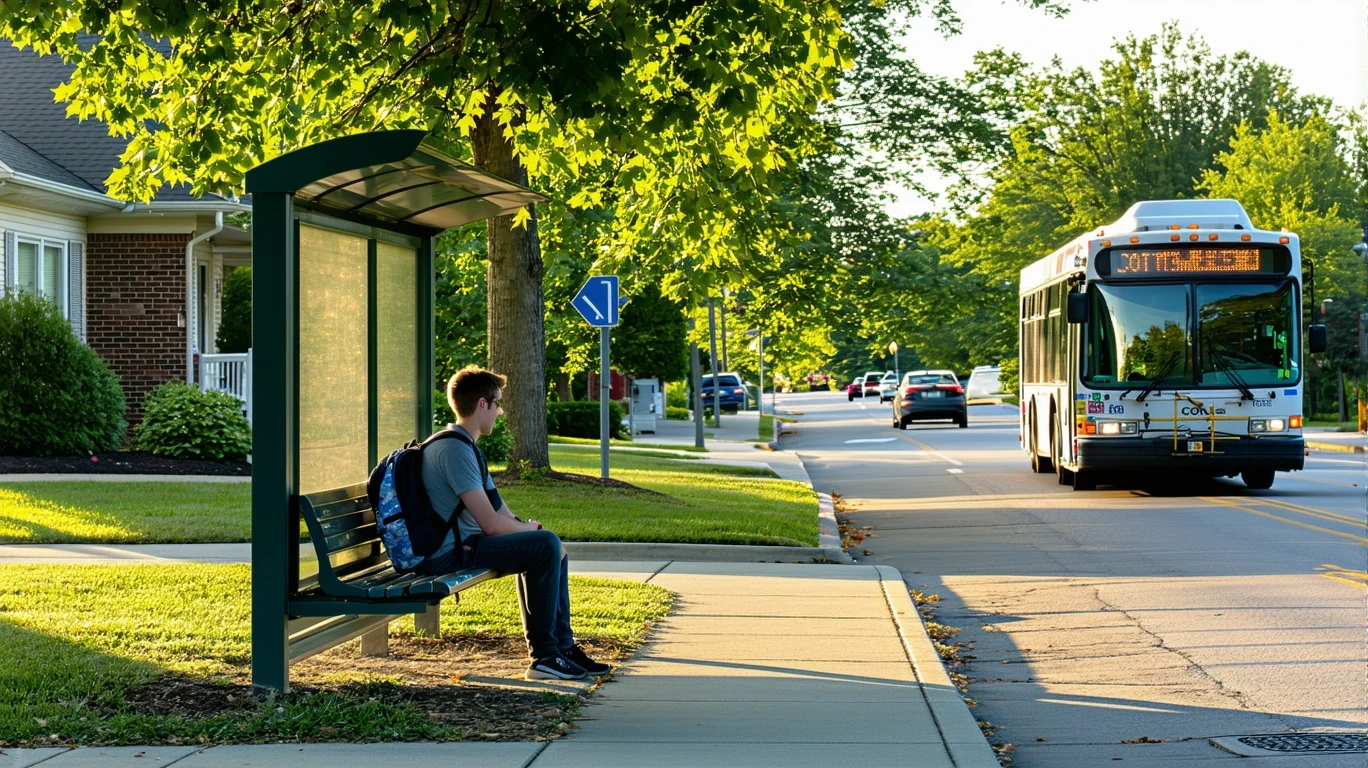
Public transit exists in the form of bus service, and it connects Dublin to the broader Columbus metro area. But bus-only systems in suburban contexts tend to work best for specific use cases: commuters traveling to a fixed workplace, students, or households willing to plan around limited service windows. For errands that require multiple stops, off-peak travel, or trips to areas outside core corridors, driving remains far more practical.
What newcomers often misunderstand is that Dublin’s transportation reality isn’t binary. It’s not “transit city” or “car city”—it’s a place where car ownership unlocks the full range of daily logistics, but where some residents can carve out a less car-intensive routine if their housing, work, and errands align with the areas where pedestrian and transit infrastructure actually exist.
Public Transit Availability in Dublin
Bus service operates in Dublin, connecting residents to employment centers, educational institutions, and commercial districts within the Columbus metro area. The system functions as a commuter-oriented resource rather than a comprehensive local transit network. This means it tends to work best for people traveling to predictable destinations during standard commute windows—office parks, campuses, or regional hubs.
Where transit tends to work: corridors with higher density, areas near major employers, and routes that connect Dublin to downtown Columbus or nearby suburban job centers. Residents living near these routes and working along them can build a transit-supported routine, especially if their schedule aligns with service availability.
Where it falls short: coverage in residential neighborhoods away from main corridors, evening and weekend service, and trips that require transfers or multiple stops. For households managing school pickups, grocery runs, medical appointments, or social commitments spread across different parts of the metro area, transit becomes a supplement rather than a primary solution.
Public transit in Dublin often centers around systems such as the Central Ohio Transit Authority (COTA), though coverage varies by area and route. The presence of bus service doesn’t guarantee that every neighborhood has equal access, and frequency can be a limiting factor for those who need flexibility or spontaneity in their daily travel.
Transit here is a tool, not a lifestyle anchor. It reduces car dependency for some, but it doesn’t eliminate it for most.
Driving & Car Dependence Reality
Driving in Dublin is the default because the city’s geography and development pattern make it the most efficient way to handle daily logistics. Residential neighborhoods, shopping centers, schools, and workplaces are often separated by distances that are too far to walk comfortably and not always well-served by transit. Parking is generally abundant and free in most commercial areas, which removes one of the friction points that makes driving less appealing in denser cities.
Car dependence here isn’t about preference—it’s about structure. Families managing multiple school drop-offs, parents coordinating childcare and work schedules, or anyone whose job requires travel to client sites or regional locations will find that a car is functionally necessary. Even in the walkable pockets where errands are accessible on foot, most households still own at least one vehicle for trips beyond the immediate neighborhood.
Sprawl plays a role, but it’s not the whole story. Dublin’s layout reflects decades of suburban development that prioritized single-family homes, office parks, and retail clusters connected by arterial roads. That pattern creates convenience for drivers—easy highway access, ample parking, minimal traffic congestion compared to urban cores—but it also means that households without cars face significant logistical challenges.
For renters or younger residents living near the historic downtown area, car ownership might feel optional in the short term, especially if work and errands fall within a compact zone. But for most households, particularly those with children, multiple jobs, or commitments spread across the metro area, driving is the only practical way to manage the complexity of daily life.
Commuting Patterns & Daily Mobility
Commuting in Dublin typically involves driving, whether to nearby office parks, into downtown Columbus, or to other suburban employment centers. The city’s position within the metro area makes it a residential base for workers whose jobs are spread across the region, and that geographic distribution reinforces car dependency.
Single-job commuters—those traveling to the same workplace each day—have the most flexibility to consider transit, especially if their destination is along a bus route. But many households manage more complex patterns: one partner commuting north, another south; parents coordinating school schedules with work hours; or workers whose jobs require site visits, client meetings, or regional travel. For these households, transit doesn’t offer enough coverage or flexibility to replace a car.
Proximity matters, but it’s not always controllable. Residents who live near their workplace or near high-frequency transit routes absorb less commute friction. Those farther out, or whose jobs are in areas poorly served by transit, face longer drives and fewer alternatives. The tradeoff isn’t just time—it’s predictability, control, and the ability to handle unexpected schedule changes without logistical collapse.
Daily mobility in Dublin also involves errands, and this is where car dependence becomes most visible. Grocery stores, medical offices, gyms, and social commitments are often spread across different parts of the city or metro area. Chaining errands together—picking up prescriptions, stopping for groceries, dropping off dry cleaning—is far easier by car than by transit or on foot, even in areas with good pedestrian infrastructure.
Who Transit Works For — and Who It Doesn’t
Transit in Dublin works best for a narrow set of household types and circumstances. Young renters living near bus routes, particularly those without children, can often manage a transit-supported routine if their work and social life align with service areas. Students commuting to nearby campuses or educational institutions also benefit, especially if they’re traveling during peak service hours.
Single commuters with fixed work schedules and destinations along transit corridors can reduce or eliminate car dependency, particularly if they’re willing to plan around bus schedules and accept longer travel times compared to driving. For these households, transit becomes a cost-control tool and a way to avoid parking hassles or vehicle maintenance.
But transit doesn’t work well for families, especially those with school-age children. School schedules, extracurricular activities, and the need to manage multiple destinations simultaneously make car ownership functionally necessary. Parents coordinating pickups, drop-offs, and errands across different parts of the metro area will find transit too slow, too limited, or simply unavailable for the routes they need.
Homeowners in peripheral neighborhoods face similar constraints. Even if bus service exists nearby, the frequency and coverage often aren’t sufficient to replace a car for daily logistics. Grocery shopping, medical appointments, and social commitments require flexibility that transit in Dublin doesn’t reliably provide.
Renters in core areas—particularly those near the historic downtown district—have the best chance of reducing car dependency, but even here, most households still own at least one vehicle for trips beyond the immediate neighborhood. Transit works as a supplement, not a replacement, and the decision to go car-free requires accepting significant limitations in mobility and convenience.
Transportation Tradeoffs in Dublin
Choosing between transit and driving in Dublin isn’t about affordability or environmental impact—it’s about control, predictability, and flexibility. Driving offers all three. You leave when you want, take the route you prefer, and handle multiple stops without waiting or transferring. Transit offers lower exposure to vehicle costs and parking hassles, but it requires planning, limits spontaneity, and works best for simple, predictable trips.
For households that can structure their lives around transit—those with fixed work schedules, minimal errands, and housing near service areas—the tradeoff can make sense. But for most, the loss of flexibility outweighs the benefits. Managing a household, coordinating schedules, or responding to unexpected needs becomes significantly harder without a car.
Biking offers a middle ground in some contexts. Dublin’s notable bike infrastructure makes short trips and recreational rides more feasible, and some residents use bikes for errands within their immediate neighborhood. But cycling here is seasonal—winter weather and summer heat limit its practicality—and it doesn’t solve the problem of longer trips or multi-stop logistics.
Walking works in the walkable pockets, particularly for residents who prioritize proximity to groceries, restaurants, and services. But even in these areas, most households still drive for trips beyond the neighborhood, for weather-dependent errands, or when carrying heavy items.
The real tradeoff isn’t transit versus driving—it’s between accepting the structure of daily life that Dublin’s layout creates or choosing housing and work arrangements that minimize the friction. For most households, that means owning a car and using it as the primary tool for day-to-day costs, with transit, biking, or walking filling in at the margins.
FAQs About Transportation in Dublin (2026)
Is public transit usable for daily commuting in Dublin?
Yes, but only for specific circumstances. If you live near a bus route and work along a corridor with regular service, transit can support a daily commute. But coverage is limited, and most households find that transit works best as a supplement to driving rather than a replacement.
Do most people in Dublin rely on a car?
Yes. The city’s layout, the distribution of jobs and services, and the structure of daily logistics make car ownership the norm. Even residents in walkable areas or near transit routes typically own at least one vehicle for trips beyond their immediate neighborhood.
Which areas of Dublin are easiest to live in without a car?
Areas near the historic downtown core, where pedestrian infrastructure is denser and errands are more accessible on foot, offer the best chance of reducing car dependency. But even here, most households still find a car necessary for work, shopping, or trips outside the neighborhood.
How does commuting in Dublin compare to nearby cities?
Dublin’s commute patterns are typical of suburban Columbus: car-dominant, with transit serving as a secondary option for specific routes and schedules. Compared to denser urban cores, commuting here involves less congestion but more reliance on personal vehicles.
Can you bike for transportation in Dublin?
Biking is more feasible in Dublin than in many comparable suburbs, thanks to notable bike infrastructure. But it works best for short trips, recreational rides, or commutes along specific corridors. Seasonal weather and the distances between destinations limit its role as a primary transportation mode.
How Transportation Fits Into the Cost of Living in Dublin
Transportation in Dublin isn’t just about where money goes—it’s about how mobility shapes housing choices, time allocation, and daily logistics. Car ownership unlocks access to the full range of jobs, services, and social opportunities across the metro area, but it also introduces ongoing costs: fuel, insurance, maintenance, and depreciation. Transit reduces some of that exposure, but only for households whose routines align with limited service areas and schedules.
The decision isn’t purely financial. It’s about tradeoffs between convenience and control, between flexibility and planning, between proximity and affordability. Households that prioritize walkability or transit access often pay more for housing in core areas, while those willing to drive can access more affordable neighborhoods farther out. The transportation system here doesn’t dictate those choices, but it does shape the friction and cost structure that comes with them.
For a fuller picture of how transportation expenses interact with housing, utilities, and other categories, see the monthly budget breakdown for Dublin. That article provides the numeric context for understanding how mobility costs fit into the broader financial landscape.
Transportation in Dublin works best when you understand what it offers and what it doesn’t. Transit exists, but it’s narrow. Biking is feasible, but seasonal. Walking works in pockets, but not everywhere. Driving remains the tool that makes daily life manageable for most households, and planning around that reality—rather than resisting it—leads to better decisions about where to live, where to work, and how to structure your day.
How this article was built: In addition to public economic data, this article incorporates location-based experiential signals derived from anonymized geographic patterns—such as access density, walkability, and land-use mix—to reflect how day-to-day living actually feels in Dublin, OH.