
Housing costs in Plainfield don’t follow a single number—they follow a structure. Whether you rent or buy, your monthly exposure depends on how predictable your costs are, how much control you have over them, and how Plainfield’s climate, infrastructure, and development patterns amplify or dampen those pressures over time. The median home value sits at $238,000, and median gross rent runs $1,248 per month, but those figures only tell you the starting line. What matters more is how costs behave once you’re living here, and which levers you can pull when they shift.
Plainfield sits in the Indianapolis metro area with a regional price parity index of 95, meaning the overall cost of goods and services runs slightly below the national baseline. That discount shows up in housing, but it doesn’t eliminate the tradeoffs renters and buyers face. The city’s low-rise, mixed-use character supports household routines, but its car-oriented infrastructure and corridor-clustered grocery and food options mean most residents depend on a vehicle for reliable access to daily needs. That dependency doesn’t just affect transportation—it shapes where people choose to live, how much they’re willing to pay for proximity, and whether renting or owning makes sense given commute and errand friction.
This article breaks down the real cost pressures in Plainfield specific to housing: what renters face, what owners absorb, and how the structure of each option plays out in a place where pedestrian infrastructure exists but doesn’t dominate, where bus service is present but limited, and where heating and cooling costs swing with Indiana’s cold winters and hot summers. If you’re deciding between renting and buying, or trying to understand what “affordable” actually means here, the answer isn’t in a single price—it’s in understanding which costs you control, which ones you don’t, and how Plainfield’s layout and climate change the equation.
—
The Housing Market in Plainfield Today
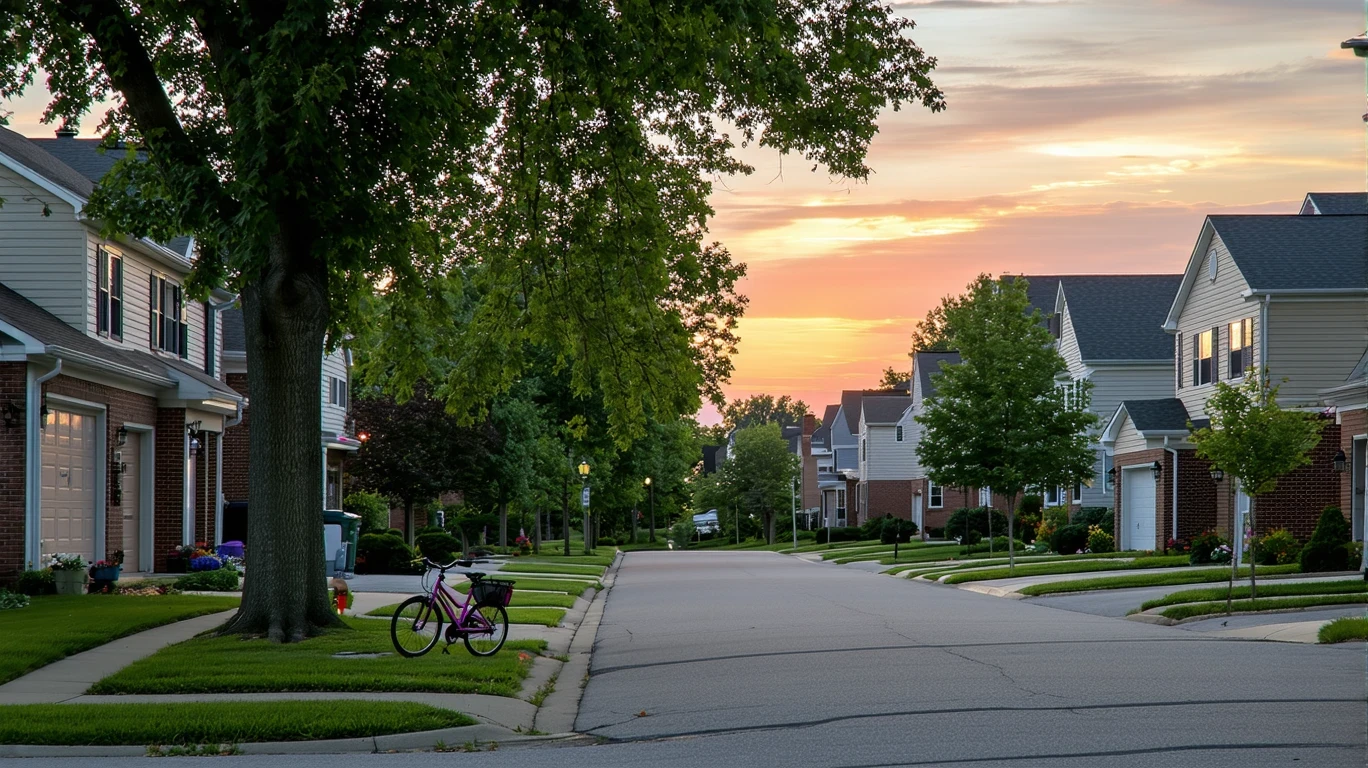
Plainfield’s housing market reflects its role as a suburban commuter city in the Indianapolis metro. Development here has favored low-rise, single-family construction with pockets of mixed residential and commercial land use, creating neighborhoods where people live near some services but still drive for most errands. The $238,000 median home value positions Plainfield below many peer suburbs closer to Indianapolis’s core, which attracts first-time buyers and families looking for more space without the price premium of denser, more walkable areas.
What shapes the market isn’t just price—it’s accessibility. Plainfield’s pedestrian-to-road ratio sits in the medium band, meaning sidewalks and paths exist but don’t define the experience. Most households rely on cars to reach grocery stores, schools, and healthcare, even though food and grocery density falls into the corridor-clustered range. That car dependency influences where buyers and renters prioritize: proximity to major corridors, commute routes, and retail clusters often matters more than walkability or transit access, because bus service, while present, doesn’t offer the frequency or coverage that reduces car reliance.
Newcomers often misunderstand Plainfield’s affordability. The lower home values and rents look appealing compared to Indianapolis proper or other metro suburbs, but the cost structure shifts once you account for transportation, utilities, and the logistics of running a household in a place where errands require planning and driving. The housing market here rewards buyers and renters who can absorb those secondary costs and who value space, lower density, and proximity to highways over walkable convenience.
—
Renting in Plainfield
At $1,248 per month, median gross rent in Plainfield sits below the threshold that would consume 30% of the city’s median household income of $77,249 per year, which translates to roughly $6,437 per month. That gap suggests rental pressure remains moderate for median earners, but the picture changes depending on where you rent and how much you drive. Plainfield’s corridor-clustered grocery and food access means renters in certain neighborhoods face longer trips for routine errands, and without frequent transit, that translates to higher transportation costs that offset the rental savings.
Rental availability in Plainfield skews toward single-family homes and low-rise apartment complexes rather than dense multifamily buildings. That stock appeals to families and households looking for more space, but it also means fewer units in walkable, transit-served areas. Renters who prioritize convenience and lower car dependency may find their options limited, and those who do find units near commercial corridors often pay a premium for that proximity.
Rental volatility in Plainfield follows broader metro trends, but the city’s suburban character and limited transit options mean renters have less flexibility to absorb rent increases by shifting to car-free or car-light lifestyles. When rent rises, the typical response—moving closer to work or transit—doesn’t work as well here, because most jobs and services require a car regardless of where you live. That dynamic keeps renters more exposed to market swings than they might be in denser, more transit-rich cities.
—
Owning a Home in Plainfield
Ownership in Plainfield centers on single-family homes in low-rise neighborhoods, where the $238,000 median value creates an entry point for buyers priced out of closer-in suburbs. But ownership here isn’t just about the purchase price—it’s about absorbing the ongoing costs that renters avoid: property taxes, maintenance, utilities, and the long-term exposure to Indiana’s climate extremes.
Property taxes in Indiana vary by county and township, and while specific rates aren’t provided in the data, buyers should expect annual tax bills that rise with assessed value and local levies. Unlike rent, which landlords can raise annually, property taxes follow assessment cycles and voter-approved increases, giving owners more predictability but less control. Maintenance costs in Plainfield’s climate add another layer: cold winters stress heating systems and roofs, while hot summers drive cooling costs and can accelerate exterior wear on siding, driveways, and landscaping.
Homeownership in Plainfield also means navigating governance structures that don’t always show up in the listing price. Some neighborhoods operate under homeowners associations (HOAs) that bundle services like lawn care or snow removal, while others leave those responsibilities entirely to the owner. The difference isn’t just cost—it’s control. HOA fees add predictability but reduce flexibility, while self-managed properties give owners more autonomy but expose them to surprise expenses when systems fail or weather hits hard.
The ownership experience here differs from renting in one critical way: renters can walk away when costs rise or systems break, but owners absorb those shocks directly. In a city where car dependency, heating and cooling intensity, and low-density infrastructure all increase baseline expenses, ownership works best for households with reserves to handle volatility and the income stability to ride out multi-year cost cycles.
—
Apartment vs House in Plainfield — Cost Behavior Comparison
| Expense Category | Apartment | House |
|---|---|---|
| Heating & Cooling | Lower exposure; shared walls reduce surface area; landlord often controls system efficiency | Higher exposure; standalone structure with more exterior surface; cold winters and hot summers drive sustained seasonal costs |
| Maintenance Responsibility | Landlord absorbs HVAC, roof, and structural repairs; tenant handles only interior damage | Owner absorbs all systems, exterior, and structural costs; Indiana weather accelerates roof, siding, and driveway wear |
| Transportation Exposure | Apartments cluster near commercial corridors; slightly shorter average trips but still car-dependent | Houses often farther from corridors; longer trips for errands and schools; no transit alternative |
| Utility Predictability | More stable; smaller square footage and shared infrastructure reduce swings | More volatile; larger space, standalone systems, and seasonal extremes create wider monthly variation |
Why these categories? Plainfield’s climate, car-oriented layout, and low-rise housing stock create meaningful cost differences between apartments and houses that wouldn’t appear in milder or denser cities. Heating and cooling intensity, maintenance exposure to weather, and transportation burden all vary based on housing type here. Categories like water/sewer or trash were omitted because they don’t differ structurally in Plainfield—both housing types face similar rates and service models.
—
Utilities & Upkeep Differences
Utility exposure in Plainfield splits along two lines: space and structure. Apartments, with their smaller square footage and shared walls, face lower heating and cooling costs even during Indiana’s cold winters and hot summers. Houses, by contrast, expose more exterior surface to temperature extremes, and standalone HVAC systems work harder to maintain comfort. At 16.19¢/kWh for electricity and $10.25/MCF for natural gas, the rates themselves sit near regional averages, but the intensity of use—not the price—drives the difference.
For illustrative context, a typical household using 1,000 kWh per month would face roughly $162 in electricity costs before fees and taxes, while natural gas heating during winter months (using roughly 1 MCF per month) would add another $10 to $15. These figures reflect usage patterns, not guarantees, and actual costs vary with insulation, system efficiency, and thermostat discipline. Houses with older HVAC systems, poor insulation, or larger square footage can see significantly higher bills, especially during January cold snaps or July heat waves.
Maintenance differences go beyond cost—they’re about control and timing. Apartment renters call the landlord when the furnace fails or the roof leaks; homeowners call a contractor and pay the bill. In Plainfield’s climate, where freeze-thaw cycles stress foundations and summer storms test roofs, that distinction matters. Houses built in the 1980s and 1990s—common in Plainfield’s older subdivisions—often need HVAC replacements, roof repairs, and driveway resurfacing within the first few years of ownership, costs that can run thousands of dollars and arrive without warning.
Upkeep in Plainfield also includes yard work, snow removal, and exterior maintenance that apartments typically bundle into rent. For some owners, that’s a benefit—they control the timing and quality of the work. For others, it’s a burden that adds time, cost, and physical effort to the ownership equation. The difference isn’t just financial; it’s about whether you want to manage those tasks yourself or pay someone else to handle them, and whether you have the margin to absorb surprise expenses when systems fail during the coldest or hottest weeks of the year.
—
Rent vs Buy: Long-Term Exposure in Plainfield
The rent-versus-buy decision in Plainfield isn’t about which option costs less in year one—it’s about which cost structure fits your risk tolerance, income stability, and timeline. Renters face annual lease renewals and the possibility of rent increases, but they avoid property tax shifts, maintenance surprises, and the long-term exposure to climate-driven wear. Owners lock in a mortgage payment (if financed at a fixed rate) but absorb every other cost that rises over time: taxes, insurance, utilities, and the eventual replacement of roofs, HVAC systems, and appliances.
In Plainfield, where car dependency, heating and cooling intensity, and low-density infrastructure all increase baseline household costs, ownership works best for households with stable income, emergency reserves, and the ability to handle multi-year cost cycles without financial strain. Renters, by contrast, gain flexibility—they can move when costs rise, when jobs change, or when household needs shift—but they sacrifice control over their housing stability and the ability to build equity.
Over time, ownership in Plainfield exposes you to cost categories that renters never see. Property taxes adjust with assessed value and local levies. Insurance premiums respond to claim history, weather events, and replacement cost estimates. Maintenance costs compound as systems age: a roof lasts 20 years, an HVAC system 15, a water heater 10. None of those expenses appear in the first year, but all of them arrive eventually, and in a climate with cold winters and hot summers, they arrive faster and hit harder than in milder regions.
Renting insulates you from those shocks, but it doesn’t eliminate cost growth—it just shifts the mechanism. Rent increases follow market demand, landlord costs, and property tax changes, and in a city where housing stock skews toward single-family homes and low-rise complexes, rental supply constraints can push prices up faster than ownership costs in stable neighborhoods. The tradeoff isn’t between cheap and expensive; it’s between predictable and controllable, between flexibility and equity, between short-term stability and long-term exposure.
—
FAQs About Housing Costs in Plainfield
Is $238,000 affordable for a median-income household in Plainfield?
At $77,249 per year in median household income, a $238,000 home value falls within conventional affordability guidelines, but affordability depends on more than the purchase price. Buyers need to account for property taxes, insurance, maintenance, and the higher transportation and utility costs that come with Plainfield’s car-dependent layout and climate extremes. A household at median income can likely qualify for financing, but long-term affordability depends on reserves, job stability, and the ability to absorb cost increases over time.
How does renting in Plainfield compare to nearby Indianapolis suburbs?
Plainfield’s $1,248 median gross rent sits below many closer-in Indianapolis suburbs, but the cost structure differs. Renters here face higher transportation costs due to car dependency and corridor-clustered errands, and fewer units sit near transit or walkable commercial areas. The rent savings are real, but they come with tradeoffs in convenience, commute time, and the need for reliable vehicle access.
What drives utility costs higher in Plainfield houses versus apartments?
Houses expose more exterior surface to Indiana’s cold winters and hot summers, and standalone HVAC systems work harder to maintain comfort than apartment systems with shared walls. Larger square footage, older insulation, and less efficient systems amplify the difference. The electricity and natural gas rates are the same, but the intensity of use—driven by structure and climate—creates the cost gap.
Do property taxes in Plainfield increase every year?
Property taxes follow assessment cycles and local levy changes, not annual automatic increases. Assessed values adjust periodically based on market conditions and property improvements, and voter-approved levies for schools, infrastructure, or services can raise rates. Owners face more predictability than renters, who can see rent increases annually, but less control—tax changes happen regardless of individual financial circumstances.
Is owning a home in Plainfield worth it if I plan to stay less than five years?
Ownership over short timelines increases exposure to transaction costs, maintenance surprises, and market volatility without enough time to build significant equity. In Plainfield, where climate-driven maintenance costs and car dependency add baseline expenses, ownership makes more sense for households planning to stay long enough to absorb those costs and benefit from stable housing payments. Renters gain flexibility and avoid the risk of selling into a down market or absorbing unexpected repair costs right before a move.
—
Making Housing Choices in Plainfield
Housing costs in Plainfield follow a structure shaped by climate, infrastructure, and the city’s suburban, car-oriented layout. Renters gain flexibility and avoid maintenance exposure, but they face moderate rent levels and limited options in walkable or transit-served areas. Owners lock in mortgage payments and build equity, but they absorb property taxes, maintenance costs, and the long-term exposure to heating, cooling, and weather-driven wear that comes with Indiana’s temperature extremes.
The decision between renting and buying isn’t about which option costs less—it’s about which cost structure fits your income stability, risk tolerance, and timeline. Plainfield rewards households who can handle car dependency, who have reserves for maintenance and utility swings, and who plan to stay long enough to benefit from ownership’s predictability and equity-building potential. For those who need flexibility, who can’t absorb surprise expenses, or who prioritize walkable convenience over space and lower density, renting offers a clearer path—even if it means less control and no equity accumulation.
Understanding your monthly budget in Plainfield means looking beyond the rent or mortgage payment to the full cost structure: transportation, utilities, maintenance, and the logistics of running a household in a place where most errands require a car and where heating and cooling costs swing with the seasons. The housing market here doesn’t penalize newcomers, but it does reward those who understand how place structure, climate, and infrastructure shape the cost experience over time.
How this article was built: In addition to public economic data, this article incorporates location-based experiential signals derived from anonymized geographic patterns—such as access density, walkability, and land-use mix—to reflect how day-to-day living actually feels in Plainfield, IN.