
Is Lawrence the kind of place you grow roots—or just pass through? For many, the answer hinges on what you’re trading off. Lawrence offers the financial breathing room of lower housing costs and the geographic advantage of sitting just northeast of Indianapolis, but it asks residents to accept a lifestyle built around driving, planning ahead, and making peace with amenity gaps. The city’s vibe reflects that bargain: appreciation for affordability and quiet, mixed with recurring frustration over convenience friction and the feeling that you’re always headed somewhere else to get what you need.
What Defines the Lawrence Experience
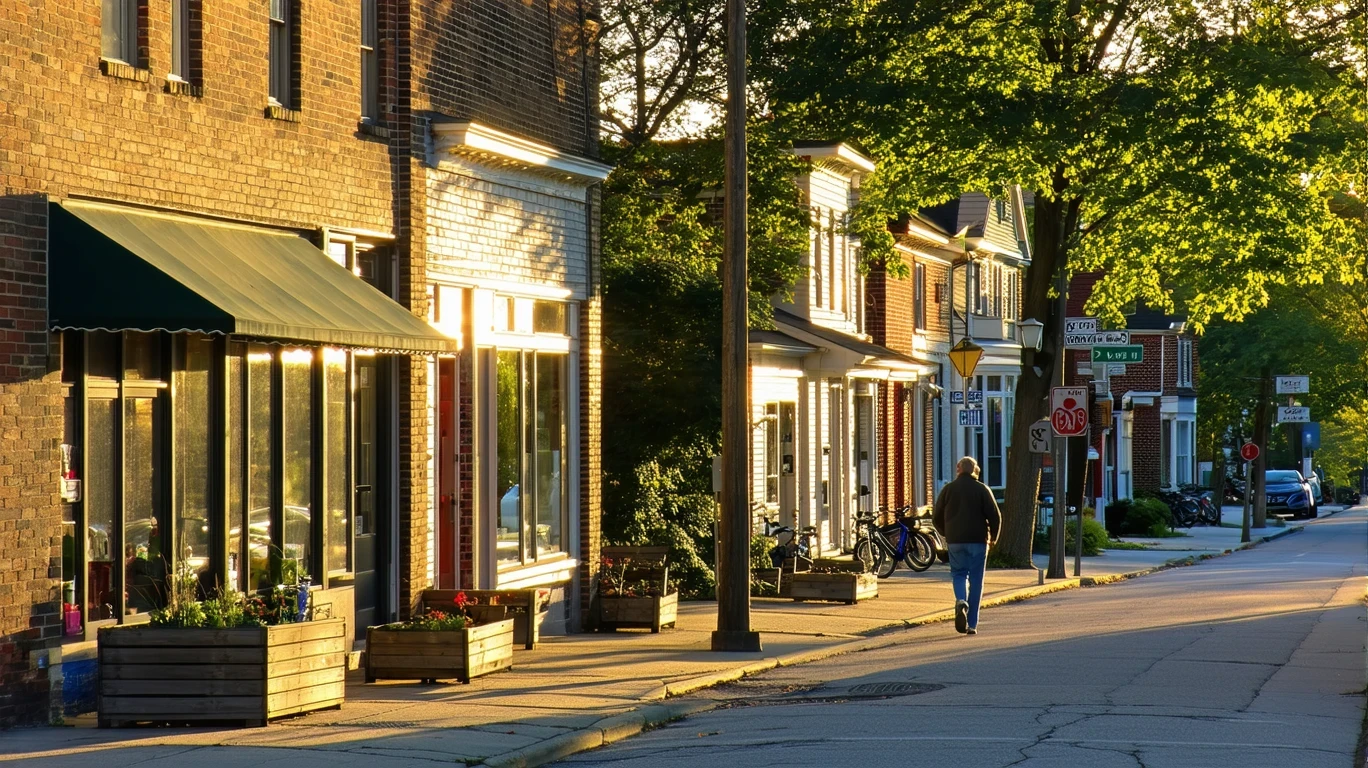
Lawrence tends to work well for people who see it as a launchpad—commuters who value proximity to Indianapolis jobs and entertainment without paying downtown prices, and families willing to drive for groceries, dining, and activities in exchange for more house and yard. The city’s residential character leans suburban and car-oriented, with pockets of walkable infrastructure that don’t always connect to the places people need to go daily. Parks and water features offer outdoor access, but school and playground density falls below what many family-focused households expect, creating a gap between the family-friendly reputation and the on-the-ground infrastructure.
What tends to frustrate residents is the mismatch between proximity and convenience. You’re close to Indianapolis, but you’re not in it—and Lawrence itself doesn’t offer the density of retail, dining, or services that would make it self-sufficient. Errands require planning, and the sparse accessibility of food and grocery options means that spontaneous stops or walkable trips are rare. For households that assumed suburban living would still mean quick access to Target, Kroger, or a variety of dining options within a few minutes, Lawrence can feel more isolated than expected.
Social Media Buzz in Lawrence
In online spaces where Lawrence residents gather—local Facebook groups, regional subreddit threads, neighborhood apps—the tone is a mix of defensive pride and practical complaint. People celebrate affordability and defend the city’s quiet character, but they also vent about the logistics of daily life.
“It’s affordable, and we’re close enough to Indy that we don’t feel stuck—but I do wish I didn’t have to drive 15 minutes just to get decent groceries.”
“Lawrence gets a bad rap, but honestly, if you’re okay with a quieter pace and you work in the city, it’s a solid choice. Just don’t expect walkable anything.”
“We moved here for the schools and the space, but I’m surprised how limited the parks and playgrounds are compared to other suburbs we looked at.”
Recurring themes include comparisons to nearby suburbs (often framed as “we’re not Fishers or Carmel, but we’re also not paying those prices”), debates about whether Lawrence feels like its own place or just an Indianapolis overflow zone, and frequent discussion of where money goes when you’re saving on housing but spending more on gas and time.
Local News Tone
Coverage of Lawrence tends to frame the city through the lens of growth, infrastructure catch-up, and identity negotiation. Headlines and story angles reflect a place in transition—no longer a small town, not quite a fully realized suburb, and working through the tension of who it wants to be.
- “Community Debates What Growth Should Look Like”
- “New Retail Development Promises Convenience, Raises Traffic Concerns”
- “Residents Weigh Affordability Against Amenity Access”
- “Local Leaders Discuss Infrastructure Needs as Population Shifts”
- “Lawrence’s Proximity to Indianapolis: Asset or Identity Challenge?”
The tone is rarely celebratory or crisis-driven; instead, it’s pragmatic and process-oriented, reflecting a city that knows it’s changing but hasn’t settled on what the end state should feel like.
Review-Based Public Perception
On platforms like Google Reviews, Yelp, and Nextdoor-style community boards, Lawrence earns praise from residents who got what they expected—space, affordability, and access to Indianapolis—and disappointment from those who assumed suburban living would come with more built-in convenience.
Positive reviews emphasize value: “We got a house we could actually afford, and we’re only 20 minutes from downtown Indy. For us, that’s the win.” Families appreciate larger lots and lower property taxes compared to more expensive suburbs, and commuters highlight manageable drive times to employment centers.
Critical reviews focus on the friction of daily errands and the lack of walkable texture: “Everything requires a drive, and even then, your options are limited unless you’re willing to go into Indy or over to Castleton.” Others note that newer planned areas feel more polished and connected, while older pockets can feel neglected or disconnected from the city’s growth. The recurring sentiment is that Lawrence rewards people who plan ahead and don’t mind driving, but punishes spontaneity and anyone hoping to live car-light.
Healthcare access gets mixed feedback—clinics and pharmacies are present, but the absence of a hospital means serious medical needs require a trip elsewhere. For families, the limited density of schools and playgrounds creates a gap between expectations and reality, especially for households moving from areas with more robust family infrastructure.
Comparison to Nearby Cities
| Dimension | Lawrence | Fishers | Noblesville |
|---|---|---|---|
| Overall Vibe | Affordable, car-dependent, quiet but sparse | Polished, family-focused, amenity-rich | Small-town charm, growing, more self-contained |
| Walkability | Pockets exist, but errands require driving | Planned trails and mixed-use zones | Walkable downtown core, suburban edges |
| Retail & Dining | Sparse, often requires leaving town | Dense, varied, locally and nationally known | Growing, historic downtown adds character |
| Family Infrastructure | Limited school and playground density | High density, highly rated schools | Moderate density, strong community feel |
| Affordability | Lower housing costs, trade-off for convenience | Higher costs, premium for amenities | Middle ground, value with more texture |
Lawrence’s vibe is defined by what it trades away for affordability. If you’re a commuter who works in Indianapolis and values lower housing pressure over walkable errands, Lawrence delivers. If you’re a family expecting Fishers-level infrastructure without Fishers-level prices, you’ll feel the gaps. Noblesville offers a middle path—more expensive than Lawrence but more self-contained, with a downtown that gives it a sense of place Lawrence lacks. The choice comes down to whether you’d rather save money and drive more, or pay more and drive less.
What Locals Are Saying
“We moved here from Broad Ripple, and the adjustment was rough at first. We miss being able to walk to dinner or grab coffee without planning it. But we also have a yard now, and our mortgage is $400 less a month. It’s a tradeoff, and some days it feels worth it.”
“I work downtown and my partner works in Castleton, so Lawrence made sense geographically. It’s not exciting, but it’s functional. We’re close to everything without being in the middle of anything.”
“As a retiree, I appreciate the quiet and the lower cost of living. I don’t need nightlife, and I’m used to driving. For me, Lawrence is exactly what I wanted—low-key and affordable.”
“We have two kids, and honestly, I’m disappointed in the park and school situation. I thought ‘suburb’ meant more options, but we’re driving to Fishers or Geist for most activities.”
“If you’re young and single, Lawrence feels pretty dead. There’s not much to do here, and even getting groceries feels like a chore. I’m probably moving closer to downtown once my lease is up.”
“I’ve lived here for 15 years, and I’ve seen it change a lot. It’s more crowded now, but it still doesn’t feel like it has its own identity. It’s just ‘near Indy,’ and that’s kind of how it feels to live here too.”
“For remote workers, it’s a decent setup—you get space and quiet, and if you only need to go into the city occasionally, the drive isn’t bad. But if you’re here all the time, the lack of local spots gets old fast.”
Does Lawrence Feel Like a Good Fit?
Lawrence works best for people who see it clearly: a lower-cost residential base near Indianapolis, not a self-contained community. It rewards commuters, budget-conscious families willing to drive for amenities, and residents who value quiet over convenience. It tends to frustrate anyone expecting suburban ease without the planning burden—households that want walkable errands, robust family infrastructure, or a strong sense of local identity will feel the gaps quickly.
The city’s vibe isn’t about excitement or texture; it’s about pragmatism and tradeoffs. If you’re comfortable with that bargain—and if your lifestyle needs align with car dependency and a commuter rhythm—Lawrence can feel stable and functional. If you’re hoping for more spontaneity, walkability, or a place that feels complete on its own, the friction will wear on you. The question isn’t whether Lawrence is happy or unhappy—it’s whether the tradeoffs it asks for match the priorities you’re bringing.
How this article was built: In addition to public economic data, this article incorporates location-based experiential signals derived from anonymized geographic patterns—such as access density, walkability, and land-use mix—to reflect how day-to-day living actually feels in Lawrence, IN.
The perspectives shown reflect commonly expressed local sentiment and recurring themes in public discussion, rather than individual accounts.