
A couple earning $110,000 thought they’d found breathing room in Fishers—until they realized the $1,600 rent left little cushion after car payments, summer cooling bills, and the 20-minute drive to anywhere they actually needed to go. Meanwhile, a single professional at $75,000 felt stretched thin, not because Fishers was expensive on paper, but because every errand required planning, every utility bill swung with the season, and every month demanded the same tightrope walk between comfortable and constrained.
Living comfortably in Fishers isn’t about hitting a magic number. It’s about whether your income absorbs the city’s specific pressure points without forcing constant tradeoffs—and whether the lifestyle those tradeoffs produce feels sustainable or suffocating.
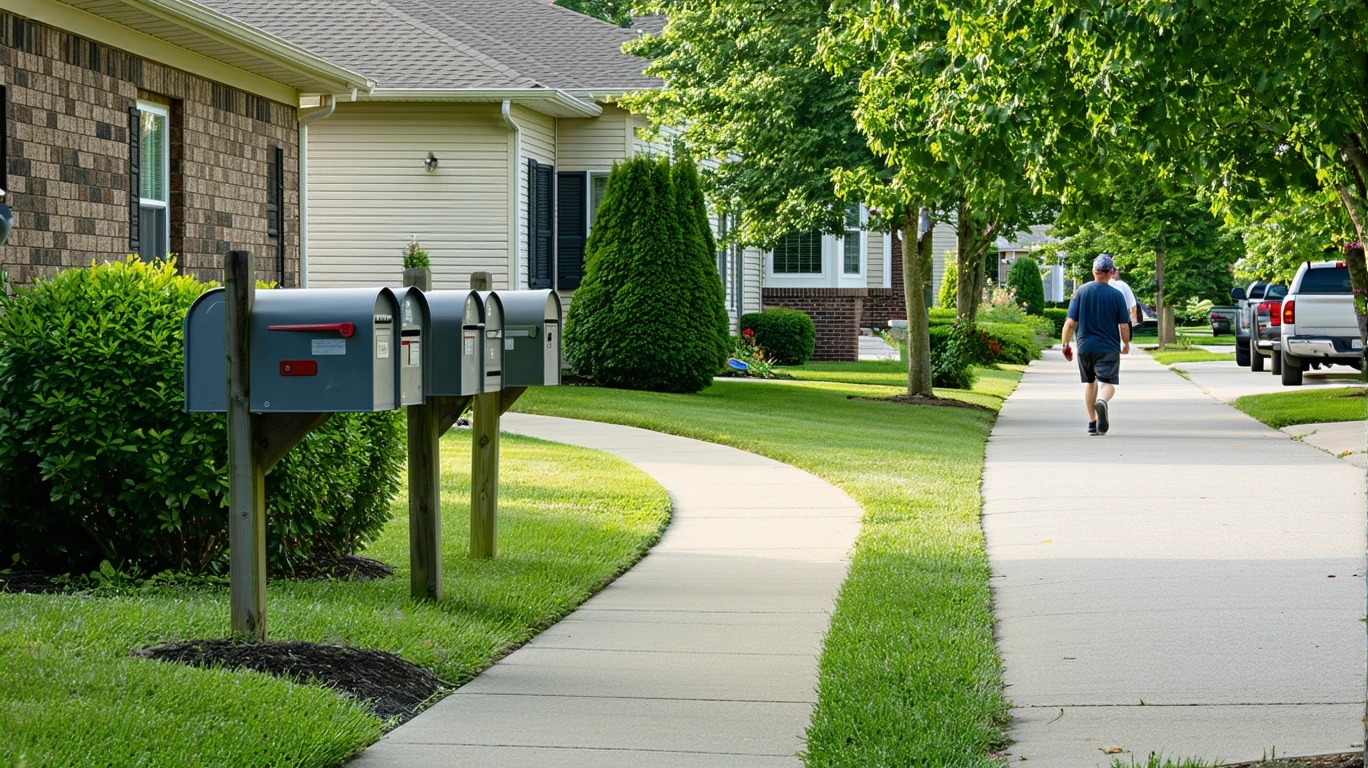
What “Living Comfortably” Means in Fishers
Comfort in Fishers looks like this: you can cover monthly expenses without checking your account before filling the gas tank. You have space—both literal and financial—for the occasional dinner out, a repair that wasn’t budgeted, or a weekend plan that doesn’t require advance justification. You’re not wealthy, but you’re not white-knuckling your way through every billing cycle either.
That definition is contextual. Fishers sits in a climate that demands both heating and cooling, in a place where most daily errands require a car despite pockets of walkable infrastructure, and in a housing market where the median home value is $339,000 and median rent is $1,478 per month. Comfort here means absorbing those costs without feeling them dictate every decision.
It also means accepting what Fishers is: a suburb in transition, with mixed building heights, some bike infrastructure, and food and grocery options clustered along corridors rather than scattered throughout neighborhoods. If your expectation is urban convenience or small-town simplicity, you’ll feel the gap. If you expect a place where planning replaces spontaneity and driving replaces walking, you’ll find it manageable.
Where Income Pressure Shows Up First
Housing dominates. Whether you’re renting at $1,478 or more, or buying into a $339,000 median home value, that cost anchors everything else. For renters, it’s the baseline monthly obligation that leaves less room for volatility elsewhere. For buyers, it’s the mortgage, property taxes, insurance, and maintenance—all of which grow less predictable over time as systems age and rates adjust.
Utilities add seasonal strain. Fishers experiences cold winters and warm, humid summers, which means heating and cooling costs swing throughout the year. The electricity rate of 17.41¢/kWh and natural gas price of $14.78/MCF aren’t extreme, but the intensity and duration of use are. A household that budgets for average monthly utility costs will find itself squeezed in January and July, when systems run longest and bills spike.
Transportation pressure is structural, not just financial. Fishers has notable bike infrastructure and some walkable pockets, but food and grocery access is corridor-clustered—concentrated along certain routes rather than evenly distributed. That means most households depend on cars for daily errands, and gas at $2.79/gallon becomes a recurring, non-negotiable cost. More importantly, the time cost compounds: every grocery run, every school drop-off, every errand requires driving, planning, and often doubling back.
For families, the pressure multiplies. School density in Fishers falls below typical thresholds, meaning fewer nearby options and more transportation complexity. Playgrounds and family-oriented amenities exist but aren’t densely distributed. The result is a household logistics burden that doesn’t show up in cost calculators but shows up every weekday morning and afternoon.
How the Same Income Feels Different by Household
A single adult earning $70,000 gross annually (about $5,833 per month before taxes) can make Fishers work, but it requires discipline. Rent at $1,478 or higher consumes a significant share of take-home income, leaving less room for transportation costs, utilities, and discretionary spending. The corridor-clustered layout means planning every errand, and the lack of transit options means owning and maintaining a car is non-negotiable. Comfort exists, but it’s narrow—one unexpected expense or one rent increase can tip the balance.
A couple without children, earning a combined $100,000 gross annually (about $8,333 per month before taxes), experiences less strain. Housing costs feel more manageable when split, and the flexibility to choose where within Fishers to live allows them to optimize for walkable pockets or proximity to clustered services. They can absorb seasonal utility swings without panic and maintain some financial cushion for repairs, travel, or savings. The car dependency still applies, but the cost burden is shared, and the time burden feels less punishing when logistics can be divided.
Families with children face the steepest climb. Even at $120,000 gross annually (about $10,000 per month before taxes), the combination of housing costs, transportation complexity, and limited school density creates constant friction. The need for more space pushes housing costs higher, whether renting a larger unit or buying a home that accommodates multiple bedrooms. School options require research and often longer drives, adding time and fuel costs. Extracurriculars, groceries, and healthcare (though a hospital is present) all require car trips, and the clustered service layout means fewer quick stops and more planned outings. Comfort is possible, but it requires income well above the city’s median household income of $126,548 per year to feel genuinely secure rather than perpetually managed.
The Comfort Threshold (Qualitative)
The comfort threshold in Fishers isn’t a number—it’s the point where your income stops dictating your behavior. It’s when you can cover rent or a mortgage, absorb a $200 utility spike in July without rearranging other spending, fill the gas tank without checking your balance first, and still have enough left over to save, plan, or breathe.
It’s when housing becomes a fixed cost you can rely on rather than a monthly negotiation with your budget. It’s when transportation shifts from a limiting factor to a logistics question—you still drive everywhere, but the cost and time don’t force you to skip trips or combine errands out of necessity. It’s when family logistics feel manageable rather than exhausting, even if school density and clustered services mean more planning than you’d prefer.
For most households in Fishers, that threshold sits somewhere above the point where housing, transportation, and utilities together consume more than 50-60% of gross income. Below that line, every month requires active management. Above it, you gain the flexibility to make choices—where to live, how to spend discretionary income, whether to save or spend—without constant financial recalculation.
The threshold also depends on expectations. If you expect walkable convenience, dense school options, and minimal driving, you’ll feel pressure at any income level because Fishers doesn’t deliver that experience. If you expect suburban space, some bike infrastructure, and a planning-oriented lifestyle, the threshold becomes more about income adequacy than lifestyle mismatch.
Why Online Cost Calculators Get Fishers Wrong
Most cost calculators treat Fishers as a data point: plug in the median rent, add estimated utilities and transportation, multiply by household size, and output a total. The problem is that totals don’t explain pressure, and averages don’t capture structure.
Calculators assume uniform access. They don’t account for corridor-clustered grocery and food options, which means they miss the time cost and planning burden that comes with car dependency. They assume walkability is binary—either a place is walkable or it isn’t—and miss the nuance of walkable pockets that serve some residents well and others not at all. They don’t distinguish between a suburb with dense school options and one where school density falls below typical thresholds, leaving families to navigate longer drives and fewer nearby choices.
They also flatten seasonality. A calculator might estimate average monthly utility costs, but it won’t explain that July and January bills can run significantly higher due to cooling and heating demands, or that households without financial cushion feel those swings acutely. It won’t capture that natural gas prices and electricity rates interact with climate intensity, not just usage averages.
Most importantly, calculators don’t explain how income pressure compounds. They’ll tell you that a household needs X dollars per month, but they won’t explain that the same income feels entirely different for a single adult, a couple, and a family with children navigating Fishers’ specific infrastructure and service layout. They produce a number that feels authoritative but lacks the context to be useful.
People feel surprised after moving because the calculator told them they could afford it, but it didn’t tell them what “affording it” would feel like day to day. The rent fit the budget, but the grocery store didn’t. The mortgage closed, but the school commute didn’t. The income checked out on paper, but the lifestyle didn’t.
How to Judge Whether Your Income Fits Fishers
Instead of asking “Can I afford Fishers?” ask these:
Can you absorb housing costs without constant recalculation? If rent at $1,478 or higher, or a mortgage on a $339,000 home, forces you to renegotiate other spending every month, you’re below the comfort threshold. If it’s a fixed cost you can rely on, you’re closer.
How sensitive are you to seasonal volatility? Fishers’ heating and cooling demands mean utility bills swing throughout the year. If a $150-$200 spike in summer or winter would force you to cut elsewhere, you’ll feel pressure. If you can absorb it without stress, you have cushion.
Does car dependency feel like a logistics question or a financial limit? Everyone in Fishers drives for most errands—that’s structural. The question is whether the cost of gas, maintenance, insurance, and time feels manageable or whether it forces you to skip trips, combine errands out of necessity, or defer repairs. If it’s the latter, your income isn’t matching the city’s transportation reality.
How much planning burden can you tolerate? Fishers rewards planning. Grocery and food access is corridor-clustered, school density is limited, and walkable pockets exist but aren’t universal. If you thrive on structure and advance planning, that works. If you expect spontaneous convenience or nearby options for everything, you’ll feel friction regardless of income.
Do you have financial margin for the unexpected? Comfort isn’t just covering predictable costs—it’s having enough left over for the car repair, the medical bill, the rent increase, or the opportunity you didn’t budget for. If your income leaves you with little to no monthly surplus after housing, transportation, utilities, and essentials, you’re not comfortable. You’re managing.
If you have children, can you handle the logistics load? Limited school density and clustered services mean more driving, more time, and more coordination. If your income allows for that time cost—whether through flexible work, shared logistics with a partner, or enough margin to pay for convenience—it’s workable. If it doesn’t, the pressure will be constant.
What Comfortable Living Actually Requires
Living comfortably in Fishers requires income that absorbs the city’s dominant costs—housing, transportation, and seasonal utilities—without forcing monthly tradeoffs. It requires enough margin to handle volatility, whether that’s a utility spike, a car repair, or a rent increase. And it requires expectations that align with what Fishers actually is: a suburb in transition, with some walkable and bikeable infrastructure, but where most households depend on cars, plan their errands, and navigate clustered rather than distributed services.
For single adults, comfort likely requires gross monthly income well above $6,000 to cover rent, transportation, utilities, and maintain breathing room. For couples, combined gross monthly income above $9,000 provides more flexibility and shared cost absorption. For families, gross monthly income above $11,000—and often higher—becomes necessary to manage housing, transportation complexity, and the logistics burden that comes with limited school density and corridor-clustered services.
But income alone doesn’t determine comfort. A household earning $130,000 that expects urban walkability and dense school options will feel strained in Fishers. A household earning $95,000 that values space, accepts car dependency, and thrives on planning may find it sustainable. The question isn’t just how much you earn—it’s whether what you earn matches the tradeoffs behind the total, and whether those tradeoffs produce a life that feels comfortable or constantly managed.
FAQs About Living Comfortably in Fishers
Is $100,000 a year enough to live comfortably in Fishers?
For a couple without children, yes—it provides enough margin to cover housing, transportation, and utilities with some cushion for savings and discretionary spending. For a single adult, it’s more than comfortable. For a family with children, it’s workable but tight, especially once housing, transportation complexity, and limited school density are factored in. Comfort depends on household size and expectations, not just the number.
Why does the same income feel different in Fishers than in other suburbs?
Because Fishers’ cost structure and infrastructure create specific pressure points. Corridor-clustered grocery and food access means more driving and planning than suburbs with evenly distributed services. Limited school density adds logistics complexity for families that other suburbs with denser options don’t impose. Seasonal utility volatility hits harder in climates with long heating and cooling seasons. The income might be the same, but the friction it has to absorb is different.
What’s the biggest financial surprise people face after moving to Fishers?
Transportation time and cost. Most people expect to drive in a suburb, but they underestimate how much driving corridor-clustered services require, and how that compounds when combined with limited school density for families. The gas cost is manageable, but the time cost—and the wear on vehicles—adds up faster than anticipated. The second surprise is seasonal utility bills, which swing more than many newcomers budget for.
Can you live in Fishers without a car?
Technically possible, but practically difficult. Fishers has notable bike infrastructure and some walkable pockets, but food and grocery access is corridor-clustered, and most daily errands require distances that aren’t walkable or bikeable for most households, especially in winter or summer heat. Public transit options are limited. A car isn’t legally required, but it’s functionally necessary for most people.
How do I know if my income is enough before I move?
Ask whether your income can absorb housing at $1,478+ for rent or $339,000 for ownership, plus car costs, plus seasonal utility swings, and still leave 20-30% for savings, discretionary spending, and unexpected expenses. If the answer is no, or if it requires perfect budgeting with no margin for error, your income isn’t enough for comfort—it’s enough for survival. Comfort requires cushion, not just coverage.
How this article was built: In addition to public economic data, this article incorporates location-based experiential signals derived from anonymized geographic patterns—such as access density, walkability, and land-use mix—to reflect how day-to-day living actually feels in Fishers, IN.