
Is Fishers expensive to live in? Fishers is considered moderately priced in 2026, with a median home value of $339,000 and median rent of $1,478 per month. The value proposition depends on housing entry cost versus car dependence and how well walkable pockets align with your daily routine.
When Maya relocated to Fishers from a downtown Indianapolis apartment, she expected lower rent but underestimated how quickly vehicle expenses would add up. Her $1,400 lease felt manageable until she factored in the 40-mile daily commute, gas at $2.79/gal, and the reality that most errands required driving to commercial corridors. Within three months, she realized the cost structure here wasn’t about any single line item—it was about how housing affordability, transportation dependence, and seasonal utility swings interacted to shape her monthly pressure points.
Overall Cost of Living Snapshot
Fishers operates at a regional price parity index of 95, meaning the baseline cost structure runs slightly below the national average. That directional advantage shows up most clearly in grocery prices and everyday goods, but it doesn’t tell the full story of what drives expenses here. The primary cost driver is housing entry—whether you’re buying at $339,000 or renting at $1,478 per month—and the secondary pressure comes from transportation dependence shaped by the city’s suburban form.
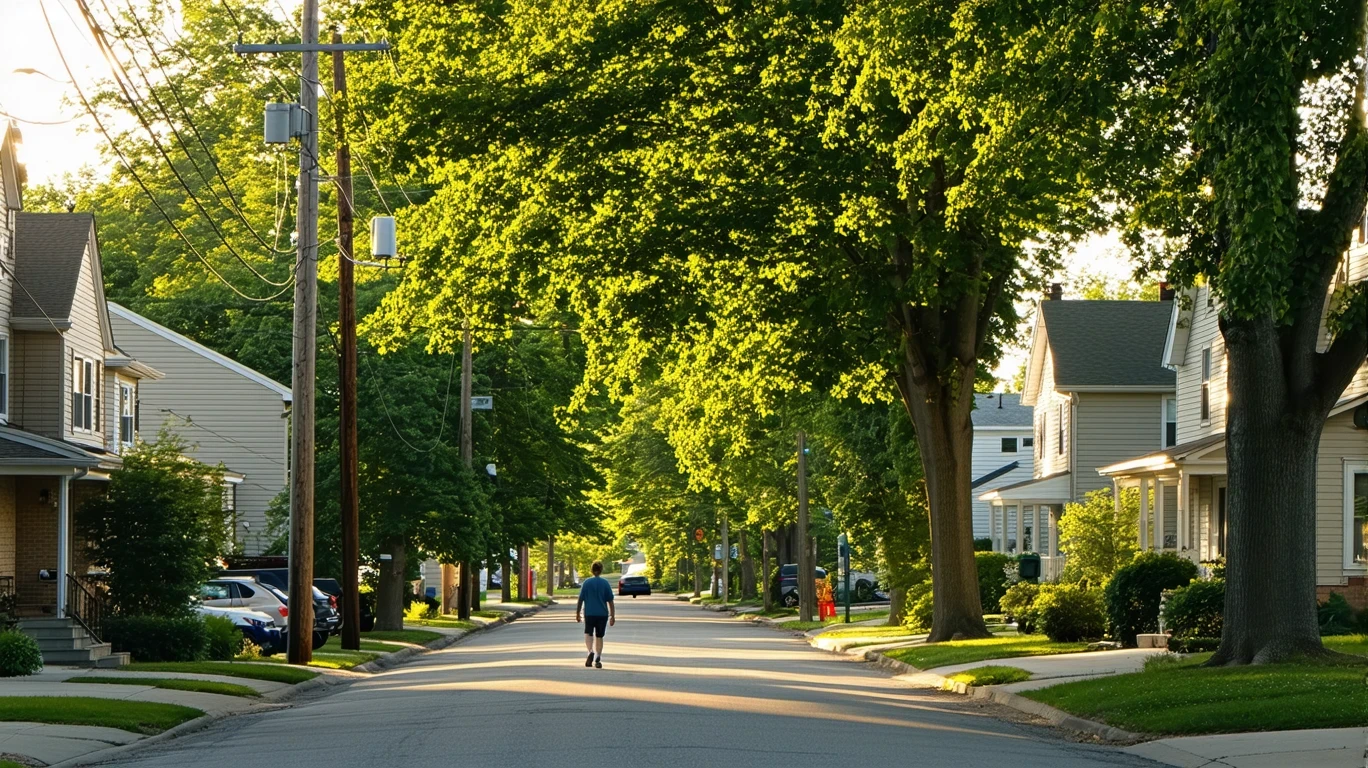
The shape of costs in Fishers reflects a commuter suburb with mixed urban character: residential neighborhoods interspersed with commercial corridors, walkable pockets supported by notable bike infrastructure, and a land-use pattern that blends low-rise and medium-height buildings. Food and grocery options cluster along corridors rather than distributing evenly across neighborhoods, which means errands often require intentional trips rather than spontaneous stops. Park access is present but not pervasive, and family infrastructure—particularly school density—falls below typical thresholds, signaling that households with children may face longer school commutes or more selective enrollment decisions.
Compared to Indianapolis proper, Fishers trades urban density and transit access for larger housing stock and lower per-square-foot costs. The tradeoff is straightforward: you gain space and ownership opportunity but absorb higher transportation exposure and rely more heavily on personal vehicles. Utility costs here swing with Indiana’s cold winters and warm summers, creating moderate seasonal volatility that affects heating and cooling bills more than baseline rates.
Driver verdict: Housing entry cost dominates the expense structure, but the real surprise comes from how car dependence and corridor-clustered errands amplify transportation and time costs. Utility seasonality adds moderate swings, but it’s a secondary factor compared to the combined weight of housing and mobility.
Housing Costs (Primary Driver)
Housing is the anchor expense in Fishers, and the market here tilts decisively toward ownership. The median home value of $339,000 positions the city as accessible compared to many Indianapolis-area suburbs, but it still represents a substantial entry threshold that shapes household budgets for years. Median rent sits at $1,478 per month, which offers a lower-commitment alternative but doesn’t deliver the same long-term equity or stability that ownership provides in a market where most residents buy.
The renting-versus-owning calculus in Fishers favors buyers who plan to stay for several years and can manage the upfront costs of entry. Renting works for transitional households, early-career professionals, or those testing the Indianapolis metro before committing, but the rental stock is thinner and less integrated into neighborhood fabric compared to ownership-dominated blocks. Ownership here means absorbing property taxes, maintenance, and insurance—all of which layer onto the mortgage—but it also means locking in a fixed housing cost in a market where rental renewals can shift with demand.
The mixed urban form and limited family infrastructure (low school density) suggest that Fishers appeals more to young professionals, couples, and smaller households than to families prioritizing walkable school access. Buyers here are often trading urban convenience for space, yard access, and a suburban pace, while renters are typically in transition or working in the Indianapolis metro and seeking proximity without downtown price pressure.
Conclusion: Fishers is a buying city with moderate entry cost and a rental market that serves transitional needs rather than long-term tenancy.
| Housing Type | Cost Anchor | What That Buys You |
|---|---|---|
| Median Home Value | $339,000 | Ownership entry in a mixed suburban market with moderate equity-building potential and fixed long-term costs |
| Median Gross Rent | $1,478 per month | Flexibility and lower upfront commitment, suited for transitional households or metro commuters testing the area |
Utilities & Energy Risk
Utility costs in Fishers are shaped by Indiana’s seasonal extremes—cold winters that demand sustained heating and warm summers that drive cooling loads. Electricity runs at 17.41¢/kWh, which sits near the middle of regional norms, and natural gas is priced at $14.78/MCF (roughly equivalent to $14.78 per 100 therms for context). These baseline rates are moderate, but the real exposure comes from how long heating and cooling seasons last and how much energy a household consumes during peak months.
Winter heating dominates the utility calendar here. When outdoor temperatures drop to 6°F with a wind chill of -5°F—as they do during cold snaps—natural gas furnaces run frequently, and electric heat pumps (if present) work harder to maintain indoor comfort. Homes with older insulation, larger square footage, or less efficient HVAC systems will see sharper bill increases during extended cold periods. Summer cooling is less intense than in southern climates, but it’s not negligible; households running central air through July and August will notice the load.
The volatility here is moderate rather than extreme. Fishers doesn’t face the utility price spikes or infrastructure strain common in coastal or desert markets, but it does experience predictable seasonal swings that require households to budget for higher winter and summer bills. Efficiency upgrades—better insulation, programmable thermostats, or HVAC tune-ups—help reduce exposure, but they don’t eliminate the seasonal rhythm entirely.
Risk classification: Moderate. Utility costs swing with the seasons but remain manageable for households who plan for winter heating loads and summer cooling needs.
Groceries & Daily Costs
Grocery costs in Fishers reflect the city’s below-national-average price parity (RPP index of 95), meaning everyday food purchases generally cost less here than in higher-cost metros. Derived estimate based on national baseline adjusted by regional price parity; not an observed local price. Ground beef runs around $6.35/lb, chicken $1.92/lb, eggs $2.58/dozen, and milk $3.84 per half-gallon—all of which fall within the moderate range for Midwestern suburbs.
The grocery pressure in Fishers isn’t about individual item prices; it’s about how food and grocery options are distributed. Experiential signals show that food establishments cluster along commercial corridors rather than spreading evenly across residential neighborhoods. That means households often need to drive to grocery stores, and the convenience of quick errands depends on proximity to those corridors. For residents living in walkable pockets with nearby access, grocery runs are straightforward. For those in more car-dependent sections, every shopping trip adds time and vehicle use to the weekly routine.
Daily costs beyond groceries—household goods, personal care, dining out—benefit from the same regional price advantage, but they’re also shaped by the corridor-clustered retail pattern. Chains and big-box stores dominate the grocery landscape, offering competitive pricing but requiring intentional trips rather than spontaneous stops. Smaller households or individuals who shop frequently may find the driving requirement more burdensome than families who consolidate weekly runs.
The takeaway: grocery costs are moderate and regionally favorable, but the structure of access—how far you drive, how often, and whether your neighborhood connects to retail corridors—affects the real cost of feeding a household more than the per-pound price of chicken or eggs.
Transportation Reality
Transportation in Fishers is built around personal vehicle ownership. The city’s suburban form, corridor-clustered errands, and limited transit options mean that most residents rely on cars for commuting, shopping, and daily logistics. Experiential signals confirm notable bike infrastructure and walkable pockets in parts of the city, but these features serve recreational or hyperlocal trips rather than replacing car dependence for most households.
Gas prices sit at $2.79/gal, which is moderate by national standards, but the real transportation cost comes from how much driving residents do. Commuters working in Indianapolis or other metro employers face regular round-trip mileage that adds up quickly, especially when combined with errands that require driving to commercial corridors. A household running two vehicles—common here—doubles the exposure: fuel, insurance, maintenance, and registration costs all layer into the monthly budget.
The mixed urban form and presence of both residential and commercial land use mean that some neighborhoods offer better walkability than others, but the overall transportation reality remains car-centric. Households that can position themselves near walkable pockets or work-from-home arrangements reduce their transportation burden significantly, while those commuting daily or living in more isolated residential sections face higher recurring exposure.
Public transit is minimal, and the bike infrastructure—while notable—serves as a supplement rather than a primary mode for most residents. The unemployment rate of 3.3% signals a strong local economy, but it also means most adults are working and commuting, which reinforces the need for reliable vehicle access.
Transportation as recurring exposure: Car ownership and fuel costs are non-negotiable for most Fishers households. The question isn’t whether you’ll drive, but how much, and whether your daily routine aligns with the city’s walkable pockets or requires constant corridor access.
Cost Exposure Profiles
Cost exposure in Fishers is shaped by three primary factors: housing entry versus long-term ownership, transportation dependence, and utility seasonality. The city’s structure rewards households who can absorb the upfront cost of homeownership, position themselves to minimize daily driving, and plan for moderate seasonal utility swings.
Low-exposure situations: Homeowners who have locked in fixed housing costs, live near walkable pockets or work-from-home, and occupy energy-efficient homes face the least financial volatility. These households benefit from stable housing payments, reduced transportation burden, and predictable utility bills even during seasonal peaks. Single-vehicle households or those with short commutes further reduce recurring transportation costs.
High-exposure situations: Renters facing potential lease renewals, long-distance commuters, and households operating multiple vehicles absorb the most cost pressure. Renters lack the equity-building and payment stability that ownership provides, while commuters face ongoing fuel, maintenance, and time costs that compound over months. Households in older or less efficient homes experience sharper utility swings during winter heating and summer cooling seasons, and those living in residential sections far from commercial corridors must drive for nearly every errand.
The difference between low and high exposure isn’t about income sufficiency—it’s about structural alignment. A household that owns, works locally, and lives near a walkable pocket experiences Fishers as a moderately priced suburb with manageable recurring costs. A household that rents, commutes daily to Indianapolis, and drives for every grocery run experiences the same city as a higher-friction, higher-cost environment where transportation and housing instability layer into constant financial pressure.
Utility volatility is moderate across all profiles, but it affects high-exposure households more acutely because they’re already managing tighter margins on housing and transportation. Seasonal bill increases that feel minor to a homeowner with stable costs can feel significant to a renter juggling lease uncertainty and long commutes.
The city’s limited family infrastructure (low school density) and corridor-clustered errands mean that households with children or complex daily logistics face additional time and coordination costs, even if those don’t show up as direct expenses. The presence of hospital and pharmacy access supports routine healthcare needs, but it doesn’t offset the broader transportation and housing exposure that defines the cost structure here.
How this article was built: In addition to public economic data, this article incorporates location-based experiential signals derived from anonymized geographic patterns—such as access density, walkability, and land-use mix—to reflect how day-to-day living actually feels in Fishers, IN.
Frequently Asked Questions
Is Fishers more affordable than Indianapolis in 2026? Fishers offers lower per-square-foot housing costs and a regional price advantage (RPP index of 95), but it requires higher transportation investment due to car dependence and corridor-clustered errands, making the affordability comparison depend on commute length and housing type.
What does a typical cost profile look like in Fishers? A typical profile centers on moderate housing entry ($339,000 median home value or $1,478 median rent), car-dependent transportation with notable bike infrastructure in pockets, and moderate utility seasonality driven by Indiana winters and summers.
Do utilities cost more in Fishers than nearby Indianapolis suburbs? Utility rates in Fishers (17.41¢/kWh electricity, $14.78/MCF natural gas) are regionally typical, but seasonal heating and cooling loads create moderate swings that affect all Indiana suburbs similarly, with exposure depending more on home efficiency than location.
What costs tend to surprise newcomers in Fishers? Newcomers often underestimate the cumulative impact of car dependence—fuel, insurance, and maintenance for one or two vehicles—and the time cost of driving to corridor-clustered grocery and retail options, especially if they’re relocating from more walkable urban environments.
Are property taxes higher in Fishers than in Indianapolis? Property tax structures vary by jurisdiction within the Indianapolis metro, and specific rates depend on assessed value, local levies, and school district funding, so direct comparison requires reviewing current tax bills rather than relying on generalized assumptions.
Is Fishers a good value for renters or buyers? Fishers favors buyers who can manage the $339,000 median entry cost and plan to stay long enough to build equity, while renters benefit from flexibility but face thinner rental stock and less long-term cost stability compared to ownership.
How much does commuting add to monthly costs in Fishers? Commuting costs depend on distance, vehicle efficiency, and fuel prices ($2.79/gal currently), but households driving daily to Indianapolis or other metro employers should expect transportation to rival or exceed utility costs as a recurring budget line.
Does Fishers have walkable neighborhoods or is it entirely car-dependent? Fishers has walkable pockets supported by notable bike infrastructure and mixed land use in certain areas, but the overall structure remains car-dependent, with most errands requiring driving to commercial corridors rather than walking from residential blocks.