
“It’s clean, it’s safe, the parks are amazing—but sometimes it feels like every street looks the same, and I wonder if I’m trading charm for convenience.”
That tension—between polish and personality, between comfort and cost—captures much of what people feel about living in Carmel. This isn’t a city where residents argue about whether it’s “nice.” Most agree it is. The real question is whether that niceness fits your life, your budget, and your tolerance for predictability.
Carmel delivers on suburban fundamentals: excellent park access, family-oriented infrastructure, and pockets of walkable design woven into a car-friendly layout. The median household income of $132,859 per year reflects a community built around professional stability and high expectations. But that same income baseline creates pressure—on housing, on keeping up, and on whether you feel like you belong if your budget doesn’t stretch as far.
This article translates the emotional tone of Carmel through the lens of public discussion: what residents praise, what they quietly resent, and who tends to feel aligned versus restless.
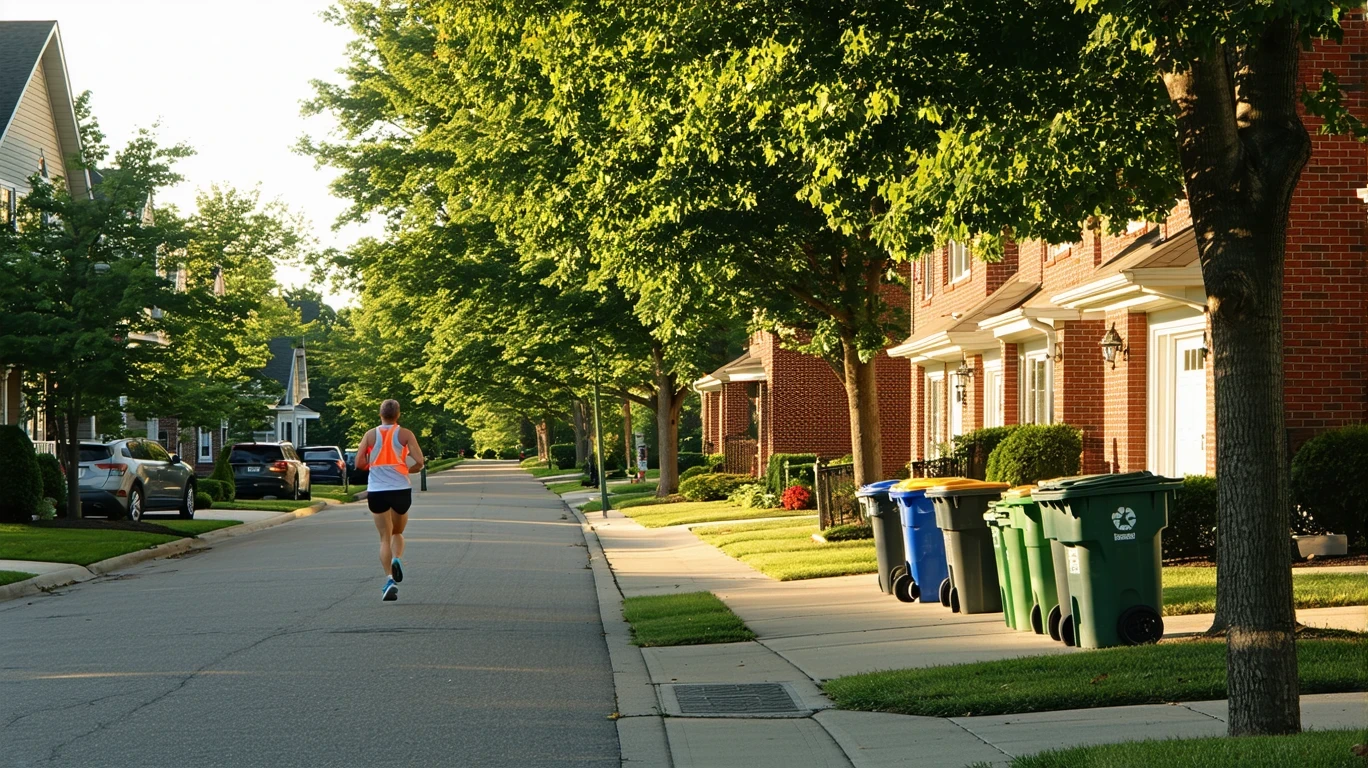
What Carmel Feels Like: Comfort with a Side of Conformity
Carmel’s vibe is rooted in intentionality. The city has invested heavily in infrastructure—roundabouts, trails, green space, and mixed-use corridors—that create a sense of order and accessibility. Park density exceeds high thresholds, and water features add texture to the outdoor environment. Cycling infrastructure is notable, and pedestrian-to-road ratios in certain areas support walkability without requiring it everywhere.
For families, this translates to ease: kids can bike to parks, errands cluster along predictable corridors, and the environment feels maintained. For professionals, it offers a polished backdrop that signals stability. But for those seeking spontaneity, grit, or cultural variety, Carmel can feel like a place where everything works—but nothing surprises.
The tension isn’t about dysfunction. It’s about whether you value predictability or crave texture. Carmel rewards the former and occasionally frustrates the latter.
Social Media Buzz in Carmel
In online spaces where Carmel residents gather, conversation tends to orbit around pride, cost, and identity. People celebrate the city’s parks, schools, and safety, but also express fatigue around housing pressure and a sense that the city’s growth has prioritized aesthetics over affordability or diversity.
Common themes include:
- Pride in infrastructure: Residents frequently highlight trails, roundabouts, and green space as evidence the city “does things right.”
- Cost anxiety: Discussions about housing, taxes, and the cost of keeping up appear regularly, often framed as “worth it, but exhausting.”
- Homogeneity concerns: Some residents express a desire for more variety—in dining, in culture, in neighborhood character—while others defend the city’s consistency as part of its appeal.
“I love that I can walk to the farmers market and feel safe, but I also feel like every new development looks identical. Where’s the character?”
“Carmel is what you make of it. If you want suburban comfort and great schools, it’s hard to beat. If you want dive bars and late-night tacos, you’re going to be disappointed.”
“The cost of living here is no joke. We’re doing fine, but I know plenty of families who feel stretched just to stay.”
The tone is rarely hostile, but it’s also rarely uncomplicated. Carmel’s residents tend to acknowledge tradeoffs rather than declare unambiguous satisfaction.
Local News Tone
Coverage of Carmel tends to frame the city through the lens of growth, investment, and community identity. Stories often focus on new amenities, infrastructure projects, and debates about what kind of place Carmel is becoming.
Recurring topic buckets include:
- “New Mixed-Use Development Promises Walkability and Dining Options”
- “Residents Weigh Density vs Suburban Character”
- “Carmel Expands Trail Network, Reinforcing Outdoor Access”
- “Housing Costs Rise as Demand Outpaces Supply”
- “Community Debates What Growth Should Look Like”
The framing is generally optimistic but not uncritical. Local coverage reflects a city that takes planning seriously, but also one where residents feel entitled to weigh in on whether that planning serves them.
Review-Based Public Perception
On platforms like Google, Yelp, and Nextdoor-style forums, Carmel’s public perception splits along expectation lines. Those who wanted polished suburban living tend to praise the city enthusiastically. Those who expected more variety, affordability, or spontaneity tend to express mild disappointment.
Common praise:
- Parks and trails are frequently described as “top-notch” and “well-maintained.”
- Safety and cleanliness are cited as major draws, especially for families.
- Schools receive consistent positive mentions, even from residents without children.
- Walkable pockets—particularly around the Arts & Design District—are appreciated by those who discover them.
Common critiques:
- Dining and nightlife options are described as “limited” or “chain-heavy.”
- Housing costs are a recurring pain point, with renters and buyers alike noting that affordability requires compromise.
- Some residents describe the city as “sterile” or “lacking soul,” particularly in newer planned areas.
- Errands are manageable but require planning; not everything is walkable from everywhere.
The pattern is clear: Carmel delivers on infrastructure and safety, but struggles to deliver on spontaneity and affordability. Whether that’s a dealbreaker depends entirely on what you’re optimizing for.
Comparison to Nearby Cities
| Aspect | Carmel, IN | Fishers, IN | Noblesville, IN |
|---|---|---|---|
| Overall Vibe | Polished, planned, family-oriented with selective walkability | Tech-forward, suburban, slightly younger energy | Small-town charm, historic core, more affordable |
| Walkability | Pockets of walkable design, strong trail network | Mostly car-dependent, some mixed-use nodes | Walkable downtown, suburban edges |
| Cost Pressure | High housing costs, income baseline creates expectations | Similar cost pressure, slightly more variety | More affordable, broader income range |
| Cultural Texture | Arts district adds some variety, but overall homogeneous | Corporate feel, newer development dominates | Historic character, more eclectic |
| Family Fit | Strong schools, parks, and infrastructure | Strong schools, tech-oriented amenities | Good schools, more relaxed pace |
Carmel, Fishers, and Noblesville all serve the northern Indianapolis suburbs, but they appeal to slightly different priorities. Carmel rewards those who value polish and planning, even at a premium. Fishers attracts tech-oriented professionals who prioritize modernity and convenience. Noblesville offers a slower pace and more affordability, with a historic downtown that provides texture Carmel sometimes lacks.
If you want the most refined suburban infrastructure and can afford it, Carmel is hard to beat. If you want a bit more grit or a lower cost of entry, Noblesville may feel more forgiving. If you want a tech-forward environment with slightly younger energy, Fishers might align better.
What Locals Are Saying
Young professional, moved from Indianapolis:
“I thought I’d miss the city more, but honestly, Carmel has enough going on that I don’t feel isolated. The Monon Trail is amazing, and I can get downtown if I need to. The cost is steep, though—I’m paying way more in rent than I expected.”
Family with elementary-age kids:
“This is exactly what we wanted: great schools, safe neighborhoods, parks everywhere. My kids bike to their friends’ houses, and I don’t worry. The tradeoff is that everything feels a little… beige. But that’s not a dealbreaker for us.”
Retiree, longtime resident:
“Carmel has changed a lot. It used to feel more like a small town. Now it’s all roundabouts and new construction. I appreciate the improvements, but I miss the old character.”
Remote worker, renting:
“I like the trails and the coffee shops, but I feel like I’m paying a premium for a lifestyle I don’t fully use. If I worked in an office here, it would make more sense. As it is, I’m considering moving somewhere cheaper.”
Newcomer from out of state:
“Carmel feels like a well-run suburb. Everything works, everything’s clean, and people are friendly. But I also feel like I’m still figuring out where the ‘real’ community is. It’s not unfriendly—it’s just… polished.”
Parent of teens:
“The schools are great, but the social pressure is real. There’s a lot of keeping up with the Joneses here, and I see my kids feeling it too. It’s not toxic, but it’s definitely present.”
Single professional, early 30s:
“Carmel is fine, but it’s not exciting. I go to Broad Ripple or downtown Indy when I want to actually do something. Here, it’s just… quiet. Which is great for some people, but not really my speed.”
Does Carmel Feel Like a Good Fit?
Carmel’s emotional profile is one of intentional comfort. The city delivers on infrastructure, safety, and outdoor access, and it does so with a level of polish that many residents deeply appreciate. But that same polish creates tradeoffs: higher costs, less spontaneity, and a sense of homogeneity that some find reassuring and others find stifling.
This tends to work for families prioritizing schools and parks, professionals seeking a stable and well-maintained environment, and households who value predictability over surprise. It tends to frustrate those on tighter budgets, those craving cultural variety or nightlife, and those who find suburban uniformity emotionally draining.
Carmel doesn’t ask you to love chaos. It asks you to appreciate order. If that aligns with how you want to live, the city will feel like a fit. If you need texture, grit, or affordability to feel at home, you may find yourself restless—or looking elsewhere.
To explore how Carmel’s costs break down across housing, transportation, and daily expenses, see What a Budget Has to Handle in Carmel. For a closer look at Income Pressure in Carmel: Who Feels Stable (and Who Doesn’t), or to understand Renting vs Buying in Carmel: The Real Tradeoffs, those resources offer decision-oriented context beyond sentiment alone.
How this article was built: In addition to public economic data, this article incorporates location-based experiential signals derived from anonymized geographic patterns—such as access density, walkability, and land-use mix—to reflect how day-to-day living actually feels in Carmel, IN.
The perspectives shown reflect commonly expressed local sentiment and recurring themes in public discussion, rather than individual accounts.