
—
Picture two households earning the same income, one renting in Indianapolis and one in Lawrence. The Indianapolis renter walks three blocks to a grocery store, takes the bus twice a week, and pays $1,046 in rent. The Lawrence renter drives everywhere, pays $1,064 in rent, and watches natural gas bills climb each winter. Same metro area, similar price environment, completely different cost experiences.
Indianapolis and Lawrence sit in the same regional economy, share the same broad price level, and compete for many of the same workers. But the mechanics of daily spending—where costs concentrate, how predictably they arrive, and which households feel pressure first—diverge sharply. Indianapolis operates as a denser, more vertical urban center with rail transit, walkable pockets, and broadly accessible errands infrastructure. Lawrence functions as a suburban alternative with higher median household income, higher housing entry points, and a structure that assumes car ownership. The decision between them isn’t about which city costs less overall; it’s about which cost structure fits the household managing it.
In 2026, that distinction matters more than ever. Rent and mortgage payments anchor every budget, but transportation friction, utility volatility, and the time cost of running errands shape how stable or strained a household feels month to month. This article explains where cost pressure shows up in each city, which households are more exposed, and how the same income can feel entirely different depending on which trade-offs dominate daily life.
Housing Costs
Indianapolis reports a median home value of $184,600 and median gross rent of $1,046 per month. Lawrence’s median home value sits at $193,100, with median rent at $1,064 per month. The $8,500 difference in home values represents a modest but meaningful entry barrier for buyers, while the $18 monthly rent gap is narrow enough that other factors—location within each city, unit type, lease terms—often matter more than the citywide median.
What separates these housing markets isn’t the sticker price; it’s the housing form and the infrastructure around it. Indianapolis shows a more vertical building character, mixed land use, and substantial pedestrian-to-road ratio. That translates to more apartments, more density, and more housing options within walking distance of daily needs. Lawrence, lacking comparable urban form data, likely skews toward single-family homes and car-dependent subdivisions. For renters, Indianapolis offers more flexibility in unit type and location relative to transit and errands. For buyers, Lawrence’s higher home values may reflect larger lots, newer construction, or more space per dollar—but those advantages come with higher heating exposure and transportation dependency.
Families prioritizing yard space, garage capacity, and separation from commercial corridors may find Lawrence’s housing stock more aligned with those preferences, even at a higher entry cost. Single adults and couples prioritizing rent predictability, proximity to work, and the ability to skip car ownership will find Indianapolis’ denser, mixed-use structure reduces both housing search friction and the secondary costs of isolation. First-time buyers face a lower entry threshold in Indianapolis, but the trade-off is less square footage and potentially older housing stock. In Lawrence, the higher home value buys more space but locks in higher property tax exposure and ongoing utility volatility tied to larger, less efficient homes.
Housing takeaway: Indianapolis suits households willing to trade space for access and mobility flexibility. Lawrence suits households prioritizing square footage and suburban form, provided they can absorb higher entry costs and the transportation dependency that follows.
Utilities and Energy Costs
Electricity rates in Indianapolis and Lawrence are nearly identical—17.41¢/kWh in Indianapolis and 17.34¢/kWh in Lawrence—but natural gas pricing tells a different story. Indianapolis natural gas costs $11.31 per MCF, while Lawrence pays $14.78 per MCF. That $3.47 difference per unit represents a structural heating cost gap that compounds over the winter months. Indiana winters demand consistent heating, and households in larger, older, or less-insulated homes feel that exposure most acutely.
The natural gas gap matters more in Lawrence because suburban housing stock typically includes larger single-family homes with more square footage to heat. Indianapolis’ more vertical, denser building character means more apartments and attached units, which inherently lose less heat and require less energy to maintain comfortable temperatures. Renters in Indianapolis apartments may see heating costs included in rent or moderated by shared walls and smaller footprints. Renters and owners in Lawrence’s single-family homes face the full cost of heating larger spaces with higher per-unit gas prices.
Cooling costs, driven by electricity, remain comparable between the two cities. Both experience hot, humid summers, and air conditioning becomes non-negotiable for most households. The difference is that cooling exposure is more predictable—households can estimate summer electricity usage with reasonable accuracy—while heating exposure in Lawrence introduces more volatility. A cold snap in January can double a gas bill in ways that are harder to control through behavior alone. Families in larger homes, especially those with older HVAC systems, experience the most pronounced swings. Single adults in smaller apartments see less dramatic shifts but still face higher baseline heating costs in Lawrence than in Indianapolis.
Utility takeaway: Indianapolis offers more predictable utility exposure, especially for renters in denser housing. Lawrence households, particularly those in single-family homes, face higher heating costs and more seasonal volatility, with natural gas pricing creating a structural disadvantage during winter months.
Groceries and Daily Expenses
Both Indianapolis and Lawrence operate within the same regional price environment, reflected in identical regional price parity indices of 95. That means grocery staples, household goods, and everyday purchases cost roughly the same at the register. But how households access those goods—and how much time, fuel, and friction it takes to get them—differs substantially.
Indianapolis shows high food establishment density and high grocery density, supported by walkable pockets and broadly accessible errands infrastructure. That structure gives households more options: walk to a corner store for milk, bike to a mid-size grocer for weekly staples, or drive to a big-box retailer for bulk purchases. The ability to mix strategies reduces both cost and time pressure. A single adult can grab dinner ingredients on the way home from work without a dedicated trip. A family can split errands across multiple household members without coordinating car access. The density also creates competition, which moderates prices and increases the availability of discount and specialty options.
Lawrence, lacking comparable errands accessibility data, likely requires more intentional trip planning. Households drive to grocers, and those trips become less flexible. Forgetting an item means another round trip. Running out of a staple mid-week means choosing between an inconvenient drive or paying convenience-store premiums. The time cost of grocery logistics rises, and so does the temptation to rely on takeout or delivery when schedules tighten. For families managing multiple schedules, that friction compounds. For single adults working long hours, the lack of walkable grocery access turns a 10-minute errand into a 30-minute commitment.
Price sensitivity matters more when access is constrained. Households in Lawrence may pay the same per-pound price for chicken or per-gallon price for milk, but they face fewer opportunities to comparison-shop, catch sales, or substitute based on what’s available nearby. Indianapolis households benefit from denser retail competition and the ability to adjust purchasing behavior without significant travel penalties. Convenience spending—coffee, prepared meals, last-minute household items—becomes more expensive in car-dependent environments because the alternative (another drive) feels more burdensome.
Groceries takeaway: Indianapolis reduces grocery friction through density and accessibility, lowering both time costs and the pressure to overspend on convenience. Lawrence households face more planning burden and less flexibility, which can push spending toward takeout and delivery when logistics become overwhelming.
Taxes and Fees

Both Indianapolis and Lawrence operate under Indiana’s state tax structure, which includes a flat state income tax and locally variable property tax rates. Without city-specific property tax data in the input feed, the comparison shifts to structural exposure rather than precise rates. Property taxes in both cities are driven by assessed home values, and Lawrence’s higher median home value of $193,100 compared to Indianapolis’ $184,600 suggests modestly higher annual property tax bills for homeowners, assuming similar millage rates.
For renters, property taxes are embedded in rent but less visible. The $18 monthly rent difference between Indianapolis and Lawrence is narrow enough that property tax variations likely play a minor role in the rent gap. More significant is the structure of fees and services. Suburban communities like Lawrence often rely on HOA fees, trash collection charges, and water/sewer billing that homeowners pay directly. Indianapolis, with denser municipal infrastructure, may bundle some of these services differently or spread costs across a broader tax base. Homeowners in Lawrence should expect recurring fees for lawn care, snow removal, and neighborhood amenities that aren’t always itemized upfront.
Sales taxes in Indiana apply uniformly at the state level, so everyday purchases—groceries, gas, household goods—carry the same tax burden in both cities. The difference emerges in how often households make taxable purchases and how much they spend per trip. Car-dependent households in Lawrence may consolidate shopping trips, reducing the frequency of taxable transactions but increasing the size of each one. Indianapolis households, with more walkable access to retail, may make smaller, more frequent purchases, spreading sales tax exposure across more transactions without increasing the total.
Long-term residents in either city face property tax exposure that grows with home values, but the predictability of that growth depends on local assessment cycles and voter-approved levies. Recent movers face the risk of surprise fees—HOA assessments, special district charges, or utility connection costs—that aren’t always disclosed during the home search. Renters avoid property tax volatility but remain exposed to rent increases driven by landlords passing through rising tax bills.
Taxes and fees takeaway: Lawrence homeowners face modestly higher property tax exposure due to higher home values and more direct fee structures. Indianapolis spreads costs across denser infrastructure, reducing per-household fee visibility but not necessarily total burden. Renters in both cities remain insulated from property tax swings but vulnerable to rent increases driven by landlord cost pass-throughs.
Transportation & Commute Reality
Indianapolis demonstrates substantial pedestrian infrastructure, a high pedestrian-to-road ratio, rail transit presence, and a notable bike-to-road ratio. Those signals point to a city where households can—and do—move without cars for at least some trips. Rail service provides a backbone for commuting and cross-city travel, while walkable pockets and cycling infrastructure support errands, recreation, and short-distance mobility. That structure doesn’t eliminate car ownership, but it reduces the frequency and urgency of driving, which lowers fuel consumption, parking costs, and vehicle wear.
Lawrence lacks comparable mobility data, which suggests a car-oriented structure by default. Without transit, walkability, or cycling infrastructure signals, households in Lawrence likely depend on personal vehicles for nearly all trips—commuting, groceries, errands, and recreation. Gas prices in Lawrence sit at $2.83 per gallon compared to Indianapolis’ $2.71 per gallon, a modest 12-cent difference that becomes more meaningful when households drive more miles. A household commuting 25 miles round trip five days a week in a vehicle averaging 25 MPG burns roughly 5 gallons weekly, or about $14.15 in Lawrence versus $13.55 in Indianapolis. Over a year, that’s a $31 difference—not large, but compounded by higher maintenance costs, insurance premiums, and the time cost of driving everywhere.
The real transportation gap isn’t fuel price; it’s optionality. Indianapolis households can choose to drive, bike, walk, or take transit depending on the trip, the weather, and the schedule. That flexibility reduces the financial and logistical burden of car ownership. Single adults can skip a second vehicle. Couples can share one car without constant coordination. Families can send teenagers on errands without handing over keys. Lawrence households, lacking those options, face higher baseline transportation costs and more rigid logistics. Every trip requires a car, every household member needs access, and breakdowns or repairs create immediate crises.
Transportation takeaway: Indianapolis reduces transportation dependency through transit, walkability, and cycling infrastructure, lowering costs and increasing household flexibility. Lawrence’s car-oriented structure raises baseline transportation costs and eliminates mobility options, making vehicle ownership and maintenance non-negotiable.
Cost Structure Comparison
Housing pressure in Indianapolis concentrates at the access and flexibility level rather than the entry price level. Median rent and home values sit modestly lower than Lawrence, but the real advantage is the variety of housing forms and the proximity to transit, errands, and services. Households willing to accept smaller units, older buildings, or denser surroundings gain significant mobility and logistics benefits. Lawrence’s housing pressure is front-loaded—higher home values and larger spaces require more upfront capital and commit households to higher heating, maintenance, and transportation costs over time.
Utilities introduce more volatility in Lawrence due to higher natural gas pricing and the prevalence of larger, single-family homes. Indianapolis households, especially renters in apartments or attached units, experience more predictable utility costs and less seasonal swing. The natural gas gap isn’t catastrophic, but it’s persistent, and it compounds with housing size. Families in Lawrence’s larger homes face the highest exposure, while single adults in Indianapolis apartments see the lowest.
Daily living costs—groceries, errands, convenience spending—favor Indianapolis not because prices are lower but because access is denser. The ability to walk, bike, or take a short drive to multiple grocery options reduces both time costs and the temptation to overspend on takeout or delivery. Lawrence households face more planning burden, longer trips, and fewer opportunities to adjust purchasing behavior on the fly. For families managing tight schedules, that friction translates into higher spending on convenience and less control over grocery budgets.
Transportation patterns matter more in Lawrence because every trip requires a car, every household needs vehicle access, and fuel, insurance, and maintenance become non-negotiable line items. Indianapolis households can reduce transportation costs by choosing transit, walking, or biking for some trips, which lowers both direct expenses and the logistical complexity of coordinating vehicle access across household members.
The decision isn’t about which city costs less in total; it’s about which cost structure aligns with the household’s priorities and constraints. Households sensitive to transportation dependency, utility volatility, and errands friction will find Indianapolis’ denser, more flexible infrastructure reduces both financial and time pressure. Households prioritizing space, privacy, and suburban form will accept Lawrence’s higher entry costs and car dependency in exchange for larger homes and more separation from urban density. For households managing tight budgets, the difference is less about price and more about predictability—Indianapolis offers more control over when and how costs arrive, while Lawrence front-loads commitments and reduces flexibility.
How the Same Income Feels in Indianapolis vs Lawrence
Single Adult
For a single adult, housing becomes the first non-negotiable cost, followed immediately by transportation. In Indianapolis, the ability to walk to groceries, take transit to work, and bike for errands means transportation costs remain flexible and controllable. Rent sits at the median, but the trade-off is access to services without constant driving. In Lawrence, rent is only slightly higher, but car ownership becomes mandatory, and every trip—work, groceries, social plans—requires fuel, time, and vehicle access. Flexibility disappears first in Lawrence, where a car breakdown or unexpected repair creates immediate logistical and financial strain. Indianapolis offers more room to adjust spending and more control over time.
Dual-Income Couple
For a dual-income couple, the question shifts to whether both partners need cars and how much time they spend coordinating logistics. In Indianapolis, one partner can take transit or bike to work while the other drives, reducing vehicle costs and insurance premiums. Errands can be split without constant car-sharing negotiations. In Lawrence, both partners likely need vehicle access, which doubles transportation costs and eliminates scheduling flexibility. The higher median income in Lawrence provides more cushion, but the car-dependent structure absorbs much of that advantage through fuel, maintenance, and the time cost of driving everywhere. Predictability becomes the differentiator—Indianapolis couples can adjust transportation and errands behavior to match income fluctuations, while Lawrence couples face more rigid, ongoing commitments.
Family with Kids
For families, housing size and school access become primary drivers, but utility volatility and transportation logistics create secondary pressure. In Lawrence, larger homes and higher natural gas costs mean heating bills swing more dramatically in winter, and every family trip—school drop-off, activities, groceries—requires a car. The higher median income context suggests Lawrence families expect and can manage those costs, but the structure leaves little room for adjustment when budgets tighten. In Indianapolis, smaller homes and integrated green space reduce utility exposure, and the ability to walk or bike to parks, schools, and errands lowers both transportation costs and the time burden of managing multiple schedules. Families in Indianapolis gain flexibility and control, while families in Lawrence gain space but accept more rigid, ongoing cost commitments.
Decision Matrix: Which City Fits Which Household?
| Decision factor | If you’re sensitive to this… | Indianapolis tends to fit when… | Lawrence tends to fit when… |
|---|---|---|---|
| Housing entry + space needs | You prioritize lower entry costs and proximity to services over square footage | You’re willing to trade space for walkability, transit access, and denser amenities | You need larger homes, yards, and suburban separation despite higher entry costs |
| Transportation dependence + commute friction | You want to avoid mandatory car ownership or reduce driving frequency | You value rail transit, bike infrastructure, and walkable errands that lower vehicle dependency | You accept car ownership as non-negotiable and prioritize garage space over transit access |
| Utility variability + home size exposure | You want predictable utility bills and less seasonal swing | You prefer smaller, denser housing that moderates heating costs and reduces volatility | You’re willing to absorb higher natural gas costs and seasonal swings for more space |
| Grocery strategy + convenience spending creep | You want flexible, walkable access to food and errands without dedicated car trips | You benefit from high grocery density and the ability to mix shopping strategies | You’re comfortable planning larger, less frequent grocery trips and driving for all errands |
| Fees + friction costs (HOA, services, upkeep) | You want to avoid surprise fees and prefer bundled municipal services | You value denser infrastructure that spreads costs and reduces direct fee visibility | You accept HOA fees and itemized service charges in exchange for suburban amenities |
| Time budget (schedule flexibility, errands, logistics) | You need to run errands quickly without constant car coordination | You gain time and flexibility through walkable access and transit options | You’re willing to spend more time driving and coordinating vehicle access across household members |
Lifestyle Fit
Indianapolis operates as a regional hub with rail transit, walkable pockets, and integrated green space. Park density exceeds high thresholds, water features are present, and the urban form supports both vertical density and mixed land use. That structure creates a lifestyle where errands, recreation, and social activities can happen without constant driving. Families benefit from accessible parks and playgrounds, while single adults and couples gain flexibility in how they move through the city. The presence of hospital facilities and pharmacy access supports healthcare needs without requiring long drives, and the denser retail environment means more options for dining, shopping, and entertainment within short distances.
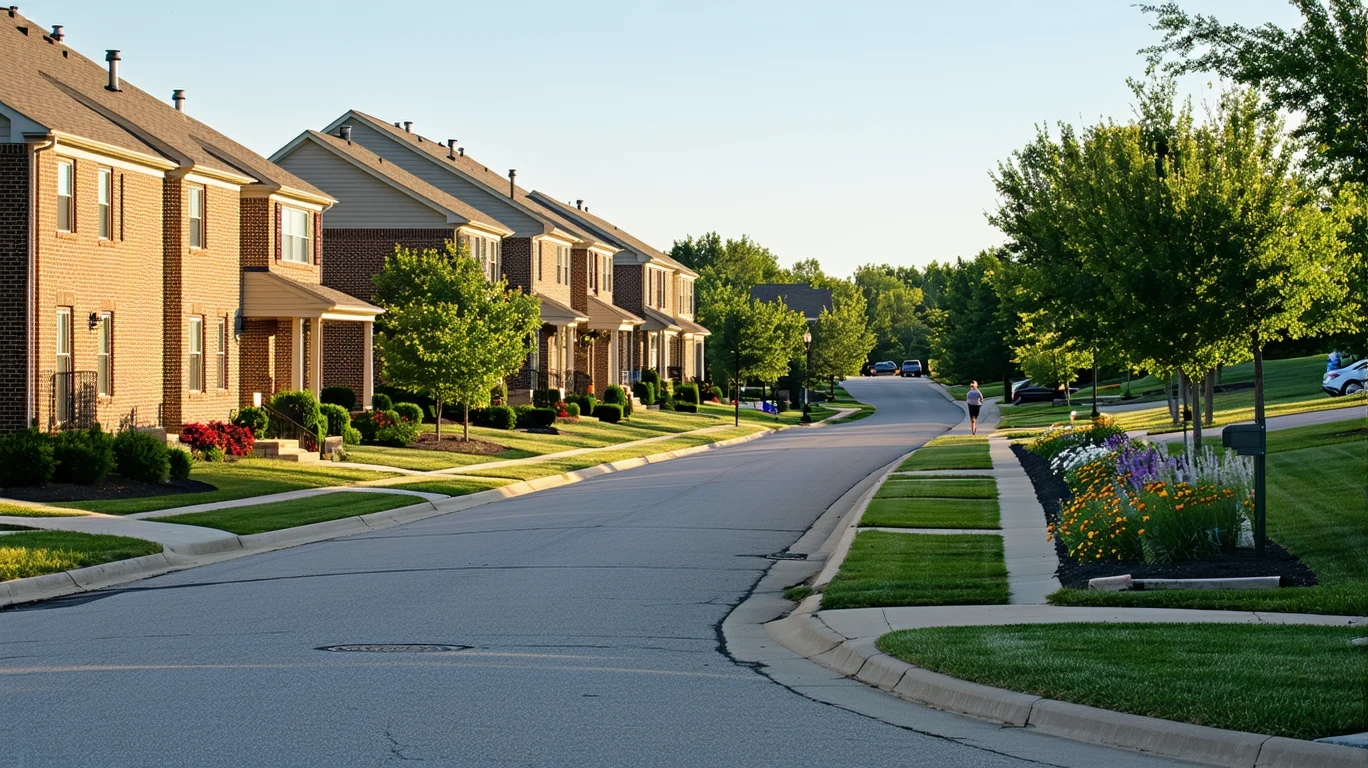
Lawrence, with higher median household income and higher home values, likely reflects a suburban lifestyle oriented around larger homes, private yards, and car-based mobility. The trade-off is more space and separation from commercial corridors, but less spontaneity in daily routines. Families in Lawrence may prioritize yard space for kids, garage capacity for vehicles, and quieter streets over the walkability and transit access that Indianapolis provides. The higher income context suggests Lawrence households expect and can manage the costs of car ownership, larger utility bills, and the time commitment of driving for most activities.
Lifestyle factors indirectly affect costs in both cities. In Indianapolis, the ability to walk or bike reduces transportation expenses, and denser housing stock lowers utility bills. In Lawrence, larger homes increase heating and cooling costs, and car dependency raises fuel, insurance, and maintenance expenses. The choice between the two isn’t about which city offers a better lifestyle in absolute terms; it’s about which lifestyle structure aligns with the household’s priorities and which trade-offs feel manageable. Indianapolis median household income: $59,110 per year. Lawrence median household income: $70,762 per year.
Frequently Asked Questions
Is Indianapolis or Lawrence cheaper for renters in 2026?
Median rent in Indianapolis is $1,046 per month compared to $1,064 in Lawrence—a difference of just $18 monthly. The cost gap is narrow enough that other factors matter more: Indianapolis offers better transit access, walkable errands, and denser amenities, which reduce transportation and convenience spending. Lawrence requires car ownership for nearly all trips, which adds fuel, insurance, and maintenance costs that can exceed the modest rent savings. Renters prioritizing mobility flexibility and lower transportation dependency will find Indianapolis more cost-effective overall, while renters prioritizing larger units and suburban quiet may accept Lawrence’s slightly higher rent and car-related expenses.
How do utility costs compare between Indianapolis and Lawrence in 2026?
Electricity rates are nearly identical—17.41¢/kWh in Indianapolis and 17.34¢/kWh in Lawrence—but natural gas costs differ substantially. Indianapolis pays $11.31 per MCF for natural gas, while Lawrence pays $14.78 per MCF, a $3.47 difference that compounds over winter heating months. Lawrence’s suburban housing stock, with larger single-family homes, amplifies that exposure. Indianapolis’ denser, more vertical housing—apartments and attached units—reduces heating needs and moderates seasonal utility swings. Households in Lawrence face higher heating costs and more volatility, while Indianapolis households experience more predictable utility bills, especially renters in smaller units.
Which city is better for families: Indianapolis or Lawrence in 2026?
Lawrence offers higher median household income ($70,762 vs. $59,110) and higher median home values ($193,100 vs. $184,600), suggesting a family-oriented suburban structure with larger homes and more space. Indianapolis provides integrated green space, accessible parks, and hospital facilities, along with moderate school density. The trade-off is between space and access: Lawrence families gain square footage, yards, and suburban separation but accept higher heating costs, car dependency, and more rigid logistics. Indianapolis families gain walkability, transit options, and denser amenities but work within smaller homes and more urban surroundings. The better fit depends on whether the family prioritizes space and privacy or flexibility and access to services.
Do I need a car in Indianapolis or Lawrence in 2026?
Indianapolis offers rail transit, substantial pedestrian infrastructure, and notable cycling infrastructure, which means households can reduce or eliminate car dependency for some trips. Single adults and couples can manage without a second vehicle, and families can rely on transit and biking for errands and recreation. Lawrence lacks comparable mobility infrastructure, making car ownership non-negotiable for nearly all households. Every trip—work, groceries, errands, social activities—requires a vehicle, and households need to budget for fuel, insurance, maintenance, and the time cost of driving everywhere. Indianapolis provides optionality; Lawrence assumes car ownership from the start.
How does the cost of living in Indianapolis compare to Lawrence for single adults in 2026?
For single adults, the primary cost difference is transportation dependency. Indianapolis’ walkable pockets, rail transit, and high grocery density allow single adults to skip car ownership or reduce driving frequency, which lowers fuel, insurance, and maintenance costs. Rent is $18 lower per month in Indianapolis, and utility costs are more predictable due to smaller housing units and lower natural gas prices. Lawrence requires car ownership, which adds several hundred dollars monthly in vehicle-related expenses, and higher natural gas costs increase heating bills in winter. Single adults prioritizing flexibility, lower transportation costs, and walkable access to errands will find Indianapolis more cost-effective, while those prioritizing larger living spaces and suburban quiet may accept Lawrence’s higher transportation and utility expenses.
Conclusion
Indianapolis and Lawrence operate in the same regional economy, share the same price level environment, and compete for many of the same households. But the mechanics of daily spending—where costs concentrate, how predictably they arrive, and which households feel pressure first—diverge sharply. Indianapolis offers lower housing entry costs, better transit and walkability infrastructure, and more predictable utility exposure, making it a stronger fit for households prioritizing flexibility, mobility options, and control over transportation spending. Lawrence provides higher median income context, larger homes, and suburban separation, but requires car ownership, introduces higher heating costs, and reduces logistical flexibility.
The decision between Indianapolis and Lawrence isn’t about which city costs less in total; it’s about which cost structure aligns with the household’s priorities and constraints. Households sensitive to transportation dependency, utility volatility, and errands friction will find Indianapolis’ denser, more flexible infrastructure reduces both financial and time pressure. Households prioritizing space, privacy, and suburban form will accept Lawrence’s higher entry costs and car dependency in exchange for larger homes and more separation from urban density. In 2026, the better choice depends on which trade-offs the household can manage and which cost pressures it’s willing to absorb.
How this article was built: In addition to public economic data, this article incorporates location-based experiential signals derived from anonymized geographic patterns—such as access density, walkability, and land-use mix—to reflect how day-to-day living actually feels in Indianapolis, IN.