
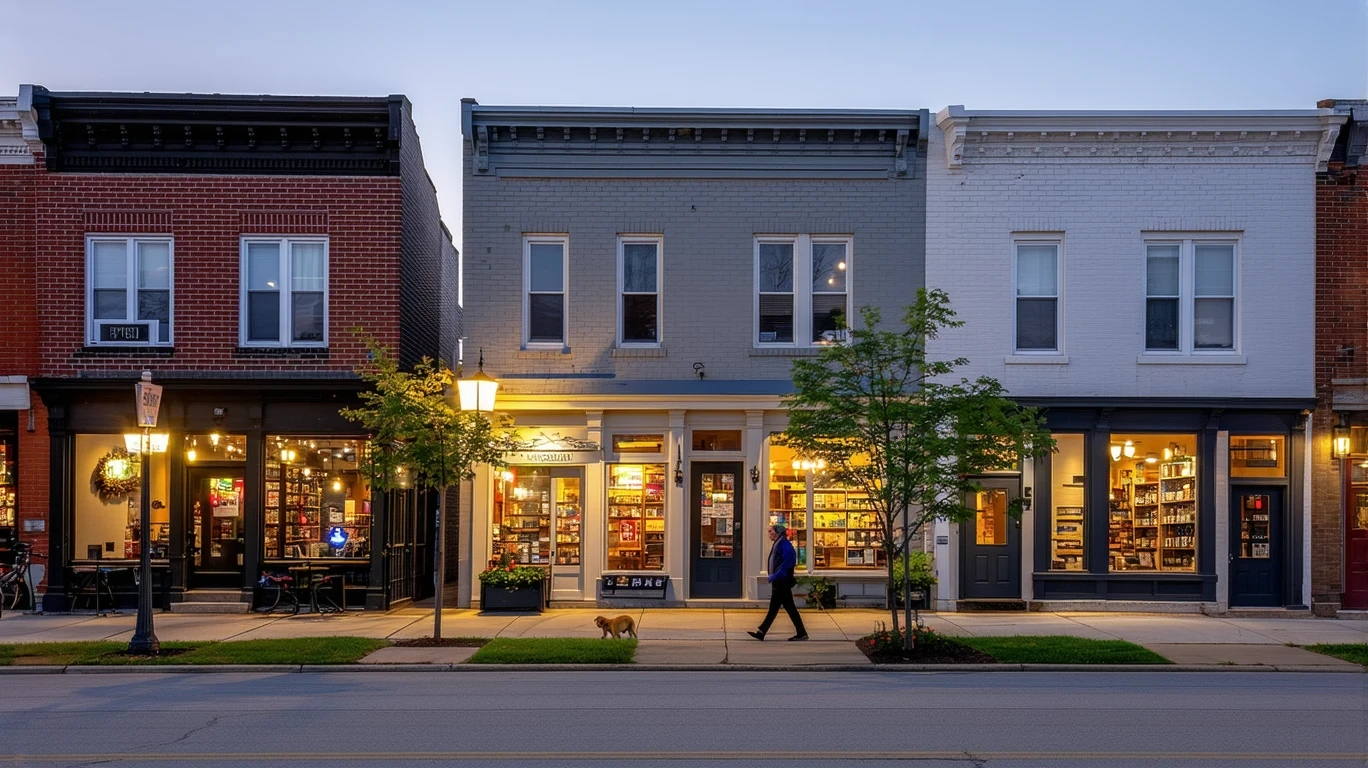
Which city gives you more for your money? Indianapolis and Greenwood sit just 15 miles apart in the same metro area, yet they offer fundamentally different cost structures for households in 2026. Indianapolis anchors the region as its urban core, with mixed-use neighborhoods, rail transit, and walkable errands access woven into parts of the city. Greenwood functions as a commuter suburb to the south, built around single-family housing, car-oriented infrastructure, and longer travel distances to work and services. The decision between them isn’t about which city is cheaper overall—it’s about which cost pressures dominate your household and which tradeoffs you’re willing to accept.
For renters and first-time buyers, the difference shows up immediately in housing entry costs. For commuters, it emerges in time spent behind the wheel and fuel burned each week. For families managing errands, school runs, and weekend logistics, it plays out in how much planning and driving daily life requires. Both cities share the same regional price environment, but the way costs concentrate—front-loaded in housing versus distributed across transportation and time—creates distinct financial experiences for different household types.
This comparison explains where cost pressure shows up in each city, how it behaves over time, and which households feel the differences most acutely. It does not calculate total monthly budgets or declare a universal winner. Instead, it clarifies the mechanisms behind the numbers so you can decide which structure fits your income, schedule, and priorities in 2026.
Housing Costs
Housing costs in Indianapolis and Greenwood reflect their structural roles in the metro. Indianapolis offers a median home value of $184,600 and median gross rent of $1,046 per month, positioning it as the more accessible entry point for renters and first-time buyers. Greenwood’s median home value reaches $226,500, with median gross rent at $1,200 per month, reflecting its orientation toward single-family ownership and newer construction. The gap isn’t subtle—Greenwood’s housing entry barrier runs higher across both rental and ownership markets, driven by larger lot sizes, newer housing stock, and demand from dual-income households seeking space over proximity.
For renters, the difference translates directly into monthly obligations. Indianapolis provides more apartment inventory, including older mid-rise buildings and mixed-use developments near transit corridors and commercial districts. Greenwood’s rental market skews toward single-family homes and newer apartment complexes, often with amenities that push base rents higher. Renters prioritizing walkable access to errands, transit options, and shorter commutes find Indianapolis offers lower rent and reduced need for a second vehicle. Renters in Greenwood accept higher rent in exchange for more square footage, parking, and quieter residential settings—but must budget for car ownership and longer drives to work and services.
Homeownership costs follow the same pattern but amplify over time. Indianapolis buyers face lower purchase prices and property taxes tied to older housing stock, though maintenance and utility exposure in aging homes can offset some savings. Greenwood buyers pay more upfront but gain access to newer construction with better insulation, modern HVAC systems, and lower near-term maintenance risk. Property taxes in both cities reflect Indiana’s statewide structure, but Greenwood’s higher home values mean larger annual tax bills even at similar rates. Families planning to stay long-term must weigh whether Greenwood’s space and condition justify the higher entry cost and ongoing obligations, or whether Indianapolis’ lower barrier and proximity reduce total housing pressure despite older stock.
| Housing Type | Indianapolis | Greenwood |
|---|---|---|
| Median Home Value | $184,600 | $226,500 |
| Median Gross Rent | $1,046/month | $1,200/month |
| Typical Rental Stock | Apartments, older mid-rise, mixed-use | Single-family rentals, newer complexes |
| Typical Ownership Stock | Older single-family, rowhouses, condos | Newer single-family, larger lots |
Single adults and couples without children feel the housing difference most acutely. Indianapolis allows renters to keep housing costs lower while maintaining access to errands, transit, and social infrastructure without mandatory car ownership. Greenwood demands higher rent or mortgage payments and assumes car dependency from day one, which works for households prioritizing space and newer construction but creates friction for those seeking flexibility or lower fixed costs. Families with children face a different calculus: Greenwood offers more space per dollar and access to newer schools, but requires accepting higher housing entry costs and car-dependent logistics. Indianapolis provides lower entry barriers and shorter distances to services, but families must evaluate whether older housing stock and smaller lot sizes meet their space needs.
Housing takeaway: Renters and first-time buyers experience lower entry barriers in Indianapolis, where housing costs concentrate in monthly rent or mortgage but allow reduced transportation dependence. Greenwood front-loads cost into higher home values and rents, rewarding households that prioritize space, condition, and car-oriented suburban living over proximity and transit access. The decision hinges on whether your household is more exposed to housing entry costs or ongoing transportation and time costs.
Utilities and Energy Costs
Utility costs in Indianapolis and Greenwood share the same regional climate exposure—cold winters demanding natural gas heating and warm summers requiring air conditioning—but differ in how housing stock and infrastructure translate that exposure into household bills. Indianapolis electricity rates sit at 17.41¢/kWh, while Greenwood’s rate is marginally lower at 17.34¢/kWh—a difference too small to drive decision-making. Natural gas prices, however, diverge more noticeably: Indianapolis pays $11.31/MCF, while Greenwood faces $14.78/MCF, a gap that compounds over heating season for households in larger or older homes.
The real difference emerges in how housing type and age shape energy consumption. Indianapolis’ older housing stock—including pre-1980s single-family homes, rowhouses, and mid-rise apartments—often carries higher heating and cooling loads due to less insulation, older windows, and aging HVAC systems. Households in older Indianapolis homes experience more volatile utility bills, with winter heating costs spiking during extended cold snaps and summer cooling costs rising during heat waves. Greenwood’s newer construction, built to more recent energy codes, generally offers better insulation, efficient HVAC systems, and lower baseline consumption. Families in newer Greenwood homes face more predictable utility costs, though the higher natural gas price erodes some of that advantage during heating season.
Household size and housing type amplify these differences. Single adults and couples in Indianapolis apartments benefit from shared-wall insulation and smaller square footage, keeping heating and cooling costs lower even in older buildings. Families in single-family homes—whether in Indianapolis or Greenwood—face higher absolute utility costs due to larger conditioned space, but Greenwood’s newer stock reduces volatility and waste. Renters in both cities typically pay electricity separately but may have water, trash, or gas bundled into rent, depending on building type. Homeowners in both cities manage all utilities directly, with Greenwood owners gaining predictability from newer systems and Indianapolis owners accepting higher exposure in exchange for lower purchase prices.
Seasonal behavior matters more than annual averages. Indianapolis households in older homes should expect heating costs to dominate winter budgets, with natural gas bills rising sharply during December through February. Greenwood households face the same seasonal pattern but at a higher per-unit gas price, meaning newer construction’s efficiency gains partially offset the rate disadvantage. Summer cooling costs affect both cities similarly, though Indianapolis’ more vertical building stock (apartments, mid-rises) offers some relief through shared-wall cooling, while Greenwood’s detached single-family homes expose all four walls to summer heat.
Utility takeaway: Households in newer Greenwood construction experience more predictable utility costs despite higher natural gas prices, benefiting from better insulation and modern HVAC systems. Indianapolis households—especially those in older single-family homes—face more volatile seasonal bills, with heating costs driving winter exposure and older systems increasing waste. Renters in Indianapolis apartments gain some protection from smaller square footage and shared walls, while Greenwood renters in single-family homes accept higher baseline consumption in exchange for space and privacy. The primary driver isn’t the rate—it’s housing age, size, and construction quality.
Groceries and Daily Expenses
Grocery and daily spending pressure in Indianapolis and Greenwood stems less from price differences—both cities share the same regional price environment—and more from how access, convenience, and household logistics shape spending behavior. Indianapolis’ broadly accessible food and grocery infrastructure, confirmed by high-density food establishments and grocery options throughout the city, allows households to shop frequently, compare prices easily, and avoid convenience markups by walking or making short trips to multiple stores. Greenwood’s car-oriented layout concentrates grocery options along commercial corridors, requiring longer drives and favoring bulk shopping trips over frequent errands.
For single adults and couples, Indianapolis’ walkable errands access reduces reliance on convenience spending. Proximity to neighborhood grocers, corner markets, and prepared food options means households can pick up fresh items on foot or via short drives without planning multi-stop trips. This structure supports price-sensitive shopping—comparing sales, buying smaller quantities, avoiding waste—and reduces the temptation to overspend on takeout or delivery when fresh ingredients are steps away. Greenwood households, by contrast, must plan grocery runs around commutes and weekend schedules, often defaulting to larger chain stores that require driving. The time cost of frequent trips pushes households toward bulk buying and meal prep, which works well for disciplined planners but increases waste risk for smaller households or those with unpredictable schedules.
Families managing larger grocery volumes experience the difference through logistics friction. Indianapolis families can split errands across multiple stores—hitting a discount grocer for staples, a farmers market for produce, and a specialty shop for specific items—without burning significant time or fuel. Greenwood families face longer distances between stores, making multi-stop trips less practical and pushing them toward one-stop shopping at big-box retailers. This consolidation can lower per-unit costs on bulk items but reduces flexibility to chase sales or adjust spending week-to-week. Dining out and convenience spending follow similar patterns: Indianapolis’ mixed-use neighborhoods offer more walkable restaurant and coffee shop density, while Greenwood’s commercial strips require intentional drives, subtly discouraging spontaneous spending but also reducing access to quick, affordable prepared food.
Grocery takeaway: Households sensitive to grocery price flexibility and convenience spending creep benefit from Indianapolis’ dense, accessible food infrastructure, which supports frequent shopping, price comparison, and reduced reliance on delivery or takeout. Greenwood households accept longer drives and consolidated shopping trips, favoring bulk buying and meal planning over spontaneous errands. Families and couples who plan well thrive in Greenwood’s structure; single adults and smaller households seeking flexibility feel more friction. The cost difference isn’t in prices—it’s in how much time, fuel, and planning daily food logistics demand.
Taxes and Fees
Property taxes, sales taxes, and recurring local fees in Indianapolis and Greenwood follow Indiana’s statewide structure, but the way these costs land on households differs based on housing type, ownership status, and length of residence. Indiana’s property tax system caps rates and ties assessments to home values, meaning Greenwood homeowners face higher absolute property tax bills due to the city’s higher median home value of $226,500 compared to Indianapolis’ $184,600. The difference isn’t driven by rate variation—it’s driven by the assessed value of the asset itself. Homeowners planning to stay long-term in Greenwood must budget for larger annual tax obligations, even though the percentage burden remains consistent with state caps.
Renters in both cities don’t pay property taxes directly, but landlords pass some portion of that cost through in monthly rent. Indianapolis renters benefit indirectly from lower property values, which reduce the tax base landlords must recover. Greenwood renters, by contrast, absorb higher property tax exposure embedded in rent, though newer construction and larger units may justify the premium for households prioritizing space and condition. Sales taxes apply uniformly across both cities, so differences in consumption-based tax burden come down to spending volume and habits, not location.
Recurring fees introduce more variability. Homeowners in both cities typically pay separately for trash collection, water, and sewer services, though fee structures and service quality vary by neighborhood and provider. Greenwood’s newer subdivisions often include homeowners association (HOA) fees that bundle landscaping, snow removal, and shared amenities, adding predictable monthly costs but reducing individual maintenance burdens. Indianapolis neighborhoods less commonly impose HOA fees, leaving homeowners with more control over maintenance spending but also more responsibility for upkeep and seasonal services. Renters in both cities usually see water, trash, and sometimes gas bundled into rent, though lease terms vary widely.
The structural difference matters most for homeowners weighing predictability against flexibility. Greenwood’s higher home values and common HOA fees create larger, more predictable fixed costs—property taxes and monthly HOA dues don’t fluctuate much year-to-year, but they also don’t disappear. Indianapolis homeowners face lower property tax bills and fewer mandatory fees, gaining flexibility to defer or DIY maintenance but accepting more variability in annual costs. Renters experience this difference indirectly: Greenwood rents reflect landlords’ higher tax and fee obligations, while Indianapolis rents benefit from lower baseline costs but may shift more utility and service responsibility to tenants.
Taxes and fees takeaway: Homeowners in Greenwood face higher property tax bills driven by higher home values, plus common HOA fees that bundle services but add fixed monthly costs. Indianapolis homeowners pay lower property taxes and encounter fewer mandatory fees, gaining flexibility but accepting more responsibility for maintenance and seasonal services. Renters in both cities absorb some property tax burden through rent, with Greenwood’s higher rents reflecting landlords’ higher obligations. The primary difference is predictability versus flexibility: Greenwood front-loads fixed costs, while Indianapolis leaves more room for household control and variability.
Transportation & Commute Reality
Transportation costs and commute patterns separate Indianapolis and Greenwood more sharply than any other category. Indianapolis’ mobility infrastructure—confirmed by rail transit presence, notable cycling infrastructure, and substantial pedestrian-to-road ratios in parts of the city—allows some households to reduce or eliminate car dependence for daily errands, commuting, and weekend activities. Greenwood, by contrast, assumes car ownership from day one, with commute data showing an average of 26 minutes each way, 39.1% of workers facing long commutes, and just 6.1% working from home. Gas prices in Greenwood sit slightly higher at $2.77/gal compared to Indianapolis’ $2.71/gal, a small difference that compounds over thousands of miles driven annually.
For single adults and couples, the transportation difference translates into both cash and time costs. Indianapolis residents in walkable pockets near transit corridors can manage daily life with one vehicle or none, using rail service for commuting, biking for errands, and walking for neighborhood needs. This structure reduces fuel costs, insurance premiums, maintenance obligations, and parking fees—none of which show up as a single line item but collectively lower monthly fixed costs. Greenwood residents must own at least one car, and dual-income couples almost always require two vehicles to manage work commutes, errands, and household logistics. The time cost of commuting—averaging 26 minutes each way—adds nearly an hour daily for many workers, a friction that doesn’t appear in budgets but affects schedule flexibility and quality of life.
Families managing school runs, extracurriculars, and weekend activities feel the logistics burden most acutely. Indianapolis families in neighborhoods with integrated schools, parks, and errands access can walk or bike for some trips, reducing the number of car-dependent errands each week. Greenwood families face longer distances between home, school, grocery stores, and recreational facilities, requiring more planned driving and less spontaneous flexibility. The commute burden extends beyond work: Greenwood’s 39.1% long-commute share means many households spend significant time behind the wheel even before factoring in non-work trips. Indianapolis’ transit and bike infrastructure won’t eliminate car ownership for most families, but it reduces the frequency and distance of mandatory driving, lowering fuel consumption and wear over time.
Transportation takeaway: Indianapolis offers viable alternatives to full car dependence for some households, particularly single adults and couples in walkable neighborhoods near transit. Greenwood requires car ownership and accepts longer commutes as baseline, with nearly 40% of workers facing extended travel times and minimal work-from-home flexibility. The cost difference isn’t just fuel—it’s insurance, maintenance, time, and the logistics friction of managing multiple vehicles for dual-income families. Households sensitive to commute time and transportation flexibility experience Indianapolis as less car-dependent; households prioritizing space and suburban living accept Greenwood’s car-oriented structure as non-negotiable.
Cost Structure Comparison
Housing pressure dominates the cost experience differently in Indianapolis and Greenwood. Indianapolis concentrates cost into lower monthly rent or mortgage obligations, allowing households to keep fixed housing costs manageable while accepting some trade-offs in housing age and condition. Greenwood front-loads cost into higher home values and rents, rewarding households that prioritize space, newer construction, and suburban living but demanding larger upfront and ongoing housing commitments. Renters and first-time buyers feel this difference immediately: Indianapolis offers easier entry, while Greenwood assumes higher income and dual-earner stability.
Utilities introduce more volatility in Indianapolis, where older housing stock increases heating and cooling exposure despite slightly lower natural gas prices. Greenwood’s newer construction delivers more predictable energy costs, though higher natural gas rates partially offset efficiency gains during winter. Households in older Indianapolis homes must budget for seasonal spikes, while Greenwood households gain stability from better insulation and modern HVAC systems. The difference matters most for families in single-family homes, where square footage and building age amplify consumption.
Transportation patterns matter more in Greenwood, where car dependence is universal and commute times stretch longer for a significant share of workers. Indianapolis reduces transportation pressure for households in walkable neighborhoods with transit access, allowing some to defer second-car ownership or reduce annual mileage. The time cost of commuting—nearly an hour daily for many Greenwood workers—doesn’t show up in budgets but affects household logistics, schedule flexibility, and quality of life. Families managing multiple work schedules and school runs feel this friction most acutely.
Daily living costs—groceries, errands, convenience spending—reflect access patterns more than price differences. Indianapolis’ dense, walkable food infrastructure supports frequent shopping, price comparison, and reduced reliance on delivery or takeout. Greenwood’s car-oriented layout pushes households toward bulk shopping and consolidated trips, favoring planners but increasing friction for smaller households or those with unpredictable schedules. The cost difference emerges in time, fuel, and the subtle creep of convenience spending when errands require intentional drives.
The better choice depends on which costs dominate your household. For households sensitive to housing entry barriers and transportation flexibility, Indianapolis offers lower fixed costs and reduced car dependence in exchange for older housing stock and more utility volatility. For households prioritizing space, newer construction, and suburban living, Greenwood delivers predictability and condition in exchange for higher housing costs, mandatory car ownership, and longer commutes. The decision isn’t about which city is cheaper—it’s about which cost structure aligns with your income, schedule, and tolerance for front-loaded versus ongoing obligations.
How the Same Income Feels in Indianapolis vs Greenwood
Single Adult
Housing becomes the first non-negotiable cost, and Indianapolis’ lower rent allows more breathing room for other priorities. Flexibility exists in transportation—walkable neighborhoods and transit access mean a single adult can defer car ownership or reduce driving, lowering insurance and fuel obligations. In Greenwood, higher rent and mandatory car ownership lock in larger fixed costs before groceries or discretionary spending enter the picture. The commute friction—time behind the wheel, fuel burned, vehicle wear—adds ongoing pressure that doesn’t show up as a single bill but compounds weekly. Indianapolis allows a single income to stretch further by reducing transportation dependence; Greenwood assumes car ownership and longer drives as baseline, leaving less room for flexibility or savings.
Dual-Income Couple
Housing costs rise in both cities, but Greenwood’s higher entry barrier demands more combined income to maintain stability. Flexibility disappears in transportation—Greenwood couples almost always need two cars to manage separate work commutes, while Indianapolis couples in walkable areas may manage with one vehicle or reduce total mileage. The time cost of commuting becomes non-negotiable in Greenwood, where long commutes affect both partners and reduce schedule flexibility for errands, exercise, or social plans. Indianapolis offers more predictable daily logistics through transit and walkable errands access, while Greenwood front-loads cost into housing and transportation but rewards couples who prioritize space and newer construction. The same combined income feels tighter in Greenwood if both partners commute long distances; it feels more flexible in Indianapolis if proximity and transit reduce car dependence.
Family with Kids
Housing space becomes non-negotiable, and Greenwood delivers more square footage per dollar despite higher home values. Flexibility exists in Greenwood through newer construction and lower near-term maintenance risk, but disappears in transportation—families need multiple vehicles to manage work, school, and extracurriculars. The role of commute friction intensifies: parents in Greenwood spend more time driving for work and errands, reducing availability for family logistics and increasing fuel and vehicle costs. Indianapolis offers lower housing entry costs and shorter distances to schools, parks, and groceries, but families must evaluate whether older housing stock and smaller lots meet space needs. The time cost versus cash cost trade-off defines the experience: Greenwood demands more driving and planning but delivers space and condition; Indianapolis reduces transportation burden but requires accepting older homes and less square footage.
Decision Matrix: Which City Fits Which Household?
| Decision factor | If you’re sensitive to this… | Indianapolis tends to fit when… | Greenwood tends to fit when… |
|---|---|---|---|
| Housing entry + space needs | You need lower upfront costs or prioritize proximity over square footage | You’re a renter, first-time buyer, or single adult seeking lower fixed housing costs and walkable access | You’re a family or dual-income couple prioritizing space, newer construction, and suburban living over entry cost |
| Transportation dependence + commute friction | You want to reduce car dependence or avoid long daily commutes | You live in walkable neighborhoods with transit access and can manage with one vehicle or less driving | You accept car ownership as non-negotiable and tolerate longer commutes in exchange for suburban space |
| Utility variability + home size exposure | You prefer predictable energy costs or live in larger single-family homes | You’re in an apartment or smaller home where shared walls and lower square footage reduce seasonal volatility | You’re in newer construction where better insulation and modern HVAC systems stabilize heating and cooling costs |
| Grocery strategy + convenience spending creep | You value frequent shopping, price comparison, and walkable errands access | You benefit from dense food infrastructure that supports spontaneous trips and reduces delivery reliance | You plan bulk shopping trips and prefer consolidated errands over frequent stops, accepting longer drives |
| Fees + friction costs (HOA, services, upkeep) | You want predictable bundled services or prefer flexibility to manage maintenance yourself | You avoid HOA fees and accept more responsibility for seasonal services and upkeep in exchange for lower fixed costs | You accept HOA fees that bundle landscaping and snow removal, gaining predictability but losing control |
| Time budget (schedule flexibility, errands, logistics) | You prioritize shorter commutes and less driving for daily errands | You value proximity to work, schools, and services, reducing time behind the wheel and increasing schedule flexibility | You accept longer commutes and car-dependent logistics in exchange for space, privacy, and suburban living |
Lifestyle Fit
Indianapolis and Greenwood offer fundamentally different daily living experiences shaped by urban form, mobility infrastructure, and access patterns. Indianapolis anchors the metro with mixed-use neighborhoods, rail transit, and walkable pockets where errands, dining, and recreation cluster within short distances. The city’s more vertical building character and integrated parks create denser, more pedestrian-friendly environments in parts of the city, allowing residents to walk or bike for some trips and reducing the need for constant driving. Greenwood’s suburban layout prioritizes single-family homes, larger lots, and car-oriented commercial corridors, delivering privacy and space but requiring intentional drives for work, groceries, and social activities. Indianapolis offers rail transit and notable cycling infrastructure, while Greenwood assumes car ownership for all household logistics.
Recreation and outdoor access differ in structure but not availability. Indianapolis integrates parks and water features throughout the city, confirmed by high park density and water polygon presence, offering green space within walking distance of many neighborhoods. Families and active adults benefit from accessible trails, playgrounds, and public spaces without needing to drive. Greenwood provides outdoor amenities as well, though access typically requires short drives to community parks, trails, and recreational facilities. Both cities support active lifestyles, but Indianapolis reduces the friction of reaching green space, while Greenwood offers quieter, less crowded parks in exchange for car-dependent access.
Cultural and social infrastructure tilts toward Indianapolis, where mixed land use and higher-density neighborhoods support more restaurants, coffee shops, entertainment venues, and community gathering spaces within walkable reach. The presence of a hospital and pharmacy infrastructure in Indianapolis adds convenience for healthcare access, reducing travel time for routine medical needs. Greenwood’s commercial activity concentrates along major corridors and shopping centers, requiring drives but offering ample parking and less crowded environments. Families in Greenwood gain access to newer schools and quieter residential streets, while Indianapolis families trade some space and newness for proximity to services and shorter daily logistics chains. These lifestyle differences indirectly affect costs: walkability lowers transportation expenses, newer housing stock reduces utility bills, and proximity to services reduces time spent driving and planning.
Frequently Asked Questions
Is it cheaper to rent in Indianapolis or Greenwood in 2026?
Indianapolis offers lower median gross rent at $1,046 per month compared to Greenwood’s $1,200 per month, reflecting differences in housing stock and location. Indianapolis’ rental market includes more apartments and older buildings near transit and errands access, while Greenwood skews toward single-family rentals and newer complexes with higher rents. The cost difference extends beyond monthly rent: Indianapolis renters in walkable neighborhoods may avoid second-car ownership, while Greenwood renters must budget for mandatory vehicle costs. Households sensitive to entry barriers and transportation flexibility find Indianapolis’ lower rent more manageable; households prioritizing space and newer construction accept Greenwood’s higher rent as part of a suburban living package.
How do commute costs differ between Indianapolis and Greenwood?
Greenwood workers face an average commute of 26 minutes each way, with 39.1% experiencing long commutes and just 6.1% working from home. Indianapolis lacks specific commute data, but its rail transit presence, notable cycling infrastructure, and walkable neighborhoods allow some residents to reduce car dependence and shorten travel distances. Greenwood assumes car ownership and longer drives as baseline, increasing fuel costs, vehicle wear, and time behind the wheel. The cost difference isn’t just gas prices—which sit at $2.77/gal in Greenwood versus $2.71/gal in Indianapolis—but the total miles driven, insurance premiums, and time lost to commuting. Households sensitive to commute friction and transportation flexibility experience Indianapolis as less car-dependent; Greenwood households accept longer drives as part of