
Can you live in Indianapolis without a car? For some residents in specific neighborhoods, the answer is yes—but for most, daily life still revolves around driving. Indianapolis sits at an interesting crossroads: rail service exists, walkable pockets are real, and bike infrastructure shows up in parts of the city, yet the metro’s geographic spread and development pattern mean that car ownership remains the norm for the majority of households.
Understanding transportation options in Indianapolis means recognizing that mobility here isn’t one-size-fits-all. Where you live, where you work, and how you structure your day determine whether transit becomes a practical tool or a limiting factor. This article walks through how people actually get around Indianapolis, what public transit can and can’t do, and who benefits from alternatives to driving.
How People Get Around Indianapolis
Most residents in Indianapolis drive. The city’s layout—characterized by dispersed residential neighborhoods, commercial corridors stretched across multiple nodes, and job sites scattered throughout the metro—favors car travel for speed and flexibility. But that’s not the whole story.
In certain areas, particularly where building density is higher and land use mixes residential and commercial functions, walking, biking, and transit become viable for daily errands and commuting. Pedestrian infrastructure in these pockets exceeds what you’d find in typical suburban zones, and the presence of rail service adds a layer of predictability that bus-only systems often lack.
Newcomers sometimes assume Indianapolis operates like a classic car-dependent sprawl city with no alternatives. That’s not quite accurate. The infrastructure exists—it’s just geographically concentrated. If you live outside those zones, your transportation reality will look very different.
Public Transit Availability in Indianapolis
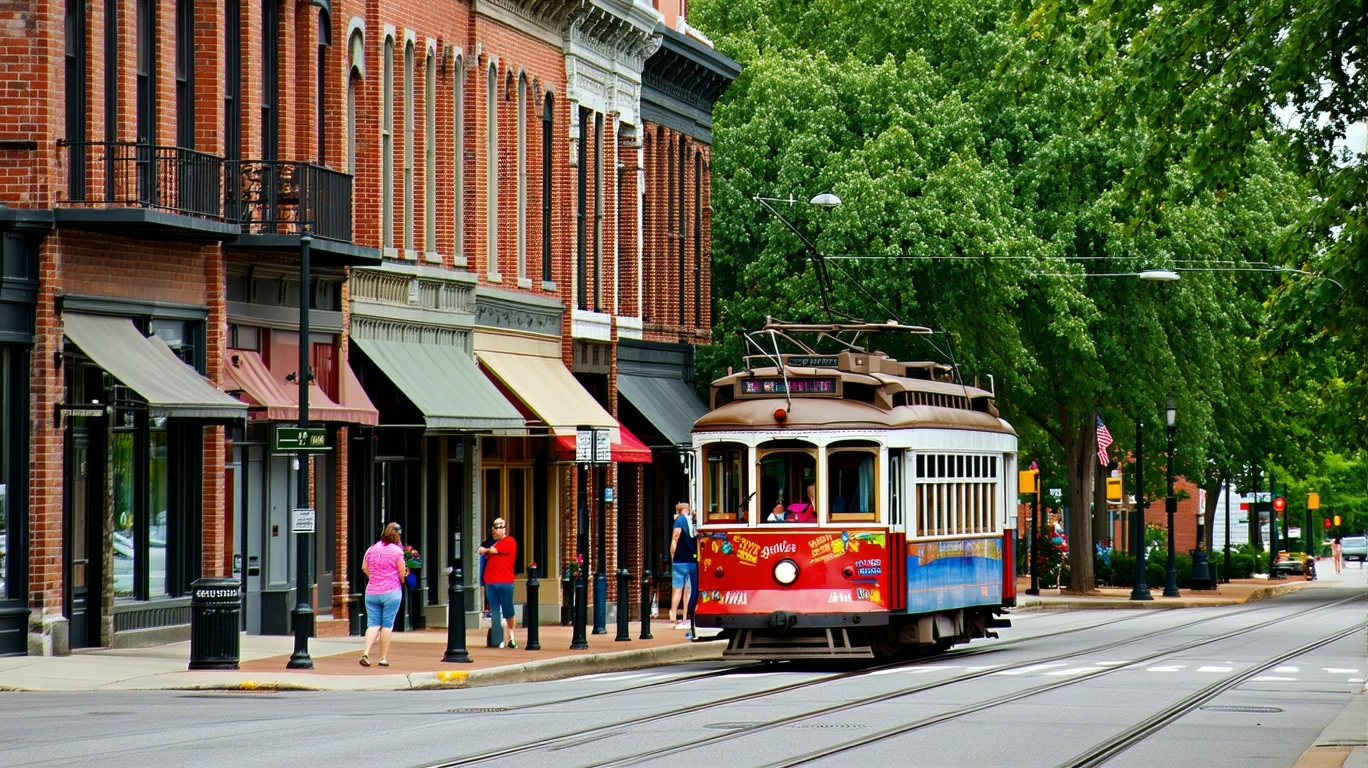
Public transit in Indianapolis often centers around systems such as IndyGo, which provides both bus and rail service. The rail component is particularly significant: rail service offers fixed routes, predictable schedules, and a level of reliability that makes it practical for regular commuting, especially for residents living near stations.
Transit works best in core areas where density supports frequent service and where destinations cluster within walking distance of stops. In these neighborhoods, residents can structure errands, work trips, and social plans around transit without significant friction. Grocery stores, clinics, parks, and schools show up at densities that support car-free or car-light living.
Outside these corridors, coverage thins. Suburban neighborhoods, areas with lower building density, and zones built primarily around single-family homes on large lots see less frequent service and longer gaps between stops. Late-night and weekend service can be limited even in better-served areas, which affects shift workers and anyone with non-standard schedules.
Transit in Indianapolis isn’t unusable—it’s selective. It rewards proximity and punishes distance.
Driving & Car Dependence Reality
For most households, driving remains the default. Indianapolis developed during an era when car ownership was assumed, and that legacy shows in street design, parking availability, and the distances between daily destinations. Parking is generally abundant and often free, which removes one of the typical friction points that pushes people toward transit in denser cities.
Sprawl isn’t just a visual characteristic here—it’s a functional one. Job sites, schools, medical offices, and shopping centers spread across the metro in ways that make multi-stop trips by transit time-prohibitive. A 15-minute drive might translate to an hour or more on transit, depending on transfers and wait times.
Car ownership provides flexibility: the ability to leave when you want, take direct routes, and handle errands that don’t align neatly with transit schedules. That flexibility comes with costs—fuel, insurance, maintenance, parking in some districts—but for many residents, those costs feel manageable compared to the time and logistical constraints of transit-dependent living.
Driving also insulates households from service disruptions, weather delays, and coverage gaps. In a city where not everywhere is equally accessible by transit, owning a car expands your housing options, job opportunities, and daily convenience.
Commuting Patterns & Daily Mobility
Commuting in Indianapolis typically follows one of two patterns: direct single-destination trips or multi-stop routes that chain errands with work travel. The latter is harder to manage without a car.
Residents who live near rail stations and work along the same corridor benefit from predictable, relatively fast commutes. They can structure their day around fixed departure times and avoid the variability that comes with driving in peak traffic. But this only works if both home and work sit within the transit-served zone.
For everyone else—especially those commuting from outer neighborhoods to suburban job sites, or those whose work requires travel throughout the day—driving is the only practical option. Flexibility matters more than speed when your day includes dropping kids at school, stopping at a clinic, picking up groceries, and making it to work on time.
Proximity to work, schools, and errands reduces commute friction regardless of mode. Households that prioritize short travel distances over larger homes or yard space often find that where money goes shifts away from transportation and toward housing—but the tradeoff can be worth it in time saved and stress reduced.
Who Transit Works For — and Who It Doesn’t
Transit works best for renters and younger professionals living in core neighborhoods where rail access and walkable errands overlap. If your daily routine fits within a compact geographic area—home, work, grocery store, gym—all accessible by foot, bike, or a single transit line, you can realistically minimize or eliminate car dependency.
Families with school-age children face a harder calculus. School locations, activity schedules, and the need to move multiple people on different timelines make car-free living significantly more complex. Even in transit-rich pockets, the logistics of managing a household often tip the balance toward car ownership.
Homeowners in outer neighborhoods, where lot sizes are larger and building density drops, will find transit impractical for daily use. Service frequency decreases, walk times to stops lengthen, and the time cost of transit compared to driving becomes prohibitive.
Shift workers, healthcare employees, and anyone with non-standard hours will struggle with limited late-night and early-morning service. Transit schedules are built around peak commuting times, and off-peak gaps can turn a 20-minute drive into a multi-hour ordeal or an impossible trip.
Transportation Tradeoffs in Indianapolis
Choosing between transit and driving in Indianapolis isn’t about cost alone—it’s about control, predictability, and geographic reach.
Transit offers lower direct costs and eliminates the need to manage a vehicle, but it constrains where you can live, work, and run errands efficiently. It rewards routine and punishes spontaneity. If your life fits within transit-served zones and your schedule aligns with service hours, it works. If not, friction compounds quickly.
Driving provides flexibility and access to the entire metro, but it introduces variability in fuel costs, maintenance needs, and parking availability in denser districts. It also requires upfront capital (purchase or lease) and ongoing insurance, which can strain budgets for lower-income households.
Biking works well in areas with notable cycling infrastructure, particularly for short trips and errands within walkable pockets. But bike commuting across longer distances or in areas without protected lanes introduces safety concerns and weather exposure that not everyone can or wants to manage.
The tradeoff isn’t binary. Many households use a hybrid approach: one car for the household, transit or biking for some trips, and driving for others. The key is understanding which parts of your routine can realistically shift away from driving and which can’t.
FAQs About Transportation in Indianapolis (2026)
Is public transit usable for daily commuting in Indianapolis?
Yes, if you live and work near rail corridors or in core neighborhoods with strong bus service. Rail provides predictable schedules and reliable service, making it practical for regular commuting. Outside these areas, transit becomes less viable due to longer travel times, infrequent service, and limited coverage.
Do most people in Indianapolis rely on a car?
Yes. The majority of residents drive for daily errands, commuting, and household logistics. Car ownership remains the norm across most of the metro, though some residents in core neighborhoods successfully use transit, biking, or walking as their primary modes.
Which areas of Indianapolis are easiest to live in without a car?
Neighborhoods with rail access, high building density, and mixed land use—where residential and commercial functions sit close together—are the most practical for car-free or car-light living. These areas support walkable errands, frequent transit service, and shorter distances between daily destinations.
How does commuting in Indianapolis compare to nearby cities?
Indianapolis offers more transit infrastructure than many peer cities in the region, particularly with rail service present. However, it still lags behind metros with extensive rail networks or denser urban cores. Compared to smaller cities nearby, Indianapolis provides better transit options; compared to larger metros, it remains more car-dependent.
Can you bike safely for commuting in Indianapolis?
In areas with notable bike infrastructure—protected lanes, dedicated paths, and lower-speed streets—biking is practical and relatively safe. Outside these zones, cycling infrastructure becomes sparse, and sharing roads with faster traffic increases risk. Weather also plays a role: winter cold and summer heat can make year-round bike commuting uncomfortable.
How Transportation Fits Into the Cost of Living in Indianapolis
Transportation isn’t just a line item in your monthly budget—it’s a structural factor that shapes where you can live, how much time you spend commuting, and what tradeoffs you make between housing cost and convenience.
Households that prioritize transit access often pay more for housing in core neighborhoods but reduce or eliminate car-related expenses. Those who choose outer neighborhoods with larger homes and lower rents typically absorb higher transportation costs and longer commute times.
The decision isn’t purely financial. Time, predictability, and flexibility all carry weight. A cheaper home farther out might cost less in rent but more in fuel, maintenance, and hours spent driving. A pricier apartment near a rail station might cost more monthly but return time and reduce logistical complexity.
Understanding how transportation options in Indianapolis align with your daily routine helps clarify which tradeoffs make sense for your household. If your work, schools, and errands cluster in transit-served areas, you can realistically reduce car dependency. If they don’t, plan for driving to remain central to your day-to-day life.
How this article was built: In addition to public economic data, this article incorporates location-based experiential signals derived from anonymized geographic patterns—such as access density, walkability, and land-use mix—to reflect how day-to-day living actually feels in Indianapolis, IN.