
Is Indianapolis the kind of place you grow roots—or just pass through? For some, it’s a city that quietly delivers: affordable housing, accessible parks, and pockets of walkable urban life that feel surprisingly complete. For others, it’s a place caught between identities—part Midwest hub, part sprawling suburb—where the vibe depends heavily on which neighborhood you land in and what you’re hoping to find.
Indianapolis doesn’t announce itself the way coastal cities do. It’s not trying to impress you. But for people who value practical amenities, manageable costs, and a growing cultural scene without the pressure of constant hustle, it tends to feel like home. For those seeking dense urban texture or a strong sense of place identity, the city can feel uneven—rewarding in some pockets, frustratingly car-dependent in others.
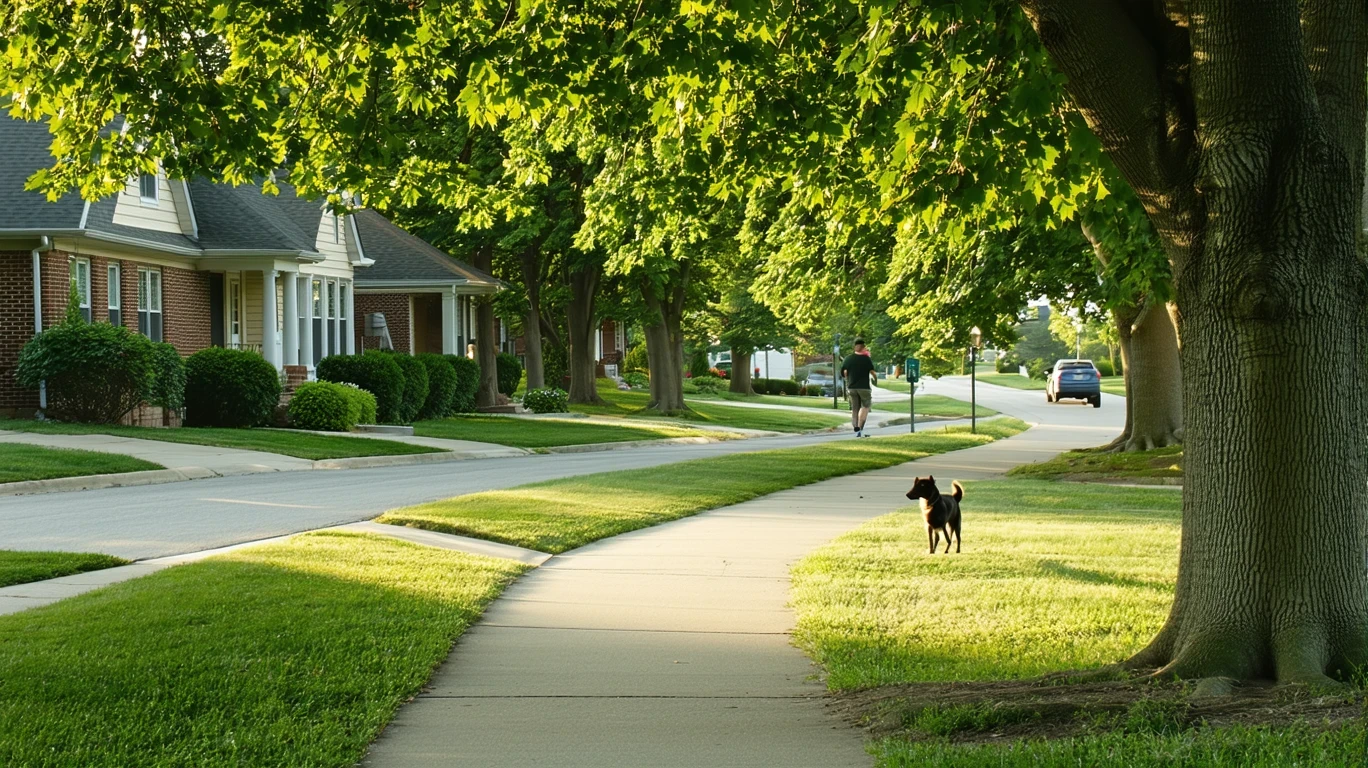
The Emotional Landscape of Indianapolis
Indianapolis operates on a tradeoff that shows up in nearly every conversation about living here: affordability and space in exchange for unevenness and car reliance. The city offers median home values around $184,600 and median rent near $1,046 per month—figures that feel refreshingly grounded compared to many metro areas. Median household income sits at $59,110 per year, and the unemployment rate hovers around 4.2%, suggesting a stable but not booming economy.
What tends to feel rewarding here is the combination of accessible green space, a growing downtown, and neighborhoods where you can actually afford to buy a home and still have money left over for life. Parks are integrated throughout the city, and water features add texture to the outdoor environment. For families, there’s moderate school infrastructure and playground access. For urban-oriented residents, there are walkable pockets with substantial pedestrian infrastructure, rail transit, and notable cycling presence—signals that some parts of Indianapolis function more like a mid-sized city than a sprawling suburb.
What tends to feel limiting is the inconsistency. Outside those walkable cores, car dependency returns quickly. Mixed land use is present, but it’s not everywhere. The city’s vertical building character and transit options create urban moments, but they don’t define the entire experience. People who want cohesive walkability or a singular neighborhood identity often feel like they’re navigating a patchwork.
Who feels at home here? People who want housing tradeoffs that favor ownership and space over density. Families who value park access and outdoor recreation. Remote workers who appreciate lower costs and don’t need to commute daily. Long-time Midwesterners who understand the rhythm of a place that’s practical first, flashy second.
Who feels restless? People who want consistent urban texture across the city. Renters hoping for a thriving, walkable neighborhood scene without needing a car. Newcomers from denser metros who expect transit and mixed-use development to be the default, not the exception.
Social Media Buzz in Indianapolis
Public discussion about Indianapolis tends to organize around a few recurring emotional threads: pride in downtown growth, frustration with sprawl and traffic, protectiveness over neighborhood character, and cautious optimism about cultural development.
On platforms like Reddit and Facebook groups, locals often describe the city in terms of pleasant surprises and unmet expectations. There’s frequent praise for the trail system, the accessibility of parks, and the affordability of homeownership. There’s also recurring annoyance about car dependency, uneven neighborhood investment, and the sense that the city is “still figuring out what it wants to be.”
“It’s not flashy, but it works. You can actually afford a house here, and the parks are legitimately good. Just don’t expect to walk everywhere unless you’re downtown.”
“Indianapolis has this weird split personality—parts of it feel like a real city, and then you drive ten minutes and it’s just strip malls and highways.”
“People sleep on Indy. The food scene is better than you’d think, and you’re not drowning in rent. But yeah, you need a car.”
The tone is rarely extreme. It’s more often pragmatic, with an undercurrent of defensiveness—people who live here tend to feel like the city gets overlooked or underestimated, and they’re quick to point out what works, even as they acknowledge what doesn’t.
Local News Tone
Local coverage in Indianapolis tends to frame the city through themes of growth, infrastructure debate, and identity negotiation. The tone is neither celebratory nor alarmist—it’s more observational, reflecting a city in transition.
Common topic buckets include:
- “Downtown Development Continues as Residents Weigh Change”
- “Neighborhoods Debate Density and Parking as City Grows”
- “Transit Expansion Proposals Meet Mixed Community Response”
- “Cultural Amenities Expand While Suburban Character Persists”
- “Residents Discuss What Affordable Growth Should Look Like”
The framing tends to emphasize process over outcome—stories about what’s being proposed, what’s being debated, what’s being built. There’s less focus on declaring success or failure and more on capturing the tension between different visions for the city’s future.
Review-Based Public Perception
On platforms like Google Reviews, Yelp, and Nextdoor-style forums, Indianapolis earns praise for practical strengths and criticism for gaps in consistency and convenience.
What delights people: Affordable housing, accessible parks and trails, friendly neighbors, manageable traffic compared to larger metros, and a growing food and brewery scene. People who wanted suburban comfort with occasional urban amenities tend to feel satisfied. Families appreciate the outdoor infrastructure and school access. Remote workers and retirees value the lower cost structure and the ability to own a home without financial strain.
What disappoints people: Car dependency outside core neighborhoods, limited late-night activity, uneven walkability, and the sense that some areas feel neglected while others receive heavy investment. People who wanted dense, walkable neighborhoods with consistent transit access often feel like they’re compromising. Renters looking for vibrant, pedestrian-friendly districts sometimes struggle to find options that don’t require a car for daily errands.
Neighborhood variation is real but often described in broad terms: newer planned areas versus older pockets, downtown versus the rest, “where the investment is” versus “where it isn’t.” The city’s mixed land use and vertical building character show up most strongly in specific districts, not citywide.
Comparison to Nearby Cities
| Aspect | Indianapolis, IN | Columbus, OH | Cincinnati, OH |
|---|---|---|---|
| Overall Vibe | Practical, affordable, uneven walkability | University-driven, younger energy, growing fast | Historic character, hilly terrain, stronger neighborhood identity |
| Walkability | Pockets of strong pedestrian infrastructure | Expanding urban core, bike-friendly initiatives | More consistent walkable districts, older street grid |
| Transit | Rail present, bus service available | Bus-focused, no rail | Streetcar and bus, hilly terrain complicates coverage |
| Affordability | Strong for ownership and rent | Slightly higher, still competitive | Comparable, with more historic housing stock |
| Cultural Scene | Growing, but still building momentum | Vibrant, driven by university presence | Established arts and music scene, older institutions |
If you prioritize affordability and don’t mind navigating a patchwork of urban and suburban character, Indianapolis offers strong value. If you want a younger, more energetic vibe with rapid cultural growth, Columbus might feel more dynamic. If you prefer historic neighborhoods with stronger walkable identity and are comfortable with hills, Cincinnati could be a better fit.
None of these cities will feel like a dense coastal metro, but each offers a different version of Midwest practicality. Indianapolis sits in the middle: less polished than Cincinnati’s historic districts, less university-driven than Columbus, but more affordable and spacious than both.
What Locals Are Saying
“I moved here from Chicago and was worried I’d feel stuck. But honestly, the parks are great, I can bike to work from my neighborhood, and I’m not spending half my paycheck on rent. It’s not Chicago, but it’s not trying to be.”
“Indianapolis is fine if you have a car and don’t need much nightlife. We bought a house here because we could actually afford one. But if you’re looking for walkable urban living, you’re limited to a few pockets, and even those aren’t perfect.”
“I love that my kids can ride their bikes to the park and we’re not constantly worried about money. The schools are decent, and the neighborhood feels safe. It’s not exciting, but it’s stable.”
“The city is trying to grow up, but it’s awkward. You get these nice downtown areas with good restaurants and then you drive five minutes and it’s just parking lots and chain stores. It feels like two cities stitched together.”
“People complain about Indy, but I think they’re comparing it to places it’s not trying to be. If you want affordable, practical, and access to green space, it delivers. If you want dense urban energy, look elsewhere.”
“I’ve been here my whole life, and it’s changed a lot. Some of it’s good—better food, more things to do downtown. Some of it’s frustrating—traffic is worse, and not every neighborhood is getting the same attention.”
“As a remote worker, Indianapolis is kind of perfect. Low cost of living, decent internet, and I’m not stuck in a commute. I don’t need the city to entertain me every night. I just need it to be functional and affordable, and it is.”
Does Indianapolis Feel Like a Good Fit?
Indianapolis tends to work for people who value day-to-day costs that stay manageable, outdoor access that’s genuinely integrated, and the ability to own a home without financial strain. It works for families who want space and parks. It works for remote workers who don’t need urban density to feel fulfilled. It works for people who understand that Midwest practicality means tradeoffs—less flash, less consistency, but more breathing room.
It tends to frustrate people who want cohesive walkability, people who expect transit to be a default option, and people who want a singular neighborhood identity that defines the entire city. If you’re coming from a dense metro and expect that texture everywhere, Indianapolis will feel uneven. If you’re hoping for a thriving urban scene without needing a car, you’ll find it in pockets, but not citywide.
The city’s emotional profile is one of quiet competence with visible gaps. It’s not trying to be Portland or Austin. It’s trying to be affordable, functional, and livable—and for many people, it succeeds. For others, those same qualities feel like settling.
If you’re considering Indianapolis, the question isn’t whether it’s happy or unhappy. The question is whether its tradeoffs align with what you need. If you want lifestyle needs met without financial pressure, and you’re comfortable navigating a city that’s part urban, part suburban, Indianapolis might feel like home. If you need density, walkability, and cultural texture to be consistent and pervasive, you’ll likely feel the friction.
How this article was built: In addition to public economic data, this article incorporates location-based experiential signals derived from anonymized geographic patterns—such as access density, walkability, and land-use mix—to reflect how day-to-day living actually feels in Indianapolis, IN.
The perspectives shown reflect commonly expressed local sentiment and recurring themes in public discussion, rather than individual accounts.