
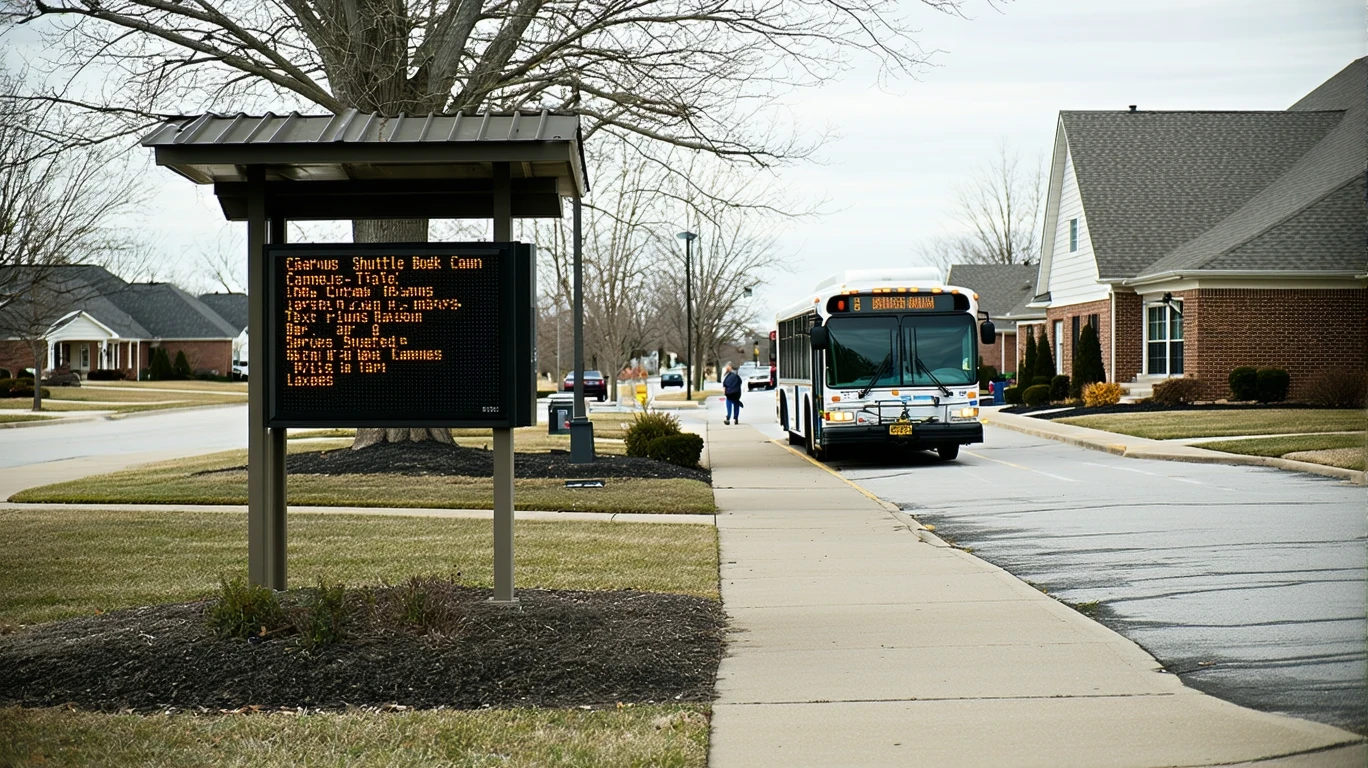
How People Get Around Bethany
Transportation options in Bethany center almost entirely on personal vehicles. The city’s layout, development pattern, and infrastructure all point toward a car-first environment where driving is not just convenient—it’s structurally necessary for most daily activities. While moderate pedestrian infrastructure exists relative to the road network, the distribution of grocery stores, restaurants, and services along specific corridors rather than throughout neighborhoods means that even short errands often require a car.
Newcomers sometimes assume that Bethany’s proximity to Oklahoma City means robust public transit access or that its suburban scale might support walkable errands. In practice, neither assumption holds. The city functions as a car-dependent suburb where households plan around vehicle ownership, parking availability, and driving time rather than bus schedules or walking distance. This isn’t a reflection of preference—it’s a reflection of how the place is built.
Understanding how transportation works here means recognizing that mobility isn’t about choosing between options; it’s about managing the realities of a system designed around cars. That shapes everything from where people choose to live to how they structure their workdays and household logistics.
Public Transit Availability in Bethany
Public transit plays a minimal role in daily life in Bethany. No strong signal of bus or rail service emerged from infrastructure analysis, suggesting that fixed-route transit either does not serve the city or operates with very limited coverage. For residents accustomed to cities where buses or trains provide a viable alternative to driving, this absence is immediate and consequential.
In practice, this means that households cannot rely on scheduled transit for commuting, errands, or evening activities. There are no bus stops to walk to, no rail stations to plan around, and no transit maps to consult. The infrastructure simply isn’t present in a way that supports daily mobility for most residents.
For those who do not drive—whether due to age, disability, cost, or choice—this creates significant friction. Ride-hailing, carpooling, or relying on friends and family become the primary alternatives, each of which introduces cost, coordination, or dependency that transit would otherwise absorb.
Driving & Car Dependence Reality
Driving is not optional in Bethany—it’s the baseline assumption. The city’s development pattern, with food and grocery options clustered along corridors rather than distributed throughout neighborhoods, means that even residents who live near some amenities will need a car to access others. Moderate pedestrian infrastructure exists, but it doesn’t translate into walkable errands for most households.
Parking is generally abundant and free, which removes one of the friction points that makes car ownership costly or inconvenient in denser cities. Driveways, street parking, and lot-based retail all assume that residents arrive by car. This makes driving easier, but it also reinforces the necessity: without a car, the city becomes difficult to navigate.
For households with multiple workers or complex schedules, car dependence can mean needing multiple vehicles. A single car may not be enough if one adult works across town and another needs to run errands or pick up children during the day. This isn’t about convenience—it’s about logistics. The structure of the city makes multi-car households common, and that carries cost, insurance, and maintenance implications that extend well beyond fuel.
Commuting Patterns & Daily Mobility
Commuting in Bethany typically means driving, whether to jobs within the city, in nearby Oklahoma City, or in surrounding suburbs. The lack of public transit means that commute time is entirely a function of distance, traffic, and road layout. There is no option to trade driving time for train time, and no ability to use a commute for reading, working, or resting.
For households with flexible or remote work arrangements, this can reduce daily driving. For those with fixed schedules or jobs that require physical presence, it means absorbing the time, fuel, and vehicle wear that comes with regular commuting. The city’s layout does not concentrate employment in a single core, so commute patterns vary widely depending on where someone works.
Daily mobility extends beyond commuting. Running errands, taking children to school or activities, and accessing healthcare or services all require driving. The corridor-clustered pattern of food and grocery options means that even nearby destinations may not be reachable on foot, especially when carrying purchases or managing time constraints.
Who Transit Works For — and Who It Doesn’t
Transit does not work for anyone in Bethany in a practical, day-to-day sense. The absence of fixed-route service means that even households who would prefer to use buses or trains cannot do so. This affects different groups unevenly.
For young professionals or renters who might otherwise rely on transit in a larger city, Bethany requires a shift in expectations. Car ownership becomes non-negotiable, and the costs associated with it—insurance, maintenance, fuel, registration—become unavoidable. For families, the need for reliable transportation to schools, activities, and errands makes a dependable vehicle essential, and often means needing more than one.
For older adults or individuals who cannot drive, the lack of transit creates isolation risk. Without scheduled bus service or nearby rail, accessing medical appointments, grocery stores, or social activities requires coordination with others or paying for rides. This is not a minor inconvenience—it’s a structural barrier that limits independence.
Renters in more central or corridor-adjacent areas may find that some errands are within walking distance, but this is the exception rather than the rule. Homeowners in residential neighborhoods farther from main roads will find that nearly every trip requires a car.
Transportation Tradeoffs in Bethany
The tradeoff in Bethany is not between transit and driving—it’s between accepting car dependence or facing significant mobility limitations. Driving offers control, flexibility, and access to the full range of services and employment in and around the city. It also requires upfront cost, ongoing expense, and the time burden of being behind the wheel for nearly every trip.
There is no transit alternative to weigh against this. Households cannot choose to save money by using a bus pass, cannot avoid traffic by taking a train, and cannot reduce vehicle wear by mixing modes. The transportation system is singular: you drive, or you find another way to get someone else to drive you.
This clarity can be helpful for decision-making. There is no ambiguity about whether transit might work, no need to research routes or schedules, and no risk of moving somewhere only to discover that the bus doesn’t run when you need it. The expectation is clear, and households can plan accordingly.
But it also means that transportation costs are less flexible. Reducing driving means reducing activity, not switching modes. Households cannot easily lower their transportation burden without changing where they live, where they work, or how they structure their daily routines.
FAQs About Transportation in Bethany (2026)
Is public transit usable for daily commuting in Bethany?
No. Public transit does not appear to serve Bethany in a way that supports daily commuting. Residents should plan on driving or arranging alternative transportation for work, errands, and most activities.
Do most people in Bethany rely on a car?
Yes. The city’s infrastructure, errands distribution, and lack of transit all point toward near-universal car dependence. Households without a vehicle face significant mobility challenges.
Which areas of Bethany are easiest to live in without a car?
No area of Bethany offers truly car-free living. Some corridor-adjacent neighborhoods may allow occasional walking errands, but daily life without a vehicle remains difficult across the city.
How does commuting in Bethany compare to nearby cities?
Bethany shares the car-dependent character common to many Oklahoma suburbs. Commuting here is similar to other cities in the metro area without robust transit: driving is the default, and commute experience depends on distance and traffic rather than mode choice.
Can I get by with one car in a two-adult household in Bethany?
It depends on work schedules, job locations, and household logistics. Some households manage with one vehicle if schedules align or one adult works from home. Others find that overlapping errands, childcare, or commute needs make a second car necessary.
How Transportation Fits Into the Cost of Living in Bethany
Transportation in Bethany is not just a line item—it’s a structural factor that shapes housing choice, time allocation, and household flexibility. Because driving is essential, the costs associated with vehicle ownership, fuel, insurance, and maintenance become non-negotiable for most households. These expenses interact with housing decisions: living farther from work may lower rent or mortgage costs, but it increases driving time and fuel consumption. Living closer may reduce commuting but doesn’t eliminate the need for a car.
The lack of transit also means that where money goes in a household budget is less flexible than it might be in a city with multiple transportation options. You cannot easily trade car costs for transit fares, and you cannot reduce transportation expenses without reducing activity or mobility.
For a fuller picture of how transportation costs fit alongside housing, utilities, and other expenses, the Monthly Budget article provides numeric context and household-level breakdowns. Understanding transportation here means recognizing that it’s not optional, not flexible, and not easily reduced—but it is predictable, and that predictability allows for planning.
Bethany’s transportation reality is clear: you will drive, and you will need to budget for it. That clarity, while limiting, also removes ambiguity and allows households to make informed decisions about what living here actually requires.
How this article was built: In addition to public economic data, this article incorporates location-based experiential signals derived from anonymized geographic patterns—such as access density, walkability, and land-use mix—to reflect how day-to-day living actually feels in Bethany, OK.