
Is the true cost of living higher than you think? Bethany is considered relatively affordable in 2026, with a median home value of $149,800 and median rent of $1,024 per month. The value proposition depends on housing entry cost versus car dependence—while housing prices remain accessible, transportation and seasonal utility exposure shape the real financial picture.
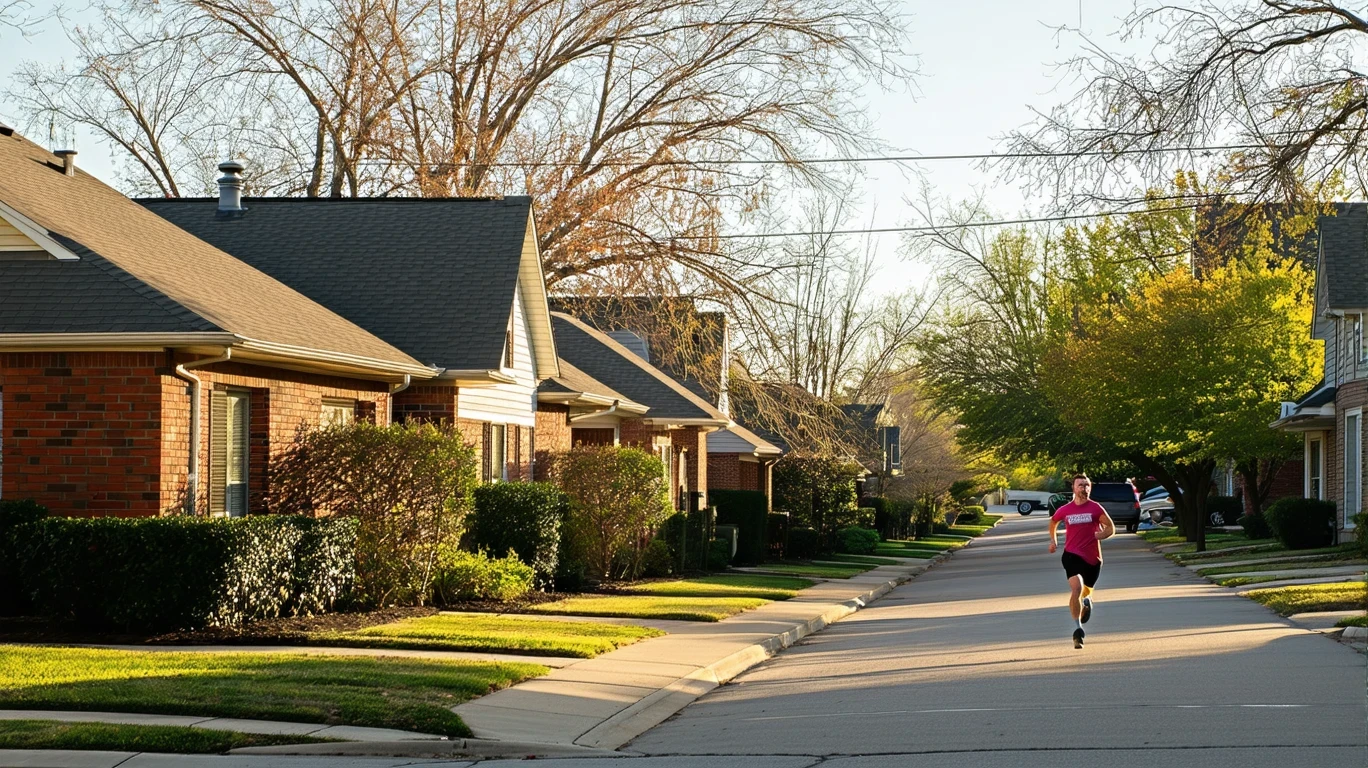
Overall Cost of Living Snapshot
Bethany operates below the national price baseline, with a regional price parity index of 91, meaning the general cost structure runs about 9% below the U.S. average. This advantage shows up most clearly in housing, where both ownership and rental entry points sit well within reach for middle-income households. The median household income of $54,606 per year provides reasonable alignment with local housing costs, though the relationship between income and total expenses tightens once transportation and seasonal utility swings enter the picture.
The cost shape here is suburban-standard: housing dominates the budget in absolute terms, but transportation and utilities create the volatility. Grocery costs track slightly below national norms, electricity rates sit near the middle of the national range at 14.42¢/kWh, and natural gas pricing at $36.97 per MCF reflects typical regional energy markets. Gas prices of $2.25 per gallon offer some relief compared to coastal metros, but the structure of daily life here—moderate pedestrian infrastructure paired with corridor-clustered food and grocery access—means most households still depend heavily on personal vehicles.
The unemployment rate of 3.2% signals a stable local economy, reducing income volatility as a cost multiplier. Weather plays a meaningful role in expense timing: current conditions show 47°F with a feels-like temperature of 39°F, a reminder that Bethany experiences both extended cooling seasons during hot summers and periodic heating demands during colder months. These seasonal swings don’t just affect comfort—they directly shape utility bills and household planning.
Driver verdict: Housing affordability is the headline advantage, but the real cost story is written by car dependence and seasonal energy exposure. Surprises come from transportation frequency (errands and commutes add up quickly when walkability is limited) and summer cooling bills during extended heat.
Housing Costs (Primary Driver)
Housing in Bethany offers a clear entry advantage. The median home value of $149,800 positions ownership within reach for households with stable income and modest down payment capacity. For renters, the median gross rent of $1,024 per month provides a lower-cost alternative to ownership in the near term, though it lacks the equity-building and cost-stability benefits that come with a fixed-rate mortgage.
The rent-versus-own decision here hinges on time horizon and financial flexibility. Renting offers lower upfront costs and freedom from maintenance unpredictability, making it a logical fit for households in transition, testing the metro, or prioritizing liquidity. Owning, by contrast, locks in the largest component of housing cost (the mortgage principal and interest) and converts monthly payments into equity accumulation. Property taxes, insurance, and maintenance introduce variability, but these costs are predictable in direction if not always in exact timing.
Bethany functions as a buy-friendly city for households planning to stay. The housing stock reflects a mixed building height character with both residential and commercial land use present, creating a suburban environment where single-family homes dominate but some density and mixed-use pockets exist. This isn’t a rental-first market, nor is it a place where ownership feels out of reach—it’s a middle ground that rewards commitment and punishes short-term speculation.
| Housing Type | Cost Anchor | What That Buys You |
|---|---|---|
| Median Home Purchase | $149,800 | Equity-building, cost stability, exposure to maintenance and tax variability |
| Median Rental | $1,024/month | Lower entry cost, flexibility, no maintenance risk, no equity accumulation |
Conclusion: Bethany is a buying city for households with income stability and a multi-year outlook. Renting works as a bridge, not a destination.
Utilities & Energy Risk
Utility costs in Bethany are shaped by seasonal intensity rather than rate extremes. Electricity at 14.42¢ per kWh sits in the middle of the national distribution—not cheap, not punitive. The real exposure comes from usage volume during extended cooling seasons, when triple-digit summer heat drives air conditioning demand for weeks or months at a time. A household running central AC heavily during peak summer can see electricity bills climb significantly, even at moderate per-unit rates.
Natural gas, priced at $36.97 per MCF (roughly equivalent to 100 therms), serves primarily heating functions during colder months. While Bethany doesn’t face the prolonged, severe winter cold of northern climates, periodic cold snaps and shoulder-season heating needs mean gas bills fluctuate with weather patterns. The variability is moderate—not negligible, but not the dominant budget disruptor that electricity can become in summer.
Households have some control over utility exposure through efficiency measures (programmable thermostats, insulation, strategic cooling and heating schedules), but the baseline reality is that living in Bethany means accepting seasonal swings in energy costs. These swings are predictable in timing but variable in magnitude depending on weather severity each year.
Risk classification: Moderate. Utilities won’t dominate the cost structure, but they introduce meaningful seasonal volatility that affects cash flow planning, especially for households in older or less-efficient housing stock.
Groceries & Daily Costs
Grocery costs in Bethany run slightly below the national baseline, consistent with the broader regional price advantage reflected in the 91 RPP index. While specific item prices show moderate variation—bread at $1.63 per pound, chicken at $1.86 per pound, ground beef at $5.95 per pound, and milk at $3.64 per half-gallon—the overall pressure on household food budgets remains manageable compared to higher-cost metros.
The structure of daily errands, however, adds friction that doesn’t show up in per-item pricing. Food and grocery establishments in Bethany are corridor-clustered, with moderate density along key commercial routes rather than broadly distributed throughout residential areas. This means most households need to plan trips deliberately and rely on personal vehicles to access everyday staples. The time and fuel cost of these trips doesn’t appear on a grocery receipt, but it’s part of the real cost of feeding a household here.
For families or larger households, the combination of moderate grocery prices and car-dependent access creates a routine expense pattern that’s affordable in per-unit terms but requires consistent transportation capacity. For smaller households or individuals, the planning burden is lighter, but the car dependency remains.
Transportation Reality
Transportation in Bethany is a recurring structural cost, not an occasional expense. The city’s mobility texture is mixed—there’s moderate pedestrian infrastructure relative to the road network, meaning some neighborhoods support walking for very local trips—but the overall pattern is car-oriented. Cycling infrastructure exists in limited pockets, and public transit options are minimal. For most households, getting to work, running errands, and accessing services means driving.
Even though gas prices of $2.25 per gallon offer relief compared to higher-cost regions, the frequency and distance of necessary trips add up quickly. Commuting, grocery runs, healthcare visits (especially given the limited local healthcare access, with no hospital detected in the city), and errands all require vehicle access. Households with two working adults often need two vehicles, doubling the exposure to fuel, insurance, maintenance, and depreciation costs.
The transportation burden here isn’t about dramatic per-gallon costs—it’s about the cumulative weight of car dependency across all household activities. Bethany’s structure rewards households that already own reliable vehicles and punishes those trying to minimize transportation expenses. There’s no realistic way to live here without a car, and for many households, one car isn’t enough.
Cost Exposure Profiles
Cost exposure in Bethany varies more by household structure and logistics than by income alone. The dominant exposures are housing entry cost, transportation dependence, and utility seasonality—but how much each one matters depends on specific circumstances.
Low-exposure situations: Homeowners with paid-off or low-balance mortgages, single-vehicle households with short commutes, and residents in energy-efficient housing face the lightest cost pressure. Their largest expenses are stable or controllable, and they benefit fully from Bethany’s below-average price baseline. Seasonal utility swings are noticeable but manageable, and transportation costs stay within predictable bounds.
High-exposure situations: Renters facing potential lease renewals, multi-vehicle households with long or frequent commutes, and residents in older or poorly insulated housing face compounding cost pressures. Rent increases introduce housing instability, multiple vehicles multiply transportation expenses, and inefficient housing amplifies seasonal utility swings. These households experience Bethany as more expensive than the headline numbers suggest, because the structural costs—car dependence, energy volatility, and housing flexibility costs—stack rather than offset.
The difference isn’t about who can or cannot afford Bethany—it’s about which cost levers each household can control. Ownership reduces housing volatility but introduces maintenance unpredictability. Proximity to work or consolidated errands reduces transportation frequency. Efficient housing smooths utility bills. Households that can optimize across these dimensions experience Bethany as genuinely affordable. Those who can’t face a tighter margin.
How Place Structure Shapes Daily Costs
The way Bethany is built—its street layout, land use patterns, and infrastructure—directly shapes how households spend money and time. The city’s moderate pedestrian-to-road ratio means some neighborhoods support short walks to nearby destinations, but the overall structure still funnels most trips onto roads. Food and grocery access is concentrated along commercial corridors rather than distributed evenly, so even a quick grocery run typically requires a car and a deliberate route.
This pattern affects more than just transportation costs—it shapes household logistics. Parents running kids to activities, workers commuting to jobs in nearby cities, and residents accessing healthcare (since no hospital is present locally) all face the same underlying constraint: most necessary activities require a vehicle and planning. The high density of parks and green spaces offers recreational relief and quality-of-life value, but it doesn’t reduce the baseline need to drive for daily errands.
For households with flexible schedules or the ability to batch errands efficiently, this structure is manageable. For those juggling multiple jobs, school schedules, or limited vehicle access, the friction compounds. The cost isn’t always visible in a single transaction—it’s the cumulative effect of needing a car for nearly everything, and needing that car to be reliable, insured, and fueled consistently.
How this article was built: In addition to public economic data, this article incorporates location-based experiential signals derived from anonymized geographic patterns—such as access density, walkability, and land-use mix—to reflect how day-to-day living actually feels in Bethany, OK.
Frequently Asked Questions
Is Bethany more affordable than Oklahoma City in 2026? Bethany generally offers lower housing entry costs than many parts of Oklahoma City, particularly in ownership, though specific neighborhood comparisons vary. Both cities share similar transportation and utility cost structures, so the affordability edge comes primarily from housing.
What does a typical cost profile look like in Bethany? A typical household faces moderate housing costs (either affordable ownership or mid-range rent), significant transportation expenses due to car dependency, and seasonal utility swings driven by cooling and heating demands. Grocery and daily costs run slightly below national averages, but access requires vehicle trips.
Do utilities cost more in Bethany than in nearby areas? Utility rates in Bethany are comparable to surrounding communities in the Oklahoma City metro. The bigger cost driver is usage intensity during extreme weather—extended summer heat creates higher electricity bills regardless of where you live in the region.
What costs tend to surprise newcomers in Bethany? Transportation frequency surprises many newcomers—errands that might be walkable in denser cities require driving here, and the cumulative fuel, maintenance, and time costs add up quickly. Seasonal utility swings during summer heat also catch households off guard if they’re coming from milder climates.
Are property taxes higher in Bethany than in Edmond or Yukon? Property tax rates vary by jurisdiction and are subject to local levies, school district funding, and county assessments. Bethany’s tax structure is generally competitive within the metro, but specific comparisons require checking current mill rates and assessment practices in each city.
Can you live in Bethany without a car? Practically speaking, no. While some neighborhoods have sidewalks and local walkability for very short trips, accessing groceries, healthcare, employment, and most services requires a personal vehicle. Public transit options are minimal, and cycling infrastructure is limited to pockets rather than a connected network.
How much do seasonal utility bills fluctuate in Bethany? Seasonal swings are moderate but noticeable—summer cooling bills can climb significantly during extended heat, while winter heating costs rise during cold snaps. The exact fluctuation depends on housing efficiency, household size, and temperature preferences, but planning for variability is essential.
Is Bethany a good value for families? Bethany offers strong value for families prioritizing affordable homeownership, access to parks (the city has high park density), and a stable suburban environment. The tradeoff is car dependency for school, activities, and errands, plus limited local healthcare access, which may require trips to nearby cities for specialized care.
—