
What does it actually feel like to live in Hillview, Kentucky? According to a recent sentiment snapshot, 74 out of 100 residents say they’re happy here—but that number tells only part of the story. Happiness in Hillview isn’t about urban energy or walkable neighborhoods; it’s about finding comfort in a car-dependent suburban rhythm, affordable space near Louisville, and a family-oriented community that trades spontaneity for predictability. Whether that trade feels rewarding or limiting depends entirely on what you need from daily life.
The Emotional Landscape of Hillview
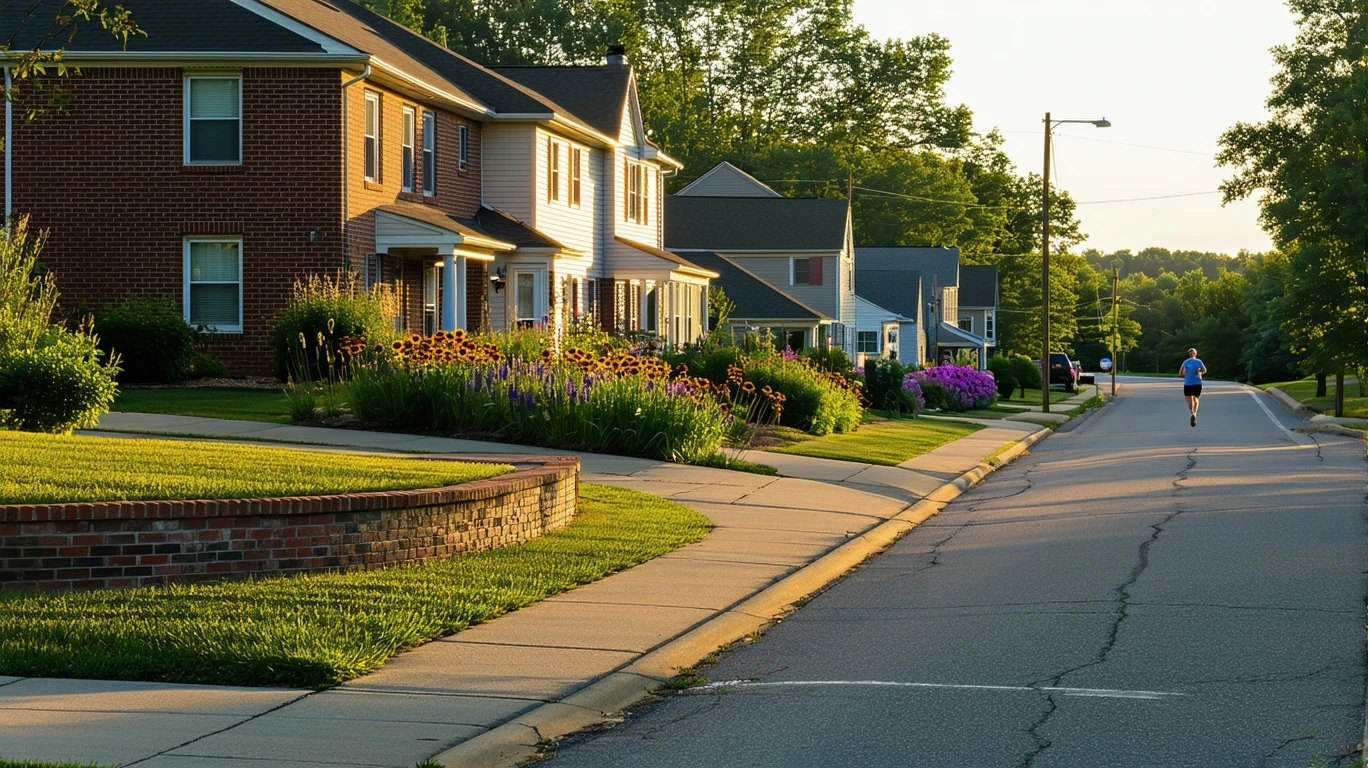
Hillview occupies a specific emotional niche in the Louisville metro area: it’s the place people choose when they want suburban affordability and quiet residential streets without sacrificing access to the city’s job market and amenities. The vibe here is grounded in routine and car dependency—errands cluster along commercial corridors, green space is limited, and nearly every aspect of daily life assumes you’re driving. For families seeking space, lower housing costs, and a predictable environment, that structure feels like relief. For those craving walkability, spontaneous outings, or a neighborhood where you can stroll to dinner, it feels like friction.
The city’s infrastructure reflects this tradeoff clearly. Pedestrian paths are sparse, and the ratio of sidewalks to roads falls well below thresholds that support walking as a primary mode. Food and grocery options exist but concentrate along specific corridors rather than spreading evenly across neighborhoods, meaning day-to-day costs include not just the price of goods but the time and fuel required to reach them. Parks are present but limited in density, and healthcare access skews toward driving to clinics or facilities outside city limits. The result is a place where convenience depends heavily on car ownership and the willingness to plan around driving distances.
Who tends to feel at home here? Families with school-age children, commuters who work in Louisville but prefer lower housing pressure, and people who value space and quiet over walkability. Who tends to feel restless? Young professionals seeking nightlife variety, retirees hoping to reduce driving, and anyone whose lifestyle depends on spontaneous errands or transit access. Hillview rewards those who align with its suburban logic and frustrates those who don’t.
What People Are Talking About Online
In online spaces where Hillview residents gather—local Facebook groups, neighborhood forums, and regional subreddits—the conversation tends to circle around a few recurring themes: affordability relative to Louisville, the convenience of being “close but not too close,” and the tension between growth and maintaining a small-town feel. The tone is generally protective and pragmatic, with residents defending their choice to live here while acknowledging its limitations.
“It’s not fancy, but it works for us. We get space, good schools, and we’re fifteen minutes from anything we actually need in Louisville.”
“I miss being able to walk places. Everything here requires getting in the car, even just to grab milk.”
“People complain about there being ‘nothing to do,’ but that’s kind of the point. It’s quiet. If you want excitement, Louisville is right there.”
The emotional center of these discussions is tradeoff acceptance: people here tend to frame Hillview not as a destination but as a strategic compromise. The frustration, when it surfaces, usually comes from newcomers who underestimated how car-dependent daily life would be or from long-time residents watching the city grow without gaining the walkability or amenities they hoped for.
How Local Coverage Frames the City
Local news and community outlets tend to frame Hillview through the lens of steady suburban growth, infrastructure catch-up, and identity negotiation. Coverage rarely focuses on dramatic incidents; instead, it reflects ongoing conversations about what kind of place Hillview is becoming and whether its infrastructure can keep pace with its population. Typical topic buckets include:
- “Community Debates What Growth Should Look Like”
- “New Retail Arrives Along Corridor, Residents Weigh Convenience”
- “Families Drawn to Affordability, But Infrastructure Questions Linger”
- “Hillview’s Identity: Suburb, Small Town, or Something In Between?”
- “Residents Seek More Parks and Walkability as Population Grows”
The tone is rarely celebratory or critical in extremes; instead, it’s observational and process-oriented. The implicit message is that Hillview is a work in progress—a place where people are generally satisfied but aware of gaps, particularly around healthcare access, park availability, and walkable infrastructure.
Review-Based Public Perception
On platforms like Google Reviews, Yelp, and Nextdoor-style forums, Hillview’s public perception reflects a pattern: people praise what they expected (affordability, space, proximity to Louisville) and express disappointment when they encounter what they didn’t anticipate (car dependency, limited dining variety, sparse parks). The reviews that skew positive tend to come from families who wanted exactly what Hillview offers—a quiet, affordable suburban base near a larger city. The reviews that skew critical tend to come from people who hoped for more walkability, local character, or spontaneous convenience.
Newer planned areas tend to receive praise for modern housing and family-friendly layouts, while older pockets are described as more affordable but sometimes lacking in upkeep or cohesion. Across both, the recurring theme is expectation matching: if you came here wanting suburban simplicity and car-based logistics, you’re likely satisfied. If you came hoping for a walkable neighborhood with local cafes and evening strolls, you’re likely frustrated.
Dining and entertainment options receive mixed feedback. Residents appreciate the presence of familiar chains and corridor-based shopping, but those seeking variety, local flavor, or spontaneous outings often note that quality of life factors depend heavily on willingness to drive into Louisville. The city’s limited green space also surfaces in reviews, particularly from families with young children or dog owners who expected more park access within walking or short driving distance.
Comparing Hillview to Nearby Cities
| Aspect | Hillview, KY | Shepherdsville, KY | Mount Washington, KY |
|---|---|---|---|
| Overall Vibe | Quiet suburban base near Louisville, car-dependent | Small-town feel with more local identity, still car-oriented | Slightly more established suburban feel, similar car dependency |
| Walkability | Very limited; most errands require driving | Limited but slightly more compact downtown core | Similar to Hillview; sparse pedestrian infrastructure |
| Dining & Entertainment | Corridor-based chains, limited local variety | More local dining options, modest downtown activity | Similar chain presence, slightly more variety |
| Family Appeal | Strong; schools and quiet streets | Strong; more small-town community feel | Strong; similar family-oriented infrastructure |
| Proximity to Louisville | Very close; easy commute access | Slightly farther south; longer commute | Similar proximity; comparable commute |
The comparison reveals that Hillview sits in a cluster of similar suburban communities south of Louisville, each offering variations on the same theme: affordable housing, car dependency, and family-friendly infrastructure. Shepherdsville leans slightly more toward small-town identity with a modest downtown, which appeals to those seeking a bit more local character. Mount Washington offers a similar profile to Hillview but with a slightly more established suburban feel. None of these cities offer walkability or transit access, so the choice among them often comes down to commute distance, specific school preferences, or subtle differences in housing stock and community tone.
If you prioritize the shortest possible commute to Louisville and don’t mind a purely car-based lifestyle, Hillview fits well. If you want a bit more local downtown character and don’t mind adding a few minutes to your commute, Shepherdsville might feel more aligned. If you’re weighing similar suburban options and want to compare housing tradeoffs, all three cities occupy roughly the same affordability and lifestyle band.
What Locals Are Saying
“We moved here from Louisville for the space and the schools. It’s been great for our kids, but I do miss being able to walk to a coffee shop or park. Everything here is a drive.”
“Hillview is exactly what we needed—affordable, quiet, and close enough to the city that we don’t feel isolated. It’s not exciting, but that’s not what we were looking for.”
“I work remotely and honestly, the lack of walkability gets to me. I spend way too much time in the car just running errands. If I didn’t have to commute, I’d probably choose somewhere with more local texture.”
“The schools are solid, the neighbors are friendly, and we got way more house for our money than we could have in Louisville. No regrets.”
“It’s fine if you have a family and a car. If you’re single, young, or don’t drive much, you’ll probably feel pretty isolated here.”
“I’ve lived here for ten years and watched it grow. It’s gotten more convenient in some ways—more stores, more options—but it hasn’t gotten any more walkable. That’s the one thing I wish would change.”
“Honestly, it’s a great launching pad. We’re saving money, the kids are in good schools, and when we want to do something fun, Louisville is fifteen minutes away. It works.”
Does Hillview Feel Like a Good Fit?
Hillview’s emotional profile is clear: it’s a place built around car-dependent suburban logic, affordable housing, and proximity to Louisville’s job market and amenities. It tends to work well for families with school-age children, commuters who prioritize space and cost over walkability, and people who are comfortable planning their days around driving. It tends to frustrate those seeking walkable neighborhoods, spontaneous local outings, extensive parks, or easy healthcare access without a car.
The city’s infrastructure—limited pedestrian paths, corridor-clustered errands, sparse green space, and minimal transit—reinforces this alignment. If you’re evaluating Hillview, the central question isn’t whether people here are happy in the abstract; it’s whether the specific tradeoffs this place demands match what you’re willing to accept. For many families, the answer is yes. For those whose lifestyle depends on walkability, variety, or reducing car dependency, the answer is often no.
If you’re still weighing whether Hillview aligns with your needs, consider exploring how where money goes in daily life here, or what lifestyle factors matter most when evaluating fit.
How this article was built: In addition to public economic data, this article incorporates location-based experiential signals derived from anonymized geographic patterns—such as access density, walkability, and land-use mix—to reflect how day-to-day living actually feels in Hillview, KY.
The perspectives shown reflect commonly expressed local sentiment and recurring themes in public discussion, rather than individual accounts.