
Hillview’s housing market sits in a zone where suburban accessibility meets real cost discipline. The median home value of $164,000 positions the city as attainable compared to Louisville’s core, but that entry point is only part of the equation. What shapes housing costs here isn’t just the purchase price or lease rate—it’s the structural relationship between where homes are, how people move between them, and what it takes to maintain them through Kentucky’s seasonal extremes.
This article breaks down Hillview’s cost structure for renters and owners, explains how housing expenses behave over time, and identifies which household types fit the city’s cost profile and which face friction.
The Housing Market in Hillview Today
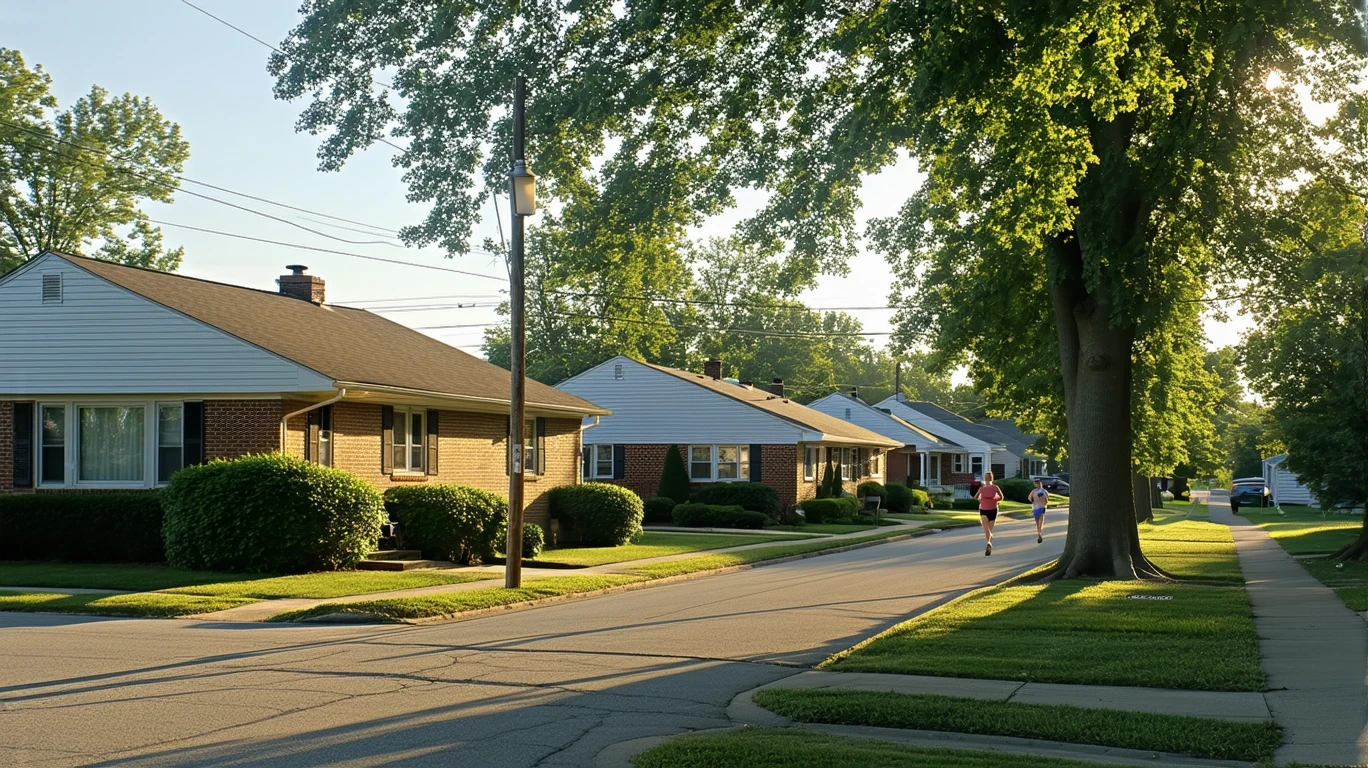
Hillview functions as a commuter-oriented suburb within the Louisville metro, and that role defines its housing character. The city’s development pattern reflects car-dependent infrastructure: pedestrian infrastructure sits below low thresholds, and food and grocery access clusters along commercial corridors rather than distributing evenly across neighborhoods. This isn’t a walkable-errands environment—it’s a place where housing costs include not just the structure, but the transportation and time required to reach daily needs.
The $164,000 median home value reflects Hillview’s position as a more accessible alternative to closer-in Louisville submarkets, but it also reflects tradeoffs. Buyers gain square footage and yard space; they accept longer errand loops and car dependency as the cost of that space. For renters, the $1,321 monthly median gross rent represents a different calculation: paying for flexibility without building equity, but also without exposure to maintenance volatility or property-level governance.
What newcomers often misread is assuming that lower home values automatically mean lower overall housing pressure. In Hillview, the housing cost experience is shaped as much by infrastructure gaps—limited park density, corridor-clustered grocery access, minimal transit options—as by the lease or mortgage payment itself.
Renting in Hillview
At $1,321 per month, Hillview’s median gross rent sits in a range that demands careful income alignment. For a household earning the city’s median income of $63,578 annually, rent alone approaches 25% of gross income before utilities, transportation, or other essentials enter the equation. That’s within conventional affordability guidelines, but it leaves limited margin for households below median income or those with variable earnings.
Rental housing in Hillview tends to cluster near the same commercial corridors that anchor grocery and errand access. This creates convenience for some renters—proximity to shopping and services—but it also means that quieter, more residential rental options may require accepting greater distance from daily errands. Because the city’s infrastructure is car-oriented, renters without reliable transportation face compounding friction: rent may be manageable, but accessing work, groceries, and services becomes a separate logistical cost.
Rental markets in commuter suburbs like Hillview also respond to metro-wide pressure. When Louisville’s core neighborhoods tighten, demand pushes outward, and Hillview absorbs some of that overflow. Renters should expect that lease renewals reflect not just local conditions, but broader regional dynamics—particularly during periods of employment growth or housing supply constraints in the metro.
Owning a Home in Hillview
Ownership in Hillview means taking on predictable and unpredictable costs simultaneously. The $164,000 median home value represents the entry point, but the ongoing cost profile includes property taxes, insurance, maintenance, and utilities—all of which behave differently than rent.
Property taxes in Kentucky are structured at the county and local level, and while specific rates aren’t provided in the data, owners should anticipate that tax bills reflect both the assessed value of the home and the services the city provides. In a car-dependent suburb with limited public transit and moderate infrastructure density, tax-funded services tend to focus on roads, schools, and emergency services rather than walkability or transit.
Maintenance exposure in Hillview is shaped by climate. Cold winters—illustrated by current conditions of 17°F with a feels-like temperature of 5°F—mean heating systems work hard, and homes face seasonal stress from freeze-thaw cycles. Owners carry the cost of HVAC upkeep, roof and gutter maintenance, and weatherization in ways renters do not. These aren’t annual expenses, but they’re inevitable, and they arrive without warning.
Ownership also means navigating governance structures that vary by neighborhood. Some subdivisions operate under homeowner associations with monthly or annual fees; others do not. Where HOAs exist, they may cover landscaping, common area maintenance, or exterior standards, but they also introduce another fixed cost and a layer of rule-making that affects how owners can use their property.
Apartment vs House in Hillview — Cost Behavior Comparison
| Expense Category | Apartment | House |
|---|---|---|
| Heating & Cooling | Lower square footage and shared walls reduce exposure; heating costs moderate even during cold snaps | Larger conditioned space and detached structure increase exposure; extended heating season drives higher natural gas or electric usage |
| Maintenance Responsibility | Landlord covers structural, HVAC, and exterior repairs; tenant exposure limited to tenant-caused damage | Owner carries all repair and replacement costs; HVAC, roofing, and weatherization are episodic but significant |
| Transportation Integration | Apartments near commercial corridors reduce errand distance; car dependency remains but trip frequency may be lower | Houses often sit deeper in residential zones; errand loops longer, fuel and time costs higher due to car-oriented layout |
| Outdoor & Storage Space | Limited or shared outdoor access; storage constrained to unit and sometimes a small external locker | Private yard and garage/shed typical; supports families, hobbyists, and those needing vehicle or equipment storage |
Why these categories: The table reflects distinctions that vary meaningfully in Hillview due to climate (heating exposure), infrastructure (car dependency and corridor clustering), and housing stock (mix of attached and detached structures). Categories like water/sewer or trash service were omitted because they don’t differ structurally between housing types in this market—both are typically billed separately or included in rent/HOA without creating a decision-relevant contrast.
Utilities & Upkeep Differences
Utility costs in Hillview are driven by climate exposure and housing type. Electricity rates sit at 13.62¢ per kWh, and natural gas is priced at $19.61 per thousand cubic feet (MCF). For context, a typical household using 1,000 kWh per month would face a base electricity cost around $136 before fees or taxes. During heating months, a house using 1 MCF of natural gas monthly would see roughly $20 in gas costs for heating alone—but actual usage scales with home size, insulation quality, and thermostat settings.
Apartment dwellers benefit from smaller conditioned spaces and shared walls, which reduce heating and cooling loads. Even during cold stretches—like the current 17°F conditions—apartments lose heat more slowly than detached houses. This translates to lower utility bills and less vulnerability to rate changes or extreme weather.
House owners face greater exposure on multiple fronts. Larger square footage means more air to heat and cool. Detached structures lose heat faster. Older homes may lack modern insulation or efficient HVAC systems, compounding usage. And because Hillview’s housing stock includes a mix of building ages and standards, two similarly sized homes can have dramatically different utility footprints depending on when they were built and how well they’ve been maintained.
Upkeep costs follow a similar pattern. Renters in apartments are insulated from most maintenance expenses—landlords cover HVAC repairs, roof leaks, and exterior work. Homeowners carry all of it. In a climate with cold winters and hot summers, HVAC systems cycle heavily, shortening their lifespan. Roofs endure freeze-thaw stress. Gutters clog and overflow. These aren’t monthly costs, but they’re large when they hit, and they’re non-negotiable.
Rent vs Buy: Long-Term Exposure in Hillview
The rent-versus-buy decision in Hillview isn’t about which option costs less in year one—it’s about which cost structure aligns with a household’s tolerance for volatility, control, and long-term commitment.
Renters face lease renewal risk. Rent can rise annually, and in a commuter suburb that absorbs metro-wide demand, those increases reflect forces beyond local supply and demand. Renters gain flexibility—they can leave when a lease ends without selling a property—but they build no equity and have limited control over their housing costs past the current lease term.
Owners face a different set of exposures. The mortgage payment (if financed) is fixed for the loan term, but property taxes, insurance, and maintenance are not. Taxes can rise due to reassessments or rate changes. Insurance premiums respond to regional claim patterns and climate risk. Maintenance costs are episodic and unpredictable—a furnace replacement or roof repair can arrive at any time, and there’s no landlord to call.
Ownership also introduces governance and transaction costs. Selling a home involves agent commissions, closing costs, and timing risk. Homeowners who need to move quickly may face financial pressure to accept lower offers. Renters avoid that friction entirely.
In Hillview specifically, ownership makes the most sense for households that value control, plan to stay multiple years, and can absorb maintenance shocks without financial distress. Renting fits those who prioritize flexibility, prefer predictable monthly costs, or aren’t ready to manage the logistical and financial complexity of a car-dependent suburban home.
FAQs About Housing Costs in Hillview
Is $164,000 a realistic home price in Hillview for most buyers?
$164,000 reflects the median home value, meaning half of homes sell for more and half for less. It’s a realistic target for buyers with stable income and down payment savings, but it’s not the floor—some homes sell below that figure, and others well above depending on size, condition, and location within the city.
How much should I budget for utilities in a house versus an apartment in Hillview?
Apartments typically see lower utility costs due to smaller square footage and shared walls, especially during Hillview’s cold winters. Houses face higher heating and cooling exposure due to size and detached construction. Actual costs depend on insulation, HVAC efficiency, and household behavior, but the structural difference is significant.
Does Hillview’s car-dependent layout affect housing costs beyond rent or mortgage?
Yes. Because errands and services cluster along corridors rather than distributing walkably, households must budget for reliable transportation, fuel, and vehicle maintenance as part of their effective housing cost. Renters and owners alike face this, but it’s often underestimated during housing decisions.
What drives property tax changes in Hillview?
Property taxes respond to assessed home values and local government budget needs. Reassessments can increase tax bills even if rates stay flat. Owners should anticipate that taxes are not fixed costs and can rise over time independent of the mortgage payment.
Are there neighborhoods in Hillview where housing costs behave differently?
Yes. Proximity to commercial corridors affects errand convenience and rental availability. Subdivisions with HOAs introduce additional monthly fees and rules. Older neighborhoods may have lower purchase prices but higher maintenance exposure. Location within Hillview shapes both upfront and ongoing costs.
Making Housing Choices in Hillview
Hillview’s housing market rewards households that understand the full cost structure, not just the rent or purchase price. The $164,000 median home value and $1,321 median rent are starting points, but the real cost experience is shaped by car dependency, corridor-clustered services, climate-driven utility exposure, and the choice between renter flexibility and owner control.
Renters gain mobility and insulation from maintenance shocks but face lease renewal uncertainty and build no equity. Owners gain stability and control but carry taxes, insurance, and episodic repair costs that renters avoid. Both groups navigate a car-oriented environment where transportation is a fixed cost, not an option.
For families, Hillview offers school infrastructure and housing space, but limited park density and healthcare access require planning. For singles or couples prioritizing walkability and spontaneous errands, the city’s layout introduces friction. For households seeking suburban affordability within the Louisville metro, Hillview delivers—but only if they’re prepared for the infrastructure tradeoffs that come with it.
Housing decisions in Hillview aren’t about finding the lowest number. They’re about matching cost structure to household priorities, risk tolerance, and the daily logistics of living in a car-dependent suburb with accessible entry costs and real ongoing exposure. For a fuller picture of what a budget has to handle in Hillview, understanding housing is only the first step.
How this article was built: In addition to public economic data, this article incorporates location-based experiential signals derived from anonymized geographic patterns—such as access density, walkability, and land-use mix—to reflect how day-to-day living actually feels in Hillview, KY.
If you’re planning a move to Hillview, understanding housing costs is just one piece of the logistics puzzle. Compare moving company costs and options to ensure your transition aligns with your budget and timeline.