
It’s 7:45 a.m., and you’re standing at a Murray bus stop, backpack slung over one shoulder, watching a TRAX train glide past on the nearby rail line. A few cars roll by slowly. The air is cool—48°F this morning—and the Wasatch Range is sharp against the eastern sky. You’re headed to work without a car today, and in Murray, that decision puts you in a small minority. Most of your neighbors are already on I-15 or State Street, because while public transit exists here, it works best for a narrow slice of residents: those living near rail corridors, commuting to predictable destinations, and willing to trade flexibility for lower transportation overhead.
Murray sits in the heart of Salt Lake County, wedged between Salt Lake City to the north and suburban sprawl to the south. It’s a city shaped by cars—wide arterials, shopping centers with vast parking lots, single-family neighborhoods fanning out from commercial strips—but it’s also threaded by light rail and bus routes that give certain households a real alternative. Whether transportation options in Murray work for you depends almost entirely on where you live, where you need to go, and how much control you’re willing to give up.
This article explains how people actually get around Murray in 2026: what public transit can and can’t do, who relies on driving, how commute patterns shape daily life, and which households benefit from proximity versus those who absorb the friction of distance. It won’t calculate commute costs or recommend specific passes—that’s not the goal. Instead, it clarifies the structure, the tradeoffs, and the realities that newcomers and long-time residents navigate every day.
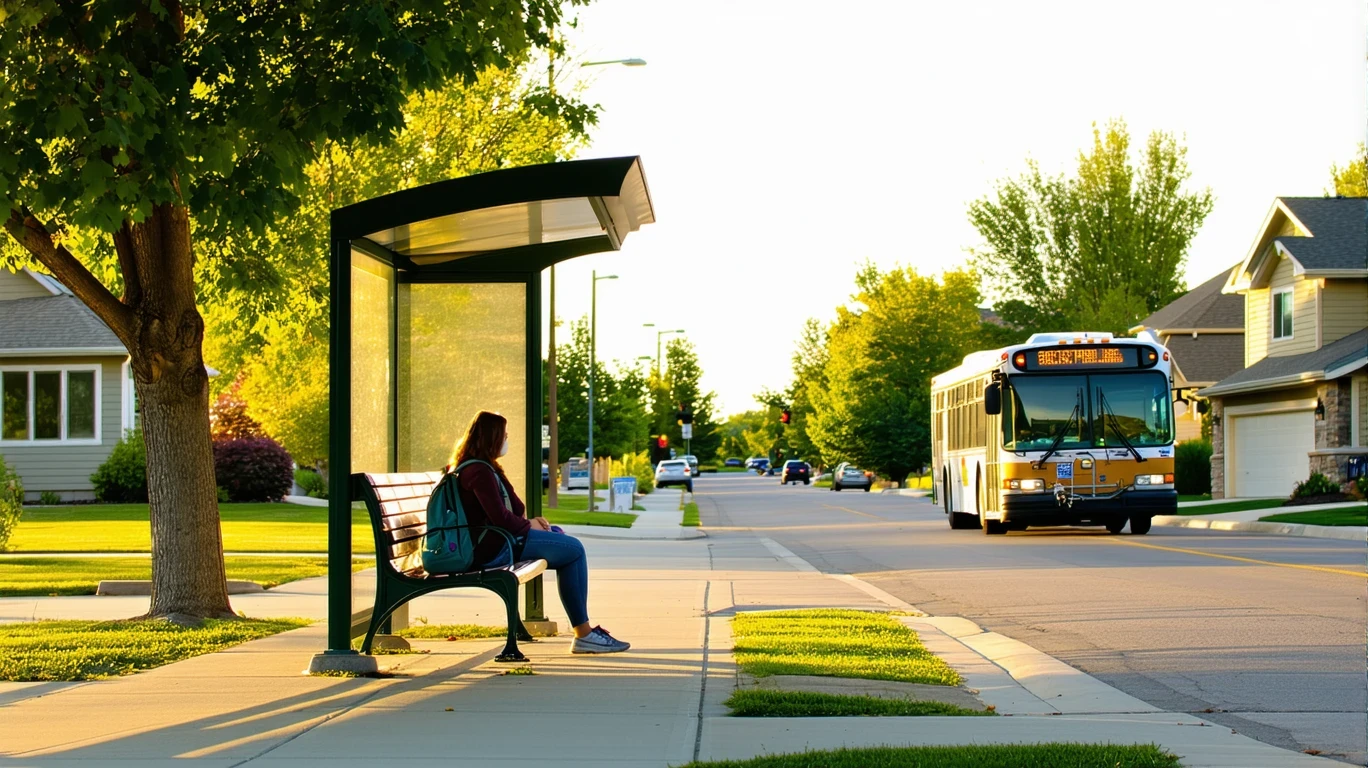
How People Get Around Murray
Murray is fundamentally car-oriented, but it’s not car-only. The city’s layout—low-density residential blocks, commercial corridors running north-south, and a grid system that favors through traffic—makes driving the default for most errands, commutes, and household logistics. But Murray also benefits from its location within the Utah Transit Authority (UTA) service area, with TRAX light rail cutting through the city and bus routes connecting neighborhoods to regional job centers.
The result is a transportation environment that works in layers. If you live near a rail station or along a frequent bus corridor, and your commute aligns with transit routes, you can realistically function without a car—or at least reduce how often you drive. But if you live in the residential neighborhoods west of State Street or south of Vine Street, or if your daily routine involves multiple stops, off-peak hours, or destinations outside the transit grid, driving becomes non-negotiable.
What newcomers often misunderstand is that Murray’s walkable pockets and transit access don’t extend uniformly across the city. The pedestrian infrastructure is strong in certain areas—particularly near commercial nodes and rail stations—but it thins out quickly as you move into purely residential zones. The city has a high pedestrian-to-road ratio in its core areas, meaning sidewalks, crosswalks, and pathways are well-developed where density supports them. But that doesn’t mean you can walk everywhere. It means that if you’re near the right corridor, walking and transit become viable. Everywhere else, you’re driving.
Public Transit Availability in Murray
Public transit in Murray often centers around systems such as UTA’s TRAX light rail and local bus service, though coverage varies significantly by area. The blue line of the TRAX system runs through Murray, with stations that serve as anchors for transit-dependent households. These stations—Murray Central, Fashion Place West, Millcreek—are where transit works best: frequent service, predictable schedules, and direct connections to downtown Salt Lake City, the University of Utah, and other regional employment hubs.
Bus service fills in gaps, connecting neighborhoods to rail stations and extending reach into areas the train doesn’t touch. But bus coverage is uneven. Routes tend to follow major arterials like State Street and 5400 South, leaving residential side streets dependent on walking or driving to the nearest stop. Service frequency drops off-peak, and evening and weekend options are limited compared to weekday commuter hours.
Transit works best in Murray for people who live within a half-mile of a TRAX station and commute to destinations along the rail line. It works reasonably well for those near high-frequency bus corridors who can tolerate longer travel times. It falls short for households in the outer residential zones, for anyone making multi-stop trips, and for those whose work hours don’t align with peak service windows.
The city’s transit infrastructure reflects its role as a suburban node within a larger regional system. It’s not designed to replace cars entirely—it’s designed to offer an alternative for linear, predictable commutes. If your life fits that pattern, transit is usable. If it doesn’t, you’ll need a car.
Driving & Car Dependence Reality
Most people in Murray drive, and the city’s infrastructure assumes they will. Parking is abundant and free in most areas. Roads are wide and designed for vehicle throughput. Shopping centers, schools, medical offices, and grocery stores are built with parking lots as the primary access point, not sidewalks or bike lanes.
Car dependence in Murray isn’t about preference—it’s about structure. The city sprawls across a large area with relatively low density outside its commercial core. Errands that might be walkable in a compact urban environment here require driving: picking up kids from school, stopping at the pharmacy, meeting friends for dinner, getting to a weekend soccer game. Even in neighborhoods with good pedestrian infrastructure, the distances between destinations make walking impractical for anything beyond immediate errands.
Commuting by car offers flexibility that transit can’t match. You can leave when you want, stop where you need to, and adjust your route in real time. For households managing complex schedules—multiple jobs, childcare pickups, evening activities—that flexibility is essential. The average commute time in Murray is 20 minutes, which is short by regional standards, but that figure reflects the dominance of driving. Transit commutes take longer, often significantly so, because of transfers, wait times, and indirect routing.
Parking is rarely a constraint in Murray. Residential streets accommodate on-street parking, driveways are standard, and apartment complexes typically include dedicated spots. The cost of car ownership here isn’t parking—it’s fuel, maintenance, insurance, and the time spent behind the wheel. Gas prices in Murray currently sit at $2.73 per gallon, a visible line item for households driving daily, though this article won’t estimate monthly fuel costs.
The tradeoff is predictability. Driving insulates you from service cuts, schedule changes, and coverage gaps. You control your mobility, but you also absorb all the costs and responsibilities that come with it.
Commuting Patterns & Daily Mobility
Commuting in Murray reflects the city’s position within the Salt Lake metro area. Many residents work outside Murray—in Salt Lake City, Sandy, West Jordan, or other nearby suburbs—which shapes how they structure their days. The 20-minute average commute time suggests that most people aren’t traveling extreme distances, but it also masks variation. About 20.3% of workers face long commutes, meaning more than a fifth of the workforce is absorbing significant travel time, likely due to congestion, indirect routes, or jobs located far from home.
Only 2.6% of Murray residents work from home, which is notably low and indicates that remote work hasn’t reshaped commuting patterns here the way it has in other cities. The vast majority of workers are leaving home daily, and for most, that means getting in a car.
Single-job commuters with predictable schedules benefit most from proximity to transit or major roads. If you live near a TRAX station and work downtown, your commute is straightforward. If you live near I-15 and work in a suburban office park, you’re optimizing for highway access. But many households don’t fit these neat patterns. Parents dropping kids at school before work, workers with irregular shifts, and anyone making multi-stop trips face compounding friction. Transit doesn’t accommodate that complexity well, and driving becomes the only practical option.
Daily mobility in Murray also depends on where you live within the city. Residents near Murray Central or Fashion Place have access to grocery stores, restaurants, and services within walking distance or a short bus ride. Those in the residential neighborhoods west of I-15 or south of Winchester Street are farther from commercial nodes and more reliant on driving for every errand. The city’s food and grocery establishment density is high overall, meaning options exist, but reaching them without a car requires either proximity or patience.
Who Transit Works For — and Who It Doesn’t
Transit in Murray works best for renters living near TRAX stations, commuting to jobs along the rail line, and comfortable with fixed schedules. If you’re a single professional working downtown, a student commuting to the University of Utah, or a service worker with shifts that align with peak transit hours, you can realistically build a life around public transportation. Your housing choices will be narrower—you’ll prioritize proximity to stations over yard space or parking—but your transportation overhead will be lower, and you’ll avoid the daily friction of traffic and parking.
Transit works less well for families, especially those with school-age children. Coordinating multiple schedules, managing after-school activities, and handling emergencies all require the flexibility that only a car provides. It also struggles to serve households in the outer residential zones, where bus service is infrequent and walking distances to transit stops are long.
Homeowners in Murray are more likely to be car-dependent, not because of preference but because homeownership here typically means living in single-family neighborhoods designed around driving. These areas have lower transit coverage, longer distances to commercial services, and layouts that assume car access. Even if a bus route runs nearby, the time cost of using it often outweighs the savings.
Transit also doesn’t work well for anyone whose job, childcare, or daily errands fall outside the transit grid. If you work in a suburban office park without direct rail access, if your kids’ school is across town, or if you need to make multiple stops in a single trip, driving is the only realistic option. Transit in Murray is a tool, not a system. It works when your life aligns with its structure, and it doesn’t when it doesn’t.
Transportation Tradeoffs in Murray
The central tradeoff in Murray is proximity versus flexibility. Living near transit means lower transportation costs, less time behind the wheel, and reduced exposure to fuel price swings and vehicle maintenance. But it also means accepting fixed schedules, longer travel times for some trips, and limited coverage for errands outside the transit grid.
Driving offers control. You leave when you want, go where you need to, and adjust on the fly. But you absorb all the costs: fuel, insurance, maintenance, depreciation, and the time spent commuting. You’re also more exposed to congestion, especially during peak hours on I-15 and State Street.
For households trying to minimize transportation overhead, the strategy is to align housing location with commute destination. If you work downtown, live near a TRAX station. If you work in a suburban office park, live close to your job or near a highway on-ramp. The worst outcome is living far from both transit and your workplace, which forces long drives or complex multi-transfer commutes.
Another tradeoff is predictability versus spontaneity. Transit schedules are fixed, which means you plan your day around departure times. Driving is spontaneous, which means you plan your day around your own priorities. Neither is inherently better—it depends on what your daily life demands.
For newcomers, the key question isn’t whether Murray has good transit or bad transit. It’s whether the transit that exists serves the life you’re planning to live here. If your commute is linear, your schedule is predictable, and you’re willing to prioritize proximity, transit can work. If your routine is complex, your destinations are scattered, or you value flexibility above all else, you’ll need a car.
FAQs About Transportation in Murray (2026)
Is public transit usable for daily commuting in Murray?
Yes, but only for specific commutes. If you live near a TRAX station and work along the rail line—downtown Salt Lake City, the University of Utah, or another station-adjacent job—you can commute by transit reliably. If your job is in a suburban office park, an industrial area, or anywhere requiring a transfer and a long bus connection, transit becomes impractical. The system is designed for linear, predictable trips, not complex multi-stop commutes.
Do most people in Murray rely on a car?
Yes. The vast majority of Murray residents drive daily. The city’s layout, low density, and limited transit coverage outside core corridors make car ownership the default. Only a small share of households—primarily those near TRAX stations with compatible commutes—function without a car. Even many transit users own a car for errands, weekends, and trips that transit doesn’t serve.
Which areas of Murray are easiest to live in without a car?
The areas within a half-mile of TRAX stations—particularly near Murray Central and Fashion Place West—are the most viable for car-free or car-light living. These neighborhoods have the best transit access, the highest concentration of walkable services, and the strongest pedestrian infrastructure. Outside these zones, car dependence increases sharply.
How does commuting in Murray compare to nearby cities?
Murray’s average commute time of 20 minutes is shorter than in many nearby suburbs, reflecting its central location within the Salt Lake metro. However, commute experience varies widely depending on whether you’re driving or using transit, and whether you’re commuting within Murray or to a distant job. Compared to Salt Lake City, Murray has less dense transit coverage but less congestion. Compared to farther suburbs like West Jordan or South Jordan, Murray offers better transit access but similar car dependence outside core areas.
Can you bike for transportation in Murray?
Biking is possible in some areas, but infrastructure is inconsistent. The city has moderate bike-to-road ratios in certain pockets, meaning bike lanes or paths exist but aren’t comprehensive. Biking works best for short trips within neighborhoods or along specific corridors, but it’s not a reliable primary mode of transportation for most residents. Weather, distance, and gaps in bike infrastructure all limit biking’s practicality compared to driving or transit.
How Transportation Fits Into the Cost of Living in Murray
Transportation isn’t just a line item—it’s a structural factor that shapes where you live, how much time you spend commuting, and how much flexibility you have in daily life. In Murray, your monthly budget will reflect whether you’re absorbing the full cost of car ownership or reducing transportation overhead by living near transit and optimizing for proximity.
Households that prioritize transit access often pay more for housing in core areas near TRAX stations, but they reduce or eliminate car-related expenses. Households that prioritize space, yards, or affordability often end up in areas where driving is non-negotiable, which shifts costs from rent to fuel, insurance, and maintenance. Neither path is wrong—they’re just different tradeoffs.
The key is to align your housing decision with your transportation reality. If you’re planning to commute by transit, live near a station and verify that your job is accessible by rail. If you’re planning to drive, factor in commute time, parking availability at work, and fuel costs as part of your location decision. If you’re trying to minimize transportation costs overall, prioritize proximity to work over proximity to transit, because the shortest commute is the one you don’t have to take.
Murray’s transportation landscape rewards intentionality. The city offers real alternatives to driving, but only if you structure your life around them. For everyone else, driving is the path of least resistance—and the path that most residents take.
How this article was built: In addition to public economic data, this article incorporates location-based experiential signals derived from anonymized geographic patterns—such as access density, walkability, and land-use mix—to reflect how day-to-day living actually feels in Murray, UT.