
A couple earning $120,000 a year moves to Herriman expecting financial breathing room. Within six months, they’re surprised by how tightly their budget fits—not because any single expense is unmanageable, but because the combination of housing, commuting, and seasonal utility swings leaves less flexibility than they anticipated. Meanwhile, a single professional earning $75,000 finds the city works well, but only because they’ve accepted a smaller living space and built their routine around the rail line and walkable pockets near their home. Same city, similar income levels, completely different experiences of comfort.
Understanding whether your income aligns with life in Herriman isn’t about hitting a magic number. It’s about knowing which tradeoffs you’re willing to make, which costs will dominate your attention, and how your household structure interacts with the city’s layout and cost drivers. This article explains how income pressure actually shows up in Herriman, who tends to feel comfortable here, and how to evaluate whether your earnings and expectations are a realistic match.
What “Living Comfortably” Means in Herriman
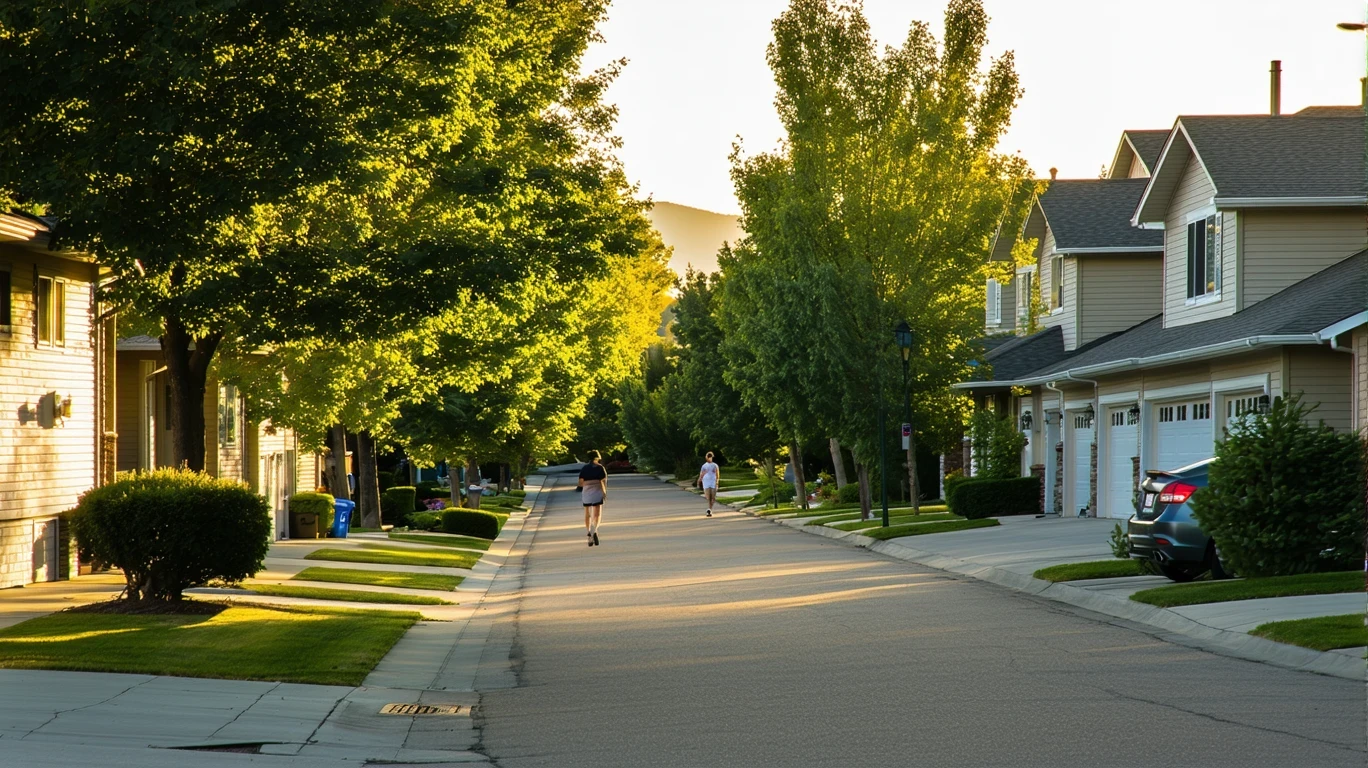
Comfort in Herriman is defined by space, access, and control over your time. The city sits in a region where housing costs are significant—median home values reach $486,200, and median rent runs $1,702 per month—but the expectation is that you’re paying for room to spread out, proximity to integrated parks and outdoor space, and a suburban structure that prioritizes single-family living over urban density.
Living comfortably here means you can absorb seasonal utility swings without rearranging your budget each month. Winters bring heating costs; summers require cooling in a climate where temperatures climb and stay there. Electricity rates sit at 13.69¢ per kWh, and natural gas costs $11.40 per MCF, but the real pressure comes from duration and intensity—how long you’re running systems and how much control you have over usage.
Comfort also means your commute doesn’t dominate your week. The average commute is 27 minutes, but 46.2% of workers face longer trips, and only 5.6% work from home. For many households, transportation isn’t just a line item—it’s a daily tax on time and energy. Gas prices currently sit at $2.63 per gallon, but the bigger question is whether your routine forces you into long, frequent drives or whether you can take advantage of rail access and walkable pockets to reduce car dependency.
Finally, comfort in Herriman is shaped by how well your household type fits the city’s infrastructure. Families benefit from integrated green space access and moderate playground density, but school density is low, meaning careful placement decisions matter. Singles and couples may find the suburban layout less aligned with their daily routines unless they live near transit or mixed-use corridors. Comfort isn’t universal—it’s contextual, and it depends on how your lifestyle intersects with the city’s structure.
Where Income Pressure Shows Up First
Housing is the first and most persistent source of pressure. Whether you’re renting or buying, the cost floor is high, and the tradeoffs are immediate. Renters at $1,702 per month are committing a significant share of income before utilities, transportation, or food enter the picture. Buyers face not only the purchase price but also property taxes, insurance, and maintenance—all of which compound over time and respond to conditions outside your control.
The pressure isn’t just the monthly payment. It’s the rigidity. Once you’ve committed to housing, your flexibility to absorb other costs shrinks. A surprise utility bill, a car repair, or a change in commute patterns can feel disproportionately disruptive because housing has already claimed the largest, least flexible portion of your budget.
Transportation pressure is different—it’s less about the cost per gallon and more about the structure of your days. If your job, errands, and social life are scattered across the metro area, you’re not just paying for gas—you’re paying in time, planning burden, and the inability to reduce trips. Herriman has rail access and notable bike infrastructure in some areas, but errands are corridor-clustered, meaning convenience isn’t evenly distributed. Households that can align their routines with transit and walkable pockets experience less pressure. Those who can’t face compounding costs in both money and time.
Utility volatility is the third pressure point, and it’s seasonal. Heating and cooling aren’t optional in this climate—they’re survival expenses that fluctuate with weather intensity and duration. The challenge isn’t predicting the average bill; it’s absorbing the swings without destabilizing other spending. Households with tight budgets feel this most acutely, because a high-usage month can force cuts elsewhere or push discretionary spending into debt.
For families, pressure also shows up in the gap between expectations and infrastructure. Integrated parks and outdoor access are strong, but school density is low, and healthcare access is limited to routine local clinics—no hospital is present. Families who assumed suburban living would simplify logistics often find themselves managing more travel, more planning, and more coordination than anticipated.
How the Same Income Feels Different by Household
Income pressure in Herriman isn’t uniform—it’s shaped by household composition, daily routines, and how well your needs align with the city’s layout. Households at similar income levels often experience very different financial and logistical strain depending on these factors.
Single adults face the lowest absolute housing costs but the highest per-person exposure. A one-bedroom rental or small home still requires a significant income share, and there’s no one to split utilities, transportation, or household expenses with. The advantage is flexibility—singles can choose smaller spaces, live closer to transit, and adjust their routines to minimize driving. In Herriman, this often means locating near rail access or walkable pockets and building a lifestyle around those anchors. The tradeoff is that family-oriented amenities—playgrounds, schools, and large parks—offer less personal value, and the suburban layout can feel isolating if your social and professional life is elsewhere.
Couples experience less per-person pressure because costs are shared, but they face new tradeoffs around coordination. If both partners work, the location that minimizes one person’s commute may extend the other’s. If one partner works from home (a minority at 5.6%), the household gains flexibility, but the pressure to choose housing that accommodates remote work—space, quiet, reliable utilities—can push costs higher. Couples who can align their routines with Herriman’s transit options and mixed-use corridors often find the city works well. Those who can’t may feel stretched by transportation time and the need to maintain two cars.
Families face the highest absolute costs and the most complex logistics. Space needs are non-negotiable—bedrooms, storage, yard access—and the housing cost floor rises accordingly. Families benefit significantly from Herriman’s integrated parks and outdoor amenities, which provide low-cost recreational options, but school density is low, meaning placement decisions require research and potentially longer travel. Healthcare access is limited to clinics, so serious medical needs mean trips outside the city. The result is that families often experience the highest planning burden, even when income is sufficient to cover expenses. Comfort depends not just on earnings but on how much time and energy parents have to manage logistics.
The key insight is that income alone doesn’t determine comfort. Two households earning the same amount can have radically different experiences depending on how their daily routines interact with Herriman’s infrastructure, how much flexibility they have in housing and transportation choices, and how well their expectations match the city’s suburban, car-oriented layout with pockets of walkability and transit access.
The Comfort Threshold (Qualitative)
There’s a point where income stops dictating every decision—where bills become predictable background noise rather than monthly negotiations, where tradeoffs ease, and where saving becomes plausible instead of aspirational. That’s the comfort threshold, and it’s not a number. It’s a condition.
You’ve crossed it when housing no longer forces you into the smallest acceptable space or the longest tolerable commute. When a high utility month is annoying but not destabilizing. When transportation is a matter of preference—whether to drive, bike, or take the rail—not necessity. When you can absorb a car repair, a medical bill, or a seasonal expense without rearranging other spending or dipping into credit.
In Herriman, the threshold is also defined by access. Comfort means you can take advantage of the city’s integrated parks and outdoor amenities without needing to budget for entertainment. It means your kids can use the playgrounds and green spaces that are woven into the city’s layout, and you’re not constantly driving to access basic errands or services. It means you have enough margin to handle the logistics that come with low school density and routine-only healthcare access without feeling perpetually stretched.
The threshold isn’t the same for everyone. A single adult with modest space needs and a routine built around transit may reach it at a lower income than a family of four navigating school placement, healthcare travel, and the need for multiple bedrooms. A couple where one partner works from home may find comfort earlier than a couple where both face long commutes.
What defines the threshold across all household types is the shift from reactive to proactive financial behavior. Below it, you’re managing costs. Above it, you’re making choices. The question isn’t whether you can technically afford Herriman—it’s whether you can afford it with enough margin that the city’s structure works for you rather than against you.
Why Online Cost Calculators Get Herriman Wrong
Most cost-of-living calculators treat Herriman as a data point—a set of averages to plug into a formula. They’ll tell you the median rent, the typical utility bill, the average commute cost, and then spit out a total. The problem is that totals don’t explain pressure, and averages don’t account for structure.
Calculators assume housing, transportation, and utilities are independent line items. In reality, they’re deeply interconnected. Choosing cheaper housing farther from transit doesn’t just lower your rent—it increases your commute time, raises your transportation costs, and limits your ability to reduce car dependency. Choosing a home closer to walkable pockets and rail access might raise your housing cost but lower your transportation burden and give you more control over daily logistics. The calculator sees two different totals. You experience two entirely different lifestyles.
Calculators also ignore how Herriman’s infrastructure shapes daily life. They won’t tell you that errands are corridor-clustered, meaning convenience depends on where you live. They won’t explain that school density is low, so families need to plan placement carefully. They won’t account for the fact that healthcare access is limited to clinics, requiring travel for anything beyond routine care. They won’t capture the value of integrated parks and green space, which provide low-cost quality of life but don’t show up in spending data.
Most importantly, calculators treat income as a static input and comfort as a binary output. They assume that if your income covers the average costs, you’re fine. But comfort isn’t about covering costs—it’s about margin, flexibility, and alignment between your household’s needs and the city’s layout. A family earning well above the median can still feel stretched if their routine requires constant driving, long commutes, and complex logistics. A single adult earning less can feel comfortable if their lifestyle fits the city’s transit options and walkable infrastructure.
People feel surprised after moving to Herriman not because the costs were hidden, but because the structure was invisible. The calculator told them what things cost. It didn’t tell them how those costs would interact, how their daily routines would shape their financial pressure, or whether their household type and expectations were a realistic match for the city’s layout. That’s the gap this article is designed to close.
How to Judge Whether Your Income Fits Herriman
Instead of asking “Can I afford Herriman?” ask yourself these questions. Your answers will tell you more than any income threshold ever could.
How sensitive are you to housing tradeoffs? If you need a specific amount of space, a particular neighborhood, or proximity to certain amenities, your housing cost floor is higher and less flexible. If you’re willing to adjust size, location, or features to reduce cost, you have more room to make the city work. Herriman’s housing market rewards flexibility, but it punishes rigidity.
Can you absorb seasonal utility swings without stress? Heating and cooling costs fluctuate with weather intensity and duration. If a high-usage month would force you to cut other spending or rely on credit, you’re operating without enough margin. If you can handle the swings as a minor annoyance, you’re closer to the comfort threshold.
Is time or money your limiting factor? If your income is tight but your schedule is flexible, you can reduce transportation costs by building routines around transit, bike infrastructure, and walkable corridors. If your income is comfortable but your time is scarce, you’ll pay more for convenience—and Herriman’s corridor-clustered errands and low work-from-home percentage mean convenience often requires driving. Know which resource you’re optimizing for.
How much planning burden can you handle? Families face the most logistics in Herriman—school placement, healthcare travel, activity coordination. If you thrive on structure and planning, this may feel manageable. If you’re already stretched thin, the city’s layout may add stress even if your income technically covers expenses.
How much flexibility do you expect month to month? If you need discretionary income for dining out, travel, hobbies, or spontaneous spending, calculate how much margin you’ll have after housing, transportation, and utilities. If those three categories leave little room, your lifestyle expectations may not align with your income in this city. If you’re comfortable with a more structured, predictable budget, you may find Herriman works well even at moderate income levels.
Does your household benefit from Herriman’s strengths? Integrated parks, rail access, walkable pockets, and notable bike infrastructure are real assets—but only if your routine allows you to use them. Families with young children benefit from outdoor space. Singles and couples near transit benefit from reduced car dependency. If your daily life doesn’t intersect with these features, you’re paying for a city structure that isn’t serving you.
These questions won’t produce a number, but they’ll give you clarity. Herriman works well for households whose income, expectations, and routines align with its layout. It’s a poor fit for those who assume suburban living automatically means simplicity, low costs, or universal convenience.
Frequently Asked Questions About Living Comfortably in Herriman
Is Herriman affordable for families?
Affordability depends on what you’re comparing it to and what you’re willing to trade. Housing costs are significant—median home values reach $486,200—but families benefit from integrated parks, outdoor amenities, and a layout designed for space and yards. The challenge is that school density is low and healthcare access is limited to clinics, meaning families face higher planning burdens and more travel for certain needs. Families with margin in their budget and the capacity to manage logistics tend to do well. Those operating at the edge of affordability often find the hidden costs—time, coordination, and travel—harder to absorb than the visible ones.
Can you live comfortably in Herriman without a car?
It’s possible, but only if your routine is tightly aligned with rail access, walkable pockets, and the corridors where errands are clustered. Herriman has notable bike infrastructure and rail service, but only 5.6% of workers are remote, and 46.2% face long commutes. If your job, grocery shopping, healthcare, and social life are all accessible via transit and bike, you can reduce or eliminate car dependency. If any of those require regular trips outside walkable areas, you’ll face significant friction. Most households find a car necessary, but some can reduce usage enough to lower transportation pressure meaningfully.
How does income pressure in Herriman compare to other Utah cities?
This article focuses on how income pressure works within Herriman, not how it compares to other cities. What matters is whether your income and household structure align with Herriman’s specific cost drivers—housing, transportation, and utilities—and whether you can take advantage of its infrastructure strengths, like parks, rail access, and walkable pockets. Comparisons are useful only if you’re deciding between specific locations and have concrete data on both. Otherwise, they distract from the real question: does this city work for you?
What income level do most people in Herriman earn?
The median household income in Herriman is $115,198 per year, but that figure includes a wide range of household types, sizes, and circumstances. Some households earn well above that and still feel stretched because of housing choices, commute patterns, or family logistics. Others earn below it and feel comfortable because their routines align with the city’s layout and their expectations are realistic. The median is a reference point, not a target or a guarantee of comfort.
Are there hidden costs in Herriman that catch people off guard?
The costs that surprise people aren’t usually hidden—they’re structural. Seasonal utility swings, long commutes, corridor-clustered errands, low school density, and clinic-only healthcare access are all visible in the data, but their impact on daily life isn’t obvious until you’re living it. The “hidden” cost is the compounding effect of these factors—the time, planning burden, and reduced flexibility that come with a suburban layout that isn’t uniformly walkable or convenient. People who research costs but not structure are the ones who feel blindsided.
How this article was built: In addition to public economic data, this article incorporates location-based experiential signals derived from anonymized geographic patterns—such as access density, walkability, and land-use mix—to reflect how day-to-day living actually feels in Herriman, UT.
Herriman can work well for some households—but only if expectations match reality. Comfort here isn’t about hitting an income threshold. It’s about understanding which costs will dominate your attention, how your household type interacts with the city’s layout, and whether you have enough margin to absorb the tradeoffs that come with suburban living in a region where housing, transportation, and utilities all demand attention. If your income, routine, and expectations align with what Herriman actually offers, the city can provide space, access to nature, and a manageable cost structure. If they don’t, no amount of earnings will make the friction disappear.