
When most people calculate the cost of owning a home in Herriman, they start with the mortgage. That’s a mistake. The real financial pressure comes from what happens after closing: property taxes that adjust with assessed value, utilities shaped by Utah’s temperature swings, maintenance on newer construction that looks low-cost until systems age, and HOA dues that bundle services but limit control. Renters face a different calculus—less exposure to long-term volatility, but more vulnerability to lease-by-lease increases and limited leverage over housing quality. Understanding housing cost structure in Herriman means recognizing which expenses you control, which ones escalate, and how the city’s suburban form and infrastructure shape both.
The Housing Market in Herriman Today
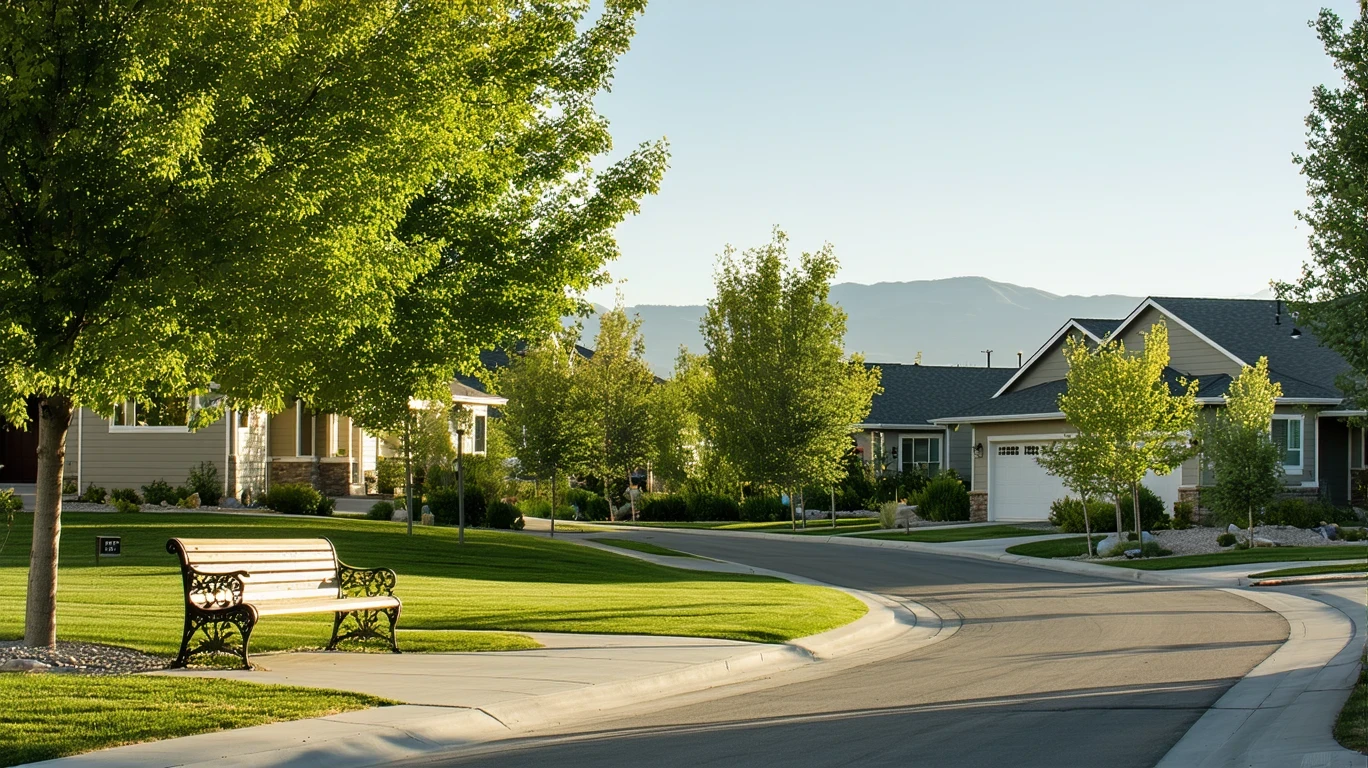
Herriman’s housing market reflects its role as a fast-growing suburban community in the Salt Lake City metro. The median home value sits at $486,200, positioning it as a mid-to-upper tier suburb where entry costs are significant but not prohibitive for dual-income households. What distinguishes Herriman from older Salt Lake neighborhoods is the predominance of newer construction—homes built in the last two decades dominate the inventory, which means lower immediate maintenance but higher embedded costs in HOA governance, landscaping requirements, and utility infrastructure that hasn’t fully matured.
The city’s development pattern—master-planned communities with mixed building heights and integrated parks—creates pockets of walkability and transit access (rail service is present), but the overall housing stock still assumes car ownership. That matters because housing affordability isn’t just about the purchase price; it’s about how far you need to drive, how much you spend cooling a larger home in summer, and whether your neighborhood’s amenities reduce or increase daily friction. Herriman’s median household income of $115,198 per year suggests the market is pricing for established families and professionals, not first-time buyers stretching toward qualification.
Renting in Herriman
Median gross rent in Herriman is $1,702 per month, a figure that includes utilities in some cases but not universally. Rental inventory skews toward single-family homes and townhomes rather than large apartment complexes, which means renters often face landlord-managed properties with variable maintenance responsiveness and less standardized lease terms. The rental experience here is less about urban density and more about accessing suburban infrastructure—schools, parks, and commute routes—without the capital commitment of ownership.
Rental pressure in Herriman is shaped by two forces: the city’s growth trajectory, which keeps demand elevated, and the limited supply of purpose-built rental housing. Because much of the rental stock consists of investor-owned single-family homes, lease renewals can be unpredictable. A landlord selling the property or adjusting to market rates can force a move with little warning. Renters also absorb utility volatility directly—summer cooling and winter heating costs aren’t averaged into a fixed rent, so monthly expenses fluctuate with temperature extremes.
The tradeoff: renting in Herriman offers flexibility and lower upfront costs, but it doesn’t insulate you from the cost behavior of suburban living. You’re still paying for car dependency, climate exposure, and the logistics of a place where errands cluster along corridors rather than within walking distance of most homes.
Owning a Home in Herriman
Ownership in Herriman means taking on the full cost structure of a newer suburban home. The $486,200 median home value is the visible anchor, but the ongoing expenses—property taxes, insurance, utilities, HOA dues, and maintenance—determine whether ownership remains sustainable over time.
Property taxes in Utah are structured around assessed value and local mill rates, which means tax bills adjust as home values rise. Herriman’s newer housing stock hasn’t experienced the long-term assessment cycles of older cities, so owners should expect tax exposure to increase as the city matures and infrastructure costs (roads, schools, public safety) scale with population growth. Unlike states with assessment caps or homestead exemptions, Utah’s system allows for more frequent adjustments, which makes tax predictability harder to guarantee.
HOA presence is common in Herriman’s master-planned neighborhoods. These associations typically cover landscaping, common area maintenance, and sometimes snow removal, but they also enforce design standards and levy special assessments for capital improvements. HOA dues are a fixed monthly cost that behaves like rent—you can’t defer it, and it often increases annually. For some households, the bundled services justify the expense; for others, it’s a loss of autonomy without corresponding savings.
Maintenance on newer homes is lighter in the first decade but accelerates as HVAC systems, water heaters, and roofing reach end-of-life. Herriman’s climate—hot, dry summers and cold winters—stresses cooling and heating systems, which means replacement cycles arrive faster than in temperate zones. Owners also face exterior maintenance shaped by Utah’s low humidity and intense sun exposure, which degrades paint, siding, and landscaping faster than coastal or forested climates.
Apartment vs House in Herriman — Cost Behavior Comparison
| Expense Category | Apartment | House |
|---|---|---|
| Utilities (Cooling) | Lower square footage and shared walls reduce cooling load during Herriman’s hot, dry summers | Larger footprint and standalone structure increase summer electricity costs; central AC runs longer |
| Utilities (Heating) | Shared walls and smaller volume reduce natural gas usage during cold winters | Standalone homes lose heat faster; natural gas costs rise with square footage and insulation quality |
| Maintenance Responsibility | Landlord or HOA covers exterior, HVAC, and appliance replacement; tenant exposure limited to lease terms | Owner bears full cost of HVAC replacement, roof repair, and exterior upkeep; climate accelerates wear |
| HOA or Association Fees | Often included in rent or structured as a fixed monthly fee with limited tenant input | Paid separately; subject to annual increases and special assessments; owner has voting rights but not cost control |
| Commute Exposure | Apartments in Herriman cluster near transit corridors and errands, reducing daily driving for some households | Single-family homes are more dispersed; car dependency is higher, increasing fuel and vehicle wear costs |
Methodology note: The table includes only categories where cost behavior differs meaningfully in Herriman due to climate (cooling and heating intensity), housing stock (newer construction with HOA prevalence), and infrastructure (corridor-clustered errands and rail access). Generic categories like water or trash service were omitted because cost variation is minimal and not driven by housing type in this market.
Utilities & Upkeep Differences
Utility exposure in Herriman is shaped by climate intensity, not just rates. Electricity costs 13.69¢/kWh, and natural gas is priced at $11.40/MCF—both figures are moderate by national standards. But Herriman’s hot, dry summers and cold winters mean households run air conditioning heavily from June through September and heating from November through March. The result: utility bills swing seasonally, with summer cooling often dominating annual electricity costs and winter heating driving natural gas usage.
For apartment dwellers, smaller square footage and shared walls buffer this exposure. A 900-square-foot unit with one exterior wall uses far less energy than a 2,500-square-foot detached home with four exposed sides. Homeowners also face irrigation costs for landscaping, which in Utah’s arid climate means either high water bills or xeriscape investments that reduce long-term usage.
Maintenance differences are structural. Apartment tenants call a landlord when the furnace fails; homeowners pay for diagnosis, parts, and labor. In Herriman’s newer housing stock, HVAC systems are often builder-grade and sized for cost efficiency, not longevity. When a system fails after 12–15 years, replacement costs run into thousands of dollars, and the timing is rarely convenient. Roof replacement, exterior painting, and fence repair follow similar patterns—low immediate costs that escalate as the home ages.
Rent vs Buy: Long-Term Exposure in Herriman
The rent-versus-buy decision in Herriman isn’t about monthly payment math; it’s about which cost structure aligns with your tolerance for volatility and control.
Renters face lease-by-lease uncertainty. A landlord can raise rent, sell the property, or decline to renew, forcing a move or a budget adjustment. But renters avoid property tax increases, special assessments, and the capital risk of a housing market correction. If Herriman’s home values flatten or decline, renters lose nothing. Owners absorb the loss and still pay taxes, insurance, and maintenance on a depreciating asset.
Owners gain cost predictability in some areas—a fixed-rate mortgage doesn’t change—but take on exposure in others. Property taxes adjust with assessed value, insurance costs rise with rebuilding costs and climate risk, and HOA dues increase annually. Maintenance is episodic and expensive: a roof, an HVAC system, or a water heater can each cost $5,000–$15,000, and the timing is unpredictable. Over a decade, these costs compound, and there’s no landlord to call.
The control tradeoff is real. Owners can renovate, refinance, or sell on their own timeline. Renters can leave with 30 days’ notice and no transaction costs. In Herriman, where the housing market is still maturing and infrastructure costs are rising, ownership makes sense for households with stable income, long time horizons, and the financial cushion to absorb maintenance shocks. Renting fits those prioritizing flexibility, lower upfront costs, or uncertainty about how long they’ll stay in the metro.
How Day-to-Day Living Shapes Housing Costs in Herriman
Herriman’s infrastructure—walkable pockets with rail access, parks integrated throughout neighborhoods, and errands clustered along commercial corridors—creates a suburban environment where some households can reduce car dependency, but most cannot. The presence of rail transit and notable cycling infrastructure means that residents near transit nodes can lower transportation costs by commuting without a car. But for households in more dispersed single-family neighborhoods, daily errands still require driving, and the average commute of 27 minutes reflects a car-first reality.
This matters for housing costs because transportation and housing are linked. A family that can walk to a grocery store or bike to a park spends less on fuel, vehicle maintenance, and second-car ownership. A household that drives for every errand absorbs higher ongoing costs, even if rent or mortgage payments are identical. Herriman’s corridor-clustered errands mean that food and grocery access exists but isn’t uniformly distributed—some neighborhoods are well-served, others require planning and driving.
For renters, this structure means evaluating not just rent but proximity to transit, schools, and daily services. For buyers, it means recognizing that a lower home price in a car-dependent pocket may cost more over time than a higher-priced home near walkable infrastructure. The city’s mixed building heights and integrated green space make it more livable than purely car-oriented suburbs, but the logistics of daily life still shape where money goes beyond the lease or mortgage payment.
How this article was built: In addition to public economic data, this article incorporates location-based experiential signals derived from anonymized geographic patterns—such as access density, walkability, and land-use mix—to reflect how day-to-day living actually feels in Herriman, UT.
FAQs About Housing Costs in Herriman
Is it cheaper to rent or buy in Herriman long-term?
It depends on how long you stay and your tolerance for maintenance costs. Renting avoids property tax increases, HOA dues, and capital expenses like roof replacement, but you’re exposed to lease-by-lease rent increases. Buying locks in a mortgage payment but adds ongoing costs that escalate as the home ages. If you plan to stay more than seven years and can absorb maintenance shocks, ownership usually builds more stability. Shorter timelines favor renting.
How much do utilities cost in a typical Herriman home?
Utility costs in Herriman are driven more by climate than rates. Summer cooling and winter heating dominate expenses, and a detached single-family home uses far more energy than an apartment. Electricity runs 13.69¢/kWh, and natural gas costs $11.40/MCF, but your bill depends on square footage, insulation quality, and how much you run HVAC systems during temperature extremes.
Are HOA fees common in Herriman, and what do they cover?
HOA fees are prevalent in Herriman’s newer master-planned neighborhoods. They typically cover landscaping, common area maintenance, and sometimes snow removal, but they also enforce design standards and levy special assessments for capital projects. Fees vary by neighborhood and increase over time, so budget for annual adjustments and occasional one-time charges.
How does Herriman’s housing market compare to other Salt Lake suburbs?
Herriman’s median home value of $486,200 positions it in the mid-to-upper range for Salt Lake metro suburbs. It’s more affordable than established areas closer to downtown but more expensive than outer-ring communities with fewer amenities. The tradeoff: Herriman offers newer housing stock, better park access, and rail transit, but you’re paying for that infrastructure through higher home prices and HOA fees.
What’s the biggest hidden cost of owning a home in Herriman?
Maintenance on HVAC systems and exterior upkeep. Herriman’s climate—hot, dry summers and cold winters—accelerates wear on cooling and heating equipment, and replacement costs arrive faster than in temperate zones. Budget for a furnace or AC replacement every 12–15 years, and expect exterior paint, siding, and landscaping to degrade faster due to sun exposure and low humidity.
Making Housing Choices in Herriman
Housing costs in Herriman are shaped by ownership structure, climate exposure, and the logistics of suburban life. The $486,200 median home value and $1,702 median rent are starting points, not final costs. What matters is how property taxes adjust over time, how much you spend on utilities and maintenance, and whether your neighborhood’s infrastructure reduces or increases daily friction.
Renters gain flexibility and avoid capital risk but remain exposed to lease uncertainty and utility volatility. Owners gain control and long-term stability but take on tax increases, HOA dues, and maintenance costs that compound as the home ages. The decision isn’t about which option is cheaper—it’s about which cost structure aligns with your income stability, time horizon, and tolerance for unpredictability.
Herriman’s infrastructure—walkable pockets, rail access, integrated parks—makes it more livable than purely car-dependent suburbs, but most households still need a vehicle for daily errands. That means housing affordability isn’t just about rent or mortgage payments; it’s about how much you spend getting around, cooling your home in summer, and maintaining systems that wear faster in Utah’s climate. For more on how these costs interact with day-to-day expenses, see monthly spending patterns and what shapes the cost of living in Herriman. If you’re planning a move, understanding logistics early can reduce friction—see the moving companies guide for practical next steps.