
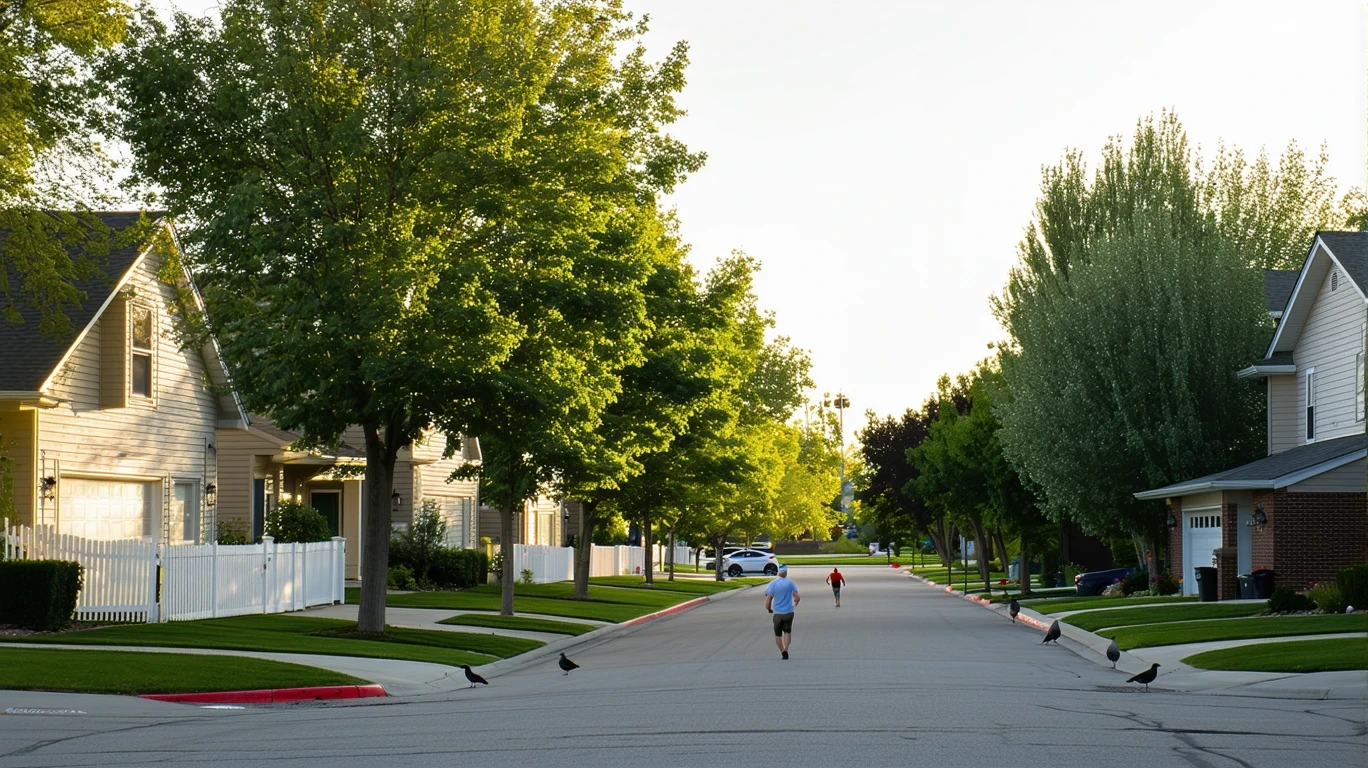
Salt Lake City and Taylorsville sit just miles apart in Utah’s Wasatch Front, sharing a metro economy, similar weather patterns, and overlapping job markets. Yet the cost experience in each city diverges in ways that matter deeply for households deciding where to settle in 2026. Salt Lake City offers urban density, rail transit access, and walkable neighborhoods with integrated parks and services. Taylorsville, a suburban community to the south, typically provides more single-family housing stock and a car-oriented layout. The decision between them isn’t about which is cheaper overall—it’s about which cost pressures align with your household’s priorities, routines, and tolerance for tradeoffs.
For young professionals, the choice often hinges on commute flexibility and lifestyle access. Families weigh school proximity, yard space, and predictable monthly obligations. Retirees and remote workers consider long-term housing equity, utility exposure, and daily convenience. Both cities function within the same regional price environment, but the structure of costs—where money goes, what’s negotiable, and what’s locked in—differs in ways that can make the same gross income feel stable in one place and stretched in the other.
This article breaks down housing entry barriers, ongoing utility exposure, transportation dependence, grocery accessibility, taxes, and lifestyle fit. It explains how these factors combine differently in Salt Lake City and Taylorsville, and which households are more exposed to each city’s dominant cost drivers in 2026.
Housing Costs: Entry Barriers vs. Ongoing Rent Pressure
Housing dominates the cost structure in both cities, but the pressure shows up differently depending on whether you’re buying or renting. In Salt Lake City, the median home value sits at $458,600, reflecting demand for urban access, walkable neighborhoods, and proximity to downtown employment centers. Taylorsville’s median home value is $358,900—a substantial difference that lowers the entry barrier for buyers willing to accept a more car-dependent layout and longer commutes into the city core.
For renters, the dynamic reverses. Salt Lake City’s median gross rent is $1,254 per month, while Taylorsville’s is $1,345 per month. This suggests that rental inventory in Taylorsville may skew toward larger single-family homes or newer apartment complexes with amenities, while Salt Lake City’s rental market includes more compact units in older buildings and mixed-use developments. Renters prioritizing space and parking may find Taylorsville’s rent structure more aligned with suburban expectations, even at a higher monthly cost. Those prioritizing walkability, transit access, and shorter commutes may accept smaller square footage in Salt Lake City to gain lifestyle flexibility.
First-time buyers face a clear tradeoff: Taylorsville offers lower down payment requirements and more accessible entry prices, but buyers give up urban infrastructure and accept higher car dependency. Salt Lake City buyers pay more upfront but gain access to rail transit, bike lanes, and neighborhoods where daily errands don’t require driving. Families planning to stay long-term must weigh whether the equity growth potential in Salt Lake City’s denser, transit-served neighborhoods justifies the higher entry cost, or whether Taylorsville’s lower purchase price and larger lot sizes better match their space needs and budget ceiling.
Housing takeaway: Buyers sensitive to entry cost and yard space will find Taylorsville more accessible. Renters seeking walkability and transit access may prefer Salt Lake City despite slightly lower rent. Households planning to minimize car dependency or prioritize urban amenities face higher housing entry costs in Salt Lake City but gain infrastructure that reduces transportation and time costs.
Utilities and Energy Costs: Rate Differences and Seasonal Exposure
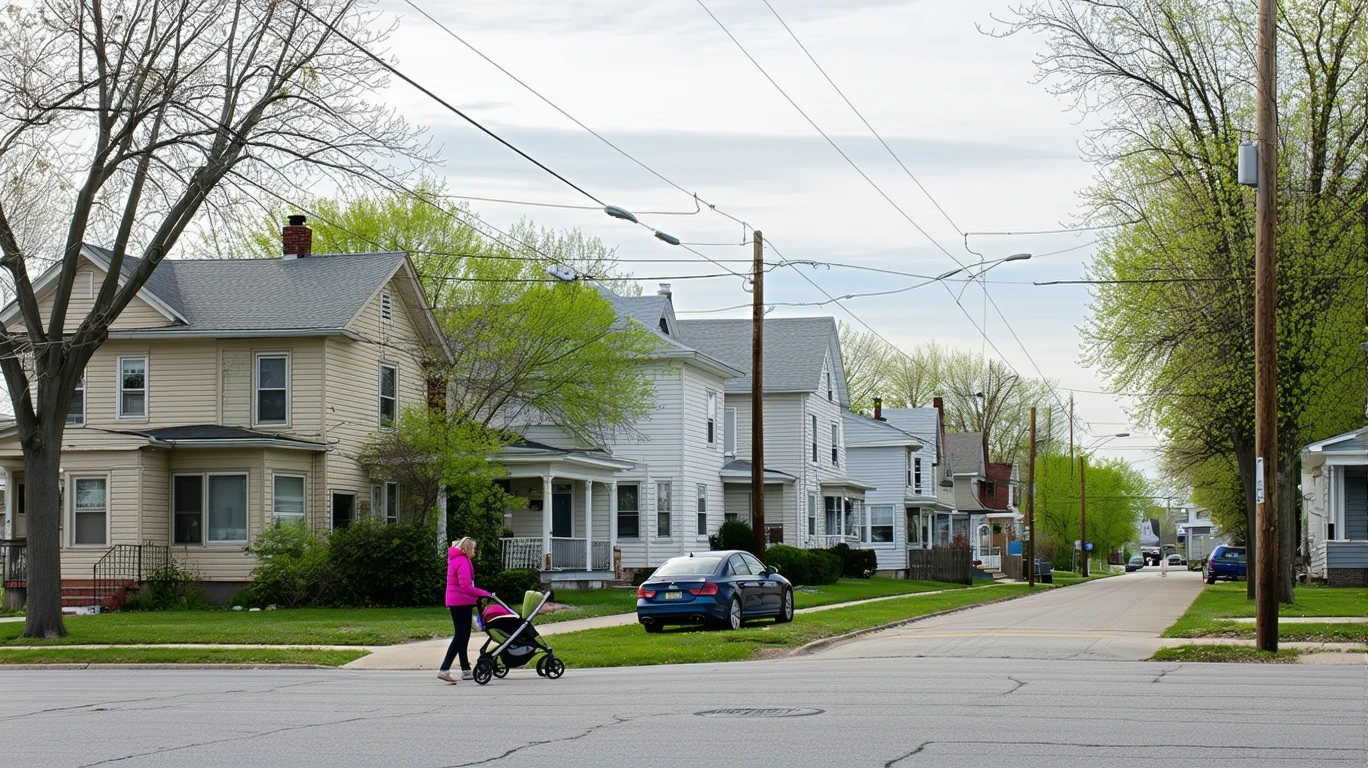
Utility costs in both cities are shaped by Utah’s high-desert climate, with cold winters requiring natural gas heating and hot summers driving air conditioning demand. The rate structures differ slightly: Salt Lake City’s electricity rate is 12.99¢/kWh, while Taylorsville’s is 13.69¢/kWh. Natural gas prices follow a similar pattern, with Salt Lake City at $10.82/MCF and Taylorsville at $11.40/MCF. These differences are modest in isolation, but they compound over months of heavy heating or cooling usage, particularly in larger single-family homes common in Taylorsville.
Housing stock plays a significant role in utility exposure. Salt Lake City’s mixed urban form includes older brick apartments and rowhouses with shared walls, which reduce heating and cooling loads. Taylorsville’s suburban layout favors detached single-family homes with larger square footage and more exterior surface area, increasing baseline energy consumption. Households in newer construction—more common in Taylorsville’s recent subdivisions—may benefit from better insulation and efficient HVAC systems, offsetting some of the rate disadvantage. Older homes in either city face higher seasonal volatility, especially during extended cold snaps or summer heat waves.
Predictability also differs by housing type. Apartment renters in Salt Lake City often see more stable utility bills due to smaller spaces and shared infrastructure. Single-family homeowners in Taylorsville experience wider seasonal swings, with winter heating and summer cooling costs creating budget pressure during extreme months. Households sensitive to monthly cash flow volatility may prefer the smaller, more insulated units typical of Salt Lake City’s urban core, even if the per-square-foot cost is higher. Those prioritizing space and willing to manage seasonal spikes may accept Taylorsville’s rate structure in exchange for larger homes and private yards.
Utility takeaway: Taylorsville’s slightly higher electricity and natural gas rates matter most for households in larger, detached homes with high seasonal usage. Salt Lake City’s denser housing stock and smaller average unit sizes reduce baseline consumption and smooth out monthly volatility. Families in newer Taylorsville construction may offset rate differences through efficiency, while renters in older Salt Lake City apartments face less exposure overall due to shared walls and reduced square footage.
Groceries and Daily Expenses: Access, Density, and Spending Patterns
Grocery and daily spending pressure in Salt Lake City and Taylorsville is less about price differences—both cities sit within the same regional market—and more about access density, convenience, and how often households default to higher-cost options due to time constraints or layout friction. Salt Lake City shows high food and grocery establishment density, with walkable access to supermarkets, neighborhood stores, and prepared food options concentrated along transit corridors and mixed-use streets. This density gives households more flexibility to comparison-shop, walk to stores, and avoid last-minute convenience purchases that inflate monthly spending.
Taylorsville’s suburban layout typically requires driving to grocery stores, and the spacing between retail clusters can push households toward fewer, larger shopping trips. This pattern works well for families with storage space, meal-planning routines, and time to batch errands. It becomes more costly for single adults or dual-income couples who rely on frequent top-up trips, grab-and-go meals, or delivery services to manage tight schedules. The lack of walkable errands access means every grocery run, coffee stop, or pharmacy visit requires a car, adding time cost and reducing spontaneous price comparison.
Dining and convenience spending also diverges. Salt Lake City’s walkable neighborhoods support a higher density of cafes, quick-service restaurants, and takeout options, which can either increase spending (through frequent small purchases) or decrease it (by enabling price-conscious households to walk to cheaper options instead of driving to distant big-box stores). Taylorsville’s car-dependent layout tends to concentrate dining options in strip malls and chain clusters, where convenience and parking ease may outweigh price sensitivity. Families managing larger grocery volumes may find Taylorsville’s big-box access advantageous, while smaller households benefit from Salt Lake City’s walkable variety and ability to buy smaller quantities more frequently without driving.
Grocery takeaway: Households that meal-plan, buy in bulk, and drive infrequently may find Taylorsville’s layout efficient despite lower store density. Those who value walkable access, frequent small trips, and spontaneous price comparison will experience less friction and potentially lower convenience spending in Salt Lake City. Single adults and couples with unpredictable schedules face higher time and convenience costs in Taylorsville’s car-dependent retail layout.
Taxes and Fees: Predictability and Structural Differences
Property taxes, sales taxes, and local fees in Salt Lake City and Taylorsville operate within Utah’s state framework, but city-level differences in assessment practices, fee structures, and service bundling create distinct cost exposures. Property taxes are typically higher in Salt Lake City due to elevated home values, even if millage rates are similar. A home valued at $458,600 in Salt Lake City generates a larger annual tax bill than one valued at $358,900 in Taylorsville, all else equal. This front-loads the cost of ownership in Salt Lake City, but it also reflects access to denser infrastructure, transit service, and urban amenities that reduce other household expenses.
Taylorsville homeowners face lower baseline property tax obligations due to lower assessed values, but they may encounter higher fees for services that are bundled or subsidized in denser urban areas. Trash collection, water, and stormwater fees can add up in suburban layouts where service delivery is less efficient. Homeowners associations (HOAs) are more common in Taylorsville’s newer subdivisions, and while they provide landscaping, snow removal, and shared amenities, they introduce another fixed monthly cost that renters and older-neighborhood buyers in Salt Lake City typically avoid.
Sales tax rates are set at the state and county level, so both cities share the same baseline consumption tax burden. However, the frequency and type of taxable purchases differ by lifestyle. Households in Taylorsville, who drive more and rely on car-dependent retail, may spend more on taxable goods (fuel, dining out, big-box purchases) than those in Salt Lake City who walk to grocery stores, use transit, and make smaller, more frequent purchases. This doesn’t change the tax rate, but it shifts where the tax burden accumulates over the year.
Tax and fee takeaway: Salt Lake City homeowners face higher property tax bills due to elevated home values, but they gain infrastructure that reduces transportation and convenience costs. Taylorsville homeowners pay less in property taxes but may encounter higher HOA fees and service charges common in suburban developments. Renters in both cities are insulated from property tax exposure but should account for how car dependency in Taylorsville increases taxable spending on fuel and retail purchases.
Transportation & Commute Reality
Transportation costs and commute friction differ sharply between Salt Lake City and Taylorsville, driven by infrastructure access rather than fuel prices alone. Salt Lake City has rail transit service, a high pedestrian-to-road ratio, and notable cycling infrastructure throughout parts of the city. This allows households to reduce or eliminate car dependency for commuting, errands, and recreation. The average commute time in Salt Lake City is 19 minutes, reflecting both proximity to employment centers and the availability of non-car options. Gas prices sit at $2.77/gal, but many households use less fuel overall because walking, biking, and transit are viable daily modes.
Taylorsville lacks the same infrastructure density. While gas prices are slightly lower at $2.59/gal, the car-dependent layout means most households drive for every trip—commuting, groceries, school drop-offs, and errands. Without rail service or walkable retail corridors, transportation costs are less about fuel prices and more about vehicle ownership, insurance, maintenance, and time spent in the car. Families with multiple drivers face compounded costs: two cars, two insurance policies, and higher annual mileage. Single adults or couples who work in downtown Salt Lake City may spend less on housing in Taylorsville but absorb the difference in longer commutes, higher mileage, and reduced schedule flexibility.
Time cost also matters. Salt Lake City’s transit and bike infrastructure allow households to avoid parking fees, reduce commute stress, and reclaim time spent sitting in traffic. Taylorsville residents gain larger homes and lower purchase prices but trade that for longer drives, less walkable errands, and the logistical complexity of coordinating multiple vehicles. Households with flexible work arrangements or remote schedules may find Taylorsville’s tradeoff acceptable, while those commuting daily into Salt Lake City’s core face higher cumulative transportation exposure despite modest fuel savings.
Transportation takeaway: Salt Lake City’s rail transit, walkability, and bike infrastructure reduce car dependency and give households more control over transportation costs and time. Taylorsville’s lower gas prices don’t offset the structural need for car ownership, higher mileage, and longer commutes. Households with one car, flexible schedules, or downtown jobs benefit most from Salt Lake City’s infrastructure. Families prioritizing space and willing to drive for all errands may accept Taylorsville’s car-dependent layout.
Cost Structure Comparison
Housing pressure concentrates differently in Salt Lake City and Taylorsville depending on whether you’re buying or renting. Buyers face a higher entry barrier in Salt Lake City, where median home values exceed $458,600, but they gain walkable neighborhoods, transit access, and infrastructure that reduces ongoing transportation and convenience costs. Taylorsville’s lower median home value of $358,900 makes ownership more accessible upfront, but buyers accept car dependency, longer commutes, and suburban service fees that shift costs into transportation and time. Renters experience the reverse: Salt Lake City’s median rent of $1,254 per month is lower than Taylorsville’s $1,345 per month, but Taylorsville renters typically get more space, parking, and single-family layouts in exchange for reduced walkability.
Utilities introduce more volatility in Taylorsville due to slightly higher electricity and natural gas rates combined with larger, detached homes that require more heating and cooling. Salt Lake City’s denser housing stock—apartments, rowhouses, and smaller single-family homes—reduces baseline energy consumption and smooths out seasonal swings. Families in newer Taylorsville construction may offset rate differences through better insulation, but older suburban homes face higher exposure during extreme weather months. Renters in Salt Lake City’s compact units experience the least utility volatility overall.
Transportation patterns matter more in Taylorsville, where every errand, commute, and school run requires a car. Salt Lake City’s rail service, bike lanes, and walkable errands access allow households to reduce or eliminate car dependency, lowering insurance, maintenance, and fuel costs while reclaiming time. Taylorsville’s lower gas prices don’t compensate for the structural need to own and operate vehicles for all daily activities. Households with multiple drivers or long commutes into downtown Salt Lake City face compounded transportation exposure in Taylorsville that offsets housing savings.
Grocery and daily spending pressure is less about prices—both cities share the same regional market—and more about access friction. Salt Lake City’s high food and grocery density allows households to walk, compare prices, and avoid convenience spending. Taylorsville’s car-dependent retail layout works well for families who batch errands and meal-plan but increases time and convenience costs for smaller households with unpredictable schedules. Taxes and fees follow housing values: Salt Lake City homeowners pay more in property taxes but avoid many suburban service fees and HOA costs common in Taylorsville’s newer developments.
The better choice depends on which costs dominate your household. Buyers sensitive to entry cost and prioritizing space may prefer Taylorsville despite higher ongoing transportation and utility exposure. Renters seeking walkability and lower monthly obligations may find Salt Lake City more predictable. Households with one car, flexible work schedules, or downtown jobs benefit most from Salt Lake City’s infrastructure. Families with multiple drivers, remote work, and tolerance for car dependency may accept Taylorsville’s suburban layout in exchange for larger homes and lower purchase prices. For households managing tight budgets, the difference is less about total cost and more about whether upfront housing expenses or ongoing transportation and time costs create more financial pressure.
How the Same Income Feels in Salt Lake City vs Taylorsville
Single Adult
For a single adult, housing and transportation costs become non-negotiable first. In Salt Lake City, lower rent and walkable errands access reduce baseline monthly obligations, but smaller living spaces and limited parking may feel restrictive. Flexibility exists in transportation—walking, biking, or using rail transit instead of owning a car—which frees up income for discretionary spending or savings. In Taylorsville, higher rent buys more space and parking, but car ownership becomes mandatory, locking in insurance, fuel, and maintenance costs. Commuting into downtown Salt Lake City adds time cost that reduces schedule flexibility and increases reliance on convenience spending.
Dual-Income Couple
A dual-income couple faces tradeoffs between housing entry cost and ongoing logistics complexity. In Salt Lake City, higher home values create a steeper down payment barrier, but walkable neighborhoods and transit access allow the household to function with one car or none, reducing insurance and maintenance burdens. Flexibility exists in how time is allocated—shorter commutes and walkable errands reduce coordination friction. In Taylorsville, lower home values make ownership more accessible, but both partners typically need cars to manage separate commutes and errands. Flexibility disappears when every trip requires driving, and the time cost of car dependency compounds even if fuel prices are slightly lower.
Family with Kids
Families prioritize space, school access, and predictable monthly costs. In Salt Lake City, higher housing costs—whether rent or mortgage—become the dominant non-negotiable expense, but strong family infrastructure (schools and playgrounds meeting density thresholds) and integrated parks reduce the need for paid recreation or long drives to activities. Flexibility exists in transportation: older kids can walk or bike to school, and parents can use transit for commuting, reducing the need for multiple vehicles. In Taylorsville, lower home values and larger yards provide more space, but car dependency eliminates flexibility—every school drop-off, activity, and errand requires driving. Utility costs introduce more volatility due to larger homes, and the time cost of managing multiple vehicles and longer commutes reduces schedule flexibility even if baseline housing costs are lower.
Decision Matrix: Which City Fits Which Household?
| Decision factor | If you’re sensitive to this… | Salt Lake City tends to fit when… | Taylorsville tends to fit when… |
|---|---|---|---|
| Housing entry + space needs | You’re weighing down payment size against square footage and outdoor space | You prioritize walkability and transit access over yard size and can manage higher upfront costs | You need lower entry costs and more space even if it means car dependency |
| Transportation dependence + commute friction | You’re deciding whether to own one car, two cars, or none | You work downtown or value the ability to walk, bike, or use rail transit for daily trips | You’re willing to drive for all errands and commutes in exchange for lower housing entry cost |
| Utility variability + home size exposure | You’re managing seasonal budget swings and want predictable monthly bills | You prefer smaller, well-insulated units that reduce heating and cooling volatility | You prioritize space and can absorb higher seasonal utility costs in larger detached homes |
| Grocery strategy + convenience spending creep | You’re trying to avoid frequent small purchases that inflate monthly spending | You value walkable access to stores and the ability to comparison-shop without driving | You batch errands, meal-plan, and drive infrequently enough that car-dependent retail works |
| Fees + friction costs (HOA, services, upkeep) | You’re weighing property taxes against HOA fees and suburban service charges | You accept higher property taxes in exchange for denser infrastructure and fewer separate service fees | You prefer lower property taxes even if HOA fees and service charges add ongoing obligations |
| Time budget (schedule flexibility, errands, logistics) | You’re managing tight schedules and want to minimize time spent coordinating vehicles and trips | You benefit from shorter commutes, walkable errands, and the ability to function without constant driving | You have flexible work schedules or remote arrangements that reduce daily commute and errand friction |
Lifestyle Fit: Urban Access vs. Suburban Space
Salt Lake City and Taylorsville offer distinct lifestyle textures shaped by infrastructure, density, and daily rhythms. Salt Lake City’s walkable pockets, rail transit, and mixed-use neighborhoods create a lifestyle where errands, recreation, and commuting don’t always require a car. Parks are integrated throughout the city, and the pedestrian-to-road ratio supports walking and cycling as viable daily modes. Families benefit from strong infrastructure—schools and playgrounds meeting density thresholds—and access to healthcare facilities including hospitals. The urban form mixes building heights and land uses, creating neighborhoods where residential and commercial activities coexist. This density reduces the time cost of daily logistics and allows households to reclaim schedule flexibility.
Taylorsville’s suburban layout prioritizes space, privacy, and single-family homes with yards. The car-dependent structure means most activities—work, school, groceries, recreation—require driving, but households gain larger living spaces, dedicated parking, and quieter residential streets. Families seeking room for kids, pets, and outdoor activities may find Taylorsville’s layout more aligned with their needs, even if it means longer commutes and less spontaneous access to services. The lack of rail transit and walkable retail corridors shifts the lifestyle toward planned trips and vehicle-based routines, which works well for households with flexible schedules or remote work arrangements.
Recreation and outdoor access differ in texture. Salt Lake City’s integrated parks and water features provide walkable green space within residential neighborhoods, supporting spontaneous outdoor activity without driving. Taylorsville’s suburban layout typically includes parks and trails, but accessing them often requires a car. Both cities benefit from proximity to Utah’s Wasatch Mountains, offering hiking, skiing, and outdoor recreation within a short drive. However, Salt Lake City’s denser infrastructure allows households to incorporate outdoor activity into daily routines—walking to parks, biking to trails—while Taylorsville’s layout requires more intentional planning and vehicle use.
Quick facts: Salt Lake City’s average commute time is 19 minutes, reflecting proximity to employment centers and transit options. Salt Lake City has rail transit service, giving households an alternative to car ownership for commuting and errands. Taylorsville’s gas prices are slightly lower at $2.59/gal, but the car-dependent layout means most households drive more miles overall. Salt Lake City shows high food and grocery density, allowing walkable access to daily essentials without requiring a vehicle.
Frequently Asked Questions
Is it cheaper to rent in Salt Lake City or Taylorsville in 2026?
Salt Lake City’s median gross rent is $1,254 per month, while Taylorsville’s is $1,345 per month. However, rent alone doesn’t determine total housing cost exposure. Salt Lake City renters often live in smaller units with lower utility costs and walkable access to errands, reducing transportation expenses. Taylorsville renters typically get more space and parking but face higher utility bills in larger homes and mandatory car ownership for all daily trips. Households prioritizing walkability and lower baseline obligations may find Salt Lake City more predictable, while those needing space and parking may accept Taylorsville’s higher rent.
Which city has lower transportation costs, Salt Lake City or Taylorsville?
Transportation costs depend on infrastructure access, not just fuel prices. Salt Lake City has rail transit, notable bike infrastructure, and walkable neighborhoods, allowing households to reduce or eliminate car dependency. Taylorsville’s car-dependent layout requires vehicle ownership for all trips, locking in insurance, maintenance, and fuel costs even though gas prices are slightly lower at $2.59/gal compared to Salt Lake City’s $2.77/gal. Households with one car or flexible work schedules benefit most from Salt Lake City’s transit and walkability. Families with multiple drivers and long commutes face higher cumulative transportation exposure in Taylorsville.
How do utility costs compare between Salt Lake City and Taylorsville in 2026?
Taylorsville’s electricity rate is 13.69¢/kWh and natural gas is $11.40/MCF, both slightly higher than Salt Lake City’s 12.99¢/kWh and $10.82/MCF. The difference matters most for households in larger, detached homes common in Taylorsville, where heating and cooling loads are higher. Salt Lake City’s denser housing stock—apartments and rowhouses with shared walls—reduces baseline energy consumption and smooths out seasonal volatility. Renters in compact Salt Lake City units experience the least utility exposure, while Taylorsville homeowners in larger single-family homes face more seasonal budget swings.
Are groceries more expensive in Salt Lake City or Taylorsville?
Grocery prices are similar across both cities since they share the same regional market. The difference lies in access and convenience. Salt Lake City’s high food and grocery density allows households to walk to stores, compare prices, and avoid last-minute convenience purchases. Taylorsville’s car-dependent retail layout requires driving for all grocery trips, which works well for families who batch errands and meal-plan but increases time and convenience costs for smaller households. Single adults and couples with unpredictable schedules may experience higher convenience spending in Taylorsville due to reduced access flexibility.
Which city is better for families with kids, Salt Lake City or Taylorsville, in 2026?
Families face different tradeoffs in each city. Salt Lake City offers strong family infrastructure—schools and playgrounds meeting density thresholds—integrated parks, and walkable neighborhoods where older kids can bike or walk to school. Higher housing costs are offset by reduced transportation expenses and the ability to function with fewer vehicles. Taylorsville provides larger homes, private yards, and lower purchase prices, but car dependency increases logistics complexity and time costs. Families prioritizing space and willing to drive for all activities may prefer Taylorsville, while those valuing walkability, shorter commutes, and access to urban amenities may find Salt Lake City’s infrastructure worth the higher housing entry cost.
Conclusion
Salt Lake City and Taylorsville present distinct cost structures shaped by infrastructure, housing density, and transportation dependence. Salt Lake City’s higher home values create a steeper entry barrier for buyers, but walkable neighborhoods, rail transit, and integrated parks reduce ongoing transportation and convenience costs. Renters benefit from lower monthly rent and the ability to function without a car, though they accept smaller living spaces. Taylorsville’s lower home values make ownership more accessible, and renters gain more space and parking, but car dependency locks in transportation costs and reduces schedule flexibility. Utility exposure is higher in Taylorsville due to larger homes and slightly elevated rates, while Salt Lake City’s denser housing stock smooths out seasonal volatility.
The better choice depends on which costs dominate your household and how you value time versus space. Buyers prioritizing walkability, transit access, and reduced car dependency will find Salt Lake City’s infrastructure worth the higher upfront cost. Those seeking lower entry prices, larger homes, and private yards may accept Taylorsville’s car-dependent layout and longer commutes. Renters managing tight budgets may prefer Salt Lake City’s lower rent and walkable errands, while those needing space and parking may find Taylorsville’s higher rent justified. Families with multiple drivers and flexible work schedules can absorb Taylorsville’s transportation costs, while those with downtown jobs or one-car households benefit most from Salt Lake City’s rail service and bike infrastructure. Both cities offer viable paths in 2026—the decision hinges on whether housing entry cost or ongoing transportation and time exposure creates more pressure for your household.
How this article was built: In addition to public economic data, this article incorporates location-based experiential signals derived from anonymized geographic patterns—such as access density, walkability, and land-use mix—to reflect how day-to