
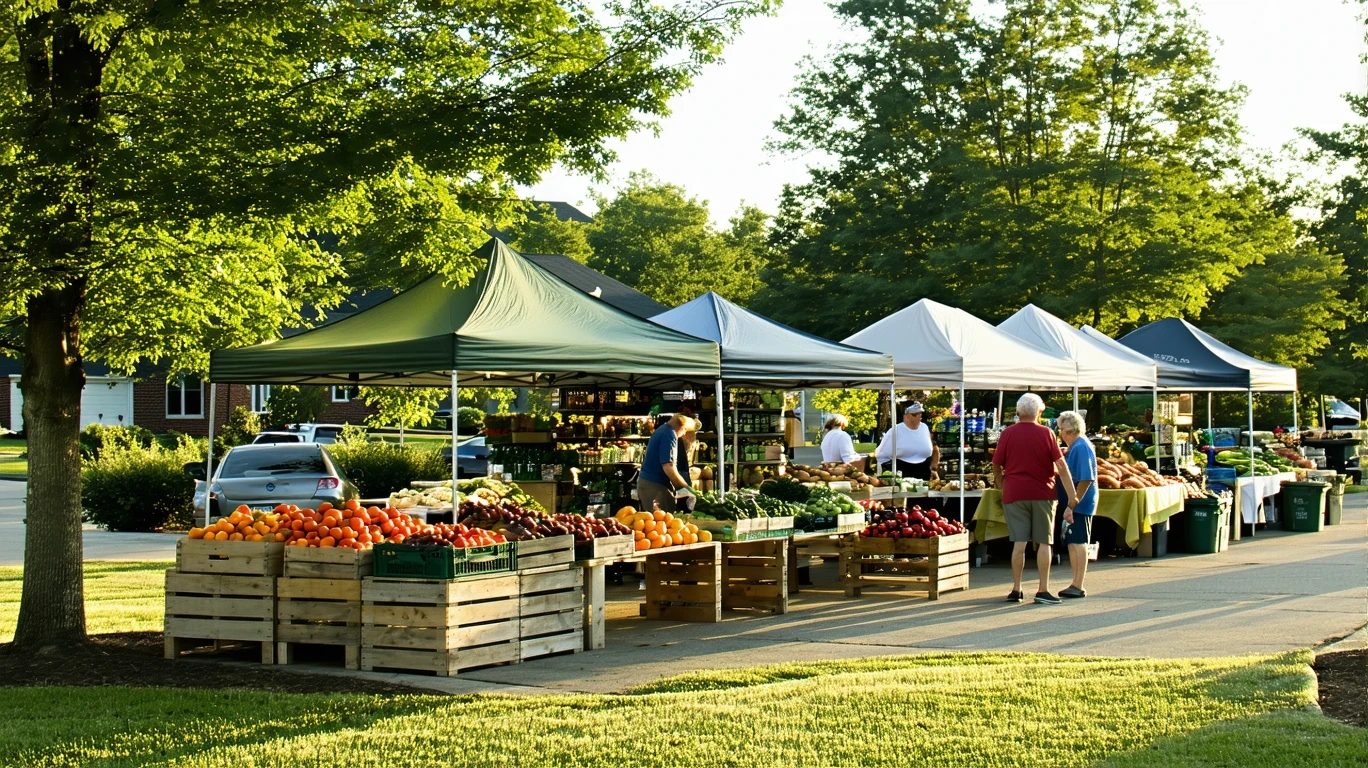
How Grocery Costs Feel in Clayton
Grocery prices in Clayton sit just below the national baseline, reflecting a regional price environment that tends to favor household budgets without delivering dramatic savings. With a regional price parity index of 98—meaning costs run roughly 2% below the national average—Clayton offers modest relief compared to higher-cost metros, but the difference isn’t large enough to fundamentally change how families think about their food spending. For most households, the experience of grocery shopping here feels familiar and manageable, shaped more by store choice and shopping habits than by unusually low or high shelf prices.
Who notices grocery costs most depends heavily on household size and income flexibility. Singles and couples without children typically find grocery spending easy to absorb within a median household income of $71,698 per year, with plenty of room to choose higher-quality items or shop at mid-tier stores without strain. Families with children, however, feel grocery pressure more acutely. Volume matters: buying for three, four, or five people means small per-item price differences compound quickly, and the frequency of shopping trips rises alongside the need for staples like milk, bread, eggs, and chicken. For these households, even Clayton’s modest cost advantage requires active management—choosing the right stores, timing purchases around sales, and balancing convenience against price.
Grocery access in Clayton follows a corridor-clustered pattern, meaning food and grocery options concentrate along certain routes rather than spreading evenly across neighborhoods. This structure favors households with cars and the flexibility to plan shopping trips intentionally, but it also means that convenience and proximity aren’t guaranteed. Families managing tight schedules or multiple dependents may find themselves weighing the time cost of driving to a discount store against the price premium of shopping closer to home. The result is a grocery landscape where access exists, but the experience varies depending on where you live and how much control you have over your schedule.
Grocery Price Signals (Illustrative)
The table below shows how staple items tend to compare locally—not a full shopping list, but a set of anchors that illustrate relative price positioning in Clayton. These figures reflect modeled estimates adjusted for regional cost patterns and should be understood as illustrative context, not checkout-accurate pricing. Actual prices vary by store, brand, and week, but these signals help clarify how grocery costs in Clayton relate to broader regional norms.
| Item | Illustrative Price |
|---|---|
| Bread (per pound) | $1.81 |
| Milk (half-gallon) | $4.02 |
| Eggs (dozen) | $2.53 |
| Chicken (per pound) | $2.00 |
| Ground beef (per pound) | $6.62 |
| Cheese (per pound) | $4.75 |
| Rice (per pound) | $1.04 |
Derived estimate based on national baseline adjusted by regional price parity; not an observed local price.
These prices suggest that Clayton’s grocery environment leans affordable on high-volume staples like rice, chicken, and bread, while items like ground beef and cheese carry moderate price weight. For households cooking at home frequently, the lower end of this range—chicken, rice, eggs—offers meaningful flexibility. Families relying heavily on protein and dairy, however, will feel the cumulative impact of mid-range pricing on cheese and beef, especially when feeding multiple people daily. The key takeaway isn’t that any single item is expensive, but that the overall structure rewards intentional meal planning and a willingness to build meals around lower-cost staples.
Store Choice and Price Sensitivity
Grocery price pressure in Clayton varies significantly by store tier, and understanding this variation matters more than focusing on a single “average” experience. Discount-tier stores—regional chains and value-focused grocers—offer the lowest shelf prices and favor bulk packaging, making them ideal for families managing high volume or tight budgets. These stores strip out convenience features like prepared foods and specialty sections, but they deliver measurable savings on staples when households can plan trips and storage around larger quantities.
Mid-tier stores occupy the middle ground, balancing price and convenience with broader selection, cleaner layouts, and more frequent sales. These are the stores where most Clayton households do their primary shopping, benefiting from competitive pricing on everyday items without sacrificing product variety or store experience. For couples and smaller families, mid-tier stores often represent the sweet spot—affordable enough to shop regularly, convenient enough to fit into weekly routines, and flexible enough to accommodate both planned meals and spontaneous purchases.
Premium-tier stores—whether organic-focused, specialty grocers, or upscale chains—carry higher baseline prices but offer differentiated value through quality, sourcing, and product range. Households shopping here regularly are typically less price-sensitive and more focused on specific dietary preferences, ingredient quality, or convenience features like prepared meals and grab-and-go options. For most families in Clayton, premium stores function as occasional destinations rather than primary grocery sources, visited for specific items or special occasions rather than weekly staples.
Store choice isn’t just about price—it’s about matching shopping behavior to household priorities. Families with the time and vehicle access to visit discount stores can reduce their grocery costs meaningfully, but they trade convenience and trip frequency for those savings. Households prioritizing time, proximity, or product variety will gravitate toward mid-tier stores and accept modestly higher costs in exchange. Premium stores remain available for those who value quality or specialization over price, but they represent a distinct spending tier rather than a marginal upgrade. The key insight is that grocery pressure in Clayton is less about absolute price levels and more about how well households align their store choices with their budget, schedule, and priorities.
What Drives Grocery Pressure Here
Income plays a central role in how grocery costs feel in Clayton. A median household income of $71,698 provides reasonable flexibility for one- and two-person households, allowing them to absorb grocery spending without constant scrutiny or tradeoff decisions. Singles earning near or above the median can shop mid-tier or premium stores comfortably, while couples benefit from shared income and the ability to buy in bulk without waste. For these households, grocery costs remain a manageable line item rather than a source of financial strain.
Families with children, however, face a different calculus. Adding dependents doesn’t just increase volume—it increases frequency, reduces flexibility, and narrows the margin for error. A household feeding four people instead of two doesn’t simply double grocery spending; it also reduces the ability to skip meals, stretch leftovers, or delay shopping trips. The result is that even Clayton’s modest cost advantage feels thinner for larger families, especially those with income closer to the median or below. These households feel grocery pressure not because prices are high, but because volume and frequency leave less room to absorb variability or make strategic choices.
Regional distribution and access patterns also shape the grocery experience in Clayton. The corridor-clustered layout of food and grocery options means that proximity isn’t guaranteed, and households without flexible transportation or time may find themselves limited to nearby stores rather than the most affordable ones. This dynamic doesn’t create food deserts, but it does introduce friction—families managing tight schedules or multiple commitments may prioritize convenience over price, even when they’d prefer the opposite tradeoff. The result is that grocery costs in Clayton are influenced as much by household logistics and access as by shelf prices themselves.
Seasonality affects grocery costs qualitatively, though the impact in Clayton remains moderate compared to regions with more extreme climates. Fresh produce prices fluctuate with growing seasons, and households relying heavily on fruits and vegetables will notice variability in both cost and quality throughout the year. Protein and dairy prices remain more stable, but periodic shifts—driven by supply chain conditions, fuel costs, or regional demand—can create short-term pressure on specific categories. Families who cook frequently and build meals around seasonal availability can smooth these fluctuations, while those with rigid meal preferences or limited cooking flexibility may feel the impact more directly.
Practical Ways People Manage Grocery Costs
Managing grocery costs in Clayton starts with store selection and trip planning. Households that consolidate shopping into fewer, larger trips—especially at discount-tier stores—reduce both per-item costs and the temptation of impulse purchases that accumulate during frequent visits. Planning meals around sales and weekly specials allows families to take advantage of temporary price drops on staples like chicken, ground beef, and cheese, building flexibility into their spending without requiring extreme couponing or deal-chasing. The goal isn’t to optimize every purchase, but to create a routine that aligns store choice, trip frequency, and meal planning in a way that reduces waste and avoids premium pricing.
Buying in bulk works well for non-perishable staples—rice, pasta, canned goods, frozen vegetables—and for households with adequate storage space and the ability to use larger quantities before spoilage. Bulk purchasing reduces per-unit costs and minimizes the frequency of restocking trips, but it requires upfront capital and the discipline to avoid over-purchasing perishable items that won’t be consumed in time. Families with multiple members benefit most from bulk strategies, while singles and couples need to be more selective, focusing on items they use consistently rather than chasing bulk discounts on products that may go to waste.
Cooking at home consistently remains the most effective lever for controlling grocery costs, not because it’s cheaper per meal in every case, but because it gives households direct control over ingredients, portion sizes, and waste. Preparing meals from staple ingredients—chicken, rice, eggs, vegetables—keeps costs predictable and allows families to stretch their grocery budget further than relying on convenience foods or prepared items. Batch cooking and intentional use of leftovers reduce both food waste and the need for last-minute purchases, smoothing grocery spending over time and reducing the frequency of expensive top-up trips.
Store loyalty programs and digital coupons offer modest savings without requiring significant effort, especially at mid-tier stores where these tools are most developed. Households that shop consistently at one or two primary stores can accumulate points, access member-only pricing, and receive targeted discounts on frequently purchased items. The savings aren’t transformative, but they add up over time and require minimal behavior change beyond signing up and scanning a card or app at checkout. For families already shopping strategically, these programs provide incremental value without adding complexity or requiring extreme deal-hunting behavior.
Groceries vs Eating Out (Directional)
The tradeoff between groceries and eating out in Clayton isn’t just about price—it’s about time, convenience, and how much control households want over their food spending. Cooking at home consistently delivers lower per-meal costs, especially for families preparing staple-based meals in volume, but it requires time, planning, and the willingness to manage shopping, cooking, and cleanup. Eating out or ordering takeout eliminates that labor and offers immediate convenience, but it introduces higher per-meal costs and less control over ingredients, portions, and nutritional content.
For households managing tight budgets or feeding multiple people, the cost difference between home cooking and dining out becomes significant quickly. A meal prepared at home using chicken, rice, and vegetables might cost a few dollars per person, while the same household ordering takeout or dining at a casual restaurant could easily spend three to five times that amount per meal. Families with children feel this gap most acutely, as the volume and frequency of meals amplify the cost difference over weeks and months. Singles and couples have more flexibility to mix home cooking with occasional dining out without destabilizing their overall food spending, but even for smaller households, frequent restaurant meals or delivery orders add up faster than grocery spending.
The practical implication is that grocery costs in Clayton remain manageable as long as households cook at home most of the time, but the margin tightens quickly when dining out becomes a regular habit rather than an occasional convenience. Families looking to control their overall food spending will find that investing time in meal planning, grocery shopping, and home cooking delivers the most consistent results, while those prioritizing convenience or time savings will need to budget for higher food costs overall. The choice isn’t binary, but the direction is clear: home cooking anchors affordability, while dining out introduces variability and upward pressure on food spending.
FAQs About Grocery Costs in Clayton (2026)
Is it cheaper to shop in bulk in Clayton? Bulk purchasing reduces per-unit costs on non-perishable staples like rice, pasta, and canned goods, and it works well for families with storage space and consistent usage patterns. The savings are real but require upfront spending and discipline to avoid waste on perishable items.
Which stores in Clayton are best for low prices? Discount-tier stores offer the lowest shelf prices and favor bulk packaging, making them ideal for families managing high volume or tight budgets. Mid-tier stores balance price and convenience, while premium stores prioritize quality and selection over cost.
How much more do organic items cost in Clayton? Organic products typically carry a price premium over conventional equivalents, with the gap varying by category and store tier. Households prioritizing organic options should expect to allocate a larger share of their grocery budget to those items, especially for dairy, produce, and meat.
How do grocery costs for two adults in Clayton tend to compare to nearby cities? Clayton’s regional price parity of 98 suggests grocery costs run slightly below the national average, positioning it favorably compared to higher-cost metros in North Carolina and the broader Southeast. The difference is modest but meaningful for households shopping consistently at discount or mid-tier stores.
How do households in Clayton think about grocery spending when cooking at home? Most families view grocery spending as a controllable expense that responds well to planning, store choice, and meal preparation habits. Cooking at home consistently keeps costs predictable, while convenience purchases and frequent dining out introduce variability and upward pressure on overall food spending.
Do grocery costs in Clayton fluctuate seasonally? Fresh produce prices vary with growing seasons, and households relying heavily on fruits and vegetables will notice shifts in cost and availability throughout the year. Protein and dairy prices remain more stable, though periodic supply chain or regional demand changes can create short-term pressure on specific categories.
How does grocery access in Clayton affect food costs? Grocery options in Clayton follow a corridor-clustered pattern, meaning stores concentrate along certain routes rather than spreading evenly. Households with flexible transportation and time can access discount stores and lower prices, while those with tighter schedules may prioritize convenience and proximity over cost, even when they’d prefer the opposite tradeoff.
How Groceries Fit Into the Cost of Living in Clayton
Grocery costs in Clayton occupy a manageable position within the broader cost structure, sitting well below the financial weight of housing and utilities but still requiring intentional management for larger families or households with tighter budgets. For most residents, food spending remains a flexible line item—one that responds to store choice, meal planning, and cooking habits in ways that housing costs and utility bills do not. This flexibility makes groceries a practical lever for households looking to control their overall cost of living, but it also means that neglecting grocery strategy can quietly erode budget margins over time.
Understanding how grocery costs interact with income, household size, and access patterns helps clarify where pressure comes from and which households feel it most. Singles and couples with median or above-median income typically find grocery spending easy to absorb, while families with children—especially those managing multiple dependents on a single or modest dual income—face tighter margins and benefit most from strategic store selection and home cooking. The key insight is that grocery costs in Clayton aren’t inherently high, but they require active engagement to keep them aligned with household priorities and financial capacity.
For a complete picture of how groceries fit alongside housing, transportation, and utilities, see the full breakdown in What a Budget Has to Handle in Clayton. That article provides the total spending context that this piece intentionally defers, helping households understand not just how much groceries cost, but how food spending fits into the larger financial landscape of living in Clayton. Grocery costs are manageable here, but only when households approach them with clarity, intention, and a willingness to make tradeoffs that align with their budget and lifestyle.
How this article was built: In addition to public economic data, this article incorporates location-based experiential signals derived from anonymized geographic patterns—such as access density, walkability, and land-use mix—to reflect how day-to-day living actually feels in Clayton, NC.